Best Pepper Shakers That Pour Evenly, Every Time in 2026
The best pepper shakers for 2026 are the ones that give you a light, even dusting of pepper with a gentle shake and stop the moment you set them down. A good pepper shaker never clogs on a damp morning, never dumps a dark patch of pepper over a finished plate, and feels steady in the hand at breakfast, lunch and dinner. A bad one gives nothing for three shakes, then dumps a dark patch of pepper over a finished plate. This guide covers the pepper shakers worth buying in 2026, in glass, ceramic, stainless steel and wood, and explains what separates a shaker that earns its place on the table from one that ends up pushed to the back of a cupboard.
Pepper is harder to serve well than most people expect. Pre-ground black pepper is coarser and lighter than fine table salt, so it jams in holes made for salt, bridges across a narrow neck, and picks up moisture from a steamy kitchen and clumps into a plug. A shaker built for pepper takes all of that into account, with fewer and larger holes, a wider neck, and a lid that seals tightly between meals.
Key Takeaways
- Hole size decides everything: pre-ground pepper needs fewer, larger holes than fine salt, and the wrong match is the main cause of clogging and sudden rushes.
- Glass bodies are the most practical choice for everyday use, because you can see at a glance when a refill is due and whether moisture has got in.
- A tight-fitting lid and a dry filling routine matter more than price; most pepper shakers fail because damp pepper clumps, not because the design is poor.
- Match the shaker to your pepper: coarse black, fine white and green peppercorns all flow differently.
- Buy a shaker that fits your hand and your table: too tall and it topples, too small and you refill it every week, too heavy and it chips the table when it is set down hard.
Pepper Shakers, Mills and Grinders: Know the Difference
It helps to be clear about what a shaker is, because three different tools get mixed up under the same name. A pepper shaker holds pepper that is already ground and releases it in a controlled sprinkle when you tip it. A pepper mill is a different tool altogether: it grinds whole peppercorns fresh, with a mechanism you twist, and it suits cooks who want the sharper flavour of freshly ground pepper. A spice grinder is different again, built to powder whole spices for cooking, not for sprinkling at the table. Our guide to the best pepper mills covers the grinding option in depth, for anyone who cooks with whole peppercorns and loves the ritual of grinding fresh pepper over a finished plate.
The honest division is simple: mills and grinders prepare seasoning in the kitchen, while shakers serve it at the table. A shaker works with one hand, in one second, and anyone can use it. If your pepper is already ground, the shaker is the right tool. If you buy whole peppercorns and want the warmest, sharpest flavour, a mill will make you happier, because freshly ground pepper smells stronger and tastes warmer than pepper ground weeks ago.
The Main Types of Pepper Shakers
Glass Shakers: The Everyday All-Rounder
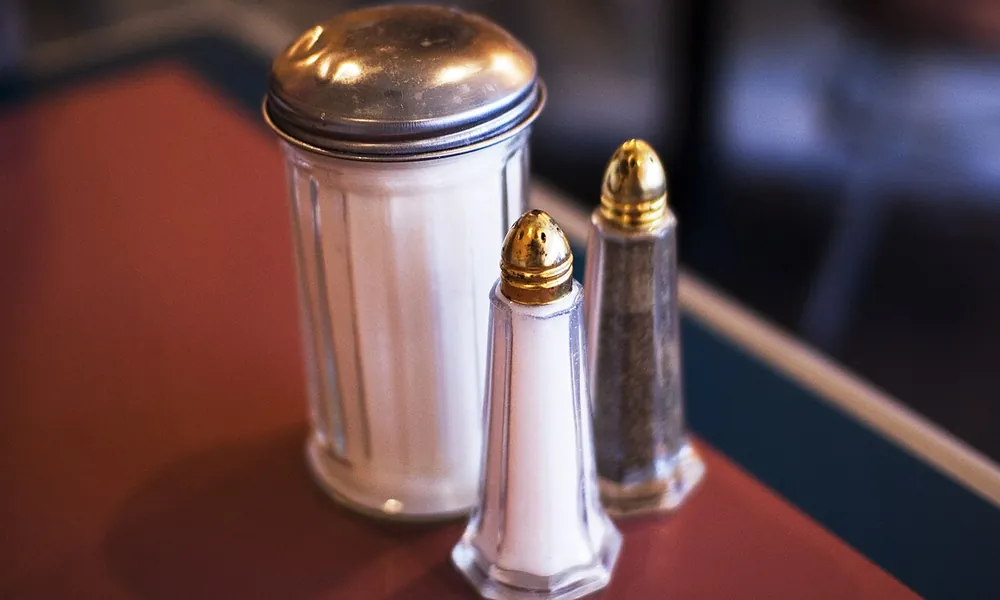
A classic glass pepper shaker with a stainless steel top is still the best choice for most households. You can see the pepper level at a glance, the glass does not stain or absorb smells, and a good one is easy to wash and refill. Look for a thick body, a screw-on top with cleanly drilled holes, and holes visibly larger and fewer than a salt shaker’s. Three to five holes suit most pre-ground black pepper; more than that and the flow becomes hard to control.
Ceramic Shakers: The Pretty Table Piece
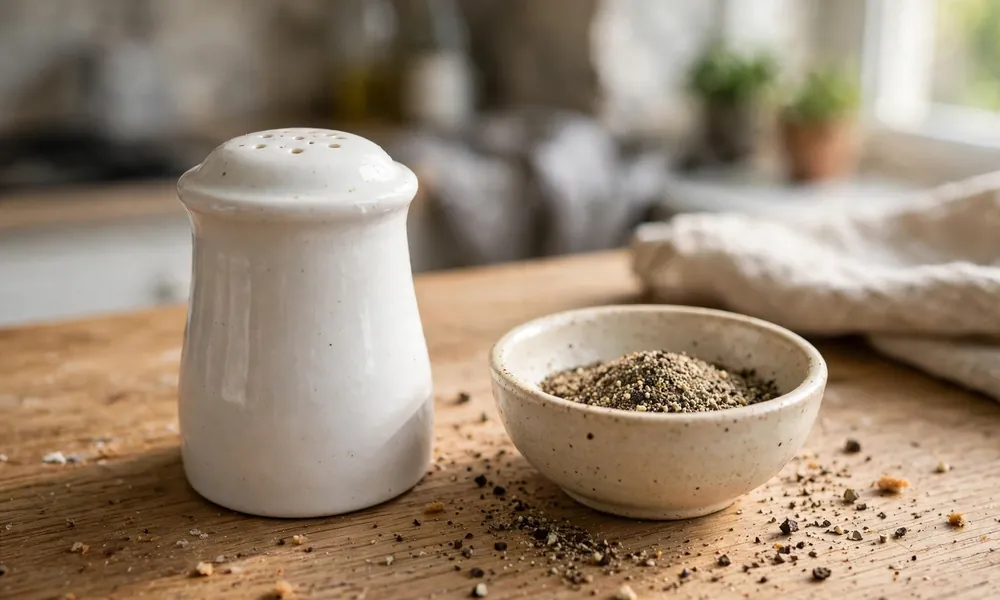
Ceramic pepper shakers earn their place by looking good, and the best ones are just as practical as they are pretty. A glazed ceramic body is non-porous, so it keeps pepper a little drier than glass in a humid kitchen. The trade-off is that you cannot see how much is left, so a ceramic shaker needs a wider neck and an easy refill, and you should get into the habit of checking the level before guests arrive.
Stainless Steel Shakers: The Tough, Modern Option
Stainless steel pepper shakers suit busy kitchens that want something that will not break. They are light, they do not chip or crack, and a well-made steel top resists corrosion far better than chrome-plated alternatives. The downside is that you cannot see the level, and cheaper steel can spot after repeated washing, so buy food-grade steel and avoid anything suspiciously light.
Wooden Shakers: Warm and Traditional
Wooden pepper shakers are warm and traditional, and they suit coarse pepper best, because the wide neck and larger holes let coarse grounds through without jamming. Wood absorbs moisture slowly, so a wooden shaker needs a dry kitchen and a lid that seals well, and it should never go in the dishwasher. The best wooden shakers use dense hardwoods such as beech or walnut, which resist dents and moisture far better than soft, pale woods.
Pepper Shakers Compared
| Type | Best for | See the level? | Clog risk | Durability |
|---|---|---|---|---|
| Glass with steel top | Fine and medium black pepper, everyday use | Yes | Low | Good, but breakable |
| Glazed ceramic | Humid kitchens, dressed tables | No | Low | Good, can chip |
| Stainless steel | Busy kitchens, outdoor eating | No | Low | Excellent |
| Wooden | Coarse pepper, rustic tables | No | Medium | Fair, swells with damp |
Glass remains the default because it lets you see the pepper. With ceramic, steel or wood, check the level weekly.
How to Choose the Right Pepper Shaker
Start with the pepper you actually use, not the pepper you wish you used. Fine white pepper flows almost like salt and suits smaller holes, while coarse black pepper needs fewer, larger holes and a wider neck, and green peppercorn flakes need the widest opening of all. If you only buy one kind of pepper, buy a shaker made for it.
Next, check the seal. Pepper draws moisture from the air, and once damp it clumps and blocks the holes. A lid that screws on firmly, with a gasket or a snug inner seal, keeps pepper dry far longer than a loose push-on cap. Then check the size. A shaker that holds about a month of pepper for your household is right; much smaller and you refill it every week, much larger and the pepper at the bottom goes stale before it is used. A wide, stable base matters too, since tall, narrow shakers get knocked over.
Finally, think about the table it will sit on. A single pepper shaker is a different purchase from a matched set, and the two solve different problems. Our guide to the best salt shakers covers salt on its own in depth, while our guide to the best salt and pepper shakers covers matched pairs, where the two shakers must be easy to tell apart by hole count, marking or shape. A single pepper shaker has no telling-apart problem, so judge it purely on flow, seal and feel.
Keeping a Pepper Shaker Working Well
Most pepper shakers fail because of damp pepper, not poor design, and the fix is a dry routine. Fill the shaker on a dry day, with dry hands, over a dry bowl, and never fill it straight from a steaming pot or over a sink. Store it away from the hob and the kettle, where steam rises every day, and keep the lid on between meals. If pepper does clog, do not shake harder: tap the base gently against your palm, then unscrew the top and clear the holes with a dry cocktail stick.
Cleaning is simple but worth doing properly. Wash the body in warm soapy water, rinse well, and dry it completely before refilling, ideally upside down on a rack overnight. A single drop of water left inside will clump the next fill. Steel tops can go in the dishwasher, but wooden shakers must be wiped, never soaked, and ceramic shakers should be dried straight away so water does not sit in the glaze cracks.

Checklist: Before You Buy a Pepper Shaker
- Shake it in the shop with your usual pepper in mind: the flow should start at once, stay even, and stop cleanly.
- Count the holes and check their size: fewer, larger holes suit pre-ground pepper; many small holes are made for salt.
- Unscrew the lid and check the neck: a wide neck makes filling easy and a screw thread that turns smoothly will seal well.
- Pick it up and set it down: it should feel steady, with a wide base, and not so tall that it topples easily.
- Check the material against your kitchen: glass for visibility, steel for toughness, ceramic for damp rooms, wood for coarse pepper.
- Ask how it cleans: the top should come apart, the body should dry fully, and wooden parts should never need soaking.
Frequently Asked Questions
How many holes should a pepper shaker have?
Three to five holes suit most pre-ground black pepper. Fewer, larger holes give a steadier flow for coarse pepper, while more holes suit fine white pepper. Match the holes to the pepper you actually use.
Why does my pepper shaker keep clogging?
Clogging is almost always moisture or the wrong hole size. Pepper draws damp from steamy kitchens, clumps, and blocks small holes. Fill it with dry hands, store it away from the hob, and if it persists, switch to larger holes.
Is a pepper shaker better than a pepper mill?
Neither is better in every kitchen. A shaker is faster, works with one hand, and suits pre-ground pepper at the table. A mill grinds whole peppercorns fresh and gives a sharper, warmer flavour, but it needs two hands and more effort. Many households keep both: a mill in the kitchen and a shaker on the table.
Can I put white pepper in a black pepper shaker?
You can, but the flow will be faster than you expect, because white pepper is usually ground finer than black pepper. Use a gentle shake, and keep white pepper in its own shaker if you use it often.
How often should I refill a pepper shaker?
Refill when it is about a quarter full, little and often. Pepper kept in a shaker for months loses its warmth and aroma, so a month of pepper per fill is a good rule for most households.
What is the best material for a pepper shaker?
Glass is the best all-rounder because you can see the level and the condition of the pepper. Ceramic suits humid kitchens and dressed tables, stainless steel suits busy households and outdoor eating, and wood suits coarse pepper on rustic tables. The best material is the one that matches how and where you eat.
Bottom Line
The best pepper shaker pours your pepper evenly, seals tightly against damp, and feels steady in your hand — and for most tables in 2026, that is a glass shaker with a stainless steel top, with holes sized for the pepper you use. Spend more on the lid and the seal than on the look, fill it dry, and it will serve every meal without a second thought.