Top Pancake Dispensers for Even, Mess-Free Pancakes in 2026
A pancake dispenser is a jug or squeeze bottle with a controlled outlet that pours batter in a steady, measured stream, and the top pancake dispensers in 2026 turn pancake morning from a dripping, uneven mess into a row of neat, evenly sized pancakes that cook at the same rate and stack beautifully. Instead of ladling batter from a bowl, you squeeze or tip the dispenser and the same amount of batter lands in the same spot every time. This guide explains which pancake dispensers are worth buying, how the different designs compare, and how to use one without the batter clogging or dripping.
Key Takeaways
- A pancake dispenser controls the flow of batter, so every pancake comes out the same size and thickness and cooks evenly.
- Jug dispensers with a valve suit big weekend batches, while pistol-grip dispensers give the finest control for small, neat pancakes.
- A wide opening matters more than a clever valve: it lets you pour thick batter in and clean the dispenser out afterwards.
- The seal is the feature worth paying for: a dispenser that drips between pours makes more mess than a ladle ever did.
- A good pancake dispenser costs very little, so buy on the seal, the opening, and the capacity that matches your household rather than on extra nozzles.
What a Pancake Dispenser Actually Is
A pancake dispenser is a container for mixed batter with a way to release it in a controlled stream. The simplest kind is a jug with a spout and a lid, which you tip to pour. The more specialised kinds add a valve: a pistol-grip dispenser has a trigger that opens the valve while you squeeze, and a squeeze bottle has a narrow nozzle. In every case the batter comes out in a thin, steady stream, exactly where you point it, and stops cleanly when you stop.
It is worth drawing a clear line here, because breakfast tools are easily confused. A pancake dispenser pours batter; it does not cook anything. A crepe maker is a plugged-in electric appliance with a flat heated plate and a spreader, built to cook thin crepes at a steady temperature, and it never holds batter at all. A frying pan is the cooking surface the batter lands on. The dispenser works with any pan or griddle you already own.
Dispensers are also useful beyond pancakes. The same controlled pour works for crumpets, drop scones, blinis, and small fritters, and a fine nozzle can draw shapes and letters in batter for children. The key point is that the dispenser earns its place by making the pour repeatable: the fifth pancake looks like the first, which is what a ladle can never promise.
The Main Types of Pancake Dispenser, Compared
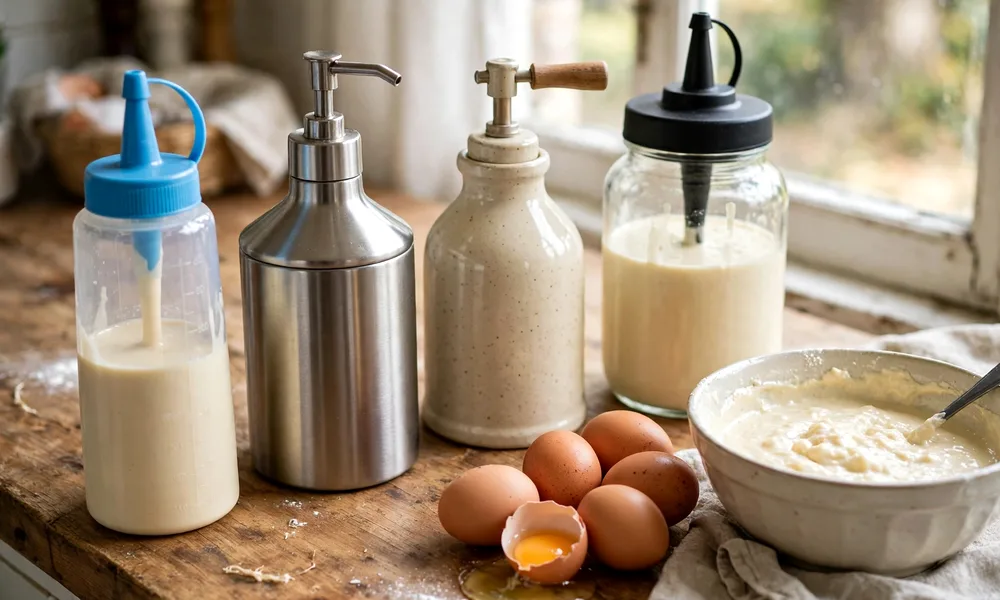
Most pancake dispensers fall into four designs, and the right one follows from how many pancakes you make and how much control you want over each one.
| Type | Best For | Capacity | Watch Out For |
|---|---|---|---|
| Jug with valve | Big weekend batches | 900 ml–1 litre | Heavy when full; valve can clog |
| Pistol-grip dispenser | Fine control, small pancakes | 500–900 ml | Trigger can stick with thick batter |
| Squeeze bottle | Shaped pancakes and children | 350–700 ml | Narrow neck is hard to fill |
| Measuring jug with spout | Simple, cheap, no moving parts | 500 ml–1 litre | No shut-off; drips between pours |
The jug with a valve is the standard and the right choice for most households. It holds a full batch of batter, sits on the worktop between pours, and the valve at the base releases batter only while it is open, so the stream stops cleanly. The pistol-grip dispenser is the precision tool: the trigger gives you one-handed control and a very fine stream, which suits small pancakes, but it is tiring to hold through a large batch.
Jug, Pistol-Grip, or Squeeze Bottle: Which Dispenser Wins?
The jug wins on capacity and comfort. A litre jug holds enough batter for a family breakfast without refilling, and because it stands on the worktop, your arm never gets tired. The valve is the part to judge: a good valve opens with a light press and snaps shut the moment you release it, with no dribble. A poor valve leaks slowly between pours, which leaves a trail of batter across the worktop and the hob, and it clogs when the batter is thick or has lumps.
The pistol-grip wins on control. The trigger is under your finger, so you can start and stop the stream in a fraction of a second, and the narrow outlet makes small, neat pancakes easy. The trade-off is weight: a full pistol-grip dispenser is heavy to hold over a hot pan, and the trigger is the first part to wear out. The squeeze bottle wins on fun and on price, but it loses on capacity and on filling: a narrow neck means the batter goes in slowly, and a thick batter needs a hard squeeze.
What to Look For Before You Buy
Capacity
A 500 millilitre dispenser holds enough batter for about six medium pancakes, which suits one or two people. A 900 millilitre to 1 litre jug holds enough for a family of four without refilling, which is the point of the tool: refilling mid-batch means the first pancakes are cooling while the last ones are still being poured.
The Seal and the Drip Test
The seal is the whole secret of a good pancake dispenser. Fill it with water, hold it over the sink, and watch: a good dispenser releases nothing until you open the valve, and stops the moment you close it. A dispenser that drips between pours is worse than useless, because it drips batter onto the hob and the worktop, and the drips burn and smoke. A silicone gasket or O-ring at the valve is a good sign, and a gasket you can replace is better still.
Cleaning
A pancake dispenser lives or dies on cleaning. Batter dries hard, and a dispenser that cannot be taken apart will hold dried batter in its valve and nozzle until it smells. Look for a valve that unscrews, a lid that comes off completely, and an opening wide enough for your hand or a sponge.
How to Use a Pancake Dispenser Without Clogs or Drips
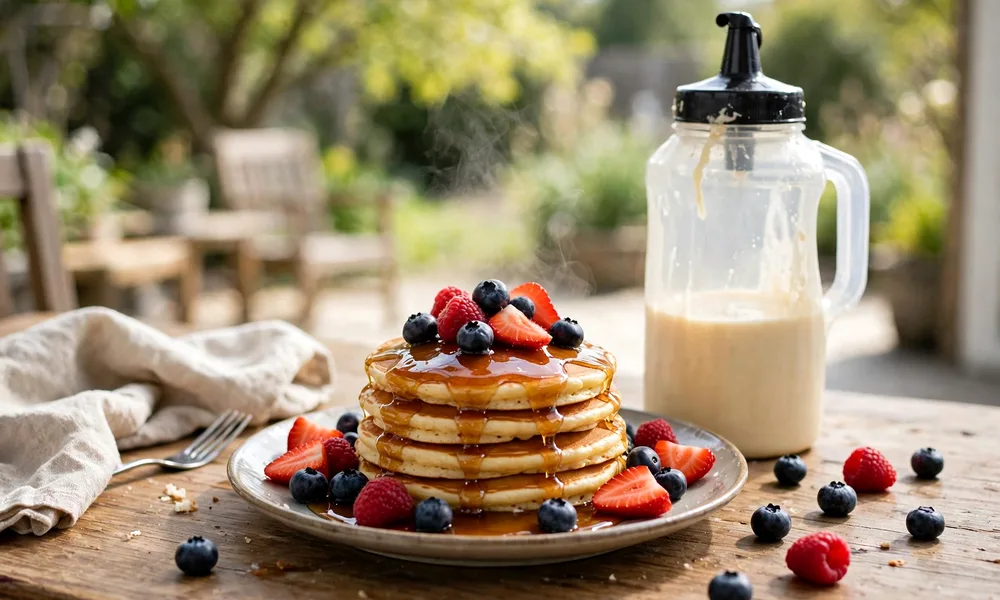
The technique matters more than the dispenser itself. Mix the batter until it is smooth, with no lumps, because lumps are what clog valves and nozzles. Let the batter rest for five to ten minutes, then stir it once gently before pouring it into the dispenser.
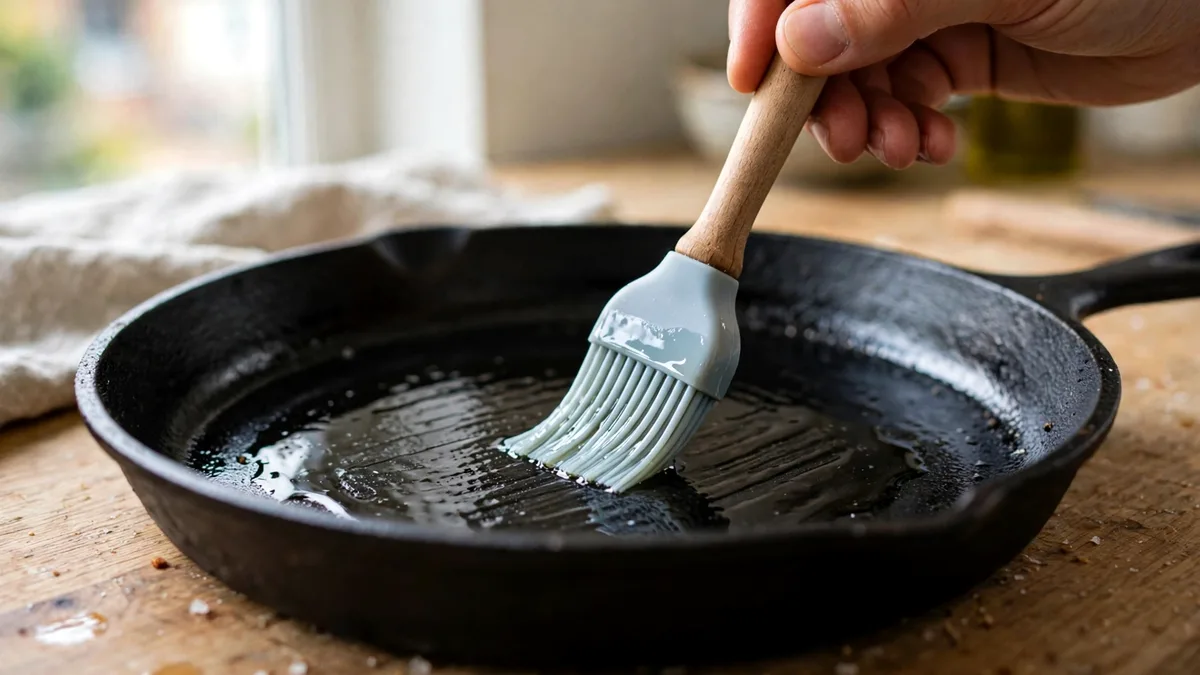
Heat the pan first, then oil it lightly and wipe the excess away with a paper towel. Hold the dispenser over the centre of the pan, open the valve, and let the batter fall in one steady stream without moving the dispenser. The batter will spread into a round by itself; moving the dispenser in a circle makes an uneven pancake. Close the valve cleanly and lift the dispenser away before the next pour. When the surface of the pancake is covered in bubbles and the edge looks dry, flip it once and cook the other side briefly.
Pancake Dispensers vs the Rest of the Breakfast Drawer
Against the ladle, the dispenser wins on repeatability and on mess, and loses only on the small effort of washing one more tool. The ladle is free and already in the drawer, but it delivers a different amount of batter every time and drips on the way from the bowl to the pan. For a household that makes pancakes once a month, the ladle is fine; for a household that makes them every weekend, the dispenser earns its shelf space. Against a crepe maker there is no real competition, because the two tools do different jobs: the maker cooks thin crepes on a heated plate and never holds batter. The dispenser also does not replace a good pan: a pan with hot spots will cook uneven pancakes no matter how evenly the batter is poured. Our guide to the best frying pans covers pans that heat evenly, which is the foundation the dispenser depends on. And if the breakfast table needs a sweet finish, our guide to the best waffles covers the other great batter breakfast, which uses the same batter skills in a different machine.
Mistakes That Ruin the Result
The most common mistake is lumpy batter. Lumps clog the valve, the stream stutters, and the pancake comes out in blobs instead of a smooth round. Whisk the batter until it is smooth, or strain it into the dispenser through a sieve, and the valve will never clog. The second mistake is batter that is too thick: a thick batter will not flow through a narrow outlet, so the cook squeezes harder, the valve sticks open, and a flood of batter lands in the pan. Thin the batter with a splash of milk until it pours like thick cream. The third mistake is moving the dispenser while pouring: a moving dispenser makes an oval or a pancake with a tail, while a still dispenser lets the batter spread into a round by itself. The fourth mistake is leaving the dispenser unwashed: batter dries hard in minutes, and a valve left with dried batter in it will stick, leak, or clog at the next breakfast.

Before You Buy: The Checklist
- Capacity matches your household: about 500 ml for one or two people, 900 ml to 1 litre for a family.
- Valve seals completely when closed: test with water and return the dispenser if it drips.
- Opening is wide enough to pour batter in without a funnel and to clean by hand.
- Valve and lid come apart for cleaning, so dried batter has nowhere to hide.
- Measurement markings are moulded or dishwasher-proof, so you can mix batter in the jug.
- Material suits your kitchen: thick clear plastic for most, stainless steel for the long term.
Frequently Asked Questions
Can I use a pancake dispenser for crepe batter?
Yes, because crepe batter is thin and flows easily through a valve. Pour a small amount into the pan, tilt the pan to spread it thin, and cook it briefly on each side. The dispenser controls the amount, which is the hardest part of making crepes in a pan.
Why does my dispenser keep clogging?
Almost always because the batter has lumps, or because dried batter is stuck in the valve from last time. Whisk the batter smooth, strain it if needed, and rinse the valve immediately after every use.
Can I put pancake batter in the dispenser the night before?
Yes, if the dispenser has a lid and goes in the fridge. Stir the batter gently in the morning, because the flour settles overnight, and let it come to room temperature for ten minutes before pouring.
Is a squeeze bottle as good as a jug dispenser?
For shaped pancakes and small batches, yes, and it is cheaper and easier to store. For a family batch, no: the capacity is smaller, the narrow neck is slow to fill, and a thick batter needs a hard squeeze.
How do I clean a pancake dispenser properly?
Rinse it immediately after use, take the valve and lid apart, wash the parts in warm soapy water, and let them dry fully before reassembling. A bottle brush reaches the inside of a narrow neck.
Do pancake dispensers work with gluten-free batter?
Yes, though gluten-free batter is often thicker and more prone to lumps, so whisk it especially well and thin it with a little extra milk if the flow is slow.
Bottom Line
The best pancake dispenser is a jug with a valve, around 900 millilitres for a family or 500 millilitres for one or two people, with a wide opening, a seal that does not drip, a valve that comes apart for cleaning, and measurement markings you can mix by. Whisk the batter smooth, hold the dispenser still over a hot pan, and rinse it the moment breakfast is over.