
The Best Pillow Protectors for Allergies in 2026
The best pillow protectors for allergies in 2026 do a quiet job that matters every night: they put a sealed barrier between you and the dust mites, pollen and moisture living inside your pillow. A pillow protector is a zippered encasement that fits tightly around your pillow, under the pillowcase, blocking allergens from reaching your face while you sleep. If you wake up sneezing, with itchy eyes or a stuffy nose, your pillow is a likely culprit, and a good protector is the cheapest fix that actually works.
Choosing well matters, because not every protector blocks allergens. A loose cover with an open end lets mites in and out. A noisy, sweaty waterproof layer ruins your sleep even as it protects the pillow. This guide covers the pillow protectors that work best for allergies in 2026, how the allergy barrier works, which types suit hot sleepers and which suit children, and how to fit, wash and replace them.
Key Takeaways
- Choose a fully zippered encasement, not an open-ended cover, so dust mites cannot get in or out.
- Look for a pore size under 10 microns, or a protector labelled allergen-proof, for a real dust mite barrier.
- Waterproof protectors guard against sweat and spills, but pick a breathable membrane so you do not sleep hot.
- Measure your pillow before you buy: a protector that is too loose bunches up, and one that is too tight strains the zip.
- Wash protectors every one to two months in hot water, and replace them every one to two years.
Pillow Protectors at a Glance
| Type | Best for | Allergy barrier | Waterproof | Feel |
|---|---|---|---|---|
| Allergen encasement | Dust mite allergy | Excellent | No | Soft, cotton-like |
| Waterproof membrane | Sweat, spills, children | Very good | Yes | Smooth, quiet if good |
| Cooling protector | Hot sleepers | Good | Often | Cool, slick touch |
| Cotton protector | Everyday use | Good | No | Natural, breathable |
| Zippered terry | Comfort, light spills | Good | Water-resistant | Soft, slightly thick |
| Bamboo blend | Hot, sensitive skin | Good | No | Silky, breathable |
What a Pillow Protector Actually Does
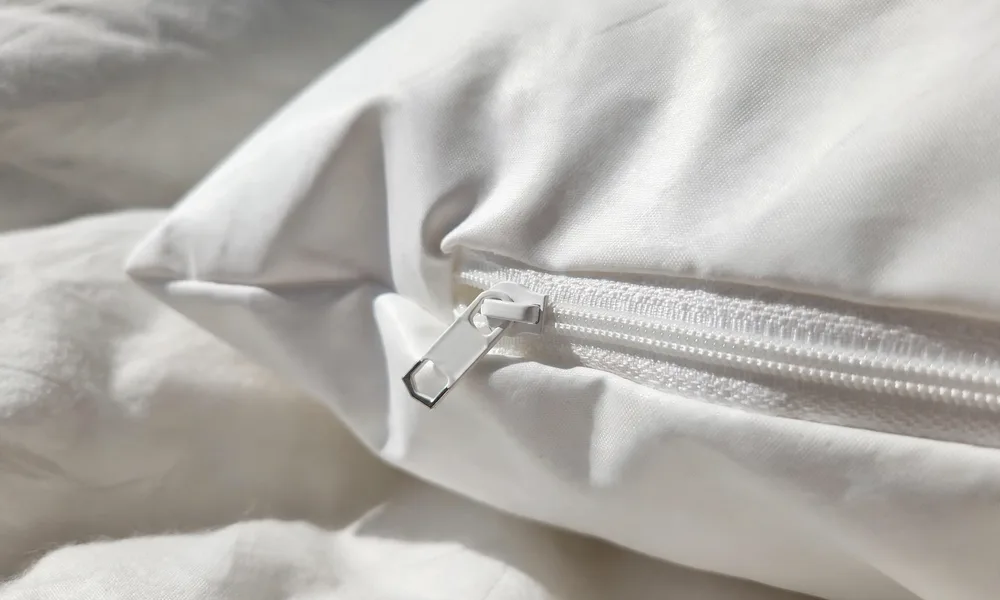
A pillow protector is a thin, zippered case that fully encloses your pillow. It sits under your normal pillowcase, so you never see it, and it does three jobs. First, it blocks dust mites and their waste, the main trigger for night-time allergy symptoms, from moving between the pillow and your face. Second, it blocks moisture, sweat, saliva and spills from soaking into the pillow fill, where they feed mites and mould. Third, it keeps the pillow itself cleaner for longer, so it lasts longer and stays fresher.
The allergy job depends on the weave. Dust mites are tiny, but their allergens are smaller still, so a protector needs a tightly woven fabric with pores small enough to block them, usually under 10 microns, or a membrane layer that blocks particles while letting air through. A normal pillowcase has pores far too large to do this, which is why a protector is not a luxury for allergy sufferers.
The Best Pillow Protector Types in 2026
Allergen encasements
Allergen encasements are the best pillow protectors for allergies, and the type doctors most often recommend. They are made from tightly woven microfibre or cotton with a pore size small enough to block dust mites and their allergens, and they zip fully shut with a small zip, so there is no gap for mites to slip through. They are not waterproof, which makes them quieter and more breathable than membrane protectors. If allergies are your main concern and you do not need spill protection, start here.
Waterproof membrane protectors
Waterproof protectors add a thin polyurethane membrane that blocks liquid completely while letting air and vapour through. They are the best choice if you sweat at night, have children, or want to protect an expensive pillow from spills. The catch is heat and noise: cheap membranes feel plasticky, rustle when you move, and trap warmth. Spend a little more on a protector described as breathable and quiet, and check reviews from hot sleepers before you buy. A good membrane protector should feel like fabric, not like a plastic bag.
Cooling pillow protectors
Cooling protectors use a smooth, moisture-wicking fabric, often with a bamboo-blend surface, to move heat away from your head. They suit hot sleepers and anyone who wakes up damp, and many are also waterproof, so they combine two jobs in one layer. The cooling effect is real but modest: a protector will not fix a hot room, but it can take the edge off.
Cotton and bamboo protectors
Cotton protectors are the most natural-feeling option, breathable and soft, with a good allergy barrier if the weave is tight enough. Bamboo-blend protectors feel silkier and wick moisture well, suiting sensitive skin and hot sleepers. Neither is fully waterproof, so they are best for adults who want allergy protection without a membrane. Check the label for a pore size or an allergen-proof claim, as not every cotton cover is woven tightly enough to block mites.
Zippered terry protectors
Terry protectors have a soft, looped cotton surface that feels like a towel, with a water-resistant backing. They are comfortable and absorbent, and they suit children and anyone who likes a plush feel. They are bulkier than a flat protector, so they can change the feel of a soft pillow slightly, and they are water-resistant rather than fully waterproof. Wash them regularly, as the terry surface holds moisture if it is left damp.
How to Choose the Right Size and Fit
Measure your pillow before you buy, and match the protector to it exactly. Standard pillows are usually 50 by 75 centimetres, queen 50 by 80, and king 50 by 90, but pillows vary, especially filled pillows that flatten with use. A protector that is too loose will bunch up under the pillowcase and feel lumpy. One that is too tight will strain the zip, pull the pillow out of shape, and may split at the seam after a few washes. If your pillow is between sizes, choose the larger size and accept a little slack, rather than forcing a tight fit.
Check the zip before you buy. It should run the full length of one side, close smoothly, and have a small fabric flap over the end, so mites cannot enter through the zip teeth. A short zip, an open end, or a cover that simply slips over the pillow is not a true encasement, and it will not protect you properly.

Allergies, Dust Mites and Your Pillow
Dust mites live in every home, and pillows are one of their favourite places: warm, humid, and full of shed skin to feed on. You cannot see them, but their waste triggers sneezing, itchy eyes, a runny nose and worsened asthma in sensitive people, often worst in the morning after a night with your face on the pillow. A protector breaks that contact. It does not kill the mites already inside the pillow, so wash or replace an old pillow when you start using one, but it stops new allergens reaching you, and it stops moisture feeding the mites inside.
Washing and Replacing Pillow Protectors
Most protectors are machine washable, which is essential, as they collect sweat, oils and dust. Wash them in hot water, at 60 degrees if the label allows, as that temperature kills dust mites. Use a mild detergent, skip fabric softener, which can coat the membrane or clog the weave, and tumble dry on low or line dry. A waterproof membrane can be damaged by high heat, so check the label and never iron a membrane protector.
Replace protectors every one to two years, sooner if you wash them often or use them nightly. The fabric thins with washing, the membrane can crack, and the zip is usually the first part to fail. Replacing a protector is far cheaper than replacing a pillow, and a fresh encasement restores the allergy barrier.
Matching a Protector to Your Pillow
The protector should suit the pillow underneath it. A firm memory foam pillow needs a thin, flexible protector that does not add bulk, while a soft down pillow suits a light cotton encasement that moves with the fill. A cooling protector pairs well with a warm foam pillow, and a waterproof protector is the right match for a child’s pillow or a pillow used by someone who sweats heavily. If you are choosing a new pillow as well, read our guide to the best pillows first, then match the protector to the pillow you pick. A mattress protector does the same job for the mattress, and the two together give you a sealed sleep surface. Our best vs worst pillows guide shows which fills hold up and which go flat.
What to Avoid
The worst pillow protectors share the same faults: an open end or short zip that lets mites in; a noisy, plasticky membrane that rustles all night; a loose fit that bunches under the pillowcase; and a claim of allergy protection with no pore size or certification to back it up. Avoid protectors that feel like a plastic bag, as you will notice them every time you move, and avoid very cheap multi-packs where the zips fail after a few washes. A protector that you take off because it is uncomfortable protects nothing, so comfort is not a luxury here, it is part of the job.
Pillow Protector Buying Checklist
- Choose a fully zippered encasement, not an open-ended cover.
- Check for a pore size under 10 microns or an allergen-proof label.
- Measure your pillow and match the protector size exactly.
- Pick a breathable membrane if you need waterproofing, to avoid sleeping hot.
- Check the zip runs the full length and has a guard over the end.
- Confirm the protector is machine washable at 60 degrees if the label allows.
Pillow Protector FAQs
Do pillow protectors really help allergies?
Yes, if they are fully zippered encasements with a tight weave. They block dust mites and their allergens from reaching your face, which is the main night-time trigger for many people. They work best with regular washing and a clean pillow to start with.
Should a pillow protector be waterproof?
Not necessarily. Waterproofing helps with sweat, spills and children, but it is not needed for allergy protection alone, and cheap membranes sleep hot and noisy. Choose waterproof only if you need it, and pay for a breathable membrane.
Can I use a pillow protector with any pillow?
Yes, as long as the size matches. Protectors work with memory foam, latex, down and fibre pillows. Use a thin, flexible protector on a firm foam pillow, and a light cotton encasement on a soft down pillow, so the protector does not change the feel.
How often should I wash a pillow protector?
Every one to two months, in hot water at 60 degrees if the label allows. Wash the pillowcase weekly. Skip fabric softener, which can coat the membrane or clog the weave, and dry on low heat or on the line.
Do pillow protectors make you sleep hot?
Good ones should not, but cheap waterproof membranes can. If you sleep hot, choose a breathable membrane, a cotton encasement, or a cooling protector, and avoid thick terry protectors, which hold warmth.
How long does a pillow protector last?
One to two years with regular use and washing. The zip usually fails first, followed by thinning fabric or a cracked membrane. Replace it when the zip breaks, the fabric feels stiff, or it starts to smell after washing.
The Bottom Line
The best pillow protectors for allergies in 2026 are fully zippered encasements with a tight, allergen-proof weave, in the exact size of your pillow. Add a breathable waterproof membrane if you need spill protection, and choose a cooling or bamboo-blend surface if you sleep hot. Wash the protector regularly in hot water, replace it every one to two years, and pair it with a mattress protector for a fully sealed bed.


