How to Choose the Best Pizza Pan for a Crisp Crust in 2026
A pizza pan decides whether the base of your pizza comes out crisp or soggy, and most home pizzas fail at the base first. The toppings can be perfect and the cheese beautifully browned, but if the dough sits on a thin tray that cools the moment cold dough touches it, the middle steams instead of crisping. This guide explains how to choose the best pizza pan in 2026: perforated, solid, deep-dish and cast iron, the materials that matter, and the sizes that fit a home oven.
Key Takeaways
- A perforated pan is the best first buy for thin and medium crusts: its holes let hot air reach the base and steam escape.
- Match the pan to the pizza: a flat round pan for thin crust, a deep pan for thick crusts, and cast iron for the darkest base.
- Heavy-gauge aluminium heats most evenly, while dark steel browns faster and cast iron holds heat longest.
- Measure your oven before buying: a 14-inch pan fits most standard ovens, and a 16-inch pan can block airflow in a small one.
- Preheat the pan and keep it dry between bakes: a cold pan steams the base and a damp pan rusts.
What a Pizza Pan Actually Does
A pizza pan is a round metal tray, usually 12 to 16 inches across, that carries a pizza into the oven and bakes its base. It is the surface the base cooks against, so its material, thickness and holes decide how fast heat reaches the dough and how quickly steam escapes. A thin supermarket tray is the worst version: it cools the moment cold dough lands on it, so the middle comes out pale and soft while the rim over-browns.
A good pan solves that in one of two ways: a perforated pan lets hot air reach the underside and steam escape, while a heavy pan stores heat so the base starts cooking the instant the dough touches it. This is also what separates a pan from a pizza stone, which stores far more heat and pulls moisture out of the dough, as our guide to the best pizza stones of 2026 covers in depth. A pan is lighter, cheaper and easier to store: it does not crack, it needs no 45-minute preheat, and it goes straight from the oven to the table.

The Main Types of Pizza Pan
There are four kinds worth knowing, differing mainly in depth, holes and weight. Pick the depth first, because it decides which pizzas the pan can bake at all.
Perforated Pans
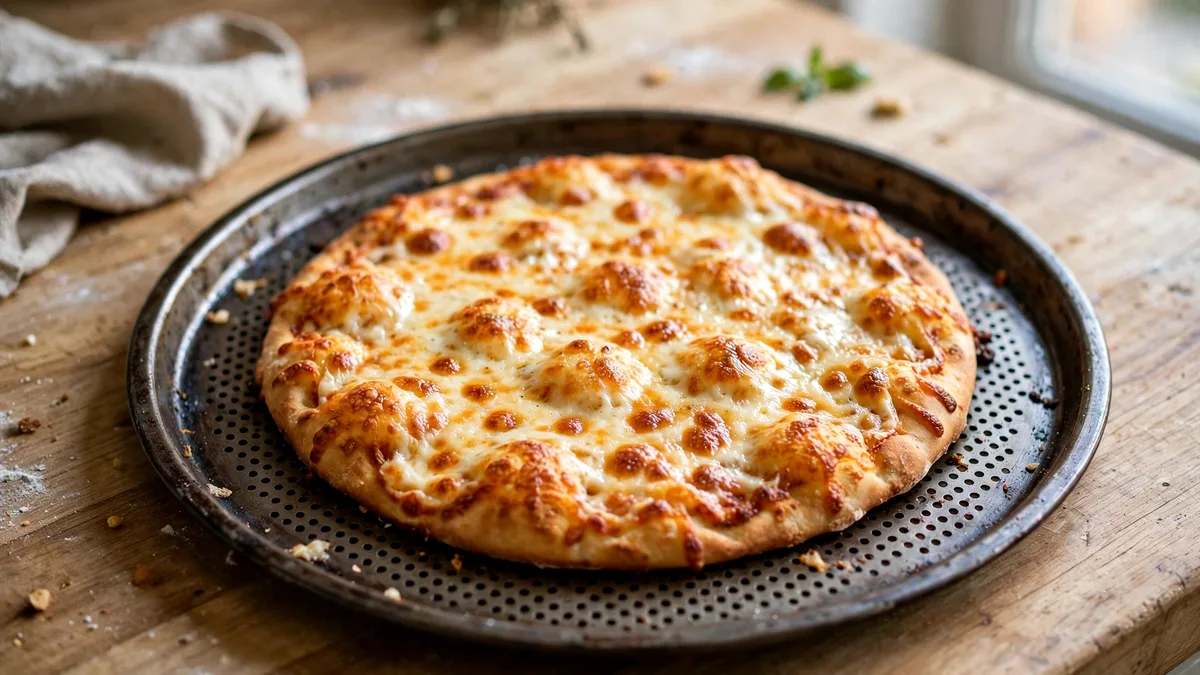
A perforated pan is a flat round pan covered in small holes, and the best first buy for most home bakers. The holes let hot air circulate under the dough and let steam escape instead of pooling under the base, so it crisps evenly from edge to centre, even in an oven that runs cool. It suits thin and medium crusts best, and frozen pizzas too, which benefit most from the extra airflow. The trade-off is mess: cheese can drip through the holes, so put a sheet on the rack below, and dough can stick in the holes if the pan is not oiled.
Solid Non-Stick Pans
A solid non-stick pan is a flat round pan with a coated surface and no holes, and the easiest pan to live with: food releases cleanly, nothing drips through, and cleanup is a quick wipe. Dark coatings absorb more radiant heat, so they brown the base faster, which suits ovens that run cool. The trade-off is the base: with no airflow underneath, the centre can stay soft under a thick dough or heavy toppings. A solid pan suits thin pizzas with light toppings, and it is the best choice for cooks who value easy cleaning over maximum crispness. Avoid metal utensils on the coating, which scratches and then sticks.
Deep-Dish Pans
A deep-dish pan is a round pan with tall straight sides, usually one and a half to two inches high, built for thick pizzas with deep layers of cheese and sauce. The high sides hold the dough up while it rises and keep the filling in place. It needs a longer, slower bake, and suits heavy-gauge metal that holds its shape. The trade-off is that it is a specialist: it bakes deep-dish pizzas beautifully and flat pizzas badly, because the tall sides shield the rim from direct heat. Buy one only if you make thick pizzas regularly.
Cast Iron Pizza Pans
A cast iron pizza pan is a heavy round pan, often with a low rim, that holds heat longer than any other kind. Preheat it and the base starts cooking the moment the dough touches it, giving the darkest, crispiest crust a home oven can produce. It also works on the hob, so you can start a pizza on a burner and finish under the grill. The trade-offs are weight and care: it is heavy, it needs seasoning and drying, and it takes longer to preheat. For the best possible crust, though, nothing else in this guide beats it.
Pizza Pans Compared at a Glance
| Type | Best for | Crispness | Cleaning | Weight |
|---|---|---|---|---|
| Perforated | Thin and medium crusts | Excellent | Harder, holes trap dough | Light |
| Solid non-stick | Easy everyday pizzas | Good | Easiest | Light |
| Deep-dish | Thick, filled pizzas | Good, with a long bake | Moderate | Medium |
| Cast iron | Darkest, crispiest base | Best | Seasoning and drying | Heavy |
Most kitchens end up with two: a perforated pan for everyday thin pizzas and a cast iron or deep-dish pan for weekends. One pan cannot do both jobs, because the qualities that make a pan light and easy to clean are the opposite of the qualities that make it hold heat.
Materials: What the Pan Is Made Of
Material decides how heat moves, and heat movement decides the base. Heavy-gauge aluminium is the best all-round material: it conducts heat quickly and evenly, is light, and does not rust. Look for 18 gauge or thicker, because thin aluminium warps and bakes unevenly. Dark steel browns faster because it absorbs more heat, which suits cool ovens, but it can burn a thin base if the oven runs hot. Stainless steel is the most durable, but it conducts heat slowly, so the base browns unevenly. Cast iron holds heat longest and browns darkest, but it is heavy and needs seasoning. Avoid thin uncoated steel, which rusts when left damp.

Size and Shape: Fitting Your Oven
Size is where most buyers go wrong: the mistake usually runs one way, too big. A 14-inch pan fits most standard ovens with room for air to circulate, and it bakes a pizza big enough for two or three people. A 16-inch pan sounds only slightly larger, but in a small oven it can block airflow, leaving one side pale. A 12-inch pan suits small ovens and single servings. Measure your oven before you buy, and leave an inch of clearance on every side so hot air can move. Round pans suit most pizzas, while rectangular pans use the space better. If you bake for a crowd, two 12-inch pans beat one 16-inch pan, because each pizza gets its own hot surface.
How to Use a Pizza Pan for a Crisp Base
Using a pan well is mostly about heat and timing. Preheat it in the oven for ten minutes before the dough goes on: a hot pan starts cooking the base immediately, while a cold pan steams it. Lightly oil a solid pan or dust it with flour, but do not oil a perforated pan heavily, because the oil drips through. Stretch the dough to the edge of the pan, because a gap lets hot air under the rim and dries it out. Bake on the lowest rack, where the base gets the most direct heat, and lift the edge halfway through: if it is pale, give it a few more minutes. Rest the pizza on the pan for a minute, then slide it onto a board: leaving it in the pan steams the base soft again.
Once the pizza is out, the pan deserves a minute of care. Let it cool before washing, because plunging a hot pan into cold water warps thin metal. Wash a non-stick pan by hand with a soft sponge, never a scouring pad, and dry steel or cast iron fully, because a damp pan rusts. A perforated pan needs a brush to clear dough from the holes. Store pans flat or hanging, not stacked under heavy pots, which bends the rim.

Pizza Pan vs Baking Sheet: The Difference That Matters
A baking sheet and a pizza pan look similar, and in a pinch a sheet will bake a pizza, but they are built for different jobs. A baking sheet is a flat rectangular tray for cookies, roasted vegetables and sheet-pan dinners, and our guide to the best baking sheets covers the ones that brown evenly. A pizza pan is round, sized to the pizza, and shaped to let air reach the base or to hold heat against it. The round shape matters: dough in a round pan bakes evenly, while dough on a rectangular sheet has corners that cook faster than the middle. And no baking sheet has the holes of a perforated pan. If you bake pizza more than once a month, a dedicated pan earns its drawer space quickly.
Before You Buy: A Quick Checklist
- Pick a perforated pan first for thin and medium crusts, and add cast iron or deep-dish for thick pizzas.
- Measure your oven and leave an inch of clearance on every side.
- Choose heavy-gauge aluminium for even browning, dark steel for faster, or cast iron for the darkest.
- Check the pan sits flat with no rocking, because a warped pan bakes unevenly.
- Make sure the rim is smooth and the holes are cleanly punched, with no burrs that tear dough.
- Check the coating or seasoning care the pan needs, and be honest about whether you will do it.
Frequently Asked Questions
Are perforated pizza pans better than solid ones?
For crispness, yes: the holes let hot air reach the base and steam out. For easy cleaning and runny toppings, a solid pan is better: nothing drips through it.
What size pizza pan should I buy first?
A 14-inch pan suits most home ovens. Go to 12 inches for a small oven or single servings, and to 16 inches only if your oven leaves an inch of clearance on every side.
Do I need to preheat a pizza pan?
Yes, for ten minutes in a hot oven. A preheated pan starts cooking the base at once, while a cold pan steams it and leaves it pale.
Can I use a pizza pan on the hob?
Only a cast iron pan, which is built for direct heat. Aluminium and coated pans can warp on a hob, so keep them in the oven.
How do I stop pizza sticking to the pan?
Lightly oil a solid pan or dust it with flour or cornmeal. For a perforated pan, dust rather than oil, because oil drips through the holes. A well-seasoned cast iron pan releases cleanly on its own.
Is a pizza pan better than a pizza stone?
Neither is better in every way. A stone stores more heat and pulls more moisture from the dough, so it gives a slightly crisper base, but it is heavy, can crack, and needs a long preheat. A pan is lighter, cheaper and more forgiving, which makes it the better choice for most home bakers.
The Bottom Line
The best pizza pan matches the pizzas you actually make: a perforated aluminium pan for everyday thin and medium crusts, a deep-dish pan for thick pizzas, and cast iron for the darkest, crispiest base. Measure your oven, preheat the pan, and bake on the lowest rack, and the base will come out crisp. Once the pizza is sliced, our guide to the best pizza cutters covers the tools that cut it cleanly without dragging the toppings.