A podcast lives or dies on its sound, and the microphone is the single biggest upgrade most new podcasters can make. A good podcast microphone makes an ordinary voice sound warm, clear and close, the way the voices on the shows you love actually sound. A bad one makes the same voice sound distant, thin or echoey, and listeners forgive a lot of things but they do not forgive bad audio. The best podcast microphones of 2026 are not the most expensive ones. They are the mics that suit your room, your voice and the way you record, and they make you sound like you know what you are doing from the very first episode.
USB or XLR: The First Decision
USB microphones plug straight into a computer and work immediately, which is why almost every first podcast starts with one. They have the converter and the headphone output built in, so there is nothing else to buy and nothing to learn. The trade is flexibility: you cannot easily run two USB microphones into one computer, and you cannot swap the microphone’s sound with a mixer or a processor later. For a solo podcaster recording alone, that trade barely matters, and a good USB microphone is the right place to start.
XLR microphones plug into an audio interface or a mixer instead of directly into the computer, which adds cost and a learning curve but buys real freedom. You can run several microphones at once for a co-hosted show, you can add processing that shapes the sound before it is recorded, and you can upgrade the interface without replacing the microphone. If you plan to record with a co-host in the same room, or you want a setup that can grow with the show, XLR is the right choice.
What Makes a Podcast Microphone Good
The first thing to judge is the pickup pattern, the shape of the space the microphone listens to. Most podcast microphones are cardioid, which means they hear what is in front of them and reject most of what comes from behind and the sides. That is exactly what you want in an untreated room, because it hears your voice and ignores the fridge, the traffic and the neighbour’s television. Some microphones offer a figure-of-eight pattern, which hears the front and the back equally and suits two people facing each other across one microphone, but it also hears the room, so it needs a quieter space.
The second thing is the sound itself. A good podcast microphone has a gentle presence lift, a small boost in the frequencies that make speech clear and intelligible, without sounding harsh or sibilant. It should handle loud laughs without distorting and quiet asides without disappearing into hiss. The only honest way to judge this is to listen to recordings made with the microphone, ideally of a voice like yours, because a microphone that flatters a deep voice can make a light voice sound thin, and the reverse is just as true.
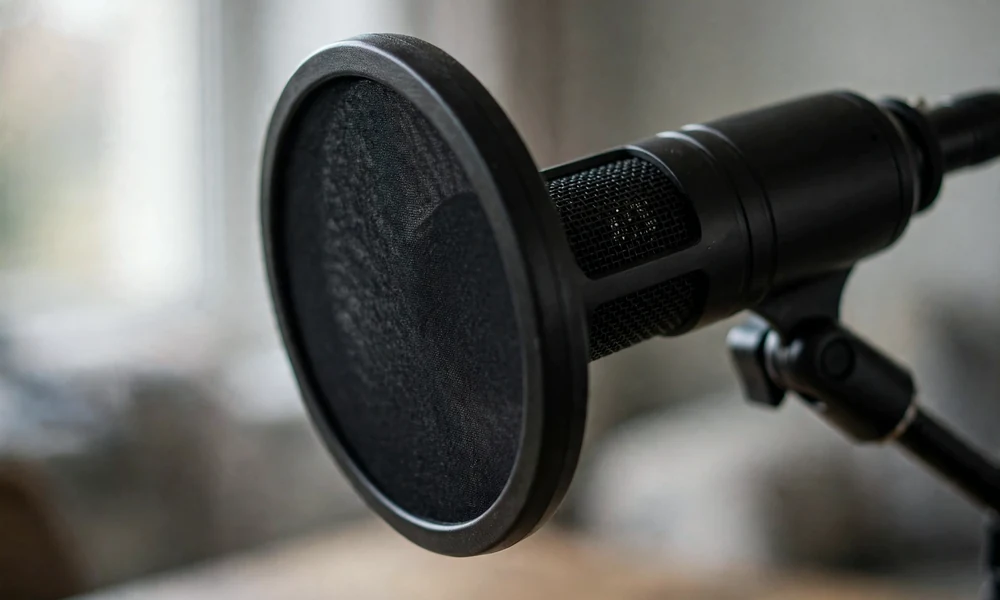
The third thing is handling noise. Every microphone hears the room, and most rooms are noisier than their owners think. A microphone with good off-axis rejection, a built-in shock mount and a pop filter will forgive a lot: the thump of a hand on the desk, the pop of a hard P, the hum of a computer fan. Before you buy a better microphone, try recording in the quietest room in the house with soft furnishings around you, because the room is half the sound, and no microphone can fix a bad one.
Setting Up Your First Recording Space
You do not need a studio to sound good, but you do need to tame the room. Hard surfaces bounce sound around, which is what makes a recording echoey, so start with the softest room in the house: a bedroom with curtains, a carpet and a wardrobe full of clothes beats a bare kitchen every time. Close the curtains, shut the door, and put a folded towel under the door if sound leaks through. A rug on a hard floor and a cushion behind the microphone will do more for your sound than a more expensive microphone in a bad room.
Position matters as much as treatment. Sit close to the microphone, about a fist’s width away, and speak across it rather than directly into it, which softens the hard pops on P and B sounds. Keep the microphone off the desk on a boom arm if you can, because every tap, bump and keyboard click travels through a desk and into the recording. Turn off anything that hums or whirs before you press record: the fan, the air conditioning, the washing machine next door.
The Best Podcast Microphones of 2026 at a Glance
Six microphones stood out in 2026. The best overall is a USB microphone with a warm, broadcast sound, a built-in headphone output with zero-latency monitoring, and a touch mute that works without a second thought. The best budget pick costs about half as much and keeps the essentials: a clear voice, a sturdy stand and a forgiving pickup pattern. The best XLR pick is a classic broadcast microphone with a rich, deep sound that has carried a thousand radio shows, and it rewards a treated room.
The best for two hosts is a pair of dynamic microphones with tight pickup patterns that reject each other’s voices, which is the hardest problem in a shared room. The best portable pick is a compact USB microphone that fits in a bag and sounds good in a hotel room. The best premium pick is a large-diaphragm condenser with a detailed, open sound that suits a quiet studio and a careful host. Your listeners will hear you through headphones as often as speakers, and our guide to the best headphones of 2026 covers the pairs that let you hear exactly what your microphone is doing.
Best Overall: The USB All-Rounder
The best overall podcast microphone of 2026 is a USB microphone that makes a first show sound like a tenth show. Its voice is warm without being muddy, with enough presence to cut through background noise and enough body to sound like a real person rather than a telephone. The built-in headphone output lets you hear yourself with no delay, which is the fastest way to learn good microphone technique, because you can hear when you drift off-axis or pop a P and correct it in the moment.
What sets it apart is how forgiving it is. It sounds good close up and a little further back, it handles a loud laugh without clipping, and its shock mount and pop filter deal with the thumps and pops that ruin otherwise good takes. It works the moment you plug it in, with no drivers and no software required, and it is sturdy enough to survive being knocked off a desk.
Best Budget and Best XLR
The best budget podcast microphone proves that a good voice does not need a big budget. Its sound is clean and clear, with a sensible cardioid pattern and a built-in pop filter, and it comes with a desk stand that is actually usable rather than decorative. The compromises are honest: the headphone output is basic, the body is light plastic rather than metal, and it is less forgiving of a noisy room than the premium picks. For a first show, or a second microphone for a guest, those are fair trades, and the money saved buys a better room treatment, which matters more.
The best XLR pick is a broadcast dynamic microphone with a sound that has defined radio for decades: deep, warm and authoritative, with a presence that makes a voice feel close even through small speakers. It needs a good interface with plenty of clean gain, because it is a quiet microphone, and it rewards a treated room and a pop filter. Paired with a decent interface, it is the closest thing to a radio studio most podcasters will ever own, and it is the microphone to buy when the show has found its audience and deserves to sound like it. If you record video as well as audio, our guide to the best webcams of 2026 covers the cameras that match these microphones for a show that looks as good as it sounds.
Best for Two Hosts and Best Portable
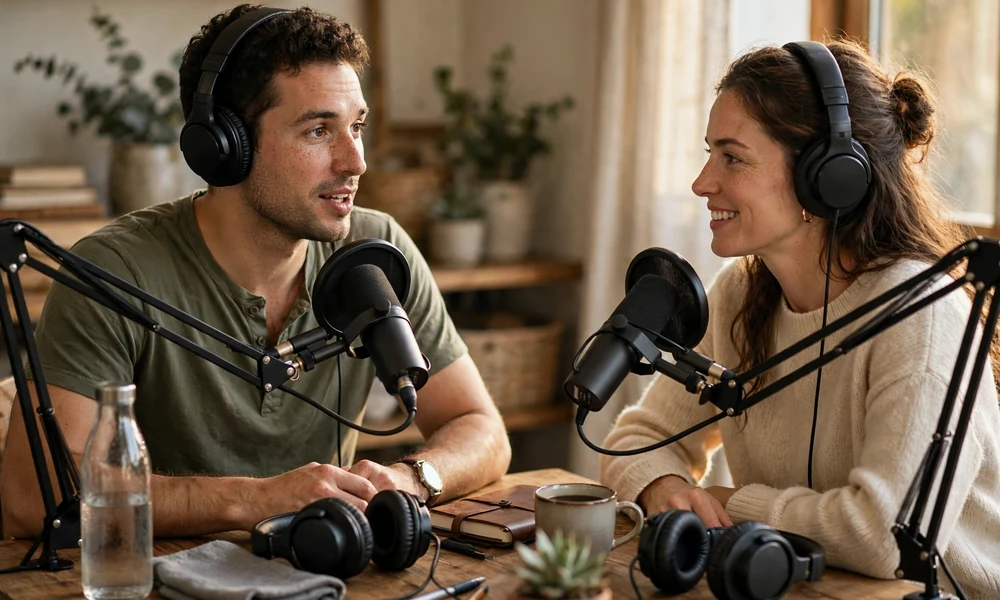
Recording two people in one room is the hardest setup in podcasting, because each microphone hears the other person as well as its own. The best setup for two hosts is a pair of dynamic microphones with tight cardioid patterns, each on its own boom arm, with the hosts sitting close to their own microphone and as far apart as the room allows. Record each microphone to its own track, because that is the only way to fix one person’s cough without cutting the other person’s sentence. It takes more gear and more patience, but it is the difference between a show that sounds professional and one that sounds like a phone call on speaker.
The best portable pick is a compact USB microphone that fits in a jacket pocket and still sounds like a real podcast microphone. It suits a host who records in hotel rooms, at conferences, or in a guest’s living room, and its forgiving pickup pattern means it copes with rooms you have never seen before. Pair it with a small foldable stand and a pair of wired earbuds for monitoring, and you have a studio that fits in a bag. It will not match a studio microphone in a treated room, but it will beat a laptop microphone or a phone recording every single time, and that gap is what listeners notice.
What to Avoid
The most common mistake is buying a condenser microphone for an untreated room. Condensers hear everything, which is wonderful in a studio and miserable in a kitchen, because they will faithfully record the fridge, the boiler and the street outside. In a normal room, a dynamic microphone is almost always the better choice. The second mistake is recording too far from the microphone: most podcast microphones want you about a fist’s width away, and doubling that distance halves the voice and doubles the room.
A third mistake is skipping the monitoring. If you cannot hear yourself while you record, you cannot hear when you drift, pop or clip, and you will only discover it in the edit. A fourth is buying a microphone without a way to hold it: a boom arm or a solid stand is not an accessory, it is part of the microphone, because a mic that wobbles or picks up desk vibrations will ruin takes no matter how good it sounds.

The Verdict
For most podcasters, the USB all-rounder is the right buy: warm, forgiving, simple to use, and good enough that the microphone never becomes the reason an episode sounds bad. Solo hosts on a budget should take the budget pick and spend the saving on the room. Co-hosted shows belong to the XLR pick and a proper interface. Our guide to the best microphones of 2026 covers the wider microphone world these podcast picks sit within. Whichever you choose, get close to the microphone, wear headphones while you record, and treat the room before you upgrade the mic. The best podcast microphone is the one that lets your voice do the work.