Top Pool Filters That Keep the Water Clear All Season in 2026
Pool filters are the part of a swimming pool that decides whether the water looks inviting or murky. A pool without a working filter goes cloudy within days: sunscreen, sweat, leaves, dust and dead algae all stay in the water, and the pool turns green. A good filter traps all of that, so the water stays clear and the chemicals actually do their job. Pick the wrong type or size and you clean it constantly, backwash away your chemicals, or watch fine dust pass straight through. This guide explains the three kinds, how to size one, and how to keep it working in 2026.
Key Takeaways
- A pool filter cleans the water; the pump moves it, the skimmer clears the surface, and the vacuum cleans the floor.
- Sand filters are the simplest and cheapest to run; cartridge filters catch finer dirt and waste no water; DE filters catch the finest dirt but need the most care.
- Size the filter to your pump’s flow rate: a filter too small for the pump pushes dirt straight through.
- The pressure gauge is the filter’s voice: a rising reading means it is full of dirt and needs cleaning.
- A filter only works if the pump runs long enough each day to turn the whole pool over through it at least once.
What a Pool Filter Actually Does
A pool filter traps the dirt your pump pushes through it. Water leaves the pool through the skimmer and the main drain, passes through the pump’s strainer basket, and enters the filter, where it flows through sand, pleated fabric, or a fine powder coating. The dirt stays in the filter media and the clean water returns to the pool through the jets. That is the filter’s only job. The pump moves the water, the skimmer clears the surface, the vacuum cleans the floor, and the filter cleans the water itself. A new pump will not clear cloudy water, and a vacuum cannot catch the fine dust that stays suspended in the water.
The filter also decides how well your chemicals work. Chlorine kills germs, but it cannot make dirt disappear: dead algae, body oils and fine dust stay in the water until the filter traps them. A dirty or undersized filter leaves that debris circulating, so a pool can smell of chlorine and still look cloudy. Our guide to the best pool pumps explains the flow side of the system. A filter that cannot handle your pump’s flow will channel, pushing dirty water straight through the media and back into the pool.
The Main Types of Pool Filter
There are three kinds, differing mainly in what traps the dirt and how fine a particle they can catch. Pick the media first, then the size.
Sand Filters
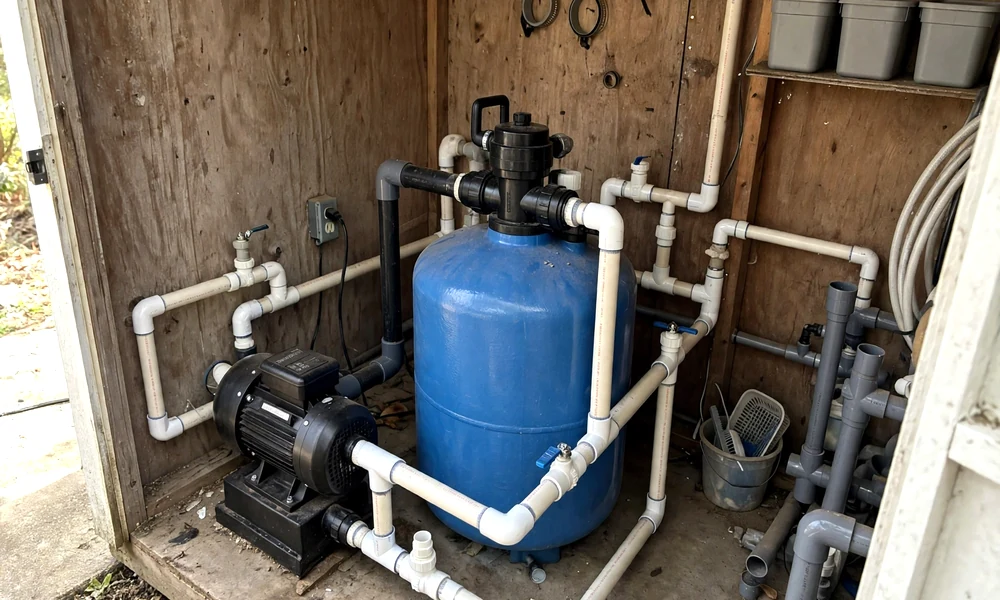
A sand filter is a large tank filled with specially graded sand. Water enters at the top and trickles down through the sand bed; the grains trap dirt as the water passes, and clean water leaves from the bottom. Sand filters are the simplest type to own: they catch particles down to about 20 to 40 microns, covering most visible dirt, and last for years with almost no attention. Cleaning one means backwashing: reversing the flow to flush the trapped dirt out to waste, which takes a few minutes. The trade-offs are water waste, since every backwash sends pool water down the drain, and fineness: the smallest dust passes through sand, so a sand-filtered pool can look slightly hazy after a dust storm. Sand needs replacing every five to seven years, as the grains wear smooth.
Cartridge Filters
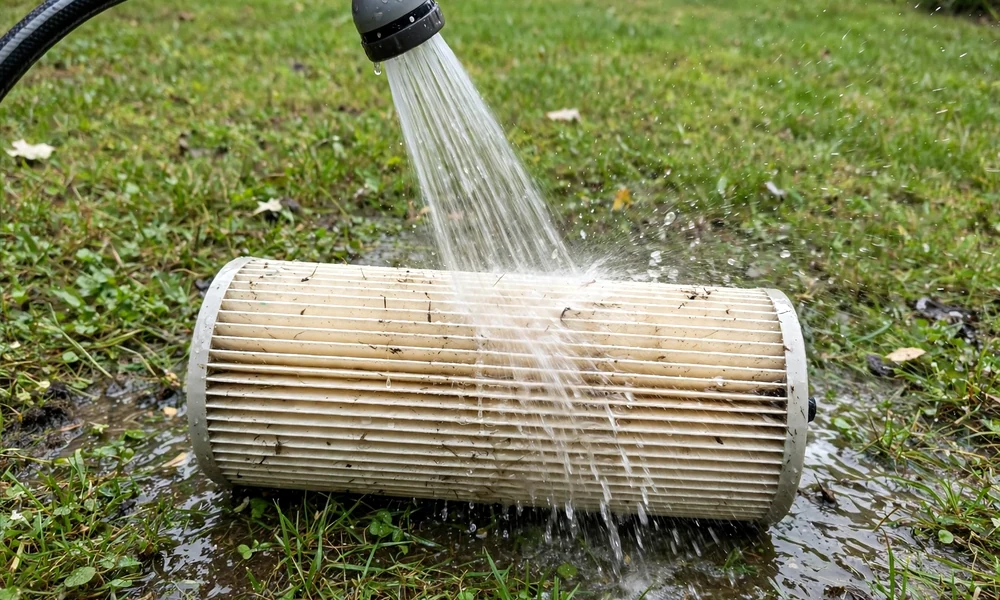
A cartridge filter is a tank holding one or more pleated fabric cylinders. Water flows through the pleats, which trap dirt down to about 10 to 15 microns, finer than sand. Cartridge filters waste no water at all, because cleaning one means lifting the cartridge out and hosing it down on the lawn. They also run at lower pressure, so the pump uses less electricity. The trade-offs are effort and replacement cost: hosing a large cartridge takes twenty minutes and a strong spray, and cartridges need replacing every two to three years.
DE Filters
A DE filter, short for diatomaceous earth, coats fabric grids with a fine white powder made from fossilised algae. Water passes through the powder layer, which traps particles down to about 3 to 5 microns, finer than sand or cartridge. DE filters suit owners who want the clearest possible water, and pools that struggle with fine dust. The trade-offs are care and cost: after every backwash the powder must be recharged, the grids need a full clean at least once a season, and DE powder must be handled and disposed of carefully. DE filters cost the most to buy and maintain, but no other filter catches dirt as fine.
Pool Filters Compared
| Filter type | Best for | Traps down to | Cleaning | Water wasted |
|---|---|---|---|---|
| Sand | Simple, low-effort ownership | 20–40 microns | Backwash | Yes |
| Cartridge | Clear water, no water waste | 10–15 microns | Hose down | None |
| DE | The clearest possible water | 3–5 microns | Backwash + recharge | Yes |
How to Size a Pool Filter
Sizing starts with your pump, not your pool. A filter is rated for a maximum flow rate, and your pump must not push water through it faster than that rating: if it does, the water channels through the media, dirt passes straight through, and the filter wears out early. Check your pump’s flow rate and choose a filter rated comfortably above it. A slightly oversized filter is the best buy: it filters more gently, holds more dirt, and lasts longer. An undersized filter clogs constantly and never really cleans the water.
Pool volume matters too, because it decides how long the pump must run: the whole pool should turn over through the filter at least once a day, and twice a day in warm weather. Work out your pool volume in litres, divide it by the hours you plan to run the pump, and you have the flow rate you need: a pool of forty-eight thousand litres run for eight hours needs about one hundred litres a minute. If that flow exceeds your filter’s rating, you need a bigger filter or longer run times, not a stronger pump. Remember that a dirty filter slows the flow, so size with headroom.

What to Look For Before You Buy
Filter area is the first number to check. A bigger area, whether more sand, more pleats, or more grids, holds more dirt and needs cleaning less often. Two filters of the same type can have very different areas, and the larger one is almost always the better buy, because it saves you cleaning sessions all season. Check the tank material next. Fibreglass tanks resist corrosion and last for decades; plastic tanks are lighter and cheaper but can crack in freezing weather if water is left inside over winter.
The pressure gauge is the filter’s most useful feature, so do not buy a filter without one. Note the clean pressure when the filter is new or freshly cleaned, then clean it when the reading rises by about 8 to 10 psi. A multiport valve makes life easier on sand and DE filters, giving you filter, backwash, rinse, waste and closed settings in one handle. On a cartridge filter, look for a tank that opens easily: a lid with a single clamp ring beats a ring of small bolts.
Cleaning and Maintenance
Cleaning a sand or DE filter means backwashing. Turn the pump off, set the valve to backwash, run the pump for two to three minutes until the sight glass runs clear, then rinse for thirty seconds. Backwash when the gauge rises 8 to 10 psi above its clean reading, not on a calendar: a slightly dirty filter actually filters finer than a brand-new one, because the trapped dirt catches smaller particles. Backwashing too often wastes water and chemicals. After a DE backwash, always recharge the powder through the skimmer, following the maker’s dose.
Cleaning a cartridge filter means hosing it down. Lift the cartridge out, stand it on the lawn, and spray between every pleat until the water runs clear. Never use a pressure washer: it tears the fabric. Soak a badly stained cartridge overnight in filter-cleaning solution once a season, and replace it when the pleats stay grey after cleaning. Whatever type you own, check the pump’s strainer basket weekly, because a full basket starves the filter of flow, and never let the filter freeze with water inside it: drain it before winter.
Pool Filter Checklist
- Check your pump’s flow rate first, and choose a filter rated comfortably above it.
- Pick the media for your priorities: sand for simplicity, cartridge for clear water with no waste, DE for the clearest.
- Buy a bigger filter area than you think you need: it holds more dirt and needs cleaning less often.
- Note the clean pressure on the gauge when the filter is new, and clean it when the reading rises 8 to 10 psi.
- Run the pump long enough each day to turn the whole pool over through the filter at least once.
- Drain the filter before winter so trapped water cannot freeze and crack the tank.
Pool Filter FAQs
How often should I clean my pool filter?
When the pressure gauge rises 8 to 10 psi above its clean reading, not on a fixed schedule. A sand or DE filter usually needs backwashing every few weeks in season, and a cartridge filter needs hosing just as often. A pool under trees or used heavily needs cleaning more often.
Can a pool filter be too big?
Almost never. A bigger filter holds more dirt, needs cleaning less often, and filters more gently, which catches finer particles. The only real costs are the higher price and the larger space it takes. If you are choosing between two sizes, take the larger one.
Why is my pool still cloudy with a clean filter?
Usually the chemistry, not the filter. Check the chlorine and pH first: cloudy water with low chlorine is an algae bloom starting, and no filter removes live algae faster than it grows. Shock the pool, balance the pH, and let the filter run for a full day. If the water stays cloudy, the filter media may be worn and need replacing.
Sand, cartridge or DE: which is best?
There is no single best. Sand is the simplest and cheapest to own. Cartridge gives clearer water and wastes no water. DE gives the clearest water of all but needs the most care. Choose by how much maintenance you will actually do.
How long does a pool filter last?
The tank lasts for decades if it never freezes with water inside. The media wears out sooner: sand every five to seven years, cartridges every two to three years, DE grids every five to eight years. A filter that no longer clears the water after cleaning has worn media.
Do I need a filter if I have a skimmer and a vacuum?
Yes. The skimmer clears the surface and the vacuum cleans the floor, but neither touches the fine dirt suspended in the water itself. Only the filter removes that. Our guide to pool skimmers covers the surface half, and our guide to the best pool vacuums covers the floor.
The Bottom Line
The best pool filter matches your pump and your patience. If you want the simplest ownership, buy a sand filter rated above your pump’s flow and backwash it when the gauge rises. If you want clearer water and no wasted water, buy a cartridge filter and hose it down a few times a season. If you want the clearest water possible and will do the upkeep, buy a DE filter and recharge it after every backwash. Whatever you buy, size it generously, watch the gauge, and run the pump long enough each day to turn the pool over.