
Pool Pumps That Keep the Water Moving Without the Noise in 2026
Pool pumps are the part of a swimming pool you never look at and notice the moment it stops. A pool pump moves the water: it pulls water out of the pool, pushes it through the filter and the heater, and sends it back clean and warm. Without that constant circulation, the water goes still, the chemicals stop spreading evenly, and algae takes hold within days. The best pool pumps do this job quietly and cheaply for years, and the worst ones hum loudly, cost a fortune to run and burn out after two summers. Here is how to pick the right one in 2026.
Confusing the pump with the filter or the heater is the most common buying mistake. The pump moves the water, the filter cleans it, and the heater warms it. A new filter will not fix a weak pump, and a powerful heater is wasted if the pump cannot push enough water through it. Choose the pump first, then match the filter and heater to the flow it delivers.
Key Takeaways
- A pool pump moves the water; a filter cleans it and a heater warms it. Three components, three different jobs.
- Match the pump to your pool volume: the whole pool should turn over through the filter at least once a day, and twice a day in warm weather.
- Variable-speed pumps cost more up front but use far less electricity than single-speed pumps.
- A clear strainer basket lid you can check at a glance saves more pump repairs than any other single feature.
- An oversized pump is not a better pump: too much flow pushes dirt through the filter and wastes power.
What a Pool Pump Actually Does
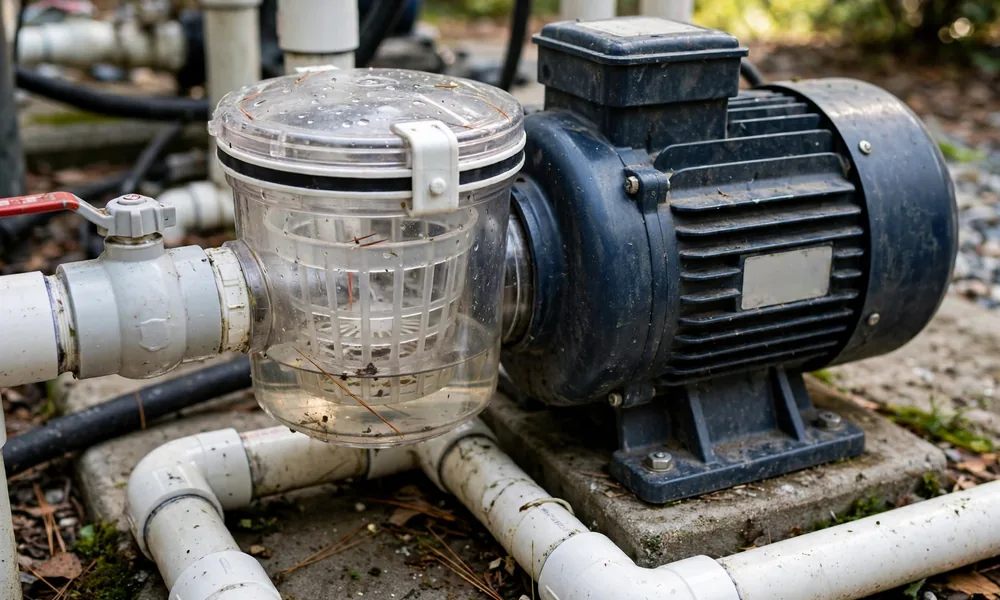
A pool pump is a motor with an impeller, a spinning fan that pushes water through the pipes. It draws water from the pool through the skimmer and the main drain, pulls it through a strainer basket that catches leaves and hair, and pushes it onward to the filter. After the filter and heater, it returns through the jets. The pump is the only part that makes any of that happen.
The skimmer and the pump work as a team. The skimmer catches floating debris at the surface before it sinks, and the pump pulls the water through it all day. Our guide to the best pool skimmers explains the surface-versus-floor split; the pump is the suction behind the skimmer basket and the flow behind the return jets. If the pump is weak, the skimmer barely pulls, the jets barely push, and the far end of the pool goes still.
Pool pumps are rated by horsepower and by flow rate, and the flow rate is the number that matters. Horsepower tells you how strong the motor is; flow rate, in litres or gallons per minute, tells you how much water actually moves. Two pumps with the same horsepower can move very different amounts of water, because the impeller and the pipework matter as much as the motor. Compare flow rates at the same head height.
The Main Types of Pool Pump
Single-Speed Pumps
A single-speed pump runs at one speed: full power, all the time. It is the cheapest pump to buy and the most expensive to run, because a pool rarely needs full flow for eight hours a day. Single-speed pumps suit small pools with simple pipework and owners who run the pump for short spells, but on a medium or large pool they waste electricity every hour they are on.
Dual-Speed Pumps
A dual-speed pump has two settings: full power for cleaning and backwashing, and a low speed for everyday circulation. The low speed moves roughly half the water for about a quarter of the power, which is a big saving over a season. They are a sensible middle step if your budget will not stretch to a variable-speed pump.
Variable-Speed Pumps
A variable-speed pump lets you set the exact speed for each job: a slow trickle overnight, a medium flow during the day, and a short burst at full power when you vacuum or backwash. Running at half speed for twice as long uses far less electricity than running at full speed for half the time. Variable-speed pumps are the quietest type too, since most of their day is spent at a gentle hum. They cost the most up front, but on a pool that runs daily they usually pay for themselves within two or three seasons.
Above-Ground Pool Pumps
Above-ground pools use smaller, lighter pumps, often sold as a set with a filter. They move less water and run at lower pressure, which matches the thinner walls and simpler pipework of an above-ground pool. Do not fit a full in-ground pump to one: the extra pressure can strain the liner, and the power is wasted.
Pool Pumps Compared
| Pump type | Best for | Running cost | Noise | Price |
|---|---|---|---|---|
| Single-speed | Small pools, short run times | High | Loudest | Low |
| Dual-speed | Medium pools, budget upgrade | Medium | Moderate | Mid-range |
| Variable-speed | Daily use, larger pools | Low | Quietest | Premium |
| Above-ground | Above-ground pools only | Low | Moderate | Low |
How to Size a Pool Pump
Sizing a pool pump starts with the volume of your pool. Work out the volume in litres: length times width times average depth, in metres, times one thousand. A pool eight metres long, four metres wide and one and a half metres deep on average holds about forty-eight thousand litres. That volume must pass through the filter at least once a day, twice when the water is warm.
Divide the volume by the hours you plan to run the pump. If you run it for eight hours, our forty-eight-thousand-litre pool needs a flow of about one hundred litres a minute. A little headroom helps, because pipes, bends and a dirty filter all slow the flow. But do not go far above it. A pump that pushes twice the water you need will force dirt through the filter media instead of trapping it, stir up fine debris, and cost twice as much to run for no cleaner water.
Head height is the other half of sizing. Head is the resistance the pump works against: the height the water must climb, the length of the pipes, and every bend, valve and fitting along the way. A pump far from the pool, or uphill from it, needs more power for the same flow. If your equipment pad is far from the pool, size up slightly or shorten the pipe run.
What to Look For Before You Buy
A Clear Strainer Basket Lid
The strainer basket is the pump’s first line of defence, catching leaves, hair and grit before they reach the impeller. A clear lid lets you see when it is full without opening it, and a basket that lifts out easily gets emptied often. A basket left full starves the pump, makes it run hot, and shortens its life.
Noise Level
Pumps sit near patios and bedrooms, and a loud one ruins a quiet evening. Variable-speed pumps are quietest because they spend most of the day at low speed. Place the pump on a solid concrete pad rather than a hollow deck, which acts like a drum. A pump that hums loudly from new usually has a cheap motor, not a fault.
Unions and Easy Servicing
Unions are the screw fittings that let you disconnect the pump from the pipes without cutting anything. With unions on both sides it comes off in minutes; glued straight in, every repair needs a saw and a plumber.
Energy and Running Cost
Look for the pump’s power draw in watts at the speed you will actually use, not just the headline horsepower. A variable-speed pump running at low speed for ten hours can use less electricity than a single-speed pump running at full power for four.

The Pool Pump Checklist
- Work out your pool volume and the flow rate you need before you look at any pump.
- Choose variable-speed if the pump runs daily; dual-speed if the budget is tight.
- Check the strainer basket is large, easy to lift out, and visible through a clear lid.
- Make sure the pump has unions on both sides so it can be removed without cutting pipes.
- Put the pump on a solid, level pad close to the pool, with short, straight pipe runs.
- Empty the strainer basket weekly, and daily in autumn when leaves are falling.
Common Mistakes With Pool Pumps
Buying on Horsepower Alone
Horsepower is the least useful number on the box. A one-horsepower pump with a well-designed impeller can out-flow a poorly built one-and-a-half-horsepower pump, and the bigger motor costs more to run every hour. Compare flow rates at the same head.
Running the Pump Too Little
A pump that runs for two hours a day cannot circulate a whole pool, however powerful it is. The water at the far end goes still, the chemicals do not spread, and algae starts in the corners. Run it long enough to turn the pool over at least once a day.
Forgetting the Rest of the System
A pump does not clean a pool on its own. It moves water to the filter, and the filter does the cleaning; a robotic cleaner does the floor. Our guide to the best robotic pool cleaners covers the machines that scrub the floor and walls, which is a job no pump can do.
Ignoring the Pond Pump Comparison
Garden pond pumps look similar and cost less, which tempts some owners to fit one to a pool. Do not. A pond pump is built for low pressure and gentle flow through a wildlife filter, while a pool pump must push water through a sand or cartridge filter, a heater and long pipe runs at much higher pressure. Our guide to the best pond pumps explains the difference: same idea, very different machine.

Frequently Asked Questions
How long should a pool pump run each day?
Long enough to turn the whole pool volume over through the filter at least once, which usually means six to eight hours in summer and four to six in cooler weather. Split the run into two or three blocks across the day rather than one long stretch.
Is a variable-speed pump worth the extra money?
For a pool that runs daily, yes: the electricity saving is large and the pump is much quieter. On a small pool that runs for short spells, a dual-speed pump is better value.
Can a pool pump be too powerful?
Yes. Too much flow pushes dirt through the filter instead of trapping it, clouds the water, and wastes electricity. Size the pump to the pool volume and the pipework, not to the biggest motor you can afford.
Why is my pool pump so loud?
Usually a worn bearing, a clogged strainer basket, or air leaking into the suction side. Check the basket and lid seal first; a pump that has always been loud probably has a cheap motor.
How often should I empty the strainer basket?
At least once a week, daily in autumn or after a storm. A full basket makes the pump work harder and run hotter.
Do I need a pump if I have a robotic pool cleaner?
Yes. A robot scrubs the floor and walls but does not circulate the water or feed the filter. The pump does the circulation; the robot does the scrubbing. You need both.
The Bottom Line
Buy the pump your pool volume actually needs, not the biggest motor on the shelf. A variable-speed pump is the best choice for most pools that run daily: gentle most of the time, far cheaper to run, and quiet. Check the strainer basket, fit unions on both sides, and give the pump a solid pad close to the pool. Get those right and the pump will do its job for years.


