
Best Pool Heaters That Warm the Water Without Wasting Money in 2026
Pool heaters are the difference between a pool you swim in all season and a pool you look at through the window. Without one, a pool warms up when the sun feels like it and cools down the first cloudy week. A good heater brings the water up to a comfortable temperature and holds it there. The catch is that heaters are the most expensive part of pool ownership to run badly. Pick the wrong type or size and you pay for it every month. This guide explains the four kinds, how to size one, and what each really costs to run in 2026.
Key Takeaways
- A pool heater makes new heat; a cover only keeps the heat you already have. They work best together.
- Gas heaters warm a pool fast for weekend swimmers; heat pumps warm it slowly and cheaply for all-season swimmers.
- Size the heater to your pool volume and your climate: an undersized heater runs constantly and never reaches temperature.
- Solar heating costs almost nothing to run but only works when the sun shines, so it is a top-up, not a guarantee.
- Match the heater to your pump’s flow rate, or the water never heats evenly.
What a Pool Heater Actually Does
A pool heater adds heat to water that is already circulating. Your pump pulls water out of the pool, pushes it through the filter and the heater, and sends it back warm through the jets. The heater does one job: raise the temperature of the water passing through it by a few degrees on each pass. The pump moves the water, the filter cleans it, and the heater warms it.
That is also why a heater without a cover wastes money. An uncovered pool loses most of its heat from the surface overnight, through evaporation, so a heater working alone warms water all day and loses much of it by morning. Our guide to pool covers vs pool heaters compares the two head to head, and its conclusion holds here too: fit a cover first, then add the heater, so the heat it makes is kept and the heater runs fewer hours.
The Main Types of Pool Heater
There are four kinds, differing mainly in where the heat comes from and how fast they deliver it. Pick the heat source first, then the size.
Gas Heaters
A gas heater burns natural gas or propane and passes pool water through a heat exchanger above the flame. It is the fastest way to warm a pool: a properly sized gas heater can raise a medium pool by a degree or two per hour. That speed suits weekend swimmers and holiday lets, where the pool sits cold all week. The price is running cost. Gas is the most expensive fuel per degree of heat, and a gas heater left running all season costs several times what a heat pump costs. Gas heaters are also the noisiest type and need a gas supply, a flue, and annual servicing.
Electric Heat Pumps
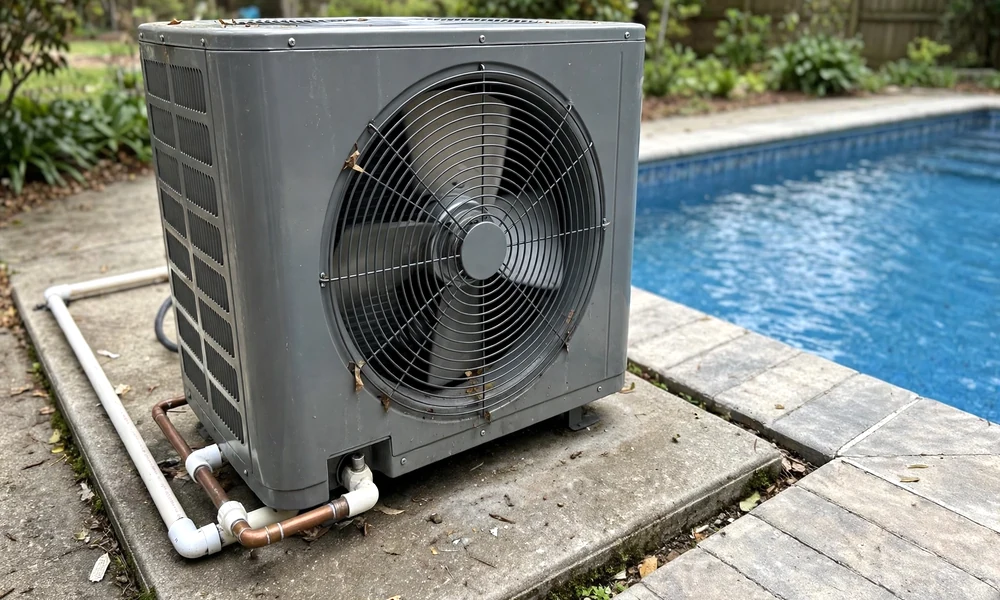
A heat pump does not make heat; it moves it. A fan draws in outside air, a compressor concentrates the warmth in that air, and the heat is passed into the pool water. Because it moves heat rather than creating it, a heat pump delivers three to five times as much warmth as the electricity it uses. The trade-off is speed: a heat pump warms a pool slowly, often taking a day or two to bring a cold pool up to temperature, and it works best when the air is warm. Heat pumps suit owners who swim often and keep the pool warm all season. They are quiet and need only an electricity supply.
Solar Heaters
A solar heater is a set of black mats or panels, usually on a roof or a sunny lawn, through which pool water is pumped. The sun warms the water as it passes through, and the water returns to the pool a few degrees warmer. Solar heating costs almost nothing to run: the only electricity is the pump you already have. Its weakness is the weather. Solar heating only works when the sun shines, so a cloudy week leaves the pool cold. Treat solar as a free top-up, not a guarantee of warm water on a specific day.
Electric Resistance Heaters
An electric resistance heater passes water over a heating element, like a giant kettle element, and warms it directly. It is simple, compact, cheap to buy, and needs only an electricity supply, which makes it popular for small above-ground pools and spas. It is also the most expensive heater to run for a large pool: every unit of heat costs a full unit of electricity, with no multiplier the way a heat pump has. For a small pool or a hot tub that is acceptable; for a full-size in-ground pool, resistance heating is rarely the right choice.
Pool Heaters Compared
| Heater type | Best for | Warm-up speed | Running cost | Up-front cost |
|---|---|---|---|---|
| Gas | Weekend swimmers, on-demand heat | Fast | High | Mid-range |
| Heat pump | All-season swimmers | Slow | Low | Mid-range |
| Solar | Sunny climates, free top-up heat | Slow | Almost nothing | Low to mid-range |
| Electric resistance | Small pools and spas | Medium | Very high | Low |
How to Size a Pool Heater
Sizing starts with pool volume in litres: length times width times average depth, in metres, times one thousand. A pool eight metres long, four metres wide and one and a half metres deep on average holds about forty-eight thousand litres. A heater’s output, in kilowatts or BTUs, tells you how fast it can warm that volume. As a rough guide, a heat pump of about 10 to 14 kilowatts suits a pool of forty to fifty thousand litres in a mild climate, while the same pool in a cooler climate needs a bigger unit.
Climate matters as much as volume: a pool in a warm region needs far less heater than the same pool somewhere cooler. A heat pump in particular loses output as the air cools, so size it for the coldest month you plan to swim in, not the warmest. An undersized heater is the worst buy: it runs constantly, never reaches the temperature you set, and still costs you the full running cost. A slightly oversized heater costs more up front but reaches temperature faster and then idles. Flow rate matters too: too little flow and the heater overheats; too much and the water passes through before it can pick up heat. Our guide to the best pool pumps explains how to match flow to pool volume.

What to Look For Before You Buy
Efficiency is the first number to check. For a heat pump, look for the COP, the coefficient of performance: a COP of 5 means the unit delivers five units of heat for every unit of electricity. For gas, look for the efficiency rating: a modern condensing heater wastes far less heat up the flue than an older model. Check the heat exchanger material too: titanium resists salt water and chemicals far better than copper, which matters for a salt-chlorinated pool.
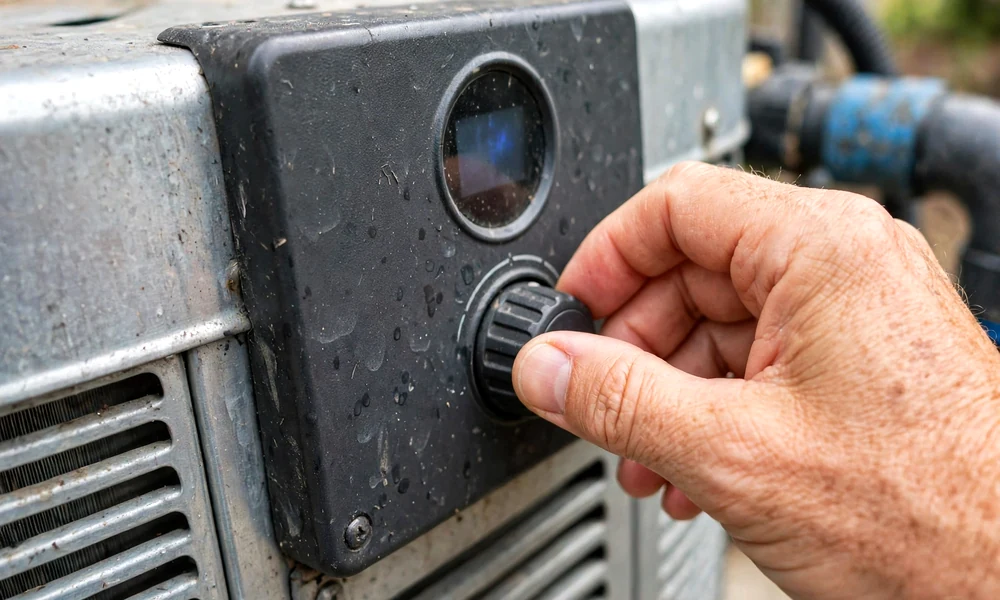
Controls come next. A digital thermostat with a timer lets you heat the pool for the hours you swim and leave it cooler overnight, which is where the real savings are. Wi-Fi control is a bonus, useful for a holiday home: start the heater the day before you arrive. Heat pumps hum quietly; gas heaters roar when they fire. Finally, check the warranty and the service network. A good heat pump lasts ten years or more, a gas heater seven to ten. A five-year warranty on the heat exchanger and compressor beats a discount on a unit with a one-year warranty and no local engineer.
Running Costs: What a Heater Really Costs to Run
Work the running cost out before you buy, not after the first bill. A heat pump on a medium pool, running through a mild season with a cover on at night, typically costs the least, because its COP multiplies every unit of electricity. A gas heater on the same pool costs several times as much if it runs the same hours, which is why gas owners learn to heat only for the days they swim. Solar costs almost nothing beyond the pump but delivers nothing on a cloudy week, and an electric resistance heater on a large pool is the most expensive option of all.
Three habits cut the bill whatever heater you own. First, keep a cover on whenever the pool is not in use: evaporation is the biggest heat loss. Second, heat to the lowest temperature you enjoy: every extra degree costs more than the last. Third, heat for the hours you swim, not around the clock: a timer is far cheaper than holding a constant temperature all week.
Pool Heater Checklist
- Measure your pool volume before you shop, and size the heater to the coldest month you plan to swim in.
- Decide the heat source first: gas for fast on-demand heat, heat pump for cheap all-season warmth, solar for a free top-up.
- Check the heater’s flow-rate range against your pump.
- Fit a cover alongside the heater, or the heat it makes will escape overnight.
- Look for a titanium heat exchanger if you run a salt-chlorinated pool.
- Confirm a local engineer can service the model and the warranty covers the heat exchanger for five years.
Pool Heater FAQs
How long does a pool heater take to warm a pool?
A gas heater can raise a medium pool by a degree or two per hour, so a cold pool may be swimmable the same day. A heat pump takes a day or two from cold, and solar takes several sunny days. A cover helps all of them, because the heat they add is not escaping at the same time.
Is a heat pump better than a gas heater?
For all-season swimming, yes: a heat pump costs far less to run over a season. For occasional weekend swimming, gas is often better, because it warms the pool on demand and sits idle the rest of the week.
Can solar heating warm a pool on its own?
In a sunny climate, often yes, for most of the season. In a cooler or cloudier climate, solar is a top-up rather than a guarantee: it stretches the season by weeks but cannot promise warm water on a specific cloudy day.
What temperature should a pool be?
Most swimmers find 26 to 28 degrees comfortable for general swimming, and 29 to 30 degrees for children. Every degree above 28 costs noticeably more to hold.
Does a pool heater work with an above-ground pool?
Yes. Above-ground pools usually suit smaller heaters: a compact heat pump or an electric resistance heater, matched to the smaller volume. Do not fit a full-size in-ground gas heater to one; the extra power is wasted.
Do I need a professional to install a pool heater?
Yes for gas and for most heat pumps. Gas heaters need a qualified gas engineer and a proper flue, and heat pumps need correct plumbing, electrical work and refrigerant handling. Solar mats are the one type a confident owner can often fit alone, but a bad installation voids most warranties.
The Bottom Line
The best pool heater matches how you actually swim. If you swim all season, buy a heat pump sized for your coldest swimming month and pair it with a cover. If you swim at weekends and want heat on demand, buy a gas heater and heat only for the days you swim. If you have sun to spare, add solar mats as a free top-up, and keep a cover on at night. A heater chosen that way warms the water without wasting money, which is the whole point. Our guide to the best pool vacuums covers keeping the floor clean once the water is warm.


