Best Push Lawn Mowers 2026
A push lawn mower is the simplest deal in the garden: you walk behind it, it cuts the grass, and the lawn looks cared for. There is no app to set up, no boundary wire to bury, and no ride-on seat to climb onto. When the mower is right for your lawn, the job takes less time than you expect and the stripes come out neat. When it is wrong, you spend every Saturday wrestling a heavy machine that stalls in long grass, clogs in the damp, and leaves ragged patches behind it.
The best push lawn mowers of 2026 are the ones that make the weekly cut feel easy rather than heroic. We judged them the way you would actually live with them: how cleanly they cut real grass, how far they go on a charge or a tank, how easy they are to start, push, empty, and store, and how they hold up after a full season of weekly mowing. The six below are the ones we would buy with our own money, from a light battery mower for a small lawn to a petrol workhorse for a big, sloping plot. If you want the wider picture first, our best vs worst lawn mowers comparison puts the whole market head to head, including ride-ons and the machines to avoid.
Key Takeaways
- Match the mower to your lawn first: size, slope, and shape decide the right type more than any brand or badge.
- Battery mowers now suit most suburban lawns, but only if the battery is big enough to finish the whole lawn on one charge.
- Cutting width is a trade-off: a wider deck finishes faster but is harder to steer around beds, trees, and narrow passages.
- Look for adjustable cutting height, a grass box that is easy to empty, and a folding handle if storage is tight.
- Self-propelled drive is worth paying for on slopes and large lawns, and a waste of money on a small flat plot.
Best Push Lawn Mowers 2026 at a Glance
| Best for | Power | Deck | Standout strength |
|---|---|---|---|
| Best overall | Battery, 40V | 46 cm | Quiet, clean cut, finishes most lawns on one charge |
| Best petrol | Petrol, 140 cc | 51 cm | Power for long grass and large, rough lawns |
| Best for small lawns | Battery, 18V | 33 cm | Light, folds away, starts at the push of a button |
| Best self-propelled | Battery, 56V | 48 cm | Drive assist that takes the effort out of slopes |
| Best reel mower | Manual | 40 cm | Silent, no fuel, a fine cut on flat lawns |
| Best budget | Battery, 36V | 40 cm | Strong cut and a big box for the price |
How We Picked the Best Push Lawn Mowers
We judged every push mower on the cut it leaves behind first, because that is the only thing you actually see. We checked how even the finish was, whether the mower left stripes or missed patches, and how it coped with grass that had grown long after a wet week. Power came next: a good mower should not bog down in thick grass or stall the moment the lawn gets damp. Then we looked at the practical things that decide whether you enjoy using it or dread it, such as how heavy it feels on a slope, how easy the grass box is to lift off and empty, and whether the handle folds flat for the shed.
1. Best Overall: The 40V Battery Push Mower That Does Most Lawns
This is the mower we would recommend to most people first. Its 46-centimetre deck covers a typical suburban lawn in fewer passes than a small mower, yet it is still light enough to steer around flower beds and trees without a fight. The 40-volt battery finishes a lawn of around 400 square metres on a single charge, and the cut stays even from the first stripe to the last, with no fading power as the battery runs down.
2. Best Petrol: The 51 cm Workhorse for Big and Rough Lawns
When the lawn is large, rough, or left too long between cuts, petrol still wins. This 51-centimetre petrol mower has the torque to chew through thick grass that would stop a battery mower in its tracks, and a tank of fuel lasts far longer than any battery. It is the mower for gardens past 600 square metres, for lawns with rough patches and weeds, and for anyone who mows less often than they should.
3. Best for Small Lawns: The Light 18V Mower for Pocket Gardens
Small lawns do not need a big mower, and a heavy machine in a pocket garden is wasted money and effort. This 33-centimetre battery mower weighs little enough to carry up a step or lift into a shed, and it turns on a sixpence around pots, beds, and narrow paths. It mows a lawn of up to 150 square metres on one charge, which covers most town gardens and courtyards with room to spare.
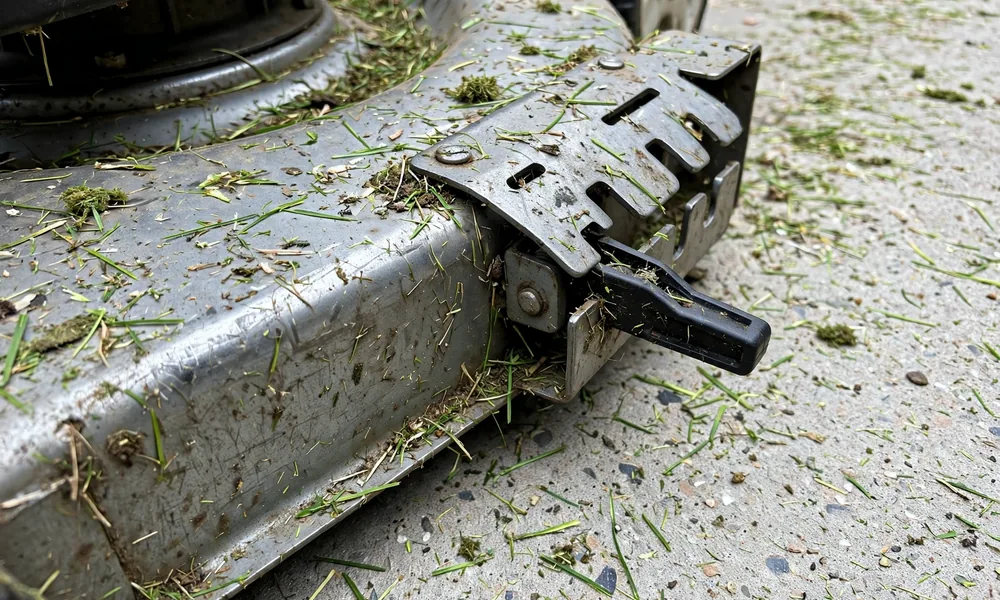
4. Best Self-Propelled: The 56V Mower That Climbs Slopes for You
Slopes change everything about mowing. Pushing a heavy mower uphill is hard work, and pushing one downhill is worse, because the machine wants to run away from you. This self-propelled 56-volt mower solves that with a drive assist you control from the handle: squeeze the lever and the mower pulls itself forward at walking pace, up slopes and across long lawns, while you simply steer.
5. Best Reel Mower: The Silent Manual Mower for Flat Lawns
Not every lawn needs a motor. A reel mower cuts grass the old-fashioned way, with a cylinder of blades that scissor the grass against a fixed bar, and the result is the cleanest, finest cut of any mower here. It is completely silent, costs nothing to run, needs no fuel, no charging, and no servicing beyond an occasional sharpening, and it weighs so little that anyone can push it.
6. Best Budget: The 36V Mower That Punches Above Its Price
A good mower does not have to cost a fortune. This 36-volt battery mower costs far less than the best-overall pick yet still delivers a clean, even cut on lawns up to around 300 square metres. The 40-centimetre deck is a sensible middle size, the grass box is generous for the price, and the cutting height adjusts across five positions with a single lever.
Deck Size: How Wide Is Wide Enough?
Cutting width is the simplest trade-off in push mowers. A wider deck covers more ground with every pass, so a 51-centimetre mower can finish a large lawn noticeably faster than a 33-centimetre one. But width has a price: a wide mower is heavier, harder to turn, and struggles in narrow gaps between beds, trees, and fences. It is also harder to store.

Battery or Petrol: Which Push Mower Suits You?
Battery mowers have taken over the suburban garden for good reasons. They start instantly, run quietly, need almost no maintenance, and cost pennies to charge. The best of them now rival petrol on lawns up to around 600 square metres, and their batteries are interchangeable with other garden tools from the same brand, which softens the cost. Their weakness is range: a battery that is too small will die halfway across a big lawn, and a second battery costs real money.
Slopes, Weight, and Self-Propelled Drive
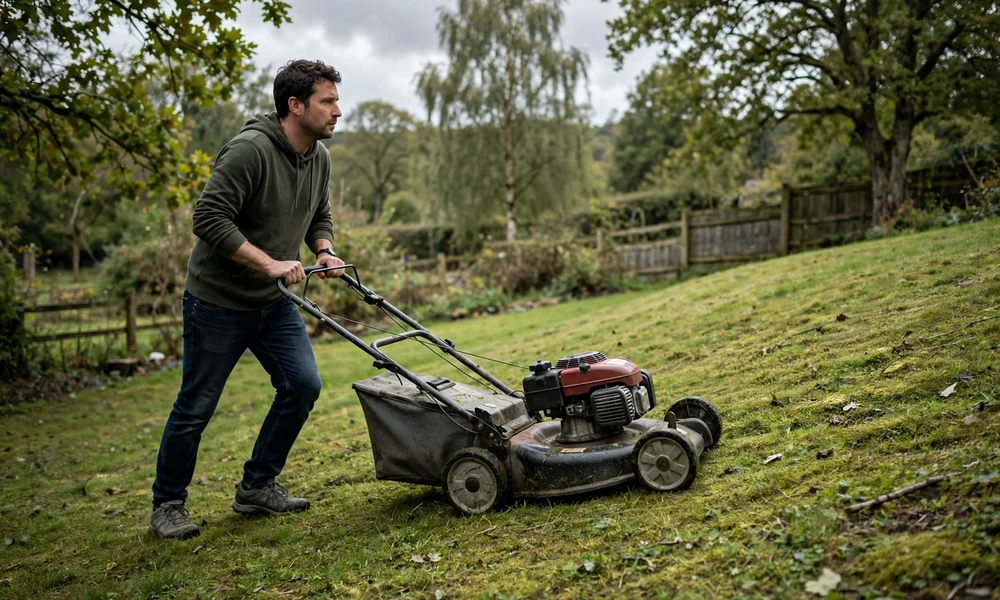
A slope of 15 degrees is enough to turn mowing into hard work, and anything steeper needs care. On a slope, a heavy mower is a liability: it is hard to push up and hard to hold back going down, and a mower that slips can be dangerous. Light battery mowers cope best on gentle slopes, while a self-propelled mower takes the effort out of the climb entirely, because the drive does the pushing and you only steer.
Whatever you buy, mow across a slope rather than straight up and down, and never mow a wet slope at all, because wet grass is slippery underfoot and under the wheels. Large rear wheels help a mower roll over bumps and climb kerbs, and a low centre of gravity keeps it stable. If your garden has a serious slope, treat self-propelled drive as essential rather than a luxury, and check the mower’s rated slope limit before you buy.
Mistakes to Avoid When Buying a Push Mower
The most common mistake is buying too much mower. A big petrol machine for a small flat lawn is heavy, loud, and expensive to run, and it will spend its life being wrestled around a garden it was never meant for. The second mistake is the opposite: buying a small battery mower for a large lawn, then discovering the battery dies halfway through every mow. Measure the lawn first, in square metres, and buy to that number.
Other mistakes are smaller but just as annoying. People forget to check the grass box, then find it too small or too fiddly to empty. They ignore cutting height, then scalp the lawn in a dry spell because the mower has only two settings. They buy a mower whose handle does not fold, then find it will not fit in the shed. And they forget the edges: a push mower cannot cut right up to a wall or fence, so you will still need a trimmer for the finishing touches, as our best vs worst string trimmers guide shows. Check the box, the height settings, and the folded size before you pay, and the mower will serve you well for years.
Looking After Your Push Mower
A mower that is looked after lasts years longer than one that is not, and the care takes minutes. After each mow, brush the clippings off the deck and empty the grass box, because damp clippings left in the box will rot and smell. Once a month, check the blade: a blunt blade tears grass instead of cutting it, leaving brown tips and a ragged lawn. Sharpening a blade is a quick job, and a sharp blade makes more difference to the look of a lawn than any feature on the box.
At the end of the season, clean the mower properly and store it dry. For a battery mower, take the battery out and store it indoors, charged to around half, and never leave it flat over winter. For a petrol mower, run the tank dry or add fuel stabiliser, change the oil, and check the air filter. A mower stored clean and dry starts first time in spring. A mower left dirty in a damp shed may not start at all. If you are considering giving up the pushing altogether, our best robot lawn mowers guide covers the machines that mow while you do something else.
The Verdict
For most gardens, the best push lawn mower of 2026 is the 40-volt battery mower at the top of this list: quiet, light, and strong enough for a typical suburban lawn on a single charge. If your lawn is large or rough, the petrol workhorse is the honest choice, and if it slopes, pay for self-propelled drive and let the mower do the pushing. Small lawns need only the light 18-volt mower, and a flat formal lawn deserves the silent reel mower. Whichever you choose, match it to your lawn, keep the blade sharp, and the weekly mow will stay what it should be: a short, satisfying job that leaves the garden looking its best.