A lawn mower is the tool that decides whether a garden looks cared for or merely survived. When it works well, the lawn is cut evenly in straight lines, the stripes are neat, the grass box empties easily, and the whole job takes less time than you expected. When it works badly, the mower stalls in long grass, leaves ragged patches, clogs every few minutes, and turns a simple Saturday job into a sweaty argument with a machine. That is the gap between the best and the worst lawn mowers of 2026, and it is decided by the lawn you actually have, not by the mower with the biggest engine.
This comparison puts the best lawn mowers of 2026 head to head against the worst, judging them the way you would actually live with them: how cleanly they cut real grass, how far they go on a charge or a tank, how easy they are to start, push, empty, and store, and how they hold up after a full season of weekly mowing. This is not about robot mowers, which do the job on their own: the best vs worst robot lawn mowers judge the machines that mow while you do something else. This guide judges the push, battery, petrol, and ride-on mowers you walk behind or sit on yourself.
Key Takeaways
- Match the mower to your lawn first, because size, slope, and shape decide the right type more than any brand.
- Battery mowers now suit most suburban lawns, but only if the battery is big enough to finish the whole lawn on one charge.
- Cutting width is a trade-off: wider decks finish faster but are harder to steer around beds, trees, and narrow passages.
- Look for adjustable cutting height, a grass box that is easy to empty, and a folding handle if storage is tight.
- The worst lawn mowers pair a weak motor with a small box, a hard start, and a deck that clogs in damp grass.
How a Lawn Mower Actually Works
A lawn mower cuts grass with a blade spinning fast under a deck, and the shape of that deck decides how cleanly it works. The blade lifts the grass as it cuts, throws the clippings into a box at the back, or mulches them finely back onto the lawn, depending on the setting. A good deck keeps the airflow steady, so clippings do not clog and the cut stays even, while a bad deck lets grass build up underneath until the blade slows and the mower starts leaving tufts behind.
The part buyers most often overlook is the cutting height, because the engine gets all the attention. Cutting grass too short scalps the lawn, lets weeds in, and leaves brown patches in dry weather, while cutting it too long means mowing twice as often. The best mowers offer several height settings that are easy to change, with one lever rather than four separate wheel adjustments, so you can raise the cut in a dry summer and lower it in spring when the grass is growing fast.
The Best Lawn Mowers of 2026
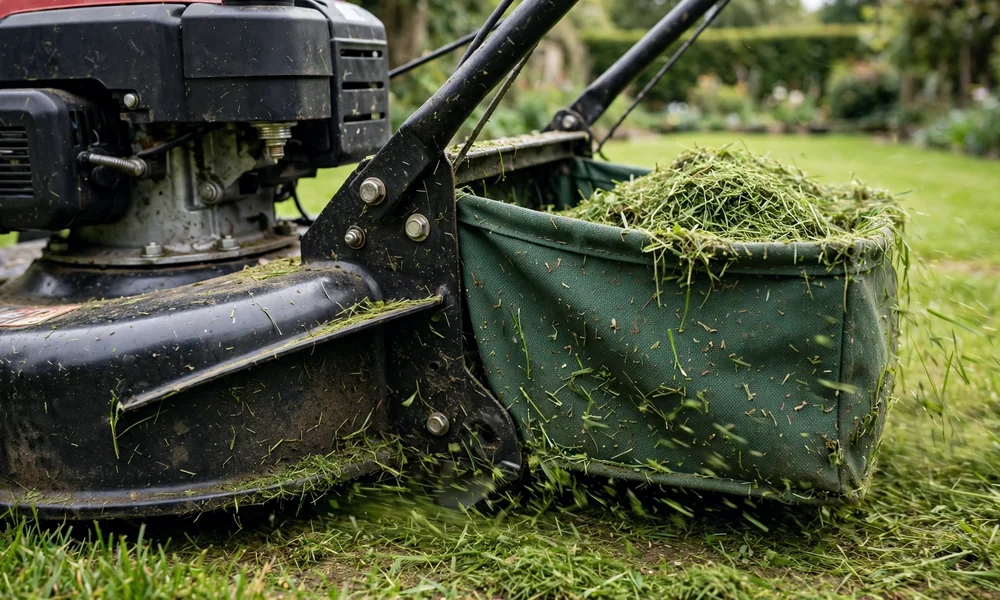
The best lawn mowers do the job they claim to do, on the lawn they claim to cover, without demanding constant stops. They start easily, cut evenly on the first pass, collect the clippings properly, and feel light enough to push and steer without a struggle. They are not the cheapest machines on the shelf, but they earn their price every week, because they turn mowing from a chore into a quick, satisfying routine.
Clean, Even Cutting on the First Pass
A good mower cuts grass cleanly rather than tearing it. The blade is sharp, the deck keeps the airflow steady, and the cut is even across the whole width, with no missed strips down the middle and no scalped patches where the deck dips. On a lawn that has grown for two weeks, that means one steady pass leaves a tidy finish; on a lawn that is damp after rain, it means the mower keeps going instead of clogging and stopping.
Batteries and Engines That Finish the Lawn
A battery mower is only as good as its battery, and the best models are honest about it. They come with a battery big enough for a typical lawn, they hold their power until the end of the charge rather than fading halfway through, and they recharge in a couple of hours rather than overnight. The number to watch is not the voltage or the horsepower on the box but the runtime on your lawn, because manufacturers quote their figures on short, dry grass, and a lawn that has grown for two weeks in May will cut that figure by a third.
Easy to Push, Empty, and Store
The best mowers are easy to live with in the small ways that add up. The handle adjusts to your height, the mower is light enough to turn at the end of a row without tearing the turf, and self-propelled drive, where it is fitted, moves at a walking pace rather than dragging you along. The grass box is big enough to hold a whole mow, lifts off easily, and empties without spilling clippings back onto the lawn you have just cut. When the job is done, the handle folds flat, the mower stands upright in the shed, and the blade can be cleaned without a struggle.
Built to Last a Season After Season
A good mower is built to survive. The deck is steel or tough composite rather than thin plastic that cracks, the wheels are large enough to roll over uneven ground without sinking, and the blade is easy to sharpen or replace when it dulls. The best models also come with spares that are actually available: a replacement battery, a new blade, a fresh grass box, all sold at a fair price rather than almost as much as the mower itself.

The Worst Lawn Mowers of 2026
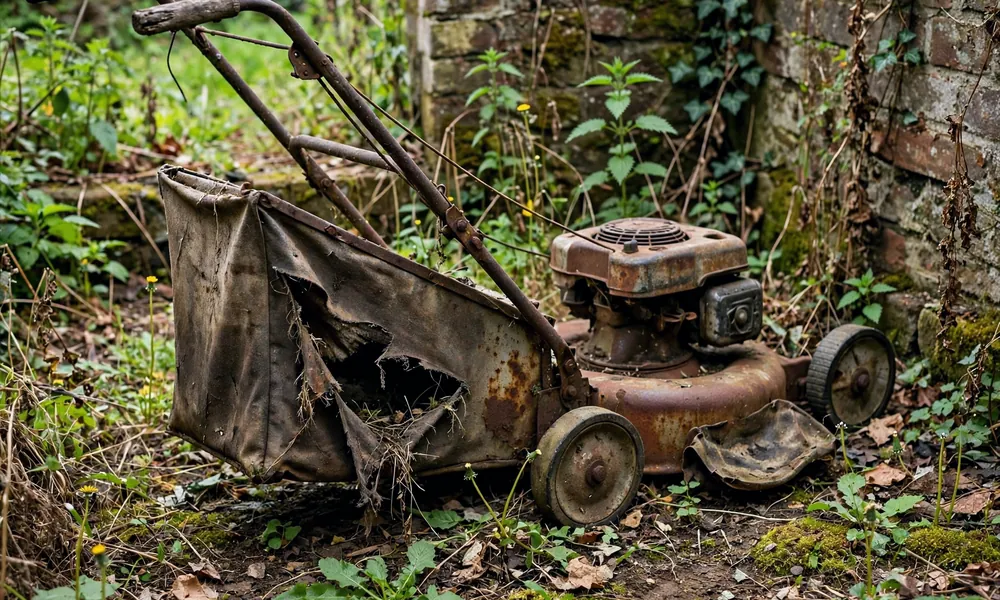
The worst lawn mowers look like bargains, and that is exactly the trap. They are cheap at the till and full of promises on the box, but in the garden they fail in the same few ways, week after week. They stall, clog, scalp, and leave ragged patches, and the money saved at the till is spent many times over in frustration, repairs, and replacements.
Weak Motors That Stall in Long Grass
A weak motor sounds busy but does very little. It spins fast on short grass and slows to a crawl the moment it meets a lawn that has grown for a fortnight, especially grass that is damp or thick with weeds. Petrol models have their own version of this failure: engines that are hard to start, that flood, that stall when hot, and that need constant fiddling with the choke and the primer. A mower should start easily and keep its speed under load, and the worst ones do neither, which is why they end up abandoned in the shed while the lawn grows wild.
Small Boxes and Decks That Clog
The cheapest mowers come with a small grass box and a deck that cannot cope with damp grass. The box fills after a few passes, the chute clogs, and you spend more time stopping to empty and unclog than you spend mowing. Some decks are so shallow that clippings pile up underneath instead of flowing into the box, and the mower starts leaving trails of cut grass across the lawn you have just finished.
Heavy, Hard to Push, and Hard to Store
Bad mowers are heavy in the wrong places. They are nose-heavy, so you spend the whole mow holding the front up rather than guiding it, and the wheels are small, so they sink into soft ground and snag on every bump. The handle is fixed at a height that suits nobody, there is no self-propelled drive, and turning at the end of a row tears the turf.
Cheap Builds That Fall Apart
The worst mowers are built to a price, and it shows after a single season. Thin plastic decks crack, wheel axles bend, grass boxes split at the seams, and blades dull quickly and cannot be sharpened properly. Spares are hard to find, or cost almost as much as a new mower, so the first real fault becomes the end of the machine. A mower that lasts one summer is not a bargain at any price, because the cost is not just the money, it is the lawn that goes uncut while you shop for a replacement. The worst garden tools for beginners are usually bought the same way, without checking the deck, the box, or the spares, and the lesson is the same: buy fewer tools, buy them once, and choose the one that fits the job.
Best vs Worst: The Head-to-Head
Put side by side, the difference is not one feature but the whole experience. A good mower starts at the push of a button, cuts cleanly on the first pass, collects its clippings, and finishes the lawn before the battery fades or the tank runs dry. A bad one needs coaxing to start, tears rather than cuts, clogs every few minutes, and gives up before the lawn is done. The guide to choosing a good garden hose makes the same point about garden tools in general: the real cost is not the price on the shelf, it is the water wasted, the time lost, and the replacement bought eighteen months later.
The Verdict
The best lawn mowers of 2026 are the battery models with a strong motor, a solid deck, a big easy-to-empty grass box, and a battery large enough to finish a real lawn. For large, rough, or sloping ground, a well-made petrol mower still earns its place, provided it starts easily and holds its speed under load, and for very large plots a ride-on is the sensible choice. The worst are the cheapest models in every category: weak motors, shallow decks, small boxes, and builds that fall apart in a season. Buy the cheapest one, and you will buy it twice, once at the till and once in frustration. Check the spares before you buy, because a mower with no replacement blade or battery is a mower with a short life.
Who Each Lawn Mower Is For
A light battery mower suits most gardens: a small or medium lawn, regular weekly mowing, and a gardener who wants a quiet, easy machine that starts at the push of a button. A petrol mower suits a large lawn, rough ground, or steep slopes, where sustained power matters more than silence, and where the gardener does not mind fuel, noise, and a little more weight. A corded mower suits a small lawn near a socket and a tight budget, provided the cable never has to cross the whole garden. A ride-on suits a very large plot, where walking behind a mower for two hours makes no sense at all.
Frequently Asked Questions
How often should I mow my lawn?
Most lawns need mowing once a week in spring and summer, when the grass is growing fast, and less often in autumn and winter. Little and often keeps the lawn healthier than one long monthly mow.
Should I choose a battery or petrol mower?
Choose a battery mower for a lawn up to around 600 square metres, where it is quiet, clean, and easy to start. Choose petrol for a larger, rougher, or sloping lawn, where a battery would fade before the job is done.