Top Quesadillas to Make at Home in 2026
The best quesadillas are the ones that come off the pan crisp on the outside, molten in the middle, and sturdy enough to pick up with one hand. A great quesadilla is not complicated food, but it is exacting food: the tortilla has to toast without drying out, the cheese has to melt all the way through without leaking, and the filling has to add flavour without turning the whole thing soggy. When those three things line up, a quesadilla is one of the most satisfying quick meals you can make at home. When they do not, you get a floppy, greasy fold that falls apart on the plate. This guide covers the cheeses that melt best, the tortillas that hold up, and how to cook them properly.
Key Takeaways
- Use a cheese that melts smoothly, such as Oaxaca, Monterey Jack, or low-moisture mozzarella, and shred it yourself for the best melt.
- Warm the tortilla before you fill it so it bends without cracking and toasts evenly in the pan.
- Keep fillings dry and modest: two to three tablespoons per quesadilla is plenty, and wet fillings should be drained first.
- Cook over medium heat, not high, so the cheese melts fully before the tortilla burns.
- Let the quesadilla rest for one minute before cutting so the cheese sets and the wedges hold their shape.
What Makes a Great Quesadilla
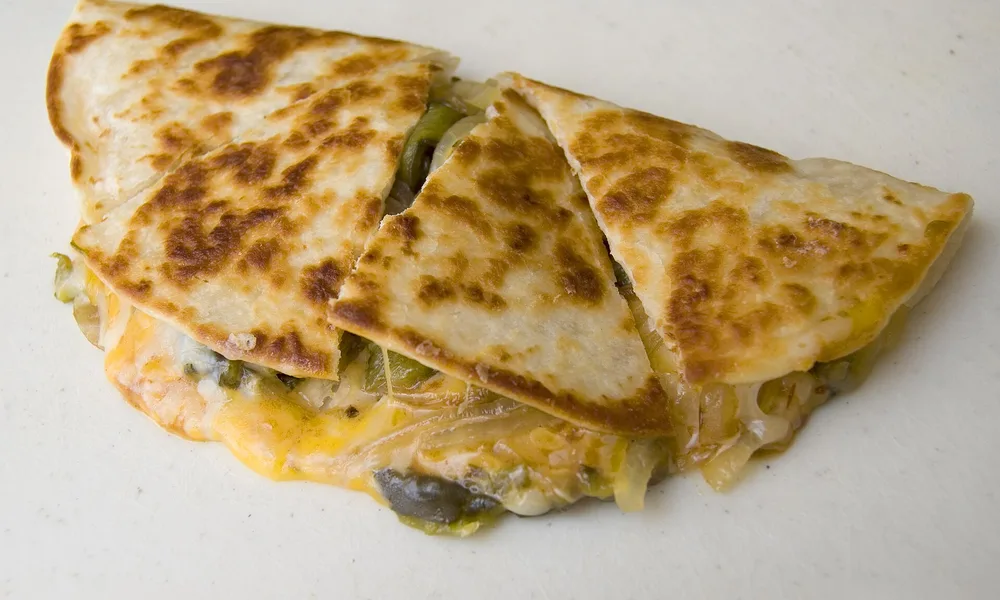
A quesadilla has only two essential ingredients, a tortilla and cheese, and that simplicity is exactly why the details matter so much. There is nowhere for a bad tortilla or a rubbery cheese to hide. The tortilla should be golden and crisp at the edges with a little chew in the centre, never pale and soft, and never so dark that it tastes bitter. The cheese should be fully melted from edge to edge, stretching slightly when you pull a wedge apart, and it should taste of something rather than just adding salt and fat. The filling, whatever you choose, should be seasoned well enough to stand on its own, because a bland filling wrapped in a bland tortilla is a wasted meal.

The Best Cheeses for Quesadillas
Cheese is the heart of a quesadilla, and not every cheese earns its place. The best choices melt into a smooth, stretchy layer without releasing pools of oil or turning grainy. Oaxaca cheese is the traditional pick for good reason: it is a Mexican string cheese that melts beautifully, stretches when pulled, and has a mild, buttery flavour that lets the filling shine. Monterey Jack is the closest everyday substitute, with a similarly clean melt and a gentle flavour that works with almost any filling. Low-moisture mozzarella is another strong option, especially if you like a pronounced cheese pull, though its flavour is milder than Jack.
Cheddar has its fans, but it needs care. A young or medium cheddar melts well and adds a sharper flavour that suits chicken, bacon, and mushroom fillings. An aged, crumbly cheddar is a poor choice on its own because it can turn oily and grainy, though a small amount mixed with a good melting cheese adds welcome sharpness. Pepper Jack adds heat and smoked cheeses add depth in small amounts. Keep at least half the cheese a reliable melter, and let the rest be there for flavour.
Always shred your own cheese. Pre-shredded cheese is coated in starches that stop the shreds sticking together in the bag, and those same starches stop it melting smoothly in the pan. Freshly shredded cheese melts into a glossy, even layer, while bagged shreds can stay grainy. Shredding a block takes about a minute and is the easiest upgrade you can make.
Choosing the Right Tortilla
The tortilla is half the quesadilla, and the wrong one will undo good cheese and good filling. Flour tortillas are the standard choice for most quesadillas because they are soft, flexible, and toast to a crisp golden brown without cracking. Look for tortillas that feel pliable and fresh, with no dry edges or stiffness, and check the date on the pack. A tortilla that is already drying out will crack when folded and will never crisp properly. If you are choosing between sizes, a medium tortilla of around eight inches is the easiest to handle in a standard pan, while larger ones suit sharing and smaller ones work well for snacks and lunchboxes.
Corn tortillas make a different, more traditional quesadilla, and they are worth trying if you have not. They have a stronger, toastier flavour and a firmer bite, and they pair especially well with mushroom, squash blossom, and huitlacoche fillings. The catch is that corn tortillas are less forgiving: they tear easily when cold, so they must be warmed properly before folding, and they need a little oil in the pan to crisp without drying out. Warm each one on a dry pan for about thirty seconds per side, then fill and fold while it is still warm. For more on picking tortillas that hold up under filling, see our guide to the best tortillas for tacos that don’t tear.
Fillings Worth Making
A great quesadilla filling is cooked, seasoned, and dry before it ever meets the tortilla. That last point is the one most people skip, and it is the reason so many homemade quesadillas turn soggy. Mushrooms should be cooked until their moisture has evaporated and they start to brown. Chicken should be shredded or diced small and tossed in its seasoning, not swimming in sauce. Vegetables like peppers and onions should be sauteed first, then drained. Anything that comes out of a jar or a can, from beans to roasted peppers, should be drained and patted dry. The tortilla cannot rescue a wet filling; it can only absorb it.
Reliable combinations include chicken and Monterey Jack with green chilli, mushroom and Oaxaca with garlic, and black beans, sweetcorn, and pepper Jack for a meat-free option. Keep the list short: three or four elements, including the cheese, is enough.
How to Cook a Quesadilla Properly
Medium heat is the whole secret of cooking a quesadilla. High heat browns the tortilla before the cheese has had time to melt, so you end up with a burnt outside and a cold, unmelted middle. Medium heat gives the cheese time to catch up. Heat a dry or very lightly oiled pan, lay the filled tortilla in, and leave it alone for two to three minutes until the underside is golden. Flip it once, gently, and cook the second side for another two minutes. Pressing down with a spatula helps the cheese bond with the tortilla, but press lightly: too much force squeezes the filling out the sides.
A griddle or a large flat pan is the best tool for the job because it gives you even heat and room to work, especially if you are making several at once. A cast iron skillet is a close second, holding heat steadily once it is hot. Non-stick pans work, but they can struggle to produce the same crisp, browned surface. Whatever pan you use, resist the urge to add too much oil: a thin film is enough, and too much oil makes the tortilla greasy rather than crisp. If you want to compare cooking surfaces before you buy, our roundup of the best griddles covers the options that work well for quesadillas and other flatbreads.
Resting matters more than it seems. When a quesadilla comes out of the pan, the cheese is fully liquid and the wedges will slide apart if you cut straight away. Give it one minute on a board, and the cheese firms just enough to hold everything together while staying molten inside. Cut with a sharp knife or pizza wheel in one firm motion, and serve immediately: after ten minutes the steam inside softens the crust.
Quesadilla Styles Compared
| Style | Tortilla | Cheese | Best For | Effort |
|---|---|---|---|---|
| Classic cheese | Flour | Oaxaca or Jack | Quick lunches, kids | Low |
| Chicken and cheese | Flour | Monterey Jack | Weeknight dinners | Medium |
| Mushroom | Corn or flour | Oaxaca | Vegetarian meals | Medium |
| Bean and corn | Flour | Pepper Jack | Meat-free, filling | Low |
| Breakfast | Flour | Cheddar and Jack | Eggs, bacon, potato | Medium |
| Street-style | Corn | Oaxaca | Authentic flavour | Medium |
Serving and Sides
Fresh salsa adds acidity that cuts through the richness of the cheese, guacamole adds creaminess, and sour cream cools a spicy filling. Rice and beans turn a snack into dinner. Keep portions modest: the quesadilla is the star. If you want to make your own, our guide to guacamole that tastes like the restaurant is a good place to start.

Quesadilla Checklist
- Shred your own cheese from a block for a smooth, even melt.
- Warm the tortilla first so it folds without cracking.
- Drain and dry every filling before it goes in.
- Spread cheese and filling in a thin, even layer.
- Cook over medium heat and flip only once.
- Rest for one minute, then cut and serve immediately.
Frequently Asked Questions
What is the best cheese for quesadillas?
Oaxaca cheese is the traditional best choice because it melts smoothly and stretches well, with a mild buttery flavour. Monterey Jack and low-moisture mozzarella are excellent substitutes that are easier to find in most shops. Use a good melting cheese for at least half the total, and add sharper cheeses in smaller amounts for flavour.
Should I use flour or corn tortillas?
Flour tortillas are the easiest and most forgiving choice: they fold well, crisp evenly, and suit most fillings. Corn tortillas give a more traditional flavour and a firmer bite, but they need to be warmed properly before folding or they will tear. Try flour first, then corn once you are confident.
Why does my quesadilla get soggy?
Soggy quesadillas are almost always caused by wet fillings. Cook mushrooms, peppers, and onions until their moisture has evaporated, drain beans and anything from a jar, and pat everything dry before filling. Medium heat also helps, because the tortilla crisps before steam can soften it.
How much filling should I use?
Less than you think. Two to three tablespoons of filling and a similar amount of shredded cheese per medium tortilla is about right. Spread it thinly and evenly across one half, leaving a small border at the edge so the cheese can seal the fold. Overfilling is the most common mistake.
Can I make quesadillas ahead of time?
Quesadillas are best eaten fresh from the pan, but you can prepare the fillings ahead and assemble them when you are ready to cook. Cooked quesadillas reheat well in a dry pan over medium heat. Avoid the microwave, which makes the tortilla soft and chewy.
What is the best pan for quesadillas?
A flat griddle or cast iron skillet gives the most even heat and the crispest results. A large non-stick pan works well too. Keep the heat at medium and use only a thin film of oil.
The Bottom Line
The best quesadillas are built on three simple habits: a cheese that melts properly, a tortilla that is warmed and fresh, and fillings that are cooked and drained before they go in. Get those right, cook over medium heat, and rest the quesadilla for a minute before cutting, and you will get a crisp, molten, hold-together result every time. Start with a classic cheese quesadilla to learn the technique, then build from there with chicken, mushroom, or beans. It is a quick meal that rewards a little care, and once you have the method down, it is hard to go back to a soggy one.