What Is the Best Spring Roll in 2026? Fresh vs Fried, Ranked
The best spring rolls of 2026 stay crisp where they should be crisp and fresh where they should be fresh, and no single roll wins every time. A spring roll is a wrapper with a job: hold a filling together and carry flavour without falling apart. Some rolls do that job with a delicate sheet of rice paper that is never cooked at all. Others do it with a wheat wrapper fried until it shatters. Both are worth eating, and they fail in completely different ways.
Key Takeaways
- Fresh rice-paper rolls should be soft, slightly chewy and translucent, with the filling visible and the herbs still bright.
- Fried rolls should shatter when you bite them, with a dry, golden wrapper and a hot, juicy filling, never greasy or soggy.
- The wrapper matters as much as the filling: a torn rice-paper sheet or a thick, doughy fried wrapper ruins the roll.
- Sauce is half the dish, so a roll served with a thin, flat or stale dip is a worse roll, however good the filling is.
- Buy fresh rolls the day you eat them and fried rolls hot from the fryer; both lose their texture fast once they sit.
What a Spring Roll Actually Is
A spring roll is a filled roll wrapped in a thin sheet and served as a snack, starter or light meal, and the name covers two very different foods that share a shape and little else. The fresh version, often called a summer roll or gỏi cuốn, uses rice paper softened in water and wrapped around prawns, pork, rice noodles, lettuce and herbs, then served cold or at room temperature with a dipping sauce. Nothing is fried, and the wrapper should be tender and a little chewy, clear enough to show the prawns and herbs inside, and tight enough to hold together when you pick it up.
The fried version uses a wheat-based wrapper, rolled around minced meat, prawns, cabbage, carrots, mushrooms and glass noodles, then deep-fried until golden. Here the wrapper should be thin, brittle and dry, shattering into flakes when you bite it. A fried roll that bends instead of cracking was fried in oil that was too cool, or left sitting until it steamed itself soft.
Fresh rolls are light, cool and herb-led, suiting hot weather and light lunches. Fried rolls are rich, hot and crunchy, suiting sharing plates and cold evenings. The best spring roll is the best example of the style you want, made well and eaten the same day.
How the Best Spring Rolls Were Chosen
Every style below was scored on five measures. Wrapper comes first: tender and intact for a fresh roll, thin and shattering for a fried one. Filling is second, covering freshness, seasoning and balance. Texture is third, because a soggy fried roll or a rubbery fresh one fails at the first bite. Sauce is fourth, since a weak dip drags a good roll down. Value is fifth, covering portion size and price.
Two notes before the list. First, no single shop or brand is named as the best, because the same good patterns appear in many restaurants and markets, and what matters is learning to recognise them. Second, a spring roll is a technique as much as a recipe: the same filling can turn out crisp or soggy depending on the wrapper, the oil and the timing. Readers who want the same logic applied to dipping sauces will find it in our guide to the best soy sauces worth pouring in 2026, where balance and salt matter just as much as they do here.
Fresh vs Fried: The Two Families
The quickest way to choose is to decide which family you want, because the two kinds of spring roll are bought, stored and eaten differently. Fresh rolls are made to order and eaten within hours. Fried rolls are made ahead, fried to order if you are lucky, and eaten hot. The table below compares the main styles side by side, so you can match the roll to the meal, the weather and the crowd you are feeding.
| Style | Best for | Texture | Watch out for |
|---|---|---|---|
| Fresh prawn rice-paper roll | Light lunches, hot days | Soft, chewy, cool | Rice paper dries out and tears |
| Fresh vegetarian rice-paper roll | Vegetarian sharing plates | Crisp vegetables, soft wrapper | Watery filling makes the wrapper soggy |
| Fried pork and prawn roll | Sharing plates, parties | Crisp, hot, juicy | Greasy if the oil was too cool |
| Fried vegetable roll | Vegetarian starters | Crisp shell, soft filling | Overcooked cabbage turns mushy |
| Baked spring roll | Lighter everyday eating | Crisp but less rich | Dries out fast if overbaked |
Fresh Rice-Paper Rolls
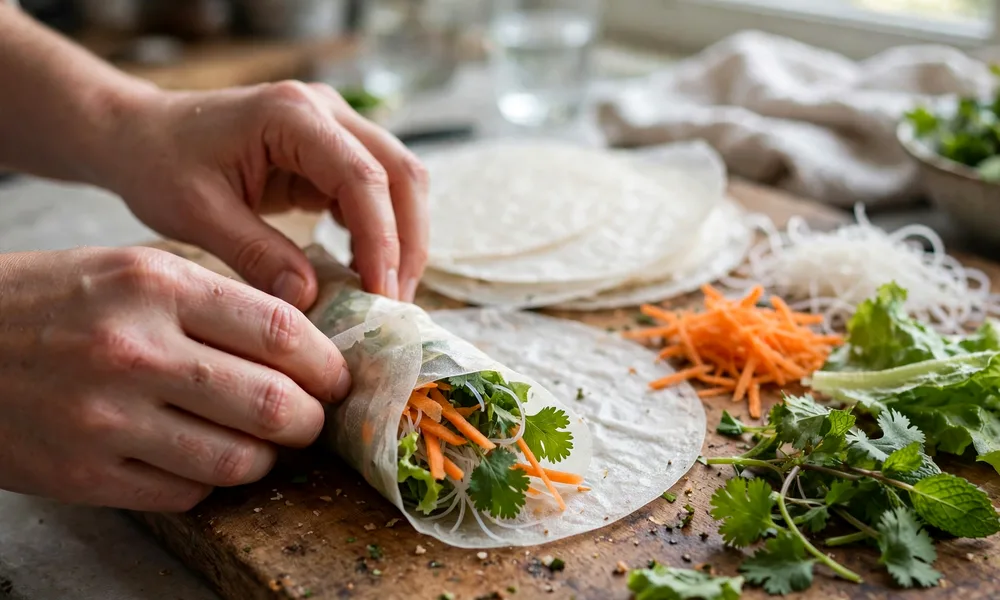
A good fresh roll starts with the rice paper. The sheet is dipped in warm water for a few seconds until it turns pliable, then laid flat and filled while it is still soft. The best makers work fast: the filling goes in the lower third, the sides fold in, and the roll is tightened as it turns, so the wrapper hugs the filling without air pockets. Done well, you can see the prawn and mint through the paper, and the roll feels firm and springy, not loose.
The filling is a balance of soft, crisp and fragrant. Rice noodles give body, lettuce and cucumber give crunch, carrot gives sweetness, and mint, coriander and basil give the fresh, green lift that makes a fresh roll taste like itself. Prawns should be pink, plump and sweet, or the pork should be tender and well seasoned; either way the protein is a partner to the herbs, not the whole show. The commonest failure is a wet filling, which softens the wrapper until it tears.

Fried Spring Rolls
A good fried roll starts with the oil. It should be hot, around 175 to 180 degrees, so the wrapper crisps in seconds and seals before the oil soaks in. The wrapper should be thin, almost papery, and wrapped tightly with no loose edges to catch and burn. Drain the roll upright for a minute, so the steam escapes instead of softening the shell, and serve it while it is still crackling.
The filling is cooked before it is wrapped, which is why a fried roll can be juicy inside and crisp outside at the same time. Minced pork and prawn, cabbage, carrot, wood ear mushroom and glass noodles are the classic mix, seasoned with garlic, soy and a little sugar, then cooled before rolling so the wrapper stays dry. The commonest failure is too much filling, wrapped too loosely, in oil that was not hot enough, so the roll comes out pale, soft and greasy.
The Wrapper Matters More Than the Filling
People argue about fillings, but the wrapper decides whether a spring roll works, and it is the first thing to check when you buy. For a fresh roll, press the wrapper gently with a fingertip. It should give a little and spring back, and it should look clear, not cloudy or dry at the edges. A wrapper that has gone stiff, or one with dry white patches, was made too long ago or left uncovered, and it will tear when you bite it. For a fried roll, tap the shell: it should feel dry and hard, and sound faintly hollow. A soft or oily shell was fried badly or sat under a heat lamp too long.
Sauces: Where Good Rolls Become Great
No spring roll is complete without its sauce, and the best rolls are judged with the dip, not without it. Fresh rolls are usually served with a peanut sauce, thick and nutty with a little chilli and lime, or with nước chấm, the light, sharp Vietnamese dipping sauce of fish sauce, lime, sugar, garlic and chilli. Peanut sauce suits a fresh roll because it adds richness the roll itself does not have. Nước chấm suits it because its sourness cuts through the starch of the noodles and wakes the herbs up.
Fried rolls want something sharper and thinner, because the roll itself is already rich. Sweet chilli sauce is the classic partner, and a good one is sticky, bright and genuinely a little hot, not just sweet. A light soy-based dip with rice vinegar and chilli works just as well, and a sesame dressing can add a nutty note without the weight of peanut sauce. Our guide to why sesame dressing works on more than salad in 2026 explains how a good sesame dressing balances salt, sweetness and acid, which is exactly what a fried roll needs. Fresh ginger in a dip adds a clean heat that cuts through frying oil; our guide to the best ginger for cooking, tea and baking in 2026 covers how to pick firm, juicy roots.
Judge a sauce by its balance, not its sweetness: salt, sour and heat, with sweetness in the background. A sauce that is only sweet makes the roll taste flat, and one that is only salty makes it taste like fast food. Serve enough to dip every bite, in a bowl wide enough to dip without breaking the roll.

Checklist: Buying Spring Rolls in 60 Seconds
- Decide fresh or fried first, then judge the roll against the right standard for that style.
- Check the wrapper: tender and clear for fresh rolls, dry and shattering for fried ones.
- Look for bright herbs and a filling you can see, not a pale, tired-looking roll.
- Ask when the rolls were made, and buy fresh rolls the same day and fried rolls hot.
- Taste the sauce before you commit: it should be balanced, not just sweet or salty.
- Buy one to try before you order a platter, especially from a new shop or market stall.
Frequently Asked Questions
What is the difference between a spring roll and a summer roll?
They are the same fresh, unfried rice-paper roll under two names. Summer roll is the common name in some countries for the fresh version, while spring roll usually means the fried version, though the terms are often mixed up on menus.
Are spring rolls healthy?
Fresh spring rolls are generally light and healthy, full of vegetables, herbs and lean protein, with no frying. Fried ones are richer and higher in fat, so they suit an occasional treat rather than an everyday lunch.
How long do fresh spring rolls keep?
Fresh spring rolls are best eaten within a few hours of being made. They keep in the fridge for a day under a damp cloth and cling film, but the rice paper hardens and the herbs wilt, so they are never as good the next day.
Can you freeze fried spring rolls?
Yes, and they freeze well. Freeze them uncooked in a single layer, then fry straight from frozen, adding a minute or two. Cooked fried rolls can be reheated in a hot oven, but they are never as crisp as freshly fried ones.
What sauce goes best with spring rolls?
Peanut sauce and nước chấm suit fresh rolls, while sweet chilli sauce and light soy and vinegar dips suit fried rolls. The best choice is the sauce that balances the roll: rich sauce for a light roll, sharp sauce for a rich roll.
Why do my fresh spring rolls tear?
Fresh rolls tear when the rice paper is soaked too long, overfilled, or left uncovered so it dries out. Dip the paper for a few seconds only, keep the filling modest, and cover finished rolls with a damp cloth until you serve them.
The Bottom Line
The best spring roll in 2026 is the best example of the style you want: a fresh roll with a tender, clear wrapper, bright herbs and a balanced sauce, or a fried roll with a dry, shattering shell and a hot, juicy filling. Judge the wrapper first, the sauce second, and buy them fresh and eat them soon, because a spring roll is at its best in the hour it is made.