
Why Sesame Dressing Works on More Than Salad in 2026
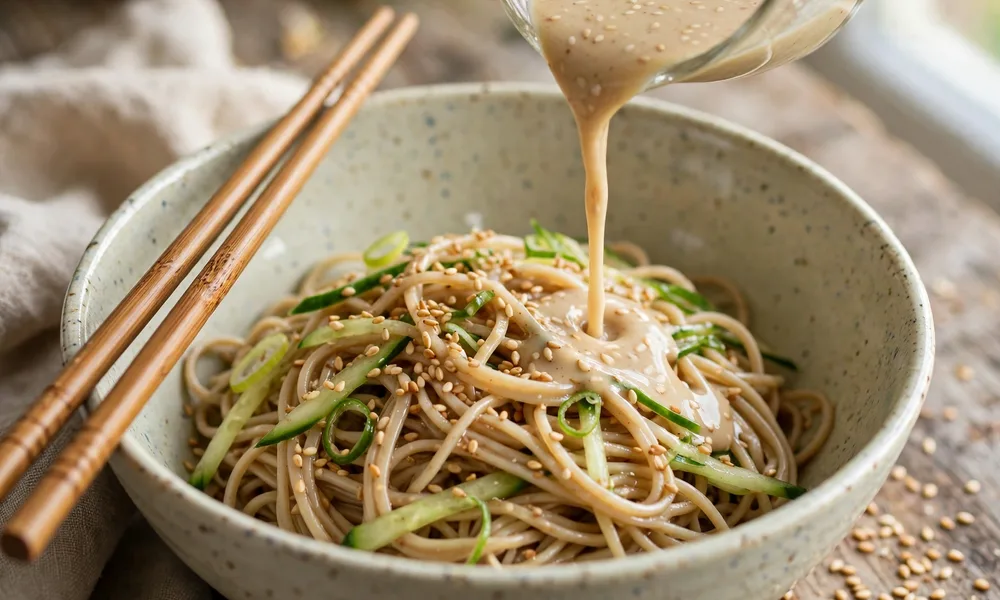
Sesame dressing works on more than salad because it is really three things at once: a nutty sauce, a salty-sweet seasoning and a creamy coating, all in one bottle. On greens it behaves like any good dressing, but on cold noodles it becomes the sauce itself, on slaw it tames raw cabbage, on grain bowls it ties rice and vegetables together, and as a dip it turns dumplings and spring rolls into a proper snack. The best bottles earn that range with a real roasted sesame flavour, a balance of salty, sweet and sour, and a body thick enough to cling without turning gluey. This guide explains how to pick a bottle worth buying, which style suits which dish, and how to use one bottle across a whole week of meals.
Key takeaways
- A great sesame dressing tastes of roasted sesame first, with salt, sweetness and acidity in support, never the other way round.
- Toasted sesame, sesame paste or tahini should appear near the top of the ingredient list, not after water and sugar.
- Creamy styles suit noodles, grain bowls and dipping; lighter vinaigrette styles suit salads, slaws and cold vegetables.
- Use about two tablespoons per serving on salad, and toss noodles in the dressing while they are still slightly warm.
- Keep an opened bottle in the fridge, shake it well before every use, and finish it within about a month.
How the best sesame dressings were chosen
Every dressing below was judged on five measures. Sesame flavour comes first: the roasted, nutty note should be clear from the first taste, whether it comes from toasted sesame oil, ground sesame seeds or sesame paste. Balance is second, because salt, sweetness and acidity must work together, with no single note shouting over the rest. Body is third: the dressing must coat noodles and leaves without sliding off or sitting in clumps. Versatility is fourth, since the best bottles move beyond salad to noodles, slaws, grain bowls and dipping. Value is fifth: the real cost per serving, not just the price on the shelf.
One distinction matters before the list. Sesame dressing is not sesame oil. Sesame oil is a single-ingredient finishing oil, used by the teaspoon, and our guide to sesame oil explains toasted versus light bottles. Sesame dressing is a finished sauce built from sesame plus soy, vinegar, sweetener and often ginger or garlic, and it is used by the spoonful. Our guide to the best salad dressings explains where sesame dressing sits among the other dressing families.
Comparison table: the best sesame dressings 2026
| Rank | Dressing style | Best for | Watch out for |
|---|---|---|---|
| 1 | Classic creamy sesame | Cold noodles, grain bowls | Too thick in cheap bottles |
| 2 | Light sesame vinaigrette | Salads, slaws, cold vegetables | Can be very salty |
| 3 | Tahini-based sesame | Dipping, grain bowls, roasting | Separates, needs a hard shake |
| 4 | Spicy sesame | Noodles, dumplings, slaws | Heat can hide the sesame |
| 5 | Sweet sesame | Chicken salads, fruit slaws | Too sweet for savoury bowls |
| 6 | Black sesame | Noodles, roasted vegetables | Strong flavour, use sparingly |
| 7 | Citrus sesame | Fish, avocado, summer salads | Too sharp if over-lemoned |
The best sesame dressings
1. Classic creamy sesame: the best all-rounder
The classic creamy sesame dressing is the bottle most people reach for first, and it is still the best all-rounder. It is built on roasted sesame paste or ground sesame seeds, thinned with soy sauce, rice vinegar and a little sweetener, and finished with toasted sesame oil for aroma. On cold noodles it is close to perfect: the creaminess coats every strand, the salt and sweetness season the noodles, and the sesame flavour carries the whole bowl. The test is the first spoonful. A good classic tastes nutty first, then salty and sweet, with a clean sour finish.
2. Light sesame vinaigrette: the best for salads and slaws
A light sesame vinaigrette drops the creamy paste and leans on oil, soy, vinegar and ginger instead, and it suits salads and slaws far better than a thick creamy bottle. Shredded cabbage, carrot and cucumber stay crisp under it, because the dressing is thin and bright rather than heavy, and delicate leaves are not crushed by its weight. The trade-off is salt. Soy-based vinaigrettes can be very salty, so taste before adding any extra soy or salt, and dress in two light passes. A bottle built on real toasted sesame oil tastes nutty and warm; one built on plain oil with a little sesame flavouring tastes flat.

3. Tahini-based sesame: the best for dipping
Tahini-based sesame dressing uses ground sesame paste as its backbone, thinned with water, lemon and a little garlic, and it is the best style for dipping. Dumplings, spring rolls, falafel and roasted vegetables all benefit from a thick, nutty dip that clings instead of running off, and the same bottle doubles as a sauce for grain bowls and roasted aubergine. The weakness is separation: tahini dressings split and the paste settles, so shake hard before every use, and keep the bottle cold once opened.
4. Spicy sesame: the best for noodles and dumplings
Spicy sesame dressing adds chilli oil, chilli flakes or a hot sauce to the classic creamy base, and it is the best choice when a dish needs warmth as well as nuttiness. On cold sesame noodles it gives the bowl a slow heat that builds with each mouthful, on dumplings it turns a plain dip into something memorable, and on slaw it balances the cool cabbage with a gentle burn. The risk is that the heat takes over. A good spicy bottle still tastes of sesame underneath the chilli, with the nutty note arriving first and the heat following. A bad one tastes of chilli oil alone, and it makes every dish taste the same.
5. Sweet sesame: the best for chicken and fruit slaws
Sweet sesame dressing leans harder on honey or sugar than the classic style, and it suits dishes where sweetness flatters the other ingredients. A chicken salad with shredded cabbage and carrot, a fruit slaw with apple and cabbage, or a grain bowl with roasted sweet potato all benefit from the extra sweetness, which rounds off the salt and the vinegar. The danger is using it on the wrong dish. On a savoury noodle bowl or a plain green salad, a sweet sesame dressing can make the food taste like dessert, so keep it for chicken, fruit and roasted vegetables.
6. Black sesame: the best for bold dishes
Black sesame dressing is made from black sesame seeds, and it is the boldest style in the family, with a deeper, toastier flavour than the pale version and a dramatic dark colour. It suits dishes that can stand up to it: cold soba noodles, roasted aubergine and mushrooms, and grain bowls with strong flavours such as miso and ginger. A little goes a long way, so use about half as much as you would of a classic bottle, and taste as you go. The best black sesame bottles list black sesame seeds or paste first, with no added colouring.

7. Citrus sesame: the best for fish and summer salads
Citrus sesame dressing adds lemon, lime or yuzu juice to the sesame base, and it is the brightest style in the family. It suits fish, avocado and summer salads, where the citrus lifts the richness of the sesame and keeps the dish tasting fresh. On a salmon and avocado grain bowl it is close to perfect: the sesame gives body and the citrus cuts the fat. The danger is overdoing the acid. A bottle that is all citrus and no sweetness tastes sharp and thin, and it can make soft avocado taste sour. The best citrus bottles balance the juice with a little honey, so the first taste is bright and the finish is round.
What to avoid when buying sesame dressing
The most common mistake is buying a bottle that tastes of salt and sugar with no sesame in it. Check the ingredient list before you buy: toasted sesame, sesame paste, tahini or ground sesame seeds should appear near the top, not after water, sugar and flavourings. The second mistake is choosing a creamy bottle for a delicate salad: it crushes baby leaves and turns a light lunch heavy, while a light vinaigrette would have kept the leaves crisp. The third mistake is using the same amount on every dish. Noodles and grain bowls need more dressing than a salad, because the starch and rice absorb it, while a slaw needs less, because the shredded vegetables release water as they sit. Taste the dish after dressing it, and add a little more only if the sesame flavour is still faint.
Checklist: buying sesame dressing
- Read the label and look for toasted sesame, sesame paste or tahini near the top, before water and sugar.
- Match the style to the dish: creamy for noodles and grain bowls, light for salads and slaws, tahini-based for dipping.
- Taste it on a noodle or a leaf, not from the spoon, before you judge the salt and the sweetness.
- Toss noodles in the dressing while they are still slightly warm, so every strand is coated evenly.
- Use about two tablespoons per serving on salad, and a little more on noodles and grain bowls.
- Keep the opened bottle in the fridge, shake it well before every use, and finish it within about a month.
Frequently asked questions
What is sesame dressing made of?
Most sesame dressings are made from roasted sesame seeds or sesame paste, soy sauce, rice vinegar, a sweetener such as sugar or honey, and toasted sesame oil, often with ginger or garlic.
Is sesame dressing the same as tahini?
No. Tahini is a single ingredient: sesame seeds ground into a paste, with nothing else added. Sesame dressing is a finished sauce that may use tahini as one ingredient, alongside soy, vinegar, sweetener and oil. Our guide to choosing tahini that actually tastes good explains how to judge the paste itself
What can I use sesame dressing on besides salad?
Cold noodles are the best use beyond salad, followed by grain bowls, slaws, roasted vegetables and dumplings. It works as a dip for spring rolls and falafel, a sauce for grilled chicken, and a drizzle over roasted aubergine or sweet potato.
How long does sesame dressing last once opened?
Most bottled sesame dressings last about a month in the fridge once opened, and vinaigrette-style bottles last a little longer. Tahini-based bottles are the exception, at about two to three weeks. Keep the bottle refrigerated, shake it before use, and throw it away if it smells stale.
Is sesame dressing very salty?
It can be, because most recipes include soy sauce. Light vinaigrette styles are usually the saltiest, while creamy and tahini-based styles are milder. Taste the dressing on the dish before adding any extra soy or salt, and look for a bottle where the sesame flavour, not the salt, is the first thing you taste.
Can I use sesame dressing as a marinade?
Yes, for short marinades of about thirty minutes, especially for chicken, tofu and salmon, where the soy and vinegar season the surface and the sesame adds flavour. Do not use it as an overnight marinade, because the vinegar can make the surface of the protein soft and the sesame flavour fades.
Bottom line
The best sesame dressing in 2026 is the one that tastes of roasted sesame first, balances salt, sweet and sour, and matches the dish it is poured over. Choose the creamy classic for cold noodles and grain bowls, the light vinaigrette for salads and slaws, a tahini-based bottle for dipping, and a spicy or citrus style when the dish needs heat or brightness. Taste it on a noodle before you buy a big bottle, and keep it cold once opened.


