
Curry in 2026: The Best Dishes, Bases and Heat Levels to Cook at Home
Curry is not one dish. It is a whole family of dishes — rich and creamy, dry and fiery, sweet and sour, slow-cooked and fast — built on the same idea: spices bloomed in fat, layered over a base of onion, tomato, or coconut, and served with something to scoop it up. The best curry in 2026 is the one that matches its base and its heat to the food in front of you: a gentle coconut curry for a weeknight, a slow-cooked meat curry for a Sunday, a dry, spiced vegetable curry when you want the spices themselves to do the talking. Get the base right and the rest follows.
Key Takeaways
- Curry is a finished dish, not a spice blend: the base, the protein, and the heat matter as much as the spices themselves.
- Bloom whole and ground spices in hot oil for about thirty seconds before adding anything else, so they taste cooked rather than raw.
- Match the heat to the eater: mild coconut curries suit family cooking, while slow-cooked meat curries can take real chilli heat.
- The base decides the dish: onion-tomato for North Indian richness, coconut for Thai and South Indian lightness, yoghurt for tangy, tender meat.
- A curry needs time to settle: ten minutes off the heat before serving lets the flavours come together and the sauce thicken.
What Good Curry Actually Tastes Like
A good curry has layers you can follow. First comes the warmth of the spices — cumin, coriander, turmeric, and garam masala — rounded and cooked, never raw or dusty. Then the base: sweet onion, bright tomato, or creamy coconut, giving the sauce its body. Then the main ingredient itself, whether chicken, lamb, lentil, or vegetable, tasting of itself rather than drowned in spice. Finally, a fresh lift at the end — coriander, lemon, or green chilli — that stops the dish feeling heavy.
Balance is the test. No single flavour should shout. A curry that tastes only of chilli has been built on heat instead of flavour. A curry that tastes only of turmeric has been built on colour instead of spice. A curry that tastes greasy has had too much oil, or oil that was never properly cooked out. A curry that tastes flat usually needs salt and acid — a squeeze of lemon or a spoonful of yoghurt — rather than more spice. Taste as you go, and season in small steps.
Curry vs Curry Powder: The Dish and the Blend
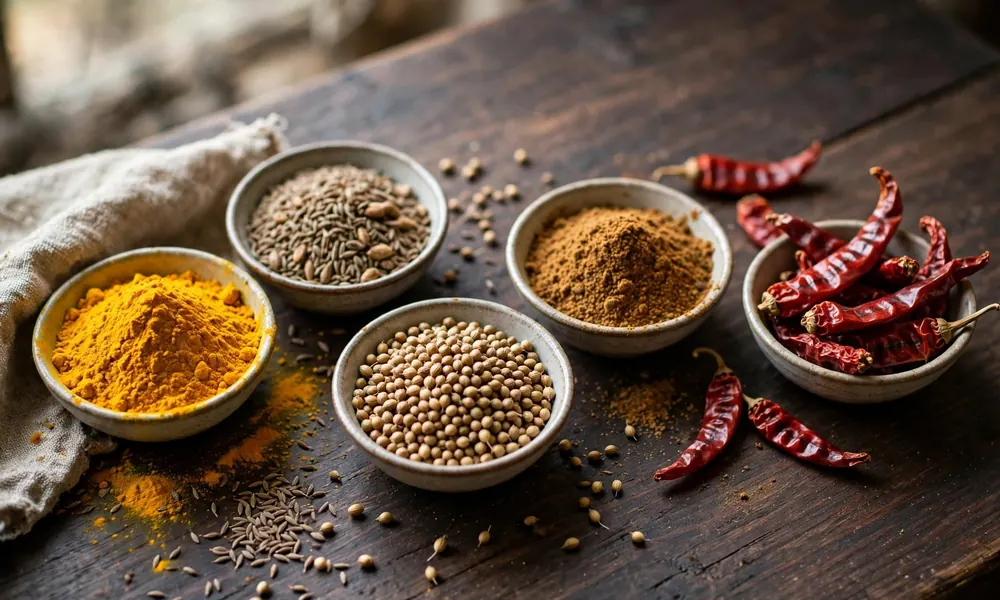
It is worth drawing the distinction plainly, because the two are often confused. Curry powder is a pre-mixed blend of ground spices — usually turmeric, coriander, and cumin, with fenugreek, ginger, and chilli in support — invented to give home cooks the flavour of a curry in a single spoonful. Curry is the finished dish: a base, a protein or vegetable, spices, and time, cooked together into a sauce. The powder is an ingredient; the curry is the meal.
That matters because a good curry is rarely built on curry powder alone. Most great curries use whole spices toasted and ground, or individual ground spices added in stages, so each one cooks at the right moment. Curry powder can be a useful shortcut — especially on a weeknight — but it is a starting point, not the whole spice cupboard. Our guide to curry powder explains how to choose a blend whose flavour matches the food you actually cook, and when a blend is enough versus when you should reach for the individual spices.
The same distinction applies to garam masala, which is often confused with curry powder. Garam masala is a warm, aromatic finishing blend, usually added near the end of cooking, and it contains no turmeric, so it adds warmth without colour. Curry powder is a cooking blend, added at the start, and its turmeric colours the whole dish golden. Our guide to garam masala explains how the two blends differ and how to use each one well.
Curry Styles Compared
The main curry styles differ in their base, their heat, and their cooking time. Knowing which style you are cooking is half the battle, because each one suits different evenings, different eaters, and different accompaniments.
| Style | Base | Heat | Best for | Watch out for |
|---|---|---|---|---|
| North Indian | Onion, tomato, cream | Mild to medium | Chicken, paneer, lentils | Can turn heavy with too much cream |
| South Indian | Coconut, tamarind, curry leaves | Medium to hot | Fish, vegetables, lentils | Tamarind can overpower if overdone |
| Thai green | Coconut milk, green chilli | Medium to hot | Chicken, aubergine, bamboo | Paste quality decides everything |
| Thai red | Coconut milk, red chilli | Hot | Beef, duck, pumpkin | Heat varies a lot between pastes |
| Japanese | Roux, onion, carrot | Very mild, sweet | Family meals, children | Can taste flat without pickles |
| Slow-cooked meat | Onion, tomato, yoghurt | Medium to hot | Lamb, goat, beef | Needs hours, not minutes |
North Indian curries are the ones most people picture first: rich, tomato-based sauces, often finished with cream or butter, served with naan and rice. They suit chicken, paneer, and lentils, and they are forgiving for beginners because the base is straightforward. South Indian curries are lighter and sharper, built on coconut and tamarind, with curry leaves and mustard seeds giving a distinctive, aromatic lift. Thai green and red curries are built on fresh pastes pounded with lemongrass and galangal, and they taste brighter and fresher than their Indian cousins — but the quality of the paste decides the dish, so buy a good one.
Japanese curry is the outlier: mild, sweet, and thick, built on a roux rather than a spice base, and beloved by children and cautious eaters. Slow-cooked meat curries are the opposite end of the scale: hours of gentle cooking, with yoghurt or tomato keeping the meat tender and the sauce deep.

How to Build a Curry Base
Every good curry starts the same way: onion, cooked slowly until it is soft, sweet, and golden. This is the step most home cooks rush, and it is the step that matters most. Onions need ten to fifteen minutes over a medium heat, stirred often, until they collapse and turn the colour of light caramel. Onions cooked for two minutes stay sharp and raw-tasting, and no amount of spice will hide them.
Next come the spices. Add ground spices to the hot oil and onion, and cook them for about thirty seconds, stirring constantly, until they smell fragrant and cooked. This is called blooming, and it is what separates a curry that tastes deep and rounded from one that tastes dusty and raw. Whole spices — cumin seeds, cardamom pods, cinnamon — go in earlier, with the oil, so they can toast and release their flavour. Garlic and ginger go in after the spices, cooked for a minute until they lose their raw edge.
Then comes the liquid base: chopped tomatoes, coconut milk, yoghurt, or stock, depending on the style. Tomatoes need to cook down until the oil separates at the edges of the pan — a sign the sauce has come together. Coconut milk should be simmered gently, never boiled hard, or it can split. Yoghurt should be added off the heat or whisked in slowly, for the same reason.
Heat: How Much, and When
Heat should be a flavour, not a punishment. Fresh green chillies add a bright, sharp heat; dried red chillies add a deeper, smokier one; chilli powder adds heat and colour together. Add heat early if you want it woven through the dish, and late if you want it to sit on top. Taste before you add more — you can always add chilli, but you cannot take it out. If a curry turns out too hot, stir in yoghurt, coconut milk, or a spoonful of sugar, and serve it with plain rice and bread to soften the blow.
Choosing the Right Curry for the Evening
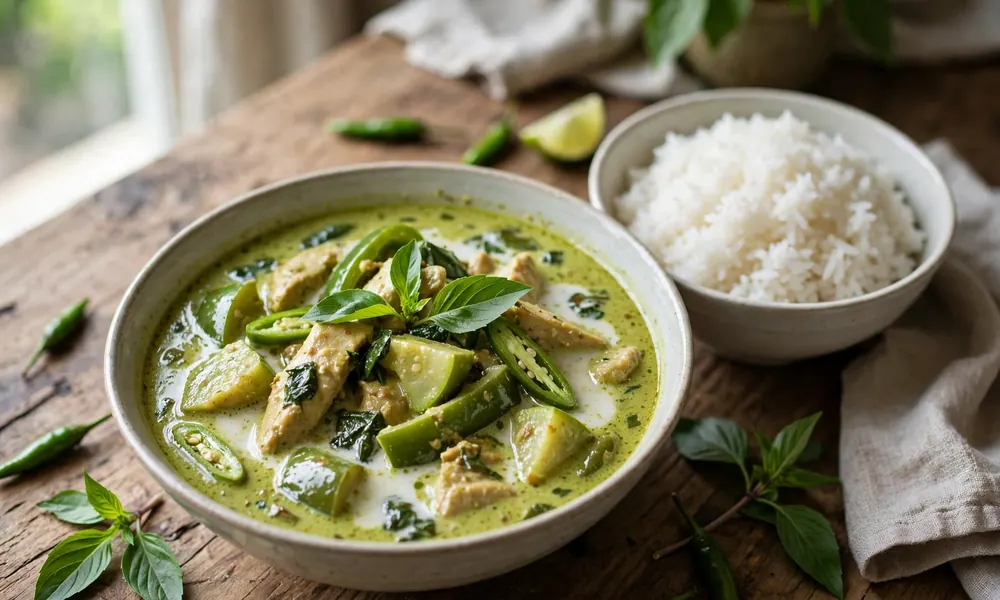
The best curry for a busy weeknight is a fast one: a Thai green curry with a good paste, or a simple lentil dal that comes together in half an hour. Both reward a good base and a short cook, and neither punishes you for being in a hurry. The best curry for a family meal is a mild one: a North Indian chicken curry or a Japanese curry, with the heat kept gentle and the spice warm rather than fiery. Serve it with rice and bread, and let everyone season their own plate.
The best curry for vegetarians is a vegetable or paneer curry, where the spices do the talking: cauliflower, chickpea, or spinach and paneer, with a base that lets the vegetables taste of themselves.
Serve it with rice or bread: our guide to naan explains how to choose bread sturdy enough to hold a rich sauce.
Common Curry Mistakes, and How to Fix Them
The most common mistake is adding spices to a cold or crowded pan, where they steam instead of blooming and taste raw. Fix it by cooking spices in hot oil, briefly, before anything wet goes in. The second mistake is rushing the onions: pale, undercooked onion makes the whole sauce taste sharp. Fix it by giving onions a full ten minutes. The third mistake is boiling coconut milk or yoghurt hard, which splits the sauce into curds and oil. Fix it by simmering gently and adding dairy off the heat.
The fourth mistake is serving a curry straight off the boil. Give it ten minutes off the heat first: the flavours settle and the sauce thickens.
Curry Cooking Checklist
- Cook the onions slowly until soft, sweet, and golden — ten to fifteen minutes, not two.
- Bloom ground spices in hot oil for about thirty seconds before adding anything wet.
- Match the base to the style: onion-tomato for richness, coconut for lightness, yoghurt for tang.
- Keep the heat in proportion to the eaters, and taste before adding more chilli.
- Simmer coconut milk and yoghurt gently, never boil them hard, or the sauce will split.
- Rest the curry for ten minutes off the heat before serving, then finish with fresh herbs or lemon.
Frequently Asked Questions
What is the difference between curry and curry powder?
Curry powder is a pre-mixed blend of ground spices, while curry is the finished dish — a base, a protein or vegetable, spices, and time, cooked together. The powder is an ingredient; the curry is the meal.
How do I stop my curry tasting raw and dusty?
Bloom the spices in hot oil for about thirty seconds before adding tomatoes or coconut milk. Raw-tasting curry almost always means the spices never got properly cooked.
Why has my coconut curry split?
Coconut milk splits when it is boiled hard or cooked for too long at high heat. Simmer it gently, and add it later in the cooking rather than at the start.
How long should a curry simmer?
Fast curries need twenty to thirty minutes; slow-cooked meat curries need two to three hours. In both cases, the sauce should coat a spoon and the flavours should taste settled, not raw.
What should I serve with curry?
Rice suits saucy curries, and bread suits thicker ones. Plain basmati rice, naan, or roti all work.
Can I freeze leftover curry?
Yes, most curries freeze well for up to three months, and many taste better the next day. Freeze in portions, thaw overnight in the fridge, and reheat gently.
Bottom Line
Curry in 2026 rewards the cook who respects the base: slow onions, spices bloomed in hot oil, heat matched to the table, and time to let the dish settle. Whether it is a quick Thai green curry on a weeknight or a slow-cooked lamb curry on a Sunday, the best curry is the one whose flavours you can follow — warmth, then base, then the ingredient itself, then a fresh lift at the end. Get those layers right, and the dish takes care of itself.


