Serving boards make dinner look expensive in 2026 because they change how food arrives at the table. A roast carried in on a warm wooden board, a loaf torn open beside it, a scatter of herbs and lemon — suddenly an ordinary meal looks like something you planned all day. The board gathers the food into one generous display, keeps everything within reach, and tells everyone to help themselves.
This guide is about serving boards only: the flat boards you present food on, carry to the table, and eat from together. It is not about chopping or prep work. A serving board can hold a Sunday roast, a loaf of bread, pastries, a dessert, or a grazing spread. The best ones share four qualities: a surface that suits the food, a size that fits the table, a shape that is easy to carry, and a finish that is safe to eat from.
Key takeaways
- Buy a serving board for presenting food, not for chopping — knife work will scar and spoil its looks.
- Wood is the most forgiving all-round choice; marble and slate stay cool and suit cheese and desserts.
- A board around 18 by 12 inches serves four to six people; bigger gatherings need two boards, not one crowded one.
- A juice groove is essential for roast meat, and a handle makes a loaded board far easier to carry.
- Choose a food-safe finish, oil wooden boards regularly, and never soak a wooden board or put it in the dishwasher.
Serving Boards Are Not Cutting Boards
A cutting board is a work surface: it takes knife cuts all day, gets scrubbed hard, and is expected to scar. A serving board is a presentation surface: food is placed on it already cooked or sliced, guests serve themselves, and it stays on the table while everyone eats. A board built for one job will disappoint at the other, so a serving board does not need to survive a cleaver — it needs a flat, stable surface and a look that suits the table. If you want the full story on boards built for knife work, our guide to the best cutting boards of 2026 covers end-grain wood, plastic, and bamboo. For the ceramic side of hosting, see our guide to the best serving platters of 2026.
The 7 Best Serving Boards of 2026
These seven boards cover the ways people actually serve food at home: the roast, the loaf, the cheese spread, the dessert, and the big gathering.
1. Best Overall: Large Acacia Board With Handles
A large acacia board with cut-out handles is the board to buy first if you only buy one. Acacia resists everyday marks, its grain is warm and varied, and it darkens gently with oiling. At around 18 by 12 inches it holds a roast chicken and a loaf, or a spread for six. The handles let you carry a heavy, loaded board level, with two hands.
2. Best for Roasts: Walnut Board With a Juice Groove
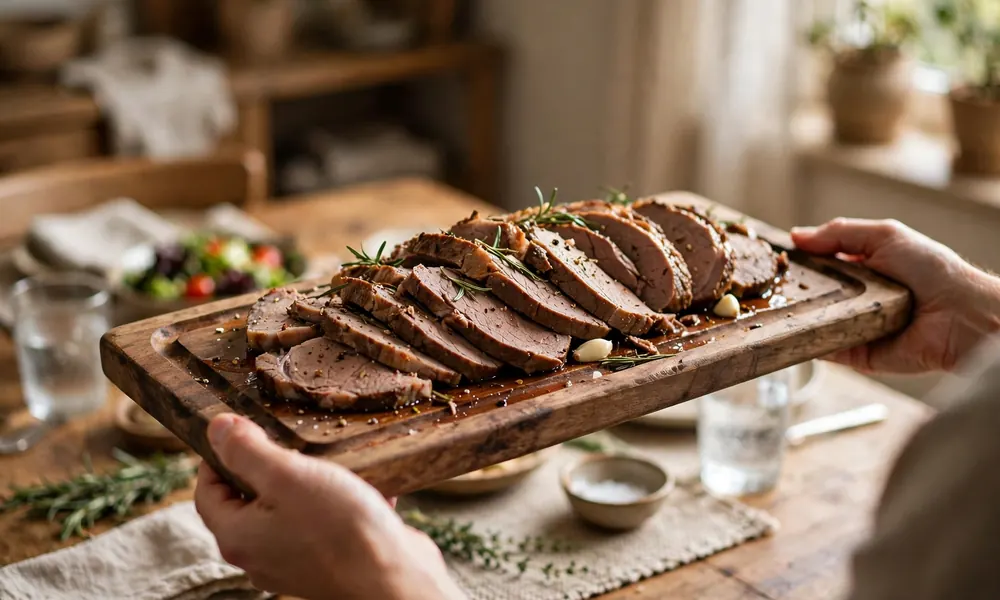
A roast needs a deep juice groove, and walnut does this job best. The groove runs around the edge and catches the juices that escape when meat rests and is sliced, so they pool on the board instead of running onto the tablecloth. Walnut is dense and dark, which hides the marks a roast leaves. Look for a board at least 20 inches long for a large roast.
3. Best Marble: White Marble Serving Board
Marble is the board for food that likes to stay cool: soft cheese, butter, desserts, and anything with chocolate. The stone holds a low temperature for a long time, so cheese keeps its shape on a warm evening. The trade-offs are real: marble is heavy, it can chip if dropped, and it stains if acidic food sits on it too long.
4. Best Slate: Dark Slate Serving Board
Slate suits a different kind of table. Its dark, matte surface makes pale food stand out — white cheese, pale bread, sliced fruit, and light pastries all look sharper against it. Slate stays cool like marble, wipes clean easily, and stacks well. Slice in the kitchen and serve on the slate, because a knife dragged across it can leave a pale scratch.
5. Best for Bread: Long Oak Bread Board
Bread deserves its own board, and a long oak board is the right shape for it. Oak is pale and sturdy, and a long, narrow board fits a baguette, a loaf, and a butter dish in a line down the middle of the table. A short board forces you to cut the loaf in half before it reaches the table; a long one lets the whole loaf arrive intact.

6. Best for Grazing: Round Mango Wood Board
A round board suits a small table and a grazing spread better than any rectangle. Food arranged in a circle is easy for everyone to reach, there are no corners to trap hands or crumbs, and the board looks friendly and informal. A round board around 15 inches across serves two to four people generously, and two round boards serve a bigger group better than one enormous rectangle.
7. Best for Big Gatherings: Extra-Long Live-Edge Board
When twelve people sit down, one ordinary board is not enough. A board of 30 inches or more, with one natural bark edge left visible, runs down the centre of a long table and holds a whole spread at once. Check that it is thick enough not to flex when loaded, that it sits flat without rocking, and that you have somewhere to store it.
Serving Boards Compared
The table below compares all seven boards on the details that matter when you are choosing.
| Board | Material | Best For | Size | Care |
|---|---|---|---|---|
| Acacia board with handles | Acacia wood | Everyday serving | 18 by 12 inches | Hand wash, oil monthly |
| Walnut carving board | Walnut wood | Roast meat | 20 inches long | Hand wash, oil monthly |
| White marble board | Marble | Cheese and desserts | 16 by 12 inches | Wipe clean, seal yearly |
| Dark slate board | Slate | Evening spreads | 16 by 12 inches | Wipe clean |
| Long oak bread board | Oak wood | Bread and baking | 24 inches long | Brush clean, oil monthly |
| Round mango wood board | Mango wood | Grazing for two to four | 15 inches round | Hand wash, oil monthly |
| Extra-long live-edge board | Hardwood slab | Big gatherings | 30 inches or more | Hand wash, oil monthly |
Wood, Marble, or Slate: Which Material Suits Your Table?
Wood is the safest first choice because it is forgiving in every way that matters. It is warm to look at, not too heavy to carry when loaded, and small marks can be sanded out and re-oiled. Hardwoods are the ones to look for: acacia, walnut, maple, and oak resist moisture and wear far better than soft pine or cheap bamboo. Marble and slate stay cool, which is a genuine advantage for cheese, butter, and desserts, and both wipe clean easily. The price is weight and fragility: a marble board large enough for a roast is heavy, and a dropped corner will chip. Neither stone should be used for cutting. For a cheese-led spread, our guide to the best charcuterie boards of 2026 goes deeper on matching board size to grazing for a crowd.
Size, Shape, Handles, and Juice Grooves
Size is the decision people get wrong most often: buy for the largest gathering you host regularly, not the smallest. A board that serves two will look sparse for six, while a board built for twelve will dominate a table set for two. Around 18 by 12 inches serves four to six people for a main course, and around 15 inches round serves two to four for grazing. Shape follows the table: rectangular boards suit long tables, round boards suit small square tables, and long narrow boards suit bread and roasts. A handle makes a loaded board far easier to carry, though it eats into the serving area. A juice groove is essential for a carving board and useful for any board that holds wet food.
Food-Safe Finishes and Everyday Care
A serving board touches food directly, so its finish matters. Wooden boards should be finished with food-safe oil or wax — mineral oil, beeswax, or a board butter made from the two — and nothing else. Varnish, lacquer, and ordinary furniture oil are not food-safe and can flake into food, so avoid any board that looks glossy like furniture. Wash wooden boards by hand with warm water and a little soap, dry them straight away, and never soak them or put them in the dishwasher. Oil a wooden board once a month, or whenever the surface looks pale and dry. Marble and slate just need a wipe with a damp cloth, and acidic spills should be wiped up promptly.
Serving Board Checklist
Use this checklist before you buy.
- Choose the board for presenting food, not for chopping — keep knife work on a cutting board.
- Measure your table and your cupboard first, then buy the largest size that fits both.
- Pick hardwood for everyday use, marble or slate for cheese and desserts that like to stay cool.
- Check for a juice groove if the board will hold roast meat or juicy fruit.
- Make sure the board has handles, or is light enough to carry safely with two hands when loaded.
- Confirm the finish is food-safe, and plan to oil a wooden board once a month.
Frequently Asked Questions
Can I use a serving board as a cutting board?
You can, but you should not if you want it to keep looking good. Cutting leaves knife scars and grooves that trap food, and on marble or slate it will dull your knife and scratch the surface. Keep a separate cutting board for prep work.
What size serving board should I buy?
For most households, a board around 18 by 12 inches is the best starting point: it serves four to six people for a main course. A round board around 15 inches across suits two to four people for grazing. If you regularly host more than eight, buy a second board.
Is wood or marble better for a serving board?
Wood is better for everyday serving because it is lighter, warmer, and more forgiving. Marble is better for cheese, butter, and desserts because it stays cool. If you can only buy one board, buy wood; add a marble board as a second if you host cheese evenings often.
How do I clean a wooden serving board?
Wash it by hand with warm water and a little soap, rinse, and dry it straight away. Never soak it or put it in the dishwasher. Once a month, rub it with food-safe mineral oil or board butter, leave it overnight, and wipe off the excess.
Do I need a juice groove on a serving board?
Yes, if the board will hold roast meat, a whole chicken, or juicy fruit — the groove catches the juices that would otherwise run onto the table. It is less important for a board that only holds bread, cheese, and dry snacks.
Are serving boards food-safe?
A good serving board is food-safe when it is finished with food-safe oil or wax and cleaned properly after every use. Avoid boards finished with varnish or furniture lacquer. Stone boards are naturally food-safe, but marble should be sealed once a year.
The Bottom Line
Serving boards make dinner look expensive in 2026 because they make dinner look generous, and generosity is what guests remember. The best board for most homes is a large acacia or walnut board with handles and a juice groove, oiled once a month and kept for the table rather than the chopping block.