Potato Keepers That Stop Sprouting in 2026
Potato keepers are the simplest fix for the most annoying kitchen waste: a bag of potatoes that sprouts, softens or rots before you cook with it. A good potato keeper is a dark, ventilated container that holds potatoes at room temperature, keeps light off them, lets damp air escape and stops them sitting in their own moisture. It does not need power, filters or clever technology. It just gives potatoes the three things they need — darkness, airflow and dryness — and keeps the three things that ruin them away: light, trapped damp and warmth.
Most of us store potatoes badly without realising it: the plastic bag traps moisture, a sunny spot triggers sprouting, and the fridge turns potato starch into sugar. A keeper solves all of that for the price of a few bags of potatoes. This guide explains how potato keepers work, which types are worth buying in 2026, how big a keeper you need, and the habits that keep potatoes firm for weeks.
Key Takeaways
- A potato keeper works by balancing darkness, airflow and dryness: vents let moisture out while the lid and walls keep light off the potatoes.
- Unglazed ceramic and terracotta breathe best and keep potatoes firm longest, while vented metal and wood are strong, practical alternatives.
- Never store potatoes in the fridge, in a sealed plastic bag or in sunlight: cold sweetens them, sealed bags trap damp, and light triggers sprouting and greening.
- Buy a keeper sized to how fast you cook: a household that uses a kilo a week needs a small bin, not one built for a month of potatoes.
- Check the potatoes weekly, remove any soft or sprouting one at once, and keep potatoes away from onions, which speed up sprouting.
Why Potatoes Sprout, Rot and Go Green
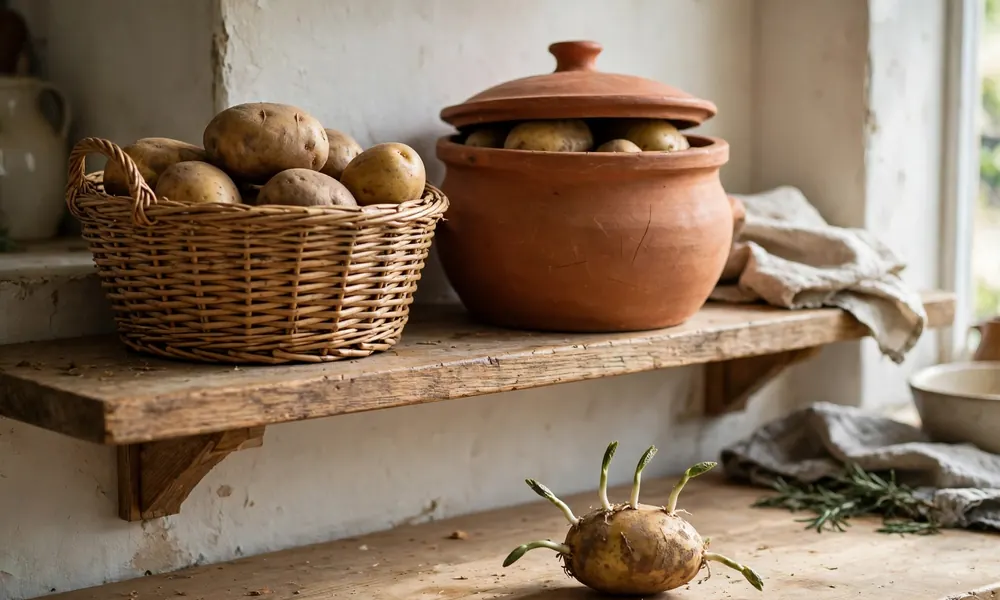
A potato is alive: even after harvest it keeps breathing, slowly using up its starch and waiting for the right conditions to grow. Light tells it to sprout, warmth speeds the process, and damp lets mould take hold — and once one potato starts to rot, the moisture it releases hurries its neighbours along. That is why a bag can look fine on Monday and be a sprouting mess by Friday.
Light also causes green patches, which signal a bitter compound called solanine. A lightly green potato can be salvaged by cutting the green parts away generously, but a potato that is green all over should be thrown away — and a keeper prevents greening entirely by keeping potatoes in the dark.
Potatoes keep best somewhere cool and dark, roughly 7 to 10 degrees Celsius — a pantry or a cupboard away from the oven. Warmer spots speed sprouting, while the fridge turns potato starch into sugar and gives cooked potatoes a strange sweet taste, so a keeper in a cool cupboard beats the fridge every time.
What Makes a Good Potato Keeper
The best potato keepers of 2026 share the same four qualities, whatever they are made from. Judge any keeper against these before you buy, and you will avoid the pretty containers that look the part and fail within a fortnight.
Airflow without light
Vents are the heart of a keeper. Small holes or slots let warm, damp air escape so condensation never settles on the potatoes. But the vents must be small and placed so that direct light does not pour in. The classic design — a lidded pot with a ring of small holes around the sides — gets this balance right. A keeper with no vents at all is just a sealed tub, and a keeper with huge slots is just a basket with a lid. Look for modest, well-spaced holes and a lid that sits close.
Darkness inside
The walls of the keeper should block light completely. Opaque ceramic, terracotta, metal and wood all do this well. Clear glass and clear plastic do not, however attractive they look, and neither does a wire basket. If you can see the potatoes clearly through the container, so can the light. Some keepers solve this with a solid outer bin and a ventilated inner basket, which is a good compromise if you like to lift the potatoes out easily.
Material that breathes
Unglazed ceramic and terracotta are the traditional choices because the porous material absorbs a little excess moisture and releases it slowly. Glazed ceramic wipes clean easily but breathes less, metal is tough and light, wood looks warm but must stay dry, and food-safe plastic is cheap but can trap condensation if its vents are poor.
Size that matches your cooking
A keeper that is too big is almost as bad as one that is too small: potatoes at the bottom of a deep bin get forgotten and damp, while a keeper that is too small means constant topping up. As a rough guide, one or two people who cook potatoes twice a week need about two to three kilos of capacity, and a family that cooks potatoes most nights needs four to five.
The Main Types of Potato Keeper, Compared
Every potato keeper on sale in 2026 falls into one of a handful of types. They all do the same job, but they suit different kitchens, budgets and habits. The table below compares them honestly, including the drawbacks sellers rarely mention.
| Type | Best for | Airflow | Typical capacity | Watch out for |
|---|---|---|---|---|
| Vented ceramic bin | Everyday kitchens; the all-round best choice | Excellent | 2–5 kg | Heavy; can chip if dropped |
| Terracotta pot | Maximum breathability; traditional kitchens | Excellent | 2–4 kg | Porous; stains and needs drying after washing |
| Vented metal bin | Busy family kitchens; easy cleaning | Good | 3–6 kg | Can dent; cheap ones rust at the seams |
| Wooden box or crate | Rustic kitchens; large harvests | Good | 3–8 kg | Absorbs damp; needs a dry spot |
| Woven basket with lid | Small kitchens; light use | Very good | 1–3 kg | Lets in light unless lined; hard to clean |
| Vented plastic bin | Budget buyers; lightweight storage | Fair to good | 2–5 kg | Traps condensation if vents are small |
If you only buy one, buy a vented ceramic bin: it gets the balance of darkness, airflow and durability right for the most people, looks good on a worktop and lasts for years. Terracotta runs it close and is better if your kitchen is damp, metal wins in busy households where things get knocked about, wooden crates suit bulk buyers, and plastic is fine as a starter keeper.
How to Use a Potato Keeper Properly
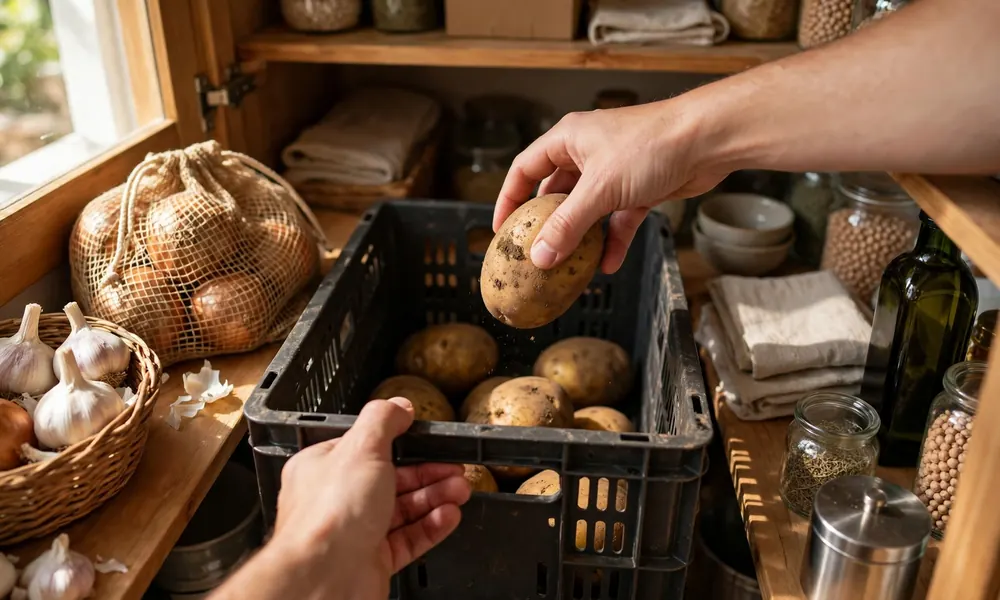
Buying the keeper is the easy part; using it well is what keeps potatoes firm for weeks. Start with dry potatoes: brush loose soil off, but do not wash them before storage, because water on the skins invites rot. If potatoes arrive damp, spread them on a tea towel for an hour first, and cook damaged potatoes first, because a damaged skin is an open door for mould.
Fill the keeper loosely and do not overpack it. Air needs to move between the potatoes, and a keeper stuffed to the brim behaves like a sealed tub. Put new potatoes on top of older ones so you use the oldest first, or keep a small note of the date you filled it. Store the keeper in the coolest dark spot you have: a pantry shelf, a cupboard away from the cooker, or a cool corner of a utility room. Kitchens with underfloor heating or a hot boiler cupboard are the worst spots, so choose the shelf, not the nearest one.
Check the potatoes once a week: tip the keeper out, pick out anything soft, sprouting or smelling off, and put the good ones back. This takes two minutes and saves the most potatoes, because one rotting potato in a closed keeper can spoil the rest in days. Wipe the keeper out when you empty it, and wash it properly — then dry it fully — every month or so.
Mistakes That Undo a Good Keeper
The most common mistake is storing potatoes with onions, which release gases and moisture that make potatoes sprout faster, while potatoes in turn make onions go soft — so keep them in separate keepers in separate spots. The same goes for fruit, whose ripening gives off ethylene that speeds sprouting, so keep the fruit bowl away from the potato keeper.
The second mistake is washing potatoes before storage, and the third is ignoring temperature: a keeper on top of the fridge, next to the oven or on a sunny windowsill is fighting a losing battle, however well made it is. Finally, do not buy in bulk unless you cook fast enough — even the best keeper cannot keep a ten-kilo sack fresh for two months in a warm kitchen.
Think of the potato keeper as part of a storage system rather than a single purchase. Pantry bins keep the rest of the cupboard tidy so the keeper is easy to reach and check, and a good masher turns stored potatoes into dinner with far less effort, as our guide to potato mashers explains. If you keep garlic as well, a dedicated garlic keeper keeps bulbs firm for weeks in the same way, just smaller and drier.
Potato Keeper Checklist
- Dark, opaque walls that block light completely, with no clear panels or wide slots.
- Small, well-spaced vents that let damp air out without letting light pour in.
- Capacity matched to your cooking: about 2–3 kg for one or two people, 4–5 kg for a family.
- A lid that sits close and lifts off easily with one hand when your other hand is full.
- Material you can clean and dry properly — ceramic, terracotta, metal or sealed wood.
- A cool, dark home for the keeper itself, away from the oven, the fridge top and sunny windows.
Frequently Asked Questions
How long do potatoes last in a potato keeper?
In a cool, dark keeper, most potatoes last three to five weeks, and firm varieties such as Maris Piper or King Edward can last longer. In a warm kitchen the same potatoes may sprout within a fortnight, so temperature matters as much as the keeper itself. Check weekly and use the oldest first.
Can I store potatoes in the fridge instead?
You can, but you should not. Fridge temperatures turn potato starch into sugar, which makes cooked potatoes taste sweet and brown too fast when fried. A cool cupboard and a dark keeper keep flavour and texture far better.
Should I wash potatoes before putting them in the keeper?
No. Brush off loose soil and let damp potatoes dry on a tea towel first. Washing adds moisture that invites rot, so wash potatoes just before you cook them, not when you store them.
Can I store onions in a potato keeper?
No — keep them apart. Onions release moisture and gases that make potatoes sprout faster, and potatoes make onions go soft. Give onions their own ventilated spot, ideally in a different cupboard.
What should I do with a sprouted potato?
Small sprouts on an otherwise firm potato can be cut off generously and the potato cooked as normal. If the potato is soft, wrinkled, green all over or smells off, throw it away. Never eat a potato that tastes bitter.
Is a ceramic keeper better than a metal one?
Ceramic breathes better and keeps potatoes firm longest in most kitchens, which is why it is our first pick. Metal is tougher, lighter and easier to clean, so it wins in busy households. Both work well provided they are vented, dark and kept somewhere cool.
Bottom Line
A potato keeper is a small, cheap purchase that pays for itself by stopping waste: dark walls, modest vents, a breathable material and the right size for your cooking. Buy a vented ceramic bin, keep it in a cool dark cupboard away from onions, check the potatoes weekly, and you will throw away far fewer potatoes in 2026.