
Best Shoe Horns for Easy Slip-Ons in 2026
The best shoe horns for easy slip-ons in 2026 turn a small daily struggle into a two-second motion. If you have ever crushed the heel of a good pair of shoes, wrestled with stiff leather in the morning, or bent down when your back would rather you did not, a well-chosen shoe horn changes the whole routine. It protects the heel counter, keeps the shoe’s shape, and lets your foot glide in without a fight.
Shoe horns are simple tools, but they are not all the same. Length, material, curve, and grip all matter, and the right one depends on whether you wear lace-up dress shoes, slip-on loafers, tall boots, or trainers. This guide compares the main types and explains what to look for.
Key Takeaways
- A long-handled shoe horn, around 60 centimetres or more, is the easiest option for anyone who finds bending down difficult.
- Metal shoe horns are the most durable and give the smoothest glide, while wooden ones feel warmer and look better on display.
- The curve matters more than the brand: a gentle, wide curve guides the heel in without pinching or catching.
- Short travel shoe horns are handy for bags and hotel rooms, but no substitute for a long one at home.
- A good shoe horn protects the heel counter, keeping expensive footwear holding its shape far longer.
Why a Shoe Horn Is Worth Owning
Every time you force a foot into a shoe without one, the heel counter — the stiffened cup at the back that holds the shoe’s shape — takes the strain. Do it often enough and the counter collapses, the leather creases, and shoes that should have lasted years start to look tired in months. A shoe horn takes that strain instead, holding the heel open while your foot slides along its smooth surface.
There is also a comfort argument. For anyone with a stiff back, sore knees, or limited mobility, bending down to tug on shoes is one of the day’s more awkward moments. A long shoe horn lets you put shoes on while standing, or while seated without doubling over. It is one of the cheapest accessibility aids you can buy, and once you have tried slipping shoes on in seconds, hands-free, it is hard to give up.
Finally, a shoe horn is a small act of care for good footwear. Leather shoes reward gentle treatment, and a horn paired with regular cleaning and shoe trees keeps them looking new far longer. If you wear suits to work, where polished shoes complete the outfit, that care pays off daily.
The Main Types of Shoe Horn
Long-Handled Metal Shoe Horns
The long metal shoe horn is the classic choice, and for most people the best one. Typically 60 to 80 centimetres long, it reaches the floor while you stand upright, so there is no bending at all. Stainless steel versions are smooth, rust-resistant, and nearly indestructible.
The only real drawback is that metal feels cold and can look utilitarian — hardly a problem when it hangs by the door. If you have tall boots, look for an extra-long model, since a standard long horn may not reach deep enough into the boot shaft.
Wooden Shoe Horns
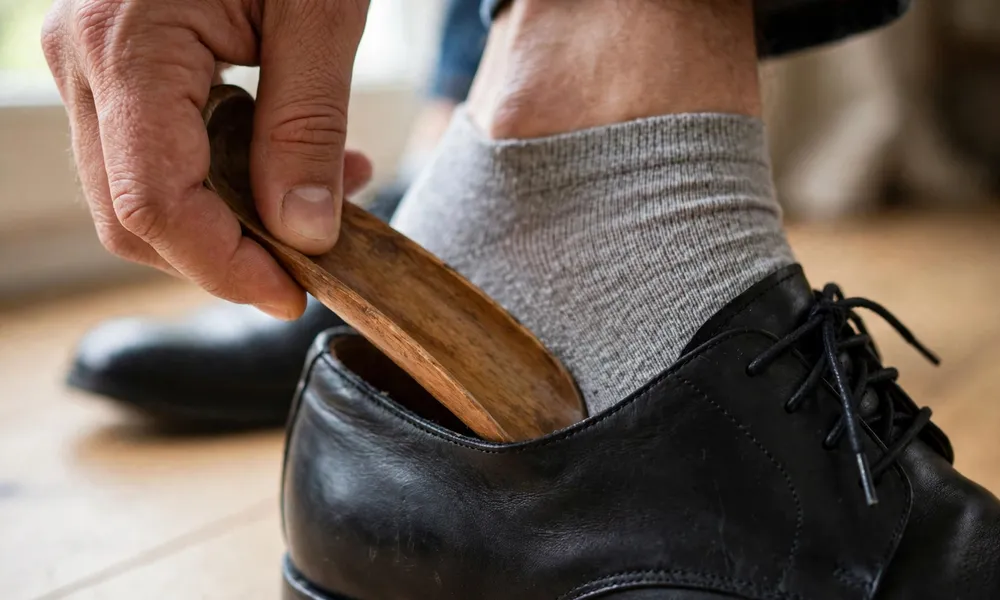
Wooden shoe horns are the traditional, handsome option. A polished hardwood horn — walnut, beech, or bamboo — feels warm in the hand and looks at home on a hallway table. Short wooden horns, around 20 to 30 centimetres, are popular as gifts and work well for slip-ons when you are seated.
Wood is not as slick as polished metal, so the glide is slightly less effortless, and a cheap wooden horn can have a rough finish that snags socks. Buy one sanded smooth and finished with oil or lacquer and it will serve well for years.
Travel and Pocket Shoe Horns
Travel shoe horns fold, telescope, or come as a short flat piece that slips into a bag. They are invaluable on holiday, in hotel rooms, and in gym bags, where stiff new shoes and tired feet are a bad combination. A folding metal travel horn is the most practical: it packs small, opens to a usable length, and survives being tossed in luggage.
Be realistic about what a travel horn can do. At 15 to 20 centimetres it still requires bending down, and it will not help much with tall boots. Think of it as a backup, not a replacement for the long horn waiting by your front door.
Boot Horns and Extra-Long Models
Boots need a different approach. A standard shoe horn often cannot reach past the ankle of a tall boot, leaving you to force your heel in anyway. Extra-long horns, 70 centimetres and beyond, solve this, and some have a wider, flatter blade to support the broader heel of a boot.
Some boot horns pair with a boot jack — a separate tool for pulling boots off. The two together make a complete boot routine: horn to get in, jack to get out, and no damage to either the boot or your back.

Comparison Table
| Type | Typical Length | Best For | Drawbacks |
|---|---|---|---|
| Long metal | 60–80 cm | Daily use, standing up, stiff shoes | Can feel cold and plain |
| Wooden | 20–45 cm | Slip-ons, display, gifts | Less slick glide, shorter reach |
| Travel / folding | 15–20 cm | Bags, hotels, gym | Still needs bending down |
| Extra-long boot horn | 70–90 cm | Tall boots, limited mobility | Too long to store neatly |
| Plastic | 15–30 cm | Budget, children, spares | Can flex or snap under pressure |
How to Choose the Right Shoe Horn
Start with length. If you can bend comfortably and mainly wear slip-ons, a short horn will do. If you wear lace-ups or have a stiff back, buy long — 60 centimetres is a sensible minimum.
Next, consider the material. Stainless steel is the workhorse: smooth, strong, and easy to clean. Wood is the looker: warm and attractive, but choose a well-finished one. Plastic is fine as a spare or for children, but it flexes under a heavy heel and can crack, so do not make it your only horn if you wear stiff leather shoes.
Then check the curve and width. The blade should have a gentle spoon shape that cradles the heel without digging in. Too flat and your heel slips off the side; too curved and it pinches. A width of around 4 to 5 centimetres suits most adult heels.
Finally, think about the handle. A loop lets you hang the horn by the door where you will actually use it, and a soft or textured grip helps if your hands are stiff or damp. The best shoe horn is the one you reach for without thinking.
How to Use a Shoe Horn Properly
Using a shoe horn is simple, but a little technique makes it smoother. Loosen the laces first — even the best horn cannot do its job if the shoe is pulled tight. Slip the horn into the back of the shoe between your heel and the heel counter, curved side facing your foot. Step down and forward, letting your heel slide along the horn, then pull it out once your foot is fully in.
With a long horn, stand with the shoe on the floor, place the horn, and step in while holding the handle upright. Do not yank it sideways or twist it while your weight is on it; a gentle straight pull is all it takes. If the horn keeps slipping, check that the shoe is loose enough and that the horn sits flat against the heel counter.
One common mistake is leaving the horn in the shoe and walking off — it will fall out and can scuff the lining. Another is using a horn too short for boots, which bends the heel counter anyway. Get the length right and keep the motion smooth.
Caring for Your Shoes and Your Horn
A shoe horn needs almost no maintenance. Metal horns wipe clean with a damp cloth; wooden ones benefit from an occasional rub with furniture oil. Store it somewhere dry and within reach of the door — a hook, a stand, or a basket by the entrance works well.
The horn is only part of the routine. Rotate your shoes so no pair is worn two days running, use shoe trees to hold the shape overnight, and clean and condition leather regularly. For trail running shoes and other sports footwear, a horn helps too, though softer heel counters are more forgiving than leather. Dry wet shoes slowly at room temperature, never beside a radiator, which cracks leather.

Who Benefits Most from a Shoe Horn
Some people need a shoe horn more than others. If you have arthritis, a bad back, or reduced flexibility, a long horn is close to essential — it removes one of the day’s most awkward movements entirely.
Parents will recognise another use: a horn makes getting small feet into stiff school shoes far less of a morning battle. And anyone who owns expensive leather shoes should think of a horn as cheap insurance for footwear that cost a hundred times more. Even hiking sandals and other outdoor footwear benefit, since a horn stops you crushing the heel in a hurry.
Checklist: Buying a Shoe Horn in 2026
- Pick the length first: at least 60 centimetres for standing use, longer for boots or tall users.
- Choose stainless steel for durability, or well-finished wood for looks.
- Check the blade curve and width — gentle, wide, and smooth, with no rough edges.
- Make sure the handle has a hanging loop or a comfortable grip for daily use.
- Avoid thin plastic as your main horn; keep it as a spare or for travel only.
- Buy a short travel horn if you wear dress shoes away from home.
Frequently Asked Questions
Do shoe horns really protect shoes?
Yes. The heel counter is the stiffened part of the shoe that holds its shape, and forcing a foot in without a horn crushes it. A horn holds the counter open while your heel slides in, keeping the shoe’s structure intact far longer.
What length shoe horn should I buy?
For standing use, choose at least 60 centimetres; taller people should look for 70 or more. For seated use with slip-ons, 20 to 30 centimetres is enough. For tall boots, an extra-long model of 70 to 90 centimetres works best.
Is metal or wood better for a shoe horn?
Metal, usually stainless steel, is smoother, stronger, and easier to clean, so it is the best choice for daily use. Wood looks better and feels warmer, and a well-finished wooden horn works perfectly well — mostly a matter of taste.
Can a shoe horn help with a bad back?
Yes, that is one of its best uses. A long-handled shoe horn lets you put shoes on while standing upright, without bending down or balancing on one leg.
Do I need a shoe horn for trainers?
Trainers have softer heel counters than leather shoes, so the damage is less severe, but a horn still helps — especially with slip-on trainers or stiff new pairs.
How do I stop a shoe horn from slipping?
Loosen the shoe first, place the horn flat against the heel counter with the curve facing your foot, and step in smoothly without twisting. If it still slips, the horn may be too narrow for your heel, or the shoe may be too tight — try a wider blade.
The Bottom Line
The best shoe horns for easy slip-ons in 2026 are the long, smooth, well-made ones you will actually use every day. A stainless steel horn of 60 centimetres or more is the safest all-round buy: it reaches the floor while you stand, glides effortlessly, and lasts for years. Add a short travel horn for trips, and your shoes — and your back — will be better for it.


