The best trail running shoes 2026 has to offer are no longer niche kit for mountain racers. They are the shoes more runners reach for on weekends, on holidays, and on any run that leaves the pavement behind. A good pair grips loose gravel, sheds mud, protects your toes from rocks, and still feels comfortable after three hours off road. The wrong pair will have you sliding on descents.
This year the field is stronger than ever. Cushioning has got softer without getting sloppy, outsoles grip better on wet rock, and several brands have made trail shoes almost as light as road shoes. The differences between the top models are now small, so price, fit, and the terrain you run on matter most.
We tested the leading trail shoes of 2026 across rocky mountain paths, muddy forest trails, dry desert singletrack, and wet grass, comparing grip, comfort, durability, and value. Below are the nine that stood out and how to pick the right one.
Key Takeaways
- The best all-round trail shoe of 2026 balances grip, cushioning, and weight, and works on rock, mud, and hard-packed dirt.
- Deep, widely spaced lugs matter most on soft, muddy ground; sticky rubber matters most on wet rock.
- Buy trail shoes a half size larger than your road shoes to protect your toes on descents.
- Waterproof membranes keep rain out but trap sweat in, so most runners are happier in breathable, non-waterproof shoes.
- Replace trail shoes after roughly 500 to 650 kilometres, or sooner if the lugs are worn smooth.
How We Picked the Best Trail Running Shoes of 2026
Every shoe was judged on grip, cushioning, protection, fit, and durability. Grip was tested on wet rock, loose gravel, mud, and steep grass. Cushioning was judged over long runs, since a midsole that feels plush for five kilometres can feel dead after twenty. Protection covered rock plates, toe bumpers, and how the upper stood up to thorns. We also weighed value: the most expensive shoe is not automatically the best.
The 9 Best Trail Running Shoes of 2026
These nine shoes cover every kind of trail runner, from first-timers to ultra-distance racers. Each one earns its place for a different reason, so match the shoe to your terrain.
1. Best Overall: Hoka Speedgoat 6
The Speedgoat remains the benchmark for all-round trail running, and the 2026 version is the most balanced yet. Its deep five-millimetre lugs bite into mud and loose dirt, the Vibram outsole holds on wet rock, and the thick cushioning smooths out rocky descents. For runners who want one pair for almost any trail, this is the safest pick.
2. Best for Long Distances: Brooks Cascadia 18
Ultra runners love the Cascadia because it stays comfortable when the miles pile up. The cushioning stays supportive late in a race, the rock plate shields your feet from sharp stones, and the upper dries quickly after crossings. It is a touch heavier than some rivals, but on runs over three hours that protection is worth carrying.
3. Best for Technical Trails: La Sportiva Bushido III
When the trail turns into a scramble over boulders and roots, the Bushido III is in its element. It sits low to the ground for a precise, connected feel, and the sticky rubber outsole grips slick rock better than almost anything else here. The fit is snug, so your foot never slides on steep traverses, though it is less forgiving on flat fire roads.
4. Best Lightweight Racer: Nike Pegasus Trail 5
The Pegasus Trail 5 is the shoe to choose when you want speed. It is light and responsive, with a ReactX midsole that returns energy on smoother trails and a grippy outsole for moderate mud. It lacks the deep lugs of the mud specialists, so it is not the pick for boggy winter trails, but for dry summer singletrack and trail races it is hard to beat.
5. Best for Muddy Conditions: Saucony Peregrine 14
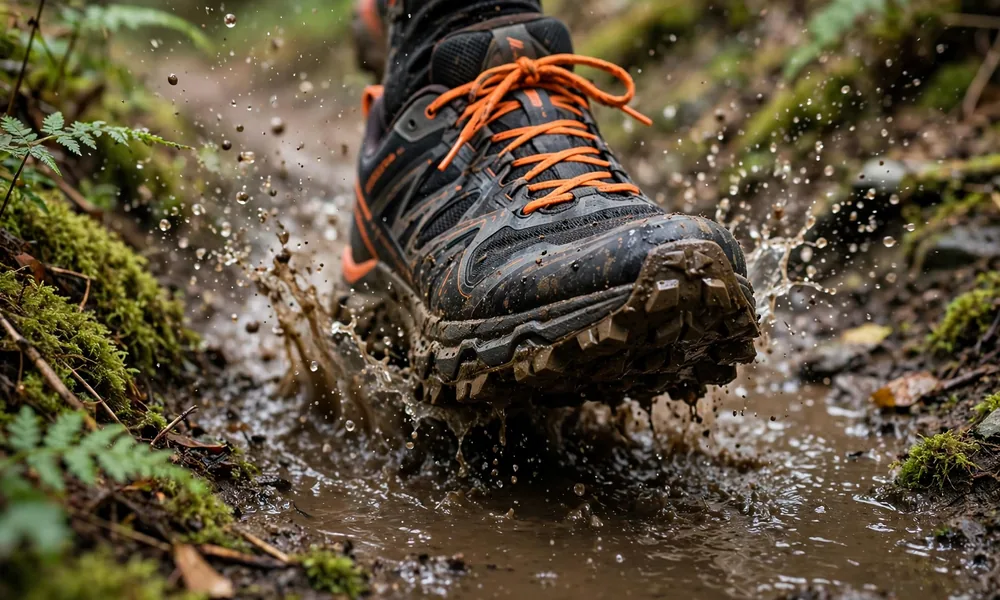
Mud is where the Peregrine earns its reputation. Its widely spaced lugs shed clinging mud instead of clogging up, and the PWRTRAC outsole grips wet grass and slick clay where other shoes skate. The ride is firm and fast, and the price undercuts most rivals. If your local trails stay wet half the year, this is the shoe that will keep you upright.
6. Best for Wide Feet: Altra Lone Peak 8
The Lone Peak 8 is the friendliest shoe here for wide feet and for runners who like their toes to spread naturally. Its roomy toe box and zero-drop platform encourage a natural stride, and the MaxTrac outsole grips well across mixed terrain. The cushioning is softer than before, so it now works for longer distances too.
7. Best Value: Merrell Agility Peak 5
The Agility Peak 5 delivers far more than its price suggests. It has a protective rock plate, a grippy Vibram outsole, and a comfortable, well-padded upper, all for noticeably less than premium rivals. It is a little heavier than the lightest shoes here, but it is the best value of 2026.
8. Best for Rocky Terrain: Salomon Sense Ride 5
The Sense Ride 5 is built for rocky, mountainous trails. Its Contagrip outsole combines different rubber compounds for grip on wet and dry rock, the Sensifit upper locks the midfoot down, and the cushioning balances comfort and ground feel. It runs slightly narrow, so wide-footed runners should try it before buying.
9. Best for Speed on Mixed Terrain: Adidas Terrex Agravic Speed
The Agravic Speed is a racing shoe that still copes with real trails. It is light and quick, with a Continental rubber outsole that grips confidently on rock and hard-packed dirt, and a breathable upper that stays cool in summer. Its lugs are shallower than the mud specialists, so it suits drier conditions best, but for fast trail races it is a contender.

Best Trail Running Shoes 2026 Comparison Table
| Shoe | Best For | Weight (approx.) | Drop | Lug Depth |
|---|---|---|---|---|
| Hoka Speedgoat 6 | Overall | 291 g | 5 mm | 5 mm |
| Brooks Cascadia 18 | Long distances | 301 g | 8 mm | 4.5 mm |
| La Sportiva Bushido III | Technical trails | 305 g | 6 mm | 4 mm |
| Nike Pegasus Trail 5 | Lightweight racing | 280 g | 10 mm | 4 mm |
| Saucony Peregrine 14 | Muddy conditions | 275 g | 4 mm | 5 mm |
| Altra Lone Peak 8 | Wide feet | 277 g | 0 mm | 4 mm |
| Merrell Agility Peak 5 | Value | 310 g | 6 mm | 5 mm |
| Salomon Sense Ride 5 | Rocky terrain | 290 g | 8 mm | 4.5 mm |
| Adidas Terrex Agravic Speed | Mixed-terrain speed | 270 g | 6 mm | 4 mm |
Weights are for a single men’s UK 8 shoe and vary by size.
How to Choose the Right Trail Running Shoes
Choosing trail shoes is simpler than the marketing suggests. Start with the terrain you run most, then fit, then cushioning. A shoe designed for mud will feel clumsy on dry fire roads, and a light racer will leave your feet battered on rocky trails.
Match the Outsole to Your Terrain
The outsole is the single most important part of a trail shoe. Deep, widely spaced lugs shed mud and grip soft ground, while shallow lugs with sticky rubber grip rock and hard-packed dirt. If your routes mix everything, pick a versatile all-rounder.
Get the Fit Right
Trail shoes should fit differently from road shoes. Buy a half size larger than usual, because your feet swell on long runs and slide forward on descents, and cramped toes lead to black toenails. Your heel should feel locked in and your toes free to spread. Always try them on with the socks you will run in.
Cushioning and Drop
Cushioning is personal. Heavily cushioned shoes protect your legs on long, rocky runs but can feel vague on technical ground. Firmer, lower shoes give better ground feel but demand stronger feet and ankles. A higher drop suits heel strikers, while a low or zero drop suits midfoot strikers. There is no best drop, only the drop that suits your stride.

Trail Shoes vs Hiking Boots: Which Do You Need?
Many runners wonder whether they need trail shoes at all when they already own walking boots. The answer depends on speed and distance. Trail shoes are lighter, more flexible, and far more comfortable for running, while boots offer ankle support and protection for slow, loaded walking. For steep, slow hikes with a heavy pack, boots still win. If you are building a kit for both, our guide to the best hiking boots covers the strongest options for walking.
Do You Need Special Socks for Trail Running?
Yes, and they matter more than most runners expect. A good trail sock wicks sweat, prevents blisters, and adds cushioning where your foot meets the shoe. Merino wool blends work well in cool weather, while thin synthetic socks dry fastest in summer. Avoid cotton, since it holds moisture and causes blisters. For the pairs that hold up best on rough trails, see our guide to the best hiking socks.
Can Trail Running Shoes Double as Travel Shoes?
Trail shoes are surprisingly good travel companions. They are comfortable for all-day walking, grippy on wet pavements and cobbles, and tough enough for unplanned hikes, which makes them a smart single-pair choice for active trips. The trade-off is that they look sportier than a smart shoe and their lugged soles feel awkward on smooth indoor floors. If you want one pair for city walking and trail days on holiday, our roundup of the best walking shoes for travel compares options that balance comfort, weight, and versatility.
Trail Running Shoe Buying Checklist
- Know your main terrain: mud, rock, forest trails, or a mix.
- Buy a half size larger than your road shoes.
- Check lug depth and rubber type, not just the brand name.
- Try shoes on with your running socks and test the heel hold.
- Choose breathable, non-waterproof uppers unless you run in constant rain.
- Plan to replace your shoes after 500 to 650 kilometres.
Frequently Asked Questions
What are the best trail running shoes for beginners in 2026?
Beginners should start with a versatile all-rounder such as the Hoka Speedgoat 6 or the Merrell Agility Peak 5. Both grip well on most surfaces, cushion comfortably, and forgive the odd misstep while your ankles adapt.
Can I run on roads in trail running shoes?
You can, but it wears the lugs down faster and feels less smooth than a road shoe. Short road sections between trails are fine. If most of your run is on tarmac, a road shoe or a light hybrid such as the Pegasus Trail 5 is better.
How long do trail running shoes last?
Most trail shoes last 500 to 650 kilometres, though muddy and rocky terrain wears them out faster than smooth dirt. Replace them when the lugs are worn smooth or the midsole feels flat.
Are waterproof trail running shoes worth it?
For most runners, no. Waterproof membranes keep rain out but trap sweat inside, so your feet end up wet anyway on long runs. They make sense in cold, wet winters, but breathable shoes dry faster the rest of the year.
Should trail running shoes be tight or loose?
Neither. They should feel secure around the heel and midfoot with room for your toes to spread, and you should fit a thumb’s width between your longest toe and the end of the shoe. If your toes touch the front downhill, go up half a size.
What is the difference between trail running shoes and hiking shoes?
Trail running shoes are lighter, more flexible, and built for moving fast over uneven ground, with grippy lugs and quick-drying uppers. Hiking shoes are stiffer and more protective, with tougher uppers and more support for slow walking with a pack. Running in hiking shoes feels clumsy, while hiking in trail shoes works on easier trails.
The Bottom Line
The best trail running shoes 2026 has produced are led by the Hoka Speedgoat 6 for most runners, with the Brooks Cascadia 18 for long distances, the La Sportiva Bushido III for technical ground, and the Saucony Peregrine 14 for mud. Pick the shoe that matches your terrain, buy a half size up, and pair it with proper socks.