The best smart locks for rental properties 2026 solve the oldest headache in renting: keys. Lost keys, copied keys, keys handed to a cleaner who never returns them, and the awkward key exchange every time a tenant moves out. A good smart lock replaces all of that with a code created in seconds and deleted just as fast, which is why landlords are fitting them faster than almost any other home upgrade.
Rentals are a special case, though. The lock has to install without drilling new holes, come off cleanly when the tenancy ends, survive heavy daily use, and keep working when the Wi-Fi drops or the batteries run low. A lock that is brilliant in an owner-occupied home can be a poor fit in a rental, so the right choice depends on the property, the turnover, and how much control the landlord wants to keep.
This guide compares the strongest options for 2026, explains what matters most in a rental setting, and covers installation, code management, and turnover. Every lock below is renter-friendly and proven in real rental use.
Key takeaways
- Choose a retrofit or deadbolt-replacement lock that installs without drilling and restores the original hardware on move-out.
- Unique codes for every tenant, cleaner, and guest beat shared keys and make turnover instant and secure.
- Keypad entry is the most practical unlock method for rentals because it needs no phone, no fingerprint enrolment, and no app.
- Long battery life, a physical key backup, and clear low-battery warnings prevent lockouts.
- Agree the lock in writing with the landlord or tenant before fitting it, and record who holds each code.
Why Smart Locks Make Sense for Rental Properties
Key management is one of the most expensive hidden costs of renting. Every lost key means a callout, every tenant change means a rekey or a new cylinder, and every unreturned key is a security risk that is hard to quantify. Smart locks remove most of that work. When a tenant leaves, the landlord deletes a code instead of changing the lock, and the property is secure again within a minute.
Tenants benefit too. There is no key to lose, no lockout at midnight, and no need to wait at home for a tradesperson. A temporary code lets a plumber in for an hour and stops working afterwards. For short-term rentals, guests receive a code before arrival and check in without meeting anyone.
There is also a quieter benefit: an activity log shows when the door was locked and unlocked. Landlords can see that a cleaner arrived on time, tenants can prove the door was locked when they left, and everyone spends less time arguing about keys. For landlords comparing options, smart locks made for apartment living show how the same ideas work in smaller rental homes.
What to Look for in a Rental Smart Lock
Not every smart lock suits a rental. The best choices share a short list of features that matter far more in a tenanted home than in one the owner lives in. Run through these before buying, and the shortlist almost writes itself.
Renter-Friendly Installation
The ideal rental lock fits the existing deadbolt and leaves no new holes. Retrofit models replace only the interior thumbturn, so the outside of the door and the original key cylinder stay untouched. Full deadbolt replacements are also fine if they use the standard cut-out, but anything that needs drilling should be agreed with the landlord first.
Code Management
Look for unlimited or generous unique codes, scheduled codes that only work during set hours, and one-time codes for guests and tradespeople. Remote code creation matters too: a landlord should be able to issue a new code without visiting the property, and delete an old one the moment a tenancy ends.
Battery Life and Backup Access
A rental lock should run at least six months on a set of batteries and warn clearly before they die. A physical key backup is essential, because a tenant should never be locked out by a flat battery. Some locks also accept a quick charge from a portable battery, which is a useful safety net.
Build Quality and Weather Resistance
Rental doors get heavy use, so the lock needs a solid metal body, a motor strong enough to throw the bolt every time, and weather sealing if the door faces the elements. A lock that jams in damp weather or struggles with a slightly sticky bolt will generate maintenance calls all year.
The Best Smart Locks for Rental Properties 2026
The locks below were chosen for rental use specifically: easy fitting, strong code management, reliable hardware, and a clean exit when the tenancy ends. Prices move through the year, so treat the figures as a guide.
| Lock | Unlock methods | Best for | Typical price |
|---|---|---|---|
| August Wi-Fi Smart Lock | App, auto-unlock, key | Retrofit fitting | Mid-range |
| Schlage Encode Plus | Keypad, app, key | All-round rental use | Higher |
| Yale Assure Lock 2 | Keypad, app, key | Key-free living | Mid-range |
| Ultraloq U-Bolt Pro | Keypad, fingerprint, app, key | High turnover | Mid-range |
| Eufy Smart Lock C220 | Keypad, fingerprint, app, key | Budget rentals | Lower |
August Wi-Fi Smart Lock
The August Wi-Fi Smart Lock is the classic retrofit choice and remains the easiest lock to fit in a rental. It replaces only the inside thumbturn, so the landlord keeps the original keys and the outside of the door never changes. Tenants unlock with the app or auto-unlock as they approach, and landlords create and revoke guest codes remotely. It is the best pick when the lease forbids changing the exterior hardware, though a keypad add-on is worth budgeting for, as it has none of its own.
Schlage Encode Plus
Schlage has made door hardware for decades, and the Encode Plus feels like it. The keypad is backlit and easy to read, the motor is strong, and built-in Wi-Fi means no extra hub is needed. It supports many unique codes, scheduled access, and an activity log, and it keeps the standard key as a backup. For landlords who want one lock that simply works across many properties, this is the safest all-round choice, and it pairs naturally with smart locks built for front doors on the main entrance.
Yale Assure Lock 2
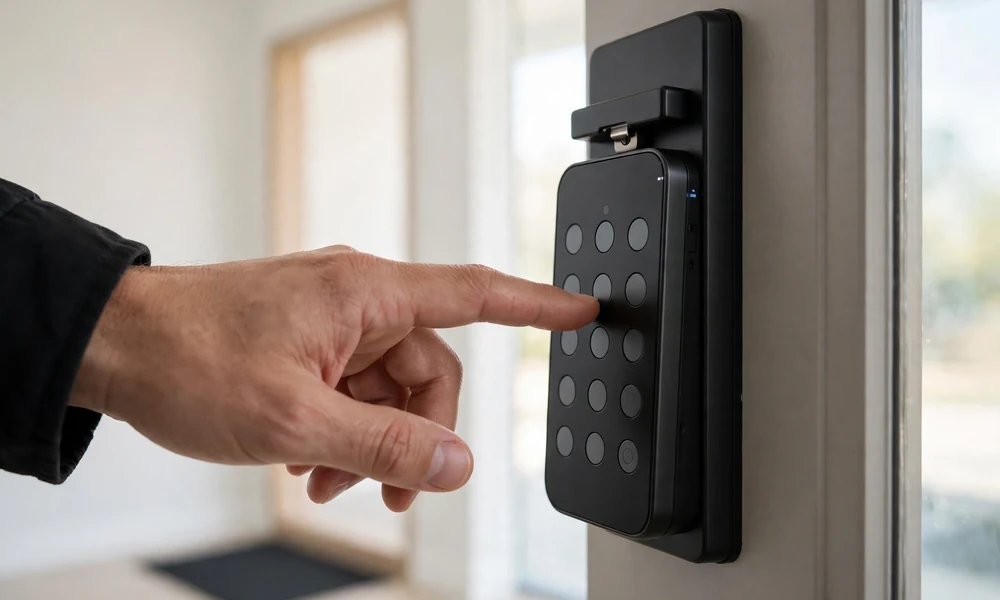
The Yale Assure Lock 2 is a clean, compact keypad lock that suits modern rental doors. It offers key-free entry by code, with optional fingerprint and Wi-Fi modules, and its slim design suits flats and townhouses alike. Code management is straightforward, auto-lock secures the door behind tenants, and battery life is strong. It suits landlords who want a tidy keypad lock without paying for features they will never use.
Ultraloq U-Bolt Pro
High-turnover rentals need a lock that can handle many users, and the U-Bolt Pro is built for exactly that. It combines a keypad, fingerprint reader, app control, and a physical key, with room for dozens of codes and fingerprints. Landlords can set temporary codes for cleaners and guests and check the access log without handing over a key. The fingerprint reader is genuinely fast, which tenants notice daily, and the price undercuts several rivals.
Eufy Smart Lock C220
The Eufy C220 is the value pick in this round-up. It includes a keypad and fingerprint reader at a price that makes fitting a whole portfolio realistic, and its battery lasts for months. Setup is quick and the app is simple. It lacks some premium polish, but for a budget rental it delivers the features that matter most.
Keypad, Fingerprint or App-Only: Which Unlock Method Fits a Rental?
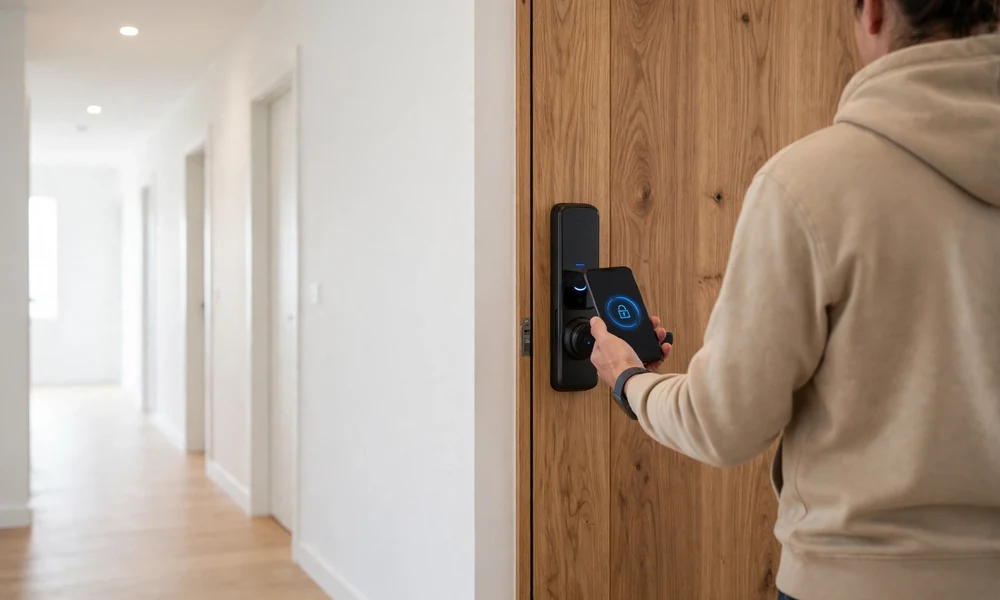
The keypad is the most practical unlock method for a rental, and it is not close. A code works for every tenant, guest, cleaner, and tradesperson without an app install or fingerprint enrolment. It also survives a dead phone battery, which app-only unlocking does not. Fingerprint readers are a nice extra for long-term tenants, but awkward for short stays because each guest must enrol. App-only locks suit a single household but frustrate everyone else who needs access. The sensible rental setup is a keypad first, with fingerprint or app access as a bonus for the main tenant.
Installing a Smart Lock Without Damaging the Door
Most smart locks install with a screwdriver in under half an hour, using the holes already in the door. Remove the interior thumbturn, fit the new interior unit, and test the bolt before tightening everything. Keep the original hardware in a labelled bag so it can be refitted on move-out, and photograph the door before and after the change. If the bolt sticks, adjust the strike plate rather than forcing the motor, which drains batteries and wears out early. Tenants should check the lease first: many landlords welcome a smart lock, but the agreement should be in writing, including who pays for it and who keeps it when the tenancy ends.
Managing Tenant Turnover and Guest Codes
Turnover is where smart locks earn their keep. Give every tenant a unique code, plus separate codes for the cleaner and any regular tradesperson. When someone moves out, delete their code immediately and check the activity log to confirm it is gone. For short-term rentals, set codes that only work during the booking dates and expire automatically at check-out. Never reuse a code, and change the master code between tenancies. A small written record of who holds which code prevents confusion and proves the property was secured properly. For the full entry setup, smart doorbells for small homes add a camera and chime that complement a keypad lock nicely.
Rental Smart Lock Checklist
Use this checklist before buying, and again before the first tenant uses the lock.
- Confirm the lock fits the existing deadbolt with no drilling required.
- Check the lease and get written agreement from the landlord or tenant.
- Create a unique code for every person who needs access.
- Test the physical key backup and the low-battery warning.
- Turn on auto-lock and check the activity log works.
- Store the original hardware safely for refitting on move-out.
Frequently Asked Questions
Can a tenant install a smart lock in a rental property?
In most cases yes, with the landlord’s written permission. Retrofit locks that leave the exterior unchanged are usually welcomed, but check the lease first and keep the original hardware for move-out.
What happens to the smart lock when a tenant moves out?
The tenant’s code is deleted, the master code is changed, and the lock can stay fitted or be swapped back to the original hardware. Either way, the old tenant loses access the moment their code is removed.
Do smart locks work without Wi-Fi?
Keypad and fingerprint entry work without Wi-Fi, because codes are stored on the lock itself. Wi-Fi is only needed for remote changes, notifications, and logs, so a lock keeps working during an outage.
Are smart locks safe for rental properties?
Yes, when set up properly. Unique codes, auto-lock, and a strong deadbolt make a smart lock at least as secure as a traditional key, and deleting codes on turnover removes the risk of unreturned keys.
How long do smart lock batteries last?
Most good locks run six to twelve months on a set of batteries, depending on use. The lock warns well before the batteries die, and the physical key remains as a backup.
Who pays for a smart lock in a rental?
It depends on the agreement. Landlords often pay because the lock stays with the property, while tenants sometimes pay for the convenience and take a retrofit lock with them when they leave.
The Bottom Line
The best smart lock for a rental property is the one that fits without drilling, gives every person their own code, and keeps working when the Wi-Fi fails. For most landlords, the Schlage Encode Plus is the strongest all-round choice, the August Wi-Fi Smart Lock is the easiest retrofit, and the Ultraloq U-Bolt Pro suits high-turnover rentals best. Pick the lock that matches the property and the tenancy, agree it in writing, and key trouble becomes a thing of the past.