Why Stair Treads Beat Bare Wood for Safety in 2026
Bare wooden stairs look wonderful in a hallway, and that is exactly the problem. Polished wood is one of the slipperiest surfaces in a home, and a staircase is the one place where a slip has a long way to fall. Stair treads fix that mismatch without hiding the wood you paid for. A tread is a single grip pad fitted to each step: it gives every footfall a textured surface, softens the edge of the step, and comes off again when you want the bare wood back.
Socks on varnished pine are nearly frictionless, and even bare feet struggle on a glossy finish after a shower. Children run downstairs, older relatives take the stairs at night, and dogs skid on the way down. If your stairs are already carpeted, you do not need treads. If they are bare wood, laminate, or painted, treads are the cheapest meaningful safety upgrade in the house.
Key Takeaways
- Stair treads add grip to each individual step, which stops the slips that bare varnished wood causes in socks and bare feet.
- Carpet treads suit homes with children and pets, clear adhesive strips suit a minimalist look, and rubber treads suit the highest-traffic stairs.
- Measure your steps before ordering: a tread that overhangs the nosing will peel.
- Peel-and-stick treads need a clean, dry, dust-free step and a full day to bond before heavy use.
- A tread is not a hallway runner: runners lie flat on a floor, while a tread is shaped for a single step.
Bare Wood Is Beautiful — and Slippery
Wooden stairs earn their keep in a hallway. They are easy to sweep, they do not trap dust the way a fitted carpet does, and they suit almost every style of home. The trade-off is friction. A varnished or oiled tread has a smooth, hard finish, and friction depends on the two surfaces meeting: a sock, a bare foot, or a smooth-soled slipper against polished wood gives almost none. Add a little moisture and the stairs become a slide.
The risk is not theoretical. Stair falls are one of the most common household accidents, and they happen most often on the way down, when momentum is already working against you and the foot lands on the edge of the step. The edge, or nosing, is the danger point: it is the narrowest landing zone, and it is where a foot catches or slips. A good tread covers the full depth of the step and wraps slightly over that edge, so the landing zone is textured instead of polished. That single change removes the worst of the risk while leaving the staircase looking like itself.
What a Stair Tread Actually Is
A stair tread is a pad made to fit one step. Most are rectangular, roughly 20 to 25 centimetres deep and 55 to 75 centimetres wide, with a backing that sticks to the wood. Carpet treads have a short pile top and a rubberised or adhesive base. Clear adhesive strips are thin transparent films with a fine grit or textured surface. Rubber treads are moulded pads with a raised pattern, often with a bullnose edge that folds over the front of the step.
Stair Treads vs Hallway Runners
The names get mixed up because both involve carpet on a walking surface, but they are different products solving different problems. A hallway runner is a long, flat strip of carpet that lies on a flat floor to protect it and soften footsteps. It has no drops to deal with, no nosing to wrap, and no adhesive holding it to a vertical edge. A stair tread is fitted to a single step, shaped to that step, and held in place while gravity pulls at it from below. If your hallway needs a runner, buy a runner. If your stairs need grip, buy treads made for stairs, sized step by step.
The same distinction applies to the other stair-adjacent products in the house. Step stools are for reaching high shelves, not for standing on stairs, and they have nothing to do with tread grip. Step lights are the natural partner to treads: lights show you the edge of each step, and treads make that edge grippy. Fitted together, light plus grip covers both ways a stair trip happens — not seeing the step, and slipping on it.
The Main Types of Stair Tread
Carpet Treads
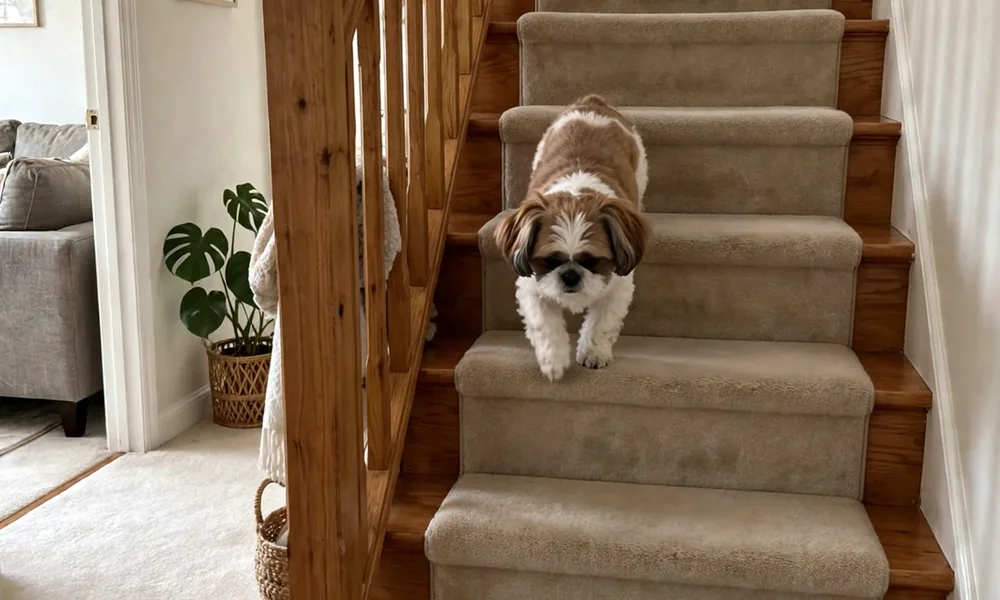
Carpet treads are the most popular choice, and the easiest to live with. A short, dense pile gives grip in socks and bare feet, feels warm underfoot on a cold morning, and comes in colours that blend with the wood or match the hallway carpet. They are the best choice for homes with children and pets, because claws and small feet get the most purchase from a textile surface.
Clear Adhesive Strips
Clear strips are for people who love the look of their wood and only want the safety. They are thin, transparent, and nearly invisible from a few steps away, with a fine grit or micro-texture that adds friction without changing the look of the staircase. They suit modern homes, light woods, and stairs you want to keep looking bare. The grip is real but less forgiving than carpet: they work best in dry conditions and on shoes or bare feet rather than thick socks.
Rubber Treads
Rubber treads are the workhorse. A moulded rubber pad with a raised tread pattern gives the strongest grip of the three types, in wet and dry conditions, and it lasts the longest — five years or more on a busy flight. They suit back stairs, garage entries, and homes where muddy boots are a daily fact. The look is practical rather than pretty, and they feel firm underfoot rather than soft.

How to Judge Grip Before You Buy
Grip is the whole point of a tread, and it is the hardest thing to judge from a product listing. Start with the surface. Run your hand across it: a good tread feels rough or deeply textured, not smooth with a pattern printed on it. Carpet treads should have a short, dense pile that springs back when pressed; a long, soft pile looks plush but compresses flat underfoot and gives less grip. Clear strips should feel like fine sandpaper. Rubber treads should have raised ridges you can feel through a sock.
Next, check the backing. A tread that slides on its own backing is useless, however grippy its top is. The backing should be full-coverage adhesive or a rubberised base that grips the wood, not four small sticky pads at the corners. Finally, think about water. A tread that grips when dry and slides when wet has failed at the moment you need it most. Rubber handles wet feet best, carpet handles them well, and clear strips are the weakest in the wet.
Measuring and Fitting Treads That Stay Put
Measure every step before you order, because no two flights are identical. Measure the depth from the back of the step to the nosing, and the width across. Most treads come in standard widths of 55, 65, or 75 centimetres; choose a width that leaves a small margin of wood visible on each side rather than one that overhangs the edge. A tread should sit a few millimetres back from the nosing or wrap neatly over it — never hang past it, or it will catch toes and peel.
Count your steps twice, then add two spare treads to the order. One spare covers a fitting mistake, and the second covers the first tread that wears out, which is always the one at the bottom of the flight. Sweep and wipe each step, and let it dry completely — dust and wax are the enemies of adhesive. Start at the bottom step and work up, peeling the backing a little at a time and pressing from the centre outwards. Stand on each tread as you go to seat the adhesive, and leave the stairs alone for a full day before heavy use.
Stair Treads Compared
| Type | Best For | Grip When Wet | Looks | Lifespan |
|---|---|---|---|---|
| Carpet treads | Families, pets, cold mornings | Good | Warm, blends with decor | 2–3 years |
| Clear adhesive strips | Keeping the wood visible | Fair | Nearly invisible | 1–2 years |
| Rubber treads | Back stairs, muddy boots, maximum grip | Excellent | Practical | 5+ years |
| Stapled carpet treads | Painted stairs, permanent fix | Good | Traditional | 4–5 years |
Cleaning, Wear, and When to Replace
Replace a tread when the middle is visibly worn smooth, when an edge has lifted and will not stick back down, or when the adhesive has yellowed and hardened. A worn tread is worse than a bare step in one specific way: it looks safe, so people trust it, while the grip is gone. If you have baby gates at the top and bottom of the stairs, treads and gates together cover the two biggest stair risks in a home with small children — the fall itself, and access to the stairs unsupervised.

Before You Buy: The Checklist
- Measure the depth and width of every step, including winder steps on a turning flight.
- Choose the tread type for your household: carpet for families and pets, clear strips for looks, rubber for maximum grip.
- Check the backing covers the whole tread, not just the corners, so edges cannot curl.
- Order two spare treads for fitting mistakes and the first worn step.
- Clean each step with washing-up liquid and water, and let it dry fully before fitting.
- Leave the stairs alone for twenty-four hours after fitting so the adhesive bonds properly.
Frequently Asked Questions
Do stair treads damage wooden stairs?
Peel-and-stick treads do not damage sound varnished wood when removed properly. Warm the tread with a hairdryer, peel slowly, and clean any residue with white spirit followed by a wash.
Can I use stair treads on painted stairs?
Yes, but check the paint first. Adhesive treads can lift flaking or poorly bonded paint when removed. If the paint is sound and has cured for at least a month, treads stick well. On fresh paint, wait the full curing time before fitting anything adhesive.
How many treads do I need?
One per step, plus two spares. Count every step including the bottom one and the top landing step if it is part of the flight. A thirteen-step flight needs fifteen treads in the order, not thirteen.
Are clear stair treads actually grippy?
Yes, in dry conditions, if you buy a textured strip rather than a smooth one. They are less grippy than carpet or rubber in socks, and weakest when wet. They are a good choice for light-traffic stairs where looks matter, and a poor choice for a bathroom-adjacent flight.
Can dogs use carpet stair treads?
Dogs do better on carpet treads than on any other type. The textile surface gives claws purchase. Avoid clear strips for dogs — claws slide on them.
Do I need treads if I already have a stair carpet?
No. A fitted stair carpet already provides the grip a tread would add. Treads are for bare wood, laminate, or painted stairs. If your carpet is worn smooth, replace the carpet — adhesive will not bond to carpet pile.
The Bottom Line
Stair treads are a small, cheap fix for a real risk. Bare wood is slippery, and a staircase is the worst place in the house to slip. Carpet treads suit most homes, rubber suits the hardest-used stairs, and clear strips suit anyone who wants the wood visible. Our verdict: 10 out of 10 for value and safety — this is the rare home upgrade that costs little, takes an afternoon, and makes the house safer every single day after.