
Kids headphones are the one piece of children’s tech where the wrong buy is not just a waste of money but a risk to hearing, and it is the purchase parents most often get wrong by buying the adult pair on sale. A good pair limits the volume, fits a small head comfortably, survives being dropped, and sounds good enough that a child actually wants to wear it. A bad pair is too loud, too big, too fragile, or so uncomfortable it ends up in a drawer while the child goes back to a tablet speaker. The best kids headphones of 2026 are not the cheapest ones. They are the pairs that protect hearing first and everything else second.
Volume Limiting: The Feature That Matters Most
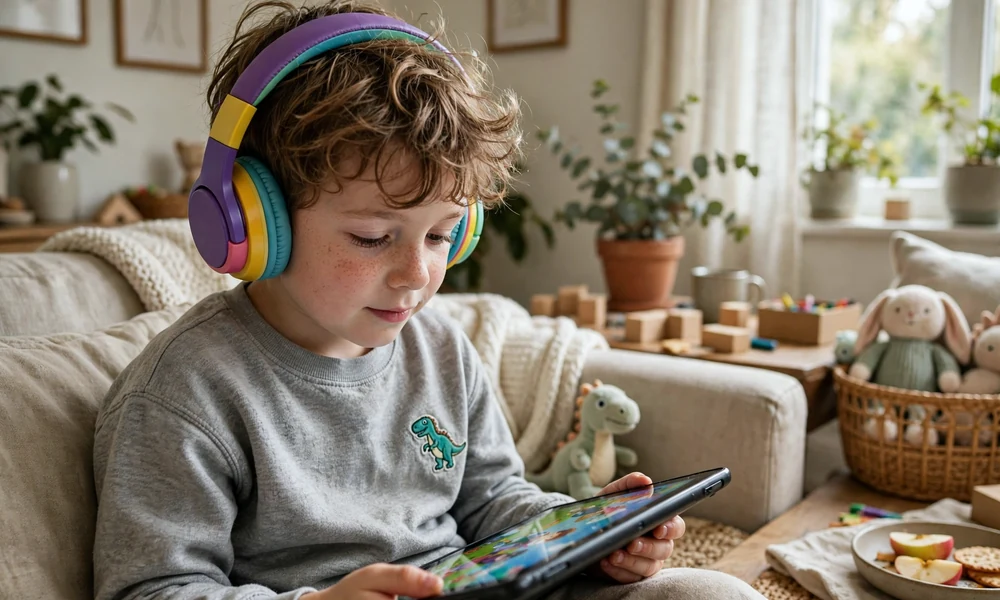
Children’s hearing is more sensitive than adults’, and a loud pair of headphones can damage it in a surprisingly short time. The rule every parent should know is 85 decibels: that is the maximum safe listening level for children, and a good kids pair caps the volume there, either by hardware or by software, so that even with the volume turned all the way up, the sound stays safe. Check how the limit works before you buy, because some pairs only limit the volume through their own cable or their own app, and the limit disappears when the child plugs them into a different device.
A volume limit is not the same as a volume warning, and it is not the same as a parental control in an app that a child can switch off. Look for a pair that states its limit clearly, that has been tested to a standard, and that keeps the limit on every connection: wired, wireless and Bluetooth. If a pair does not state a limit at all, do not buy it, however good it looks. The limit is the whole point of a kids pair, and without it you are buying an adult pair in a smaller size, which is not the same thing. For the adult equivalent, our guide to the best headphones of 2026 covers the full-size pairs these are built from.
Fit, Comfort and Durability
A child’s head is smaller, narrower and softer than an adult’s, and a pair that fits an adult will slide, pinch and ache on a child within half an hour. Look for a headband that adjusts small enough, ear cups that sit on the ears rather than pressing on them, and padding that is soft without being hot. Weight matters too: a heavy pair tires a small neck, and a pair that is too tight gives a headache, so the best pairs are light, with a clamping force that holds without squeezing.
Durability is the other half of the equation, because children drop things, step on things, and wind cables around everything. A good kids pair has a flexible headband that bends rather than snaps, thick cables or a wireless design, and ear cushions that can be replaced when they wear out. A foldable design helps for travel, but the hinge is the part that breaks first, so check that it feels solid. If the pair has a microphone for school calls, test that it works clearly, because a child on a video lesson needs to be heard as well as to hear. For the tablet most children use them with, our guide to the best kids tablets of 2026 covers the devices these headphones pair with.
Wired or Wireless: Which Suits a Child
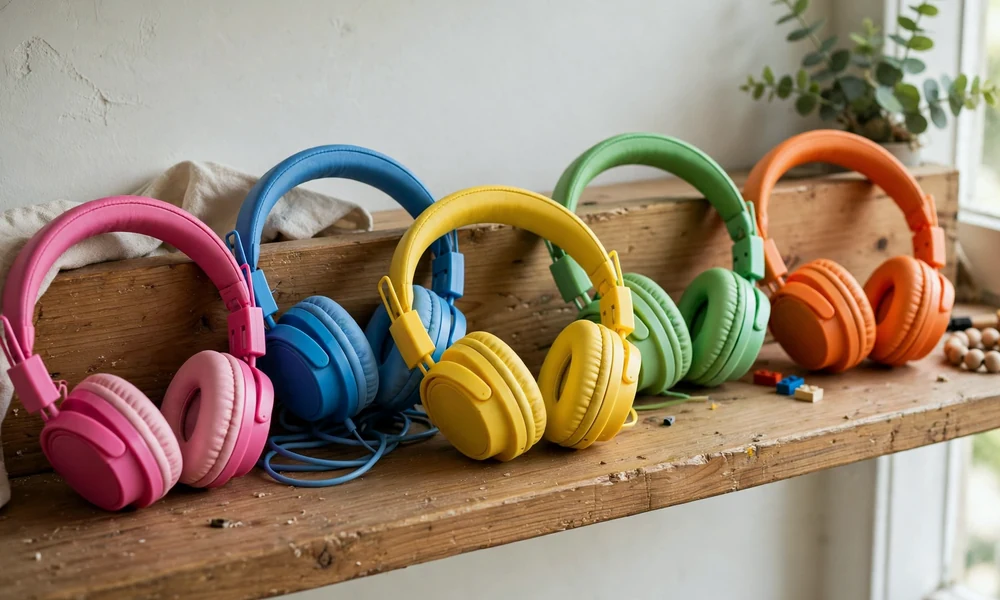
Wired pairs are simpler, cheaper and never run out of battery, which makes them the right choice for a younger child, a school bag, and a household that does not want another device to charge. The cable is the weak point: it tangles, it gets caught, and it breaks at the plug, so look for a thick cable, a reinforced plug, and a detachable cable if you can find one, because a replaceable cable is a pair that lasts twice as long. A wired pair also works with every device, including an aeroplane seatback screen, which is a place wireless pairs often cannot go.
Wireless pairs are freer and tidier, with no cable to tangle, and they suit a child who moves around, a car journey, or a home where cables become a trip hazard. Their weakness is the battery: a pair that runs out on a long journey is a pair that stops working, so look for a long battery life and a cable included for when it does run out. Some wireless pairs also share audio, so two children can listen to the same tablet, which is a feature worth having on a long trip. The choice is not about which is better in general, but about which suits your child: a younger child suits wired, an older child suits wireless, and a household with both will end up owning one of each.
The Best Kids Headphones of 2026 at a Glance
Six pairs stood out in 2026. The best overall is a wireless pair with a hard 85-decibel limit, a comfortable fit for ages four to twelve, a long battery life and a tough, flexible build. The best budget pick is a simple wired pair with a volume limit, a small price and a design that survives a school bag. The best for school is a pair with a clear microphone, a mute button and a wired connection that never runs out of battery in a lesson.
The best for travel is a folding pair with a hard case, a long battery and a cable included for the aeroplane. The best for younger children is a smaller, lighter pair with a lower volume cap and a design that fits a three-year-old. The best premium pick is a pair with active noise cancelling, a study mode and a build that will last until the child outgrows it. Kids listen to music and shows through earbuds too, and our guide to the best earbuds of 2026 covers the in-ear options for older children and adults.
Best Overall: The Wireless Volume-Limited Pair
The best overall kids headphones of 2026 are a wireless pair that gets the fundamentals right. Their volume limit is built into the hardware, so it holds on every device and every connection, and it is capped at 85 decibels, which is the level every expert recommends. The fit suits children from four to twelve, with a headband that adjusts in small steps and ear cups that are soft, cool and light enough for a long film or a school day.
What sets them apart is the battery and the build. They run for more than thirty hours on a charge, which means a week of use without plugging in, and they come with a cable for the times the battery does run out, which is the detail that saves a long journey. The headband flexes without snapping, the ear cushions are replaceable, and the whole pair is built to be dropped, which is the test that matters most. They are not the cheapest pair, and they are not the smallest, but they are the pair we would buy for our own children.
Best Budget and Best for School
The best budget kids headphones are a simple wired pair that does the essentials properly. They have a hard volume limit, a comfortable fit, and a cable that is thick enough to survive a school bag, and they cost less than a family takeaway. The compromises are honest: there is no wireless mode, so the child is tethered to the device, and there is no microphone, so they do not suit video lessons, but for watching shows, listening to stories and playing games, they are the sensible buy.
The best pair for school is one with a clear microphone, a mute button and a wired connection that never runs out of battery in the middle of a lesson. It suits a classroom and a video call, and its volume limit keeps the teacher happy as well as the parent. It takes a little more to set up, because the microphone needs to be positioned properly, but once it is, it is the pair that lets a child be heard as well as hear. A school pair that works is worth more than a fancy pair that does not.
Sharing, Hygiene and Making a Pair Last
Children share headphones, and a shared pair needs cleaning more often than most parents think. Ear cushions collect sweat and skin oils, and a pair passed between siblings or classmates should be wiped down regularly with a damp cloth and a little mild soap. Look for a pair with removable, washable ear cushions, because they are the part that wears out first and the part that is easiest to replace, and a pair with fresh cushions feels new again for the price of a spare part.
Teach the child the habit too: put the pair back in its case or on its hook, do not wind the cable tightly around the pair, and do not leave it on the floor where it will be stepped on. A pair that is looked after lasts until the child outgrows it, while a neglected pair breaks within a season, and the difference is usually a case and a little care. If the pair has a volume limit, check it now and then, because some pairs let the limit be switched off in an app, and a child who finds the setting will use it.
What to Avoid
The most common mistake is buying an adult pair because it is on sale. An adult pair has no volume limit, it is too big, too heavy and too tight, and it will damage a child’s hearing if the volume is turned up, which a child will do. A second mistake is buying a pair with no stated limit and trusting a sticker that says “kids safe” without a number: if the limit is not stated in decibels, it is not a limit you can trust.
A third mistake is choosing on looks alone. A pair with a cartoon character on it is not automatically a good pair, and the character does not make the volume safe or the fit comfortable. A fourth mistake is ignoring the age range: a pair built for a ten-year-old will not fit a four-year-old, and a pair built for a four-year-old will be outgrown in a year. Check the age range, check the limit, and try the fit before the return window closes.

The Verdict
For most families, the wireless volume-limited pair is the right buy: safe, comfortable, long-lasting and built to be dropped. Short budgets belong with the wired pair, school with the microphone pair, and travel with the folding pair. Whichever you choose, check the volume limit in decibels, check the fit, and make sure the limit holds on every connection. Kids headphones are a small purchase, but the hearing they protect is worth more than any pair.


