The top shelf of a kitchen cupboard, the highest shelf in a pantry, the box on top of the wardrobe: the things we use least often always end up exactly where we cannot reach them. A good step stool for reaching high shelves in 2026 closes that gap safely, giving you solid steps and a handrail, so you can take down a jar without standing on a chair.
Standing on a chair is the habit to break. A dining chair tips, its seat is slippery, and it was never designed to be climbed. A step stool is designed for exactly one job: a short, stable climb to a high shelf, then folding away out of sight. This guide compares the step stools that do that job best in 2026.
Key Takeaways
- Measure the shelf first: your eye level plus the stool should clear the shelf by a comfortable margin.
- Two steps suit most kitchen shelves; three steps with a handrail suit high pantry and wardrobe shelves.
- Wide, splayed feet and deep rubber pads matter more than weight: a stool that does not rock is a stool you can trust.
- A step stool is for climbing, not for resting your feet: it is a different tool from a footstool, and it is not a seat.
- Fold it flat and store it where you use it: a stool buried in the garage will not be there when you need it.
A Step Stool Is Not a Footstool, and Not a Ladder Either
The names sound alike, but a step stool, a footstool and a ladder are three different tools. A footstool is a low footrest, usually 25 to 35 centimetres high, whose only job is to support your feet while you sit. You should never stand on one. Our guide to the best footstools of 2026 covers that smaller piece in detail.
A bar stool is different again: a seat at counter height, made for sitting at a kitchen island, and no more a climbing aid than a dining chair is. A step stool, by contrast, is built to be climbed: two to four deep steps, a frame that stands on its own, and a top step wide enough for both feet.
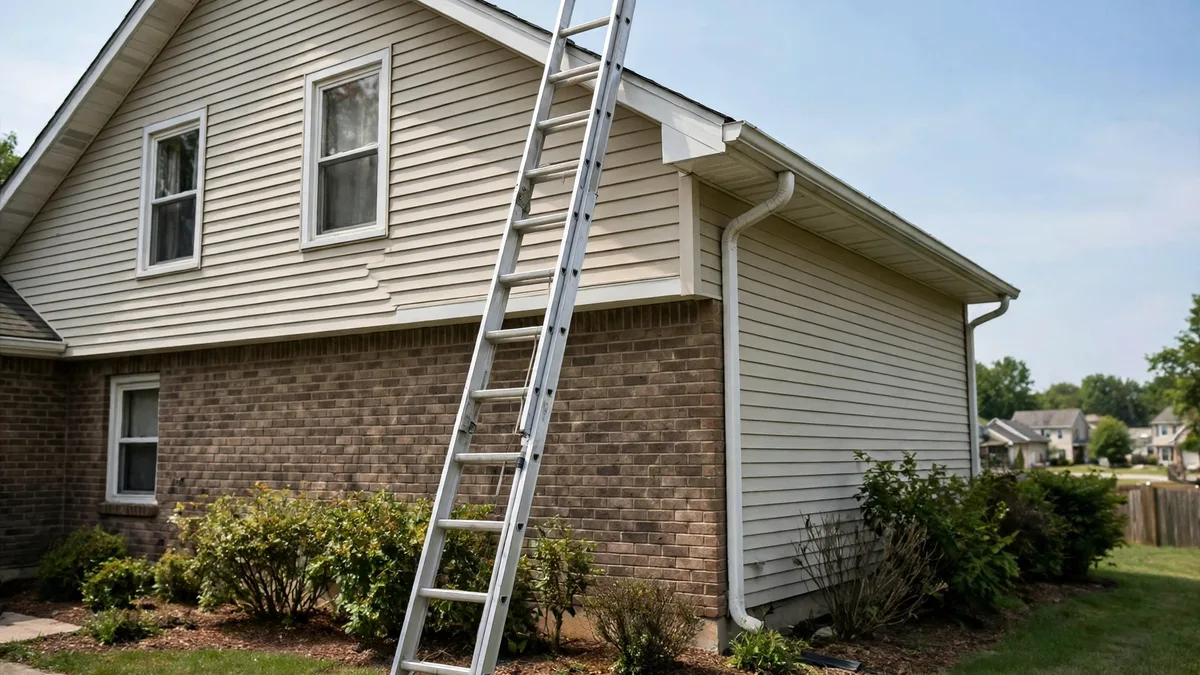
A tall ladder is the other end of the same job. It leans against a wall and reaches gutters and second-storey windows, but it is the wrong tool for a kitchen shelf: it needs wall space and is awkward indoors. If the job is outside at real height, a stool is the wrong tool too, and our guide to the best versus worst ladders of 2026 covers the taller options and the ones to avoid.
The Main Types of Step Stool
Step stools come in a handful of shapes, and the right one depends on how high your shelves are, who will use it, and where it will live when not in use.

Two-Step Folding Stools
The two-step folding stool is the kitchen classic. It opens into a small A-frame, gives you roughly 45 to 50 centimetres of extra height, and folds flat enough to slide between the fridge and the wall. It suits most kitchen wall cabinets and the middle shelves of a pantry. Look for a locking hinge that clicks firmly open, and steps deep enough for your whole foot, not just your toes.
Three-Step Stools With a Handrail
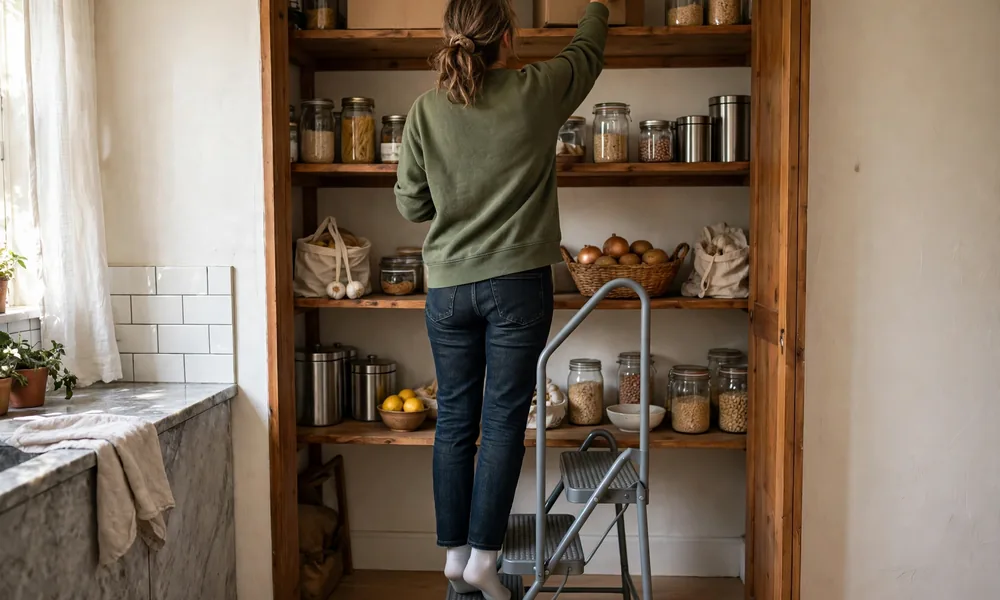
A three-step stool adds a third step and, on the best models, a handrail above the top step. That rail changes everything for high shelves: it gives you something to hold while you reach, and to steady yourself with while stepping down carrying a box. These stools suit tall pantry shelves and the tops of wardrobes.
Wooden Step Stools
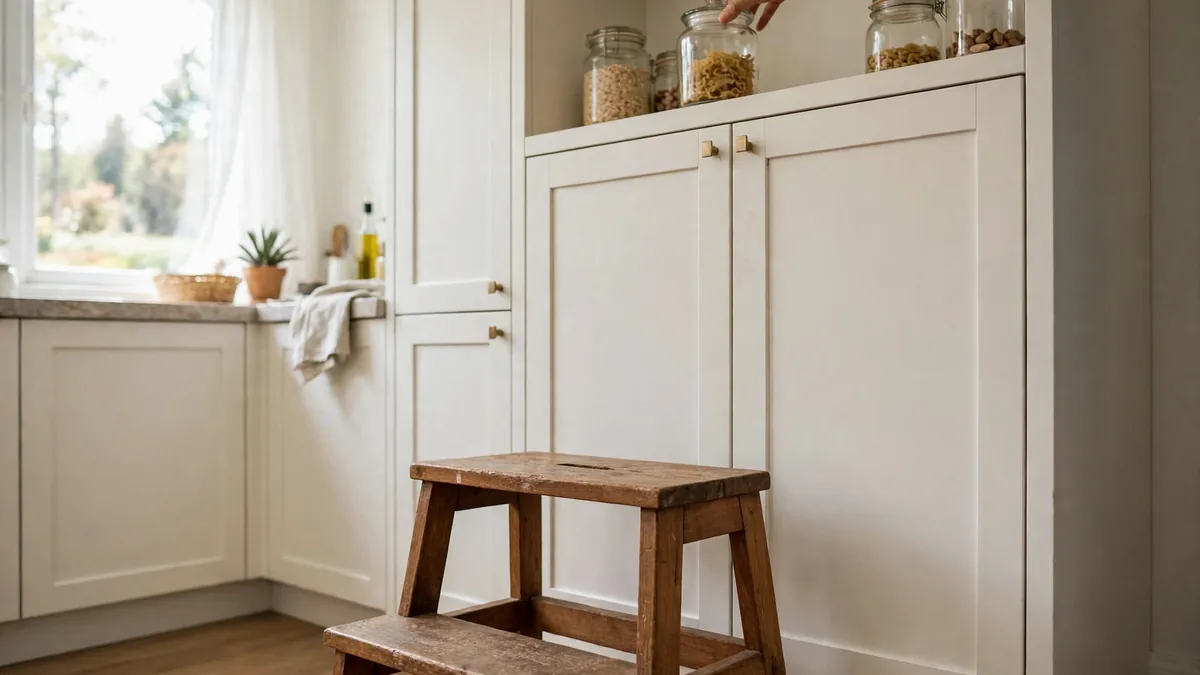
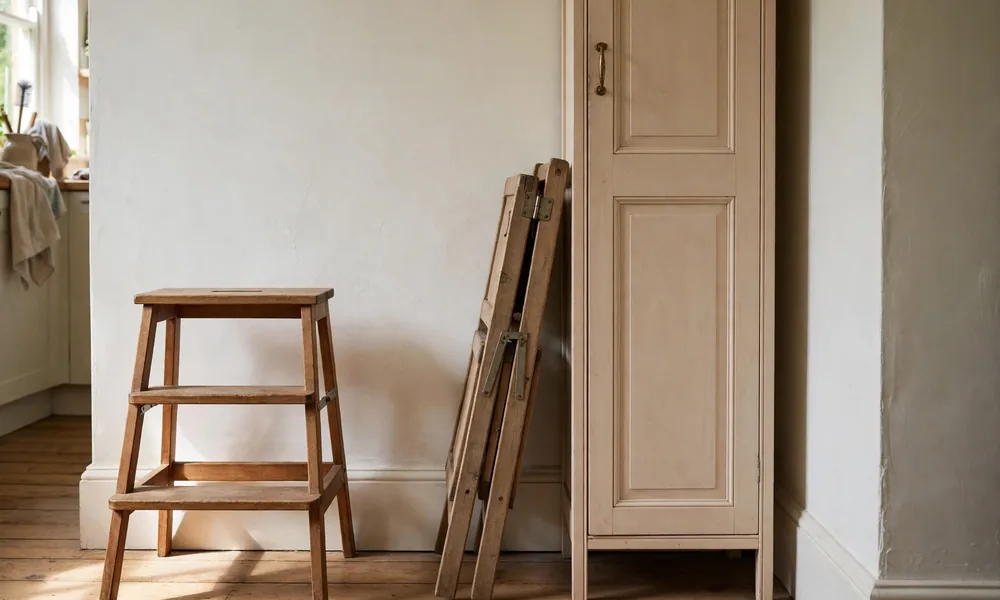
A wooden step stool is the one you leave out. Made from solid hardwood with wide, flat steps, it looks at home in a kitchen or hallway and doubles as a small side table. Wood is heavy and warm underfoot, and it does not flex the way thin steel can. The trade-off is storage: most wooden stools do not fold, so they need a permanent corner. Check the joints are glued and screwed, and the steps are non-slip, because varnished wood can be slippery in socks.
How High Do You Actually Need to Reach?
Before you buy, measure the shelf. Stand in front of it, reach up comfortably without stretching, and note where your fingertips fall. The gap between that point and the shelf is the height your stool must add. You want the shelf at chest or eye level when you stand on the top step, not at the limit of a stretch. Our guide to the best tape measures of 2026 covers the tapes that make this a one-minute job.
As a rough guide, a two-step stool suits shelves up to about 2 metres high for most adults, and a three-step stool with a handrail suits shelves up to about 2.4 metres. Taller than that, and you are in ladder territory. Also think about who else will use it: a stool bought for a tall adult may be too tall for a shorter person, and a household with several users is better served by a three-step model with a handrail.
What Makes a Step Stool Steady
Steadiness comes from four things: the feet, the frame, the steps, and the lock. Get all four right and the stool feels like a small staircase; get one wrong and it rocks every time you shift your weight.
Feet come first. Look for wide, splayed feet with deep rubber pads that grip tile, wood and vinyl without sliding. A good stool sits flat with no rocking when you press down on one corner. The frame should be rigid: push the open stool from the side and it should barely flex. A stool rated for 100 kilograms is not enough for a 90-kilogram person carrying a box, so buy a rating with a margin.
Steps matter more than most buyers realise. A good step is deep, at least 20 centimetres front to back, with a textured surface that grips your shoes even when they are dusty. Narrow steps force you to balance on your toes, and smooth metal steps are slippery in socks. On a folding stool, open it fully and listen for a firm click, then try to fold it without using the release. If it moves, walk away.
Step Stools for High Shelves at a Glance
| Pick | Steps | Best for | Watch out for |
|---|---|---|---|
| Best overall | 3 with handrail | High kitchen and pantry shelves | Heavier to carry between rooms |
| Best two-step folding | 2 | Everyday kitchen cabinets | No handrail for high reaches |
| Best with handrail | 3 | Anyone less steady on their feet | Needs storage space when open |
| Best wooden | 2 | Kitchens where it stays out | Does not fold flat |
| Best for small flats | 2 slim folding | Sliding behind a door | Narrower steps than full-size models |
| Best budget | 2 steel | Occasional use, low shelves | Thin steps can feel hard underfoot |
The Best Step Stools for High Shelves in 2026
1. Best Overall Step Stool
The best overall step stool is a three-step model with a handrail, wide splayed feet and deep rubber treads. It reaches the shelves a two-step stool cannot, the rail steadies every climb, and it folds flat enough to live behind a door.
2. Best Two-Step Folding Stool
The best two-step folding stool is light, opens with a firm click and folds to a few centimetres thick. It is the everyday kitchen stool: quick to grab, easy to carry, and tall enough for wall cabinets.
3. Best Step Stool With a Handrail
The best handrail stool has a rail that rises well above the top step and a top platform wide enough for both feet. It is the safest choice for high wardrobe shelves and for anyone who wants something solid to hold.
4. Best Wooden Step Stool
The best wooden stool is a solid hardwood two-step with wide flat steps and a non-slip tread. It stays out in the kitchen, looks like furniture, and is heavy enough that it never slides when you step onto it.
5. Best Step Stool for Small Flats
The best small-flat stool is a slim two-step folder that slides behind a door or between cupboards. It gives up a little step depth to gain storage, but keeps its wide feet and rubber pads, so it stays steady.
6. Best Budget Step Stool
The best budget stool is a simple two-step steel model with a locking hinge and rubber feet. It has no handrail and no frills, but it is steady, it folds flat, and it costs little enough to keep one in the kitchen and one in the bedroom.
Folding Flat and Storing It Where You Use It
A step stool only helps if it is within reach when you need it. Folding stools collapse to a few centimetres thick and slide behind a door, between the fridge and the wall, or beside a kitchen cabinet. Wooden stools do not fold, so they need a corner of their own, beside the cupboard they serve.
Keep the stool clean and dry, and check the feet and the hinge every few months. Rubber pads wear smooth with use and are cheap to replace, and a hinge that starts to stick deserves a drop of oil before it becomes a problem.
Step Stool Checklist
- Measure the shelf first, and choose the stool that puts it at chest or eye level.
- Press down on one corner: a good stool sits flat with no rocking at all.
- Check the steps are deep enough for your whole foot, with a non-slip surface.
- Open the hinge fully and listen for a firm click; try to fold it without the release.
- Read the weight rating and make sure it covers you plus anything you carry.
- Fold it flat and check it fits where you plan to store it, near the room you use it in.
Frequently Asked Questions
How many steps do I need for a high kitchen shelf?
Two steps suit most kitchen wall cabinets, up to about 2 metres high for most adults. For shelves above 2 metres, a three-step stool with a handrail is the safer choice.
Can I stand on the top step of a step stool?
Yes, if it is a proper top step on a stool designed for it, with both feet flat and a handrail to hold. Never stand on a footstool or a chair.
Are step stools safe for older people?
A three-step stool with a full handrail and wide, splayed feet is the safest option, because there is always something to hold. Choose deep steps and a low first step, and avoid tall stools without a rail.
What is the best step stool for a small kitchen?
A slim two-step folding stool is best: it folds to a few centimetres thick and slides behind a door, so it is there when you need it and out of the way when you do not.
How much weight should a step stool hold?
Most good stools are rated for 100 to 150 kilograms. Buy a rating with a comfortable margin above your weight plus anything you will carry up.
Wooden or metal: which step stool lasts longer?
Both last for years if they are well made. Wood is heavier and harder to slide, but it does not fold. Metal folds flat and is lighter to carry, but cheap thin steel can flex.
The Bottom Line
The best step stool for reaching high shelves in 2026 matches your shelf, your height and your home: two steps for everyday kitchen cabinets, three steps with a handrail for high pantry and wardrobe shelves. Measure the shelf and test the stool for rocking before you pay.