Top Sugar Containers for Dry, Clump-Free Sugar in 2026
Sugar looks indestructible in the bag, but leave it in an open packet in a steamy kitchen and it turns into a solid brick within weeks. The best sugar containers stop that happening: they seal out damp air, keep sugar loose and free-flowing, and make it easy to scoop exactly what a recipe needs. This guide compares the strongest sugar containers of 2026 for white, brown and cube sugar, judged on the seal, the size, the material and how easy they are to live with.
Key Takeaways
- The seal matters more than the material: a silicone gasket or clamp lid keeps sugar dry far longer than a lid that simply rests on top.
- Buy the size for the bag you buy: a 1 kilogram bag needs about 1.2 litres of space, and a container that is too big holds stale air.
- Glass suits white sugar because you can see the level, while ceramic and steel suit brown sugar because they block light.
- A wide mouth matters for scooping, while a narrow pour spout matters for pouring into tea and coffee.
- Keep it in a cool, dry cupboard away from the kettle and the cooker, and decant sugar the day you bring it home.
What a Sugar Container Actually Does
A sugar container has one job: keep sugar exactly as it was when it left the bag. Sugar pulls moisture out of the air, and in a kitchen that air is often warm and damp from kettles, cooking and washing up. A little dampness makes granulated sugar clump, turns brown sugar into a rock, and gives icing sugar a crust that will not break up. A sealed container keeps humid air out, so the sugar stays loose and pourable for months.
That is a different job from the one a sugar bowl does at the table. A sugar bowl holds a small amount for serving tea and coffee, with a lid and a spoon. A sugar container holds the bulk supply in the pantry, usually a whole bag or more, and it is judged on how well it stores rather than how it looks beside the teapot. The two work together: the container keeps the stock fresh, and the bowl is filled from it as needed.
The Main Types of Sugar Container
Most sugar containers fall into five types, and the right one depends on which sugar you store most and how you use it. The differences are in the seal, the mouth and the material.
Glass Containers With Silicone Gaskets
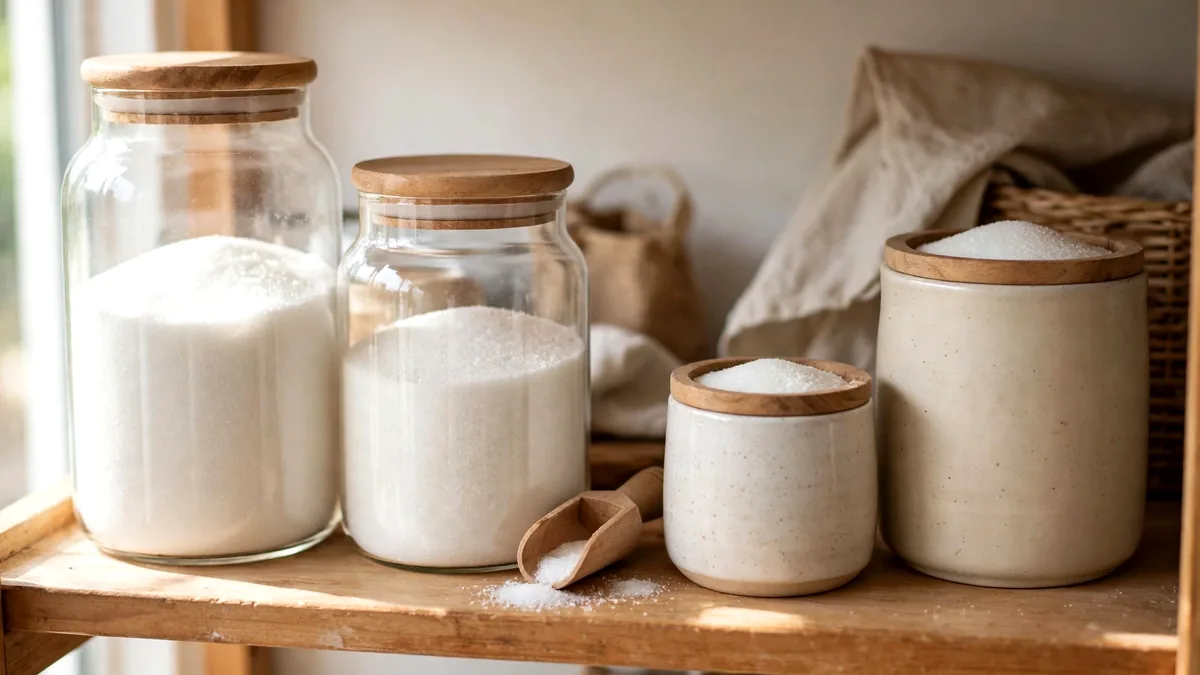
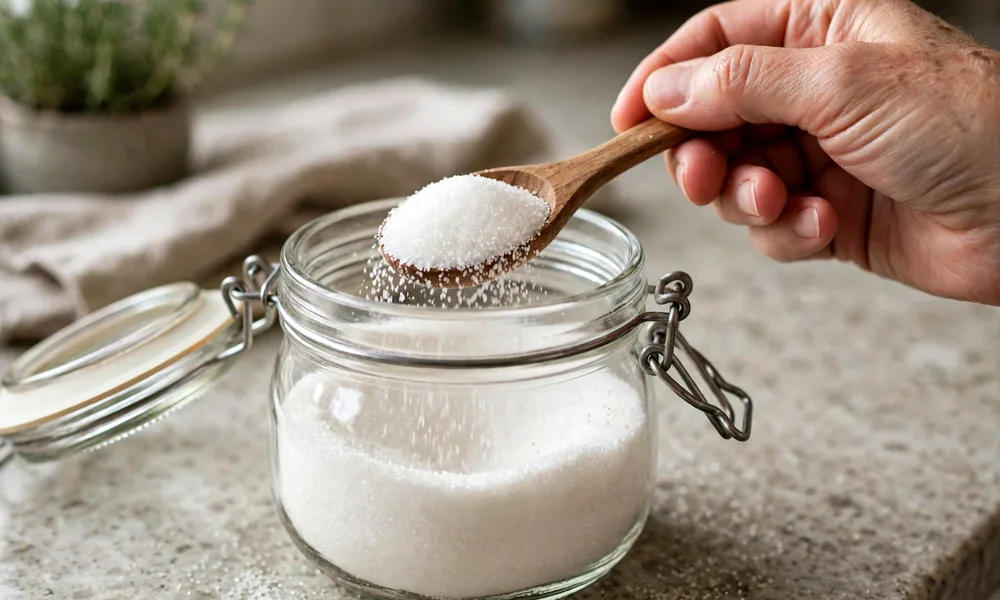
Glass containers with a silicone gasket are the best all-rounders for white granulated sugar. The glass lets you see how much sugar is left without opening the jar, and it does not absorb smells or stains. Look for thick glass, a lid that lifts off cleanly, and a mouth wide enough for a scoop. The trade-off is weight and fragility: glass is heavier than plastic and can break if dropped, so it suits a shelf better than a bag.
Ceramic Containers
Ceramic containers are the traditional choice. A glazed ceramic body blocks light completely, keeps sugar cool, and looks at home on an open shelf. They suit brown sugar especially well, because brown sugar needs a little moisture to stay soft, and ceramic does not dry it out the way an open bag does. Check the inside is fully glazed, since unglazed ceramic traps moisture and stains.
Stainless Steel Containers
Stainless steel containers are the toughest option and the best choice for busy family kitchens. Steel blocks light completely, survives drops, does not stain, and goes in the dishwasher. With a silicone-seal lid it keeps sugar as dry as glass does. The trade-off is that you cannot see how much is left without opening it, so label the lid with the fill date.
Clamp-Lid and Vacuum-Seal Containers
Clamp-lid containers use a metal catch to press the lid down onto a silicone ring, and they give the tightest everyday seal of all. They suit damp kitchens or sugar stored for months, because the clamp holds the seal even if the jar is knocked. Vacuum-seal containers pump air out, which suits icing sugar and caster sugar that clump at the first sign of damp. Both cost more than a simple lidded jar, but the seal is the whole point of a sugar container.
Pour-Spout Containers
Pour-spout containers are built for serving rather than scooping: a narrow spout lets you pour sugar into tea, coffee or a measuring jug without a spoon. They suit white sugar for hot drinks and are the neatest option for a household that sweetens drinks all day. The spout is also the weak point, because it is harder to seal than a flat lid, so look for one with a cap that closes fully. Our guide to the best sugar dispensers compares the neatest pouring designs.
Sugar Containers at a Glance
| Container type | Best for | Seal | Watch out for |
|---|---|---|---|
| Glass with silicone gasket | White sugar, everyday use | Good | Heavy, can break |
| Ceramic | Brown sugar, open shelves | Good | Lids that only balance on top |
| Stainless steel | Family kitchens, drops | Good | Cannot see the level |
| Clamp-lid | Damp kitchens, long storage | Excellent | Costs more, heavier |
| Vacuum-seal | Icing and caster sugar | Excellent | Pump parts to clean |
| Pour-spout | Tea and coffee, daily pouring | Fair | Spout that will not close fully |
What Separates a Good Sugar Container From a Pretty Jar
The closure is the part that fails first, and it is the part almost nobody checks before buying. A good closure presses the lid evenly onto the rim all the way around, with a gasket that sits snugly in its channel without twisting or lifting out. Test it in the shop if you can: close the lid, press the centre and listen for a firm click, then try to lift the lid by its edge. A lid that flexes or pops back up will let damp air in within weeks.
Size is the easiest thing to get wrong. A container that is too big holds stale air above the sugar, which speeds up clumping, while one that is too small needs constant refilling. Measure the bag you buy most often: a 1 kilogram bag needs about 1.2 litres, and a 2 kilogram bag needs about 2.4 litres.
The mouth decides how you use the container day to day. A wide mouth suits scooping for baking, while a narrow neck pours better and spills less, which suits sugar for drinks. Cleaning matters too: a container that comes apart fully stays fresh far longer than one with fixed parts that trap sugar in the corners. Dry every part completely before refilling, because a damp gasket feeds moisture straight into the sugar.
White, Brown and Cubes: One Container or Three?
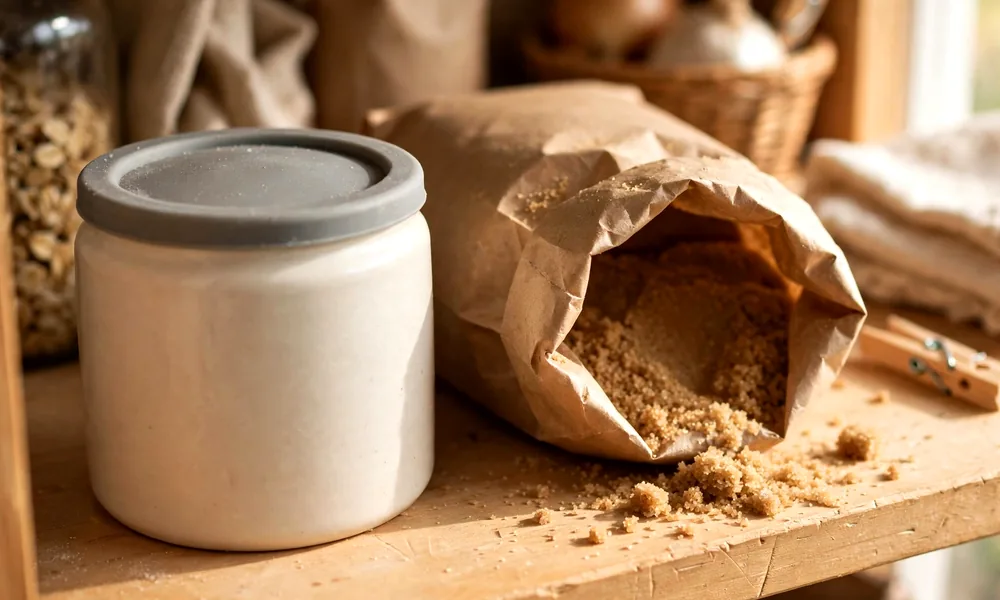
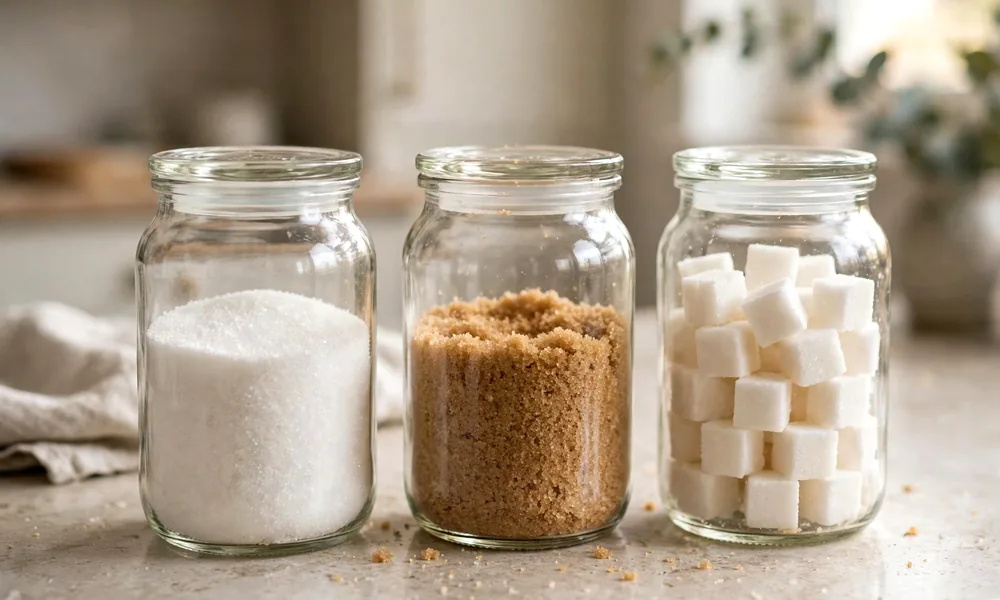
Different sugars store differently. White granulated sugar is the easiest: it needs a dry, airtight home and a wide mouth for scooping, and glass suits it best because you can see the level. Brown sugar is the fussiest, because it needs to stay slightly moist to stay soft. An airtight ceramic or steel container keeps brown sugar soft for months, while an open bag lets it dry into a brick. Caster and icing sugar need the driest home of all, so a vacuum-seal or clamp-lid container is worth the extra cost for these. One container per sugar is the rule that works: mixing them means none of them keeps well.
How Much Sugar Should a Container Hold?
The right size depends on how much sugar your household uses and how often you shop. A household that sweetens tea and coffee and bakes at weekends will get through a 1 kilogram bag in two or three weeks, and a 1.2 litre container suits it well. A household that bakes often, or buys 2 kilogram bags, needs a 2.5 litre container, or two smaller ones: one for the daily supply and one for the bulk stock in the pantry. Two containers beat one big one, because the bulk stock stays sealed while the daily jar is opened and closed.
Keeping Sugar Dry: Habits That Matter as Much as the Jar
Even the best sugar container cannot save sugar that was already damp when it went in, or sugar stored in a hot, steamy spot. Decant sugar as soon as you bring it home, and write the date on the lid. Keep the container in a cool, dry cupboard away from the kettle, the cooker and the dishwasher, all of which pump steam into the air. Never put a wet spoon into the sugar, and wipe the rim clean before closing, because sugar dust in the seal stops the gasket pressing evenly. For the wider picture, our guide to the best canisters covers the same seal and storage rules for flour, rice and coffee.
The 6-Point Checklist Before You Buy
- Close the lid and press the centre: it should click firmly and stay flat, with no flex or pop-back.
- Check the gasket sits snugly in its channel all the way around, without twisting or lifting out.
- Measure the bag you buy most often and choose a container that holds it with a little room to spare.
- Match the mouth to the job: wide for scooping and baking, narrow with a cap for pouring into drinks.
- Pick the material for the sugar: glass for white sugar you want to see, ceramic or steel for brown sugar.
- Make sure every part comes apart and dries fully, so sugar dust never builds up in the seal.
Frequently Asked Questions
Does sugar go off in a sealed container?
Sugar does not go off the way fresh food does, and a sealed container keeps it usable for years. What changes is texture: damp air makes it clump, and strong smells nearby can taint it. A dry, airtight container in a cool cupboard keeps it loose and neutral almost indefinitely.
Why does my brown sugar keep going hard?
Brown sugar goes hard when it dries out, which happens when air gets to it. An airtight ceramic or steel container stops it, because it holds in the moisture brown sugar needs. If it has already gone hard, put a slice of bread in the container overnight and it will soften again.
Can I store sugar in a plastic container?
Yes, if the plastic is food-safe and the lid seals properly. Good polypropylene containers with a silicone gasket work well and are lighter than glass. Avoid thin plastic with a lid that merely rests on top, because it will not keep damp air out.
Should sugar containers be kept in the fridge?
No. A fridge is damp, and sugar in one picks up moisture and food smells. A cool, dry cupboard is far better. The only exception is a very humid climate, where a well-sealed container in the fridge beats an open bag in a steamy kitchen.
How do I stop icing sugar clumping?
Icing sugar clumps at the first sign of damp, so it needs the driest home of all: a vacuum-seal or clamp-lid container, kept away from the kettle and the cooker. Always use a dry spoon, wipe the rim before closing, and sift it before use.
Is one container enough for all my sugar?
One container per sugar is the rule that works. White, brown, caster and icing sugar all store differently, and mixing them means none keeps well. Two or three smaller containers beat one big one, and the daily jar can be refilled from a larger bulk container.
Bottom Line
Buy the seal first and the looks second. A glass jar with a silicone gasket suits white sugar, a ceramic or steel container keeps brown sugar soft, and a clamp lid is worth the extra cost in a damp kitchen. Size it for the bag you buy, keep one container per sugar, and store it away from steam. Do that, and your sugar stays loose, dry and ready to scoop for months.