
Tennis rackets are the one piece of kit that can make the game feel either easy or impossibly hard, and most casual players use a racket that works against them. A racket that is too heavy tires your arm by the second set, one with too small a head punishes every ball struck off-centre, and one with the wrong grip size quietly wrecks your forehand. The good news is that you do not need an expensive professional racket to enjoy tennis. You need a tennis racket that forgives mishits, gives you easy power, and feels comfortable in your hand. This guide explains how to find that racket in 2026, whether you are picking up the game for the first time or returning to it after years away.
The most important idea in this guide is that a racket should do some of the work for you. A forgiving racket has a larger head, a lighter frame, and a balance that helps you swing through the ball rather than fighting the racket. When you strike the ball off-centre, and every casual player does that often, a forgiving racket keeps the ball in play instead of dumping it into the net or sailing it long. That matters more than brand, more than the racket a professional uses, and more than any single technology printed on the frame. The right racket will not make you a better player overnight, but it will make practice more enjoyable, and enjoyable practice is what makes you better.
Key Takeaways
- A larger head size, around 100 to 105 square inches, is more forgiving and gives casual players easy power.
- Lighter rackets, around 260 to 285 grams unstrung, are easier to swing and kinder to the arm.
- An open string pattern gives more spin and power, while a denser pattern gives more control.
- Grip size matters more than most players realise: too small a grip strains the wrist, too large a grip stiffens the hand.
- Try rackets before you buy, and spend the saving from a sensible racket on lessons or court time.
Head Size: Bigger Is More Forgiving
Head size is the first number to understand, and it is measured in square inches. A midsize head is around 85 to 95 square inches, a midplus head is 96 to 102, and an oversize head is 103 to 115. Professional players mostly use midplus heads because they want control and can find the centre of the strings almost every time. Casual players should do the opposite. A head of 100 to 105 square inches gives a bigger sweet spot, which is the area of the strings where the ball comes off cleanly, and that means more of your shots fly true even when your timing is slightly off.
Weight and Balance: Light Enough to Swing Freely
Weight is the second number that matters, and it is usually given unstrung, meaning without strings. A light racket weighs 260 to 285 grams, a medium racket 285 to 310, and a heavy racket 310 or more. Light rackets are easier to swing fast, easier to manoeuvre at the net, and kinder to shoulders and elbows, which is why they suit beginners, juniors, and players returning after a break. The cost is stability: a very light racket can twist in your hand on a hard-hit ball and can feel less solid against a fast serve. A medium-weight racket solves that while still being manageable for most adults.
Balance describes where the weight sits. A head-light racket has more weight in the handle, so it feels quick and easy to swing, and it suits net play and players with slower swings. A head-heavy racket has more weight in the head, so it generates more power on groundstrokes but feels heavier to swing. An evenly balanced racket sits in between. Most casual players will be happiest with a head-light or evenly balanced racket in the light to medium range. If you have any arm trouble, a lighter, head-light racket with softer strings is the kindest combination you can choose.
String Pattern and Tension
The string pattern is the number of main strings running lengthways and cross strings running sideways, written like 16×19. An open pattern, such as 16×19, has wider gaps between the strings, which lets them move more and grip the ball, giving more spin and power. A dense pattern, such as 18×20, has more strings packed together, which gives more control and a firmer feel but less free power. For most casual players, an open 16×19 pattern is the friendlier choice, because it helps the ball clear the net and dip back into the court, which is exactly what a developing player needs.
Grip Size: The Detail That Changes Everything
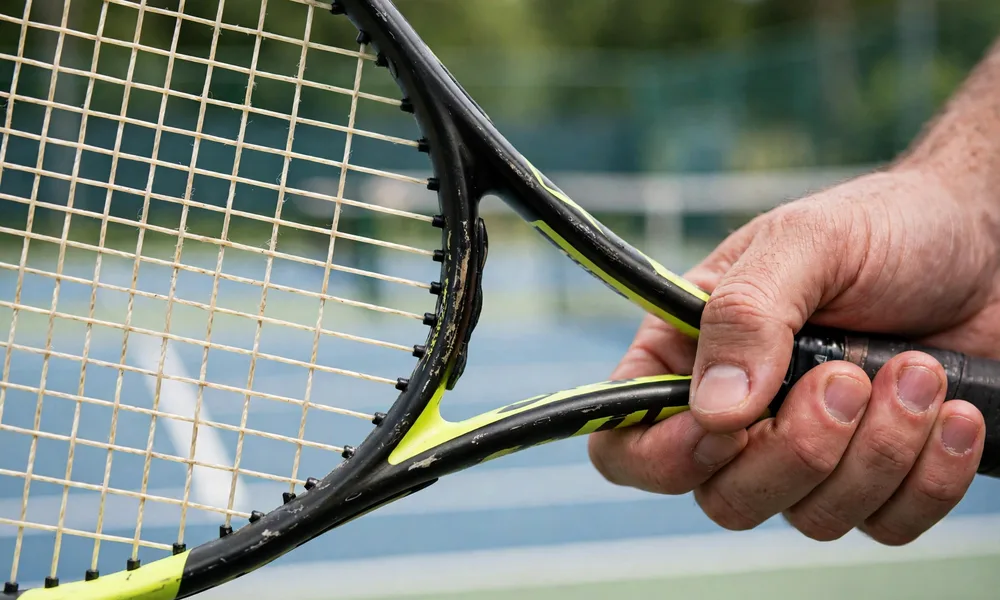
Grip size is measured in eighths of an inch, from 4 inches for smaller hands up to 4 and 5/8 inches for larger hands, and getting it wrong causes real problems. A grip that is too small lets the racket twist in your hand, which strains the wrist and forearm and can contribute to tennis elbow. A grip that is too large stops you rotating the racket properly, which stiffens your forehand and makes spin harder to generate. The simple test is to hold the racket in your playing hand and slide the index finger of your other hand into the gap between your fingertips and your palm: it should fit snugly, with no large gap and no squeezing.
Choosing a Racket for Your Level
Beginners should look for a racket that is light, forgiving, and easy to swing: a head of 102 to 105 square inches, a weight of 260 to 280 grams, a head-light balance, and an open string pattern. These rackets are often sold as beginner or game-improvement models, and they are designed to get the ball over the net with a short, compact swing. They will not hold you back for a year or two, and by the time you outgrow one, you will know exactly what you want next. Do not be tempted by a professional model because it looks impressive; it will feel heavy, unforgiving, and frustrating.

Trying Before You Buy
The best way to choose a tennis racket is to hit with it, and most good shops and clubs offer demo programmes that let you borrow a racket for a few days. Take two or three rackets that fit the specification above, play a normal hitting session with each one, and pay attention to how your arm feels afterwards as much as to how the ball flies. A racket that feels great for ten minutes but leaves your elbow aching is the wrong racket. Note which one you reach for second, because the racket you want to pick up again is usually the right one.
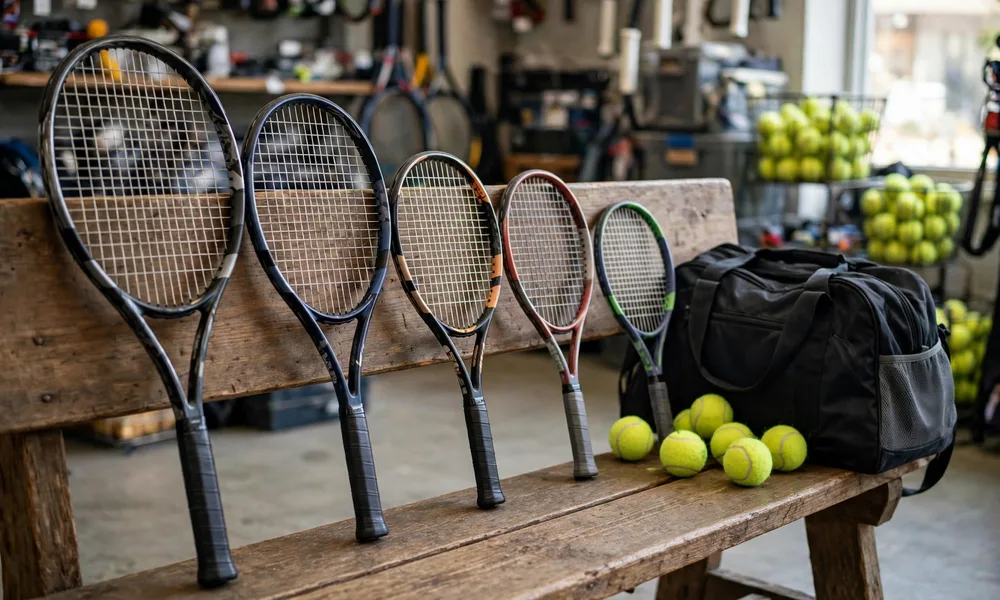
When you buy, consider the whole cost, not just the frame. A new racket usually needs a fresh overgrip, and you will need a bag, balls, and eventually restringing. Buying a previous year’s model is a sensible way to save money, because racket technology changes slowly and last season’s model is usually the same frame with a different paint job. Second-hand rackets are also worth considering if you buy from a reputable shop that checks the frame for cracks, because a cracked frame is useless and a hairline crack is easy to miss. Avoid rackets sold without a cover or with visibly frayed strings unless the price reflects a restring.
Your kit around the racket matters too, and it is worth getting the basics right. Shoes built for lateral movement protect your ankles on hard courts, and our guide to the best tennis shoes in 2026 explains what to look for in grip, support, and durability. Shorts that move freely and breathe make long rallies far more comfortable, as our guide to the best athletic shorts in 2026 explains. And if you want to track your sessions, improve your fitness, and keep yourself playing regularly, our guide to the best fitness apps in 2026 covers the apps that help you build the habit and the stamina the game rewards.
Comparison Table
| Racket type | Head size | Weight | Best for |
|---|---|---|---|
| Beginner / game improvement | 102–105 sq in | 260–280 g | New players, easy power |
| Midplus all-rounder | 98–100 sq in | 285–305 g | Regular players, balance |
| Control / players’ racket | 95–98 sq in | 305–320 g | Advanced players only |
| Oversize | 106–115 sq in | 260–280 g | Maximum forgiveness |
| Junior | Smaller, shorter | 200–250 g | Children by height |
Checklist: Buying a Tennis Racket
- Choose a head size of 100 to 105 square inches for forgiveness and easy power.
- Pick a weight of 260 to 285 grams if you are starting out, or 285 to 305 grams if you play regularly.
- Look for a head-light or even balance, and an open 16×19 string pattern for spin.
- Check grip size with the finger test, and choose the smaller size if you are between two.
- Demo two or three rackets before buying, and notice how your arm feels the next day.
- Budget for an overgrip, a bag, balls, and a restring, and consider last year’s model to save money.
Frequently Asked Questions
What size tennis racket should a beginner use?
Most adult beginners should use a racket with a head of 102 to 105 square inches and a weight of 260 to 280 grams. That combination gives a large sweet spot, easy power, and a frame light enough to swing freely for a full session without tiring your arm.
How do I know my tennis racket grip size?
Hold the racket in your playing hand and slide the index finger of your other hand into the gap between your fingertips and your palm. It should fit snugly. If there is a large gap, the grip is too big; if your finger will not fit, it is too small.
How often should I restring a tennis racket?
A good rule is to restring as many times a year as you play per week, so twice a week means twice a year. Strings lose tension and feel even if they do not break, and a fresh restring restores power and comfort noticeably.
Are expensive tennis rackets worth it?
Not for most casual players. A mid-priced racket with the right head size, weight, and grip will play better for you than an expensive professional model that is too heavy and unforgiving. Spend the difference on lessons, which improve your game far more than a dearer frame.
What is the difference between 16×19 and 18×20 string patterns?
A 16×19 pattern is more open, giving more spin and power, while an 18×20 pattern is denser, giving more control and a firmer feel. Most casual players will enjoy the open pattern more, because it helps the ball clear the net and drop into the court.
Should children use adult tennis rackets?
No. Children should use junior rackets sized by height, usually 21 to 26 inches long, which are lighter and shorter so they can swing properly. An adult racket is too long and heavy for a child and teaches poor technique.
The Bottom Line
Tennis rackets that make the game feel easier are not the ones professionals use, but the ones built for the player you actually are: a larger head, a lighter frame, a comfortable grip, and an open string pattern that helps the ball over the net. Try a few, trust how your arm feels the next day, and choose the racket you want to pick up again. The right racket will not do the work for you, but it will stop fighting you, and that is what makes tennis fun enough to keep playing.


