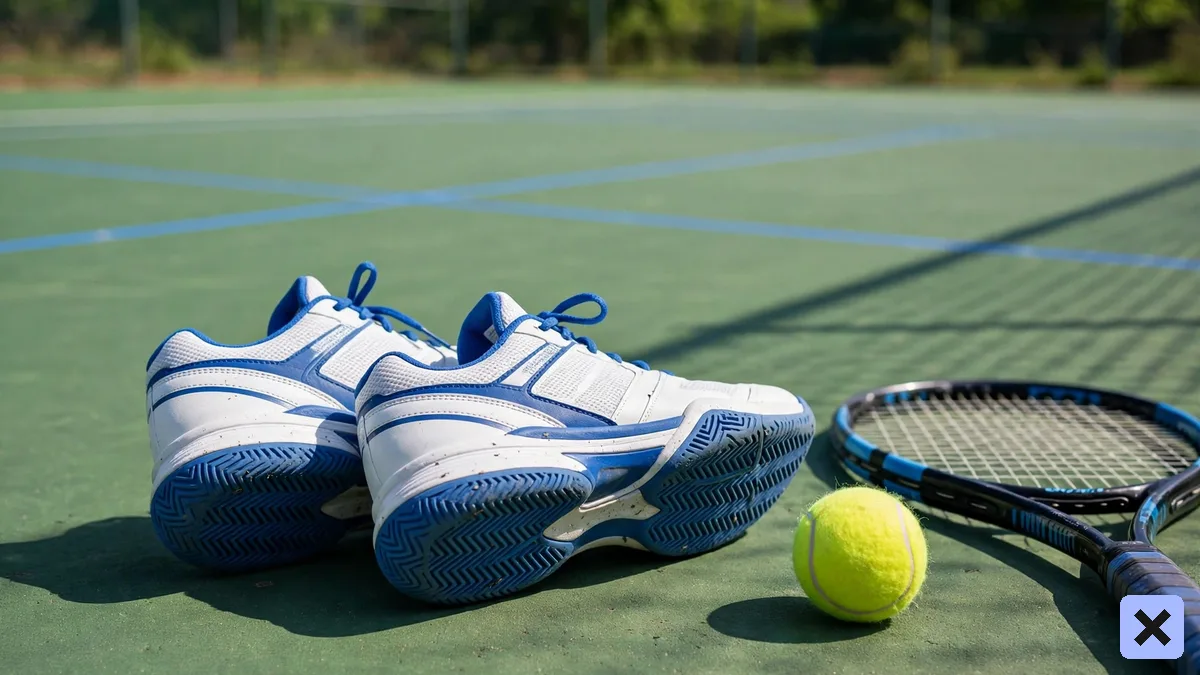
The best tennis shoes of 2026 are built for one job that no other shoe does properly: moving sideways, fast, on a hard surface, then stopping dead without rolling an ankle. Tennis is a sport of short sprints, sudden direction changes, lunges, and slides, and a shoe that cannot handle lateral force will let you down at exactly the wrong moment. The right pair grips the court, supports your foot through every change of direction, and cushions the repeated impact of hard-court play.
That is what separates the best tennis shoes from ordinary trainers, and it is also where most buyers go wrong. Running shoes are built to roll forward, not sideways, and their soft, high soles can roll under your foot on a hard lateral cut. Everyday sneakers look the part but lack the reinforced uppers and court-specific outsoles that keep you planted. This guide compares the strongest tennis shoes of 2026 and shows you how to match a shoe to your surface, your playing style, and your feet.
We judged every shoe here on lateral support, outsole grip on hard and clay courts, cushioning under repeated impact, durability in the high-wear zones, fit, and weight — testing them on hard courts, clay courts, and indoor surfaces, through baseline rallies and long three-set matches.
Key Takeaways
- Tennis shoes are court shoes, not running shoes: lateral support and a low, stable sole matter far more than forward cushioning.
- Outsole pattern must match your surface — herringbone for clay, modified herringbone or all-court tread for hard courts.
- A reinforced toe and medial side are essential: sliding and dragging wear through ordinary uppers in weeks.
- Fit should be snug in the midfoot with a thumb’s width of room at the toes, and your heel must not lift on lateral moves.
- Replace tennis shoes when the outsole tread smooths out or the cushioning goes flat — worn grip is a genuine injury risk.
Why Tennis Shoes Are Not Sneakers
It is tempting to play tennis in whatever trainers you already own, and for a casual knockabout that is fine. But the moment you start moving properly, the differences become obvious. Our guide to the best sneakers of 2026 shows how most sneakers are built for walking and light running: soft foam, a curved sole that rolls you forward, and an upper that flexes freely. None of that helps on a tennis court.
A tennis shoe is built sideways. The sole is flatter and lower to the ground, which keeps you stable when you plant and push off. The midfoot is reinforced with a shank that stops the shoe twisting when you cut hard. The upper is strengthened on the inside edge, where the foot drags during slides, and the toe is capped with extra rubber where toe-draggers wear through. The outsole uses a court-specific herringbone tread that grips in every direction instead of just forward and back.

What Makes a Great Tennis Shoe
A great tennis shoe does four jobs at once: it holds your foot steady through lateral movement, grips the court, absorbs the shock of hard-court impact, and survives the abrasion of sliding and dragging.
Lateral Support Comes First
Lateral support is the single most important feature of a tennis shoe, and the one most buyers overlook. When you sprint sideways and plant your outside foot, your body weight drives the foot toward the outer edge of the shoe. A good tennis shoe resists that with a rigid midfoot shank, a wide, stable base, and an upper that locks the midfoot down. Test it in the shop: hold the heel and the toe and try to twist the shoe. A proper tennis shoe resists twisting firmly; a soft, twisty shoe will let your foot roll.
Outsole Grip: Match the Tread to the Surface
The outsole is where court knowledge pays off. On clay, the classic full herringbone pattern is king: its zigzag grooves grip the loose surface, shed clay instead of clogging, and let you slide in a controlled way. On hard courts, a modified herringbone tread with denser, shallower grooves lasts longer and grips better on the abrasive surface. Buy for the surface you actually play on most: a clay outsole wears fast on hard courts, and a hard-court outsole clogs and slips on clay.
Cushioning and Weight
Hard courts punish your joints, so cushioning matters — but not the soft, bouncy kind used in running shoes. Tennis cushioning needs to absorb impact on landing and then firm up instantly so you can push off without sinking. Weight is a real trade-off: lighter shoes feel faster over three sets, but the lightest shoes usually give up durability. Most club players are happiest around 350 to 400 grams per shoe, where speed and support balance out.
The Best Tennis Shoes of 2026 at a Glance
| Shoe | Best for | Weight (per shoe) | Surface | Outsole |
|---|---|---|---|---|
| Court Ace Pro | All-round club play | 380 g | All court | Modified herringbone |
| Baseline Speed Lite | Fast movers and singles | 330 g | Hard court | All-court tread |
| Clay Master Slide | Clay-court specialists | 395 g | Clay | Full herringbone |
| Grand Slam Guard | Durability and heavy use | 420 g | Hard court | Modified herringbone |
Top Picks in Detail
Best Overall: Court Ace Pro
The Court Ace Pro is the pair we would hand to a club player who wants one shoe for everything. Its lateral support is the best in this guide: a rigid midfoot shank, a wide base, and a lacing system that locks the midfoot down. The modified herringbone outsole grips confidently on hard courts and holds up well enough on clay. Cushioning is firm but forgiving, with gel inserts in the heel that take the sting out of hard-court landings.
Best for Speed: Baseline Speed Lite
If your game is built on speed, the Baseline Speed Lite is the shoe for you. At 330 g it is the lightest adult shoe here, and it feels it: quick off the mark and light on direction changes. The trade-off is durability — the outsole is thinner and the upper less reinforced, so heavy sliders will wear through it faster than the Court Ace Pro.
Best for Clay: Clay Master Slide
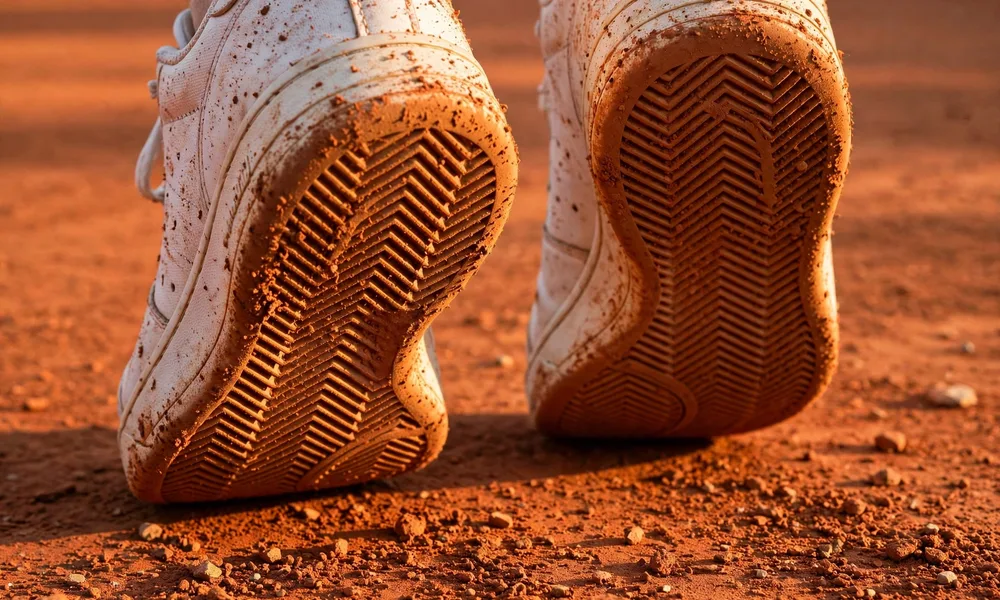
Clay is a different game, and the Clay Master Slide is built for it. Its full herringbone outsole grips the loose surface without clogging and lets you slide into shots in a controlled, knee-friendly way. The upper is reinforced on the medial side, where clay-court sliding wears shoes out fastest. On hard courts it wears quickly, so keep it for clay — but on clay, nothing else in this guide matches it.
Best for Durability: Grand Slam Guard
The Grand Slam Guard is the shoe for players who destroy footwear. A thick, abrasion-resistant outsole with a six-month durability guarantee, a fully reinforced toe and medial side, and an upper built from tough synthetic leather. It is the heaviest shoe here at 420 g, but players who play four or five times a week will save money: this shoe lasts months longer than lighter rivals.
Hard Court vs Clay: Choosing for Your Surface
Your surface should decide your shoe more than any other factor. Hard courts are abrasive and unforgiving: they wear outsoles fast, punish joints, and reward grip on a dry, dusty surface. Clay courts are softer and slower: kinder to joints, but they demand an outsole that sheds clay and lets you slide. If you play on both, an all-court shoe with a modified herringbone tread is the honest compromise.
Fitting Your Tennis Shoes
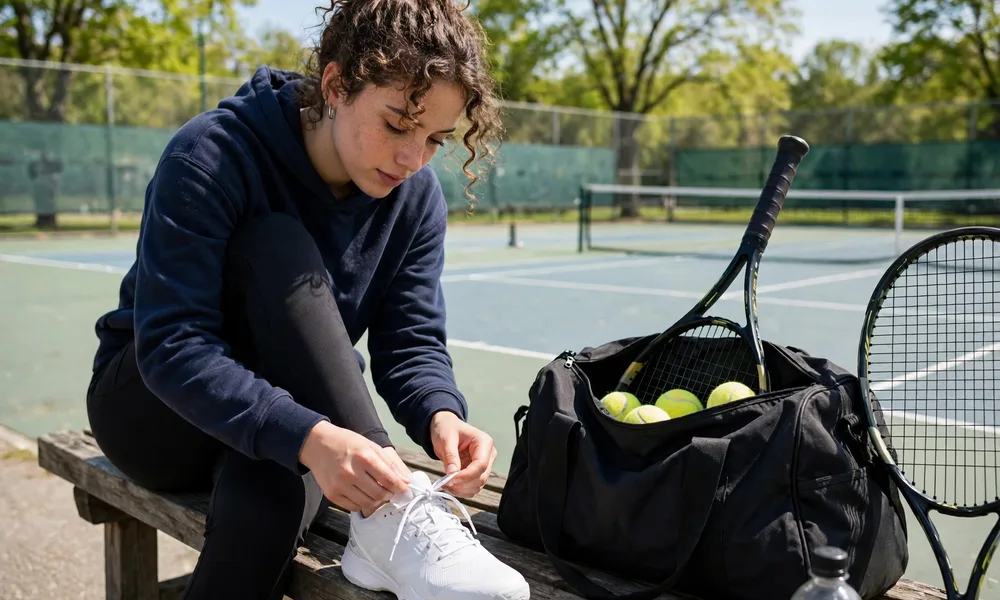
Fit is the one thing you cannot fix later, and tennis shoes fit differently from running shoes. You need a thumb’s width of room between your longest toe and the end of the shoe, because your foot slides forward on every hard stop. The midfoot should feel snug and locked down, and your heel must not lift when you push off laterally — heel lift causes blisters and instability on direction changes.
Try tennis shoes on in the afternoon, wearing the socks you play in, and test them the way you play: lunge sideways, plant and push off, shuffle along an imaginary baseline. Break new shoes in over two or three practice sessions before a match. If a pair needs breaking in to feel comfortable, it is the wrong size or the wrong shape for your foot. For players who also train off court, our guide to the best gym shoes covers footwear built for that very different job.
How Long Do Tennis Shoes Last?
For a club player playing two or three times a week, a good pair lasts four to six months. Heavy players, toe-draggers, and hard-court regulars may get three. Replace them when the outsole tread smooths out, the cushioning feels flat, or the upper wears through at the toe — worn grip is a genuine injury risk, because a shoe that slips on a hard lateral move is how ankles get rolled.
To make your shoes last longer, rotate two pairs if you play often, so the foam recovers between sessions. Keep them for the court only: walking to the shops wears the outsole on tarmac far faster than any court will. Clean clay off after every session and dry them in the shade. And if you are shopping on a budget, last season’s models are often heavily discounted — our round-up of the best budget running shoes shows the same value-hunting approach, and it applies to court shoes too.
Checklist: Buying Tennis Shoes in 2026
- Rigid lateral support — a shoe that resists twisting and holds your heel on direction changes.
- Outsole tread matched to your surface: full herringbone for clay, modified herringbone for hard courts.
- Reinforced toe and medial side to survive sliding and toe-dragging.
- Firm, responsive cushioning in the heel and forefoot, not soft running-shoe foam.
- A snug midfoot fit with a thumb’s width of room at the toes and no heel lift.
- A thick, durable outsole — with a durability guarantee if you play several times a week.
Frequently Asked Questions
Can I play tennis in running shoes?
You can for a casual hit, but not for regular play. Running shoes are built to roll forward, with soft, high soles that can roll under your foot on a hard lateral cut — a real ankle injury risk. Tennis shoes are lower, flatter, and reinforced for sideways movement.
What is the difference between clay-court and hard-court tennis shoes?
Clay-court shoes use a full herringbone outsole that grips loose clay, sheds it instead of clogging, and allows controlled sliding. Hard-court shoes use a denser tread that lasts longer on abrasive surfaces. Each wears fast on the other’s surface.
How should tennis shoes fit?
Snug in the midfoot, with a thumb’s width of room at the toes and no heel lift on lateral moves. Try them on in the afternoon wearing your playing socks, and test sideways lunges in the shop — not just walking in a straight line.
How often should I replace my tennis shoes?
Every four to six months for a club player playing two or three times a week, or sooner if the tread smooths out, the cushioning goes flat, or the upper wears through. Worn grip is an injury risk, not just a performance issue.
Do I need different shoes for indoor courts?
Most all-court tennis shoes work fine indoors, but indoor courts usually ban black, marking outsoles. If you play indoors regularly, choose a non-marking outsole.
Are expensive tennis shoes worth it?
Usually, yes, for regular players. Premium shoes offer better lateral support, longer-lasting outsoles, and more durable uppers, which makes them cheaper per match than replacing budget pairs twice as often.
The Bottom Line
The best tennis shoes of 2026 are the Court Ace Pro for all-round club play, the Baseline Speed Lite for fast movers, and the Clay Master Slide for clay-court specialists. Match the tread to the court you actually play on, put lateral support first, and get the fit right — your feet will stay planted, supported, and comfortable through every rally.


