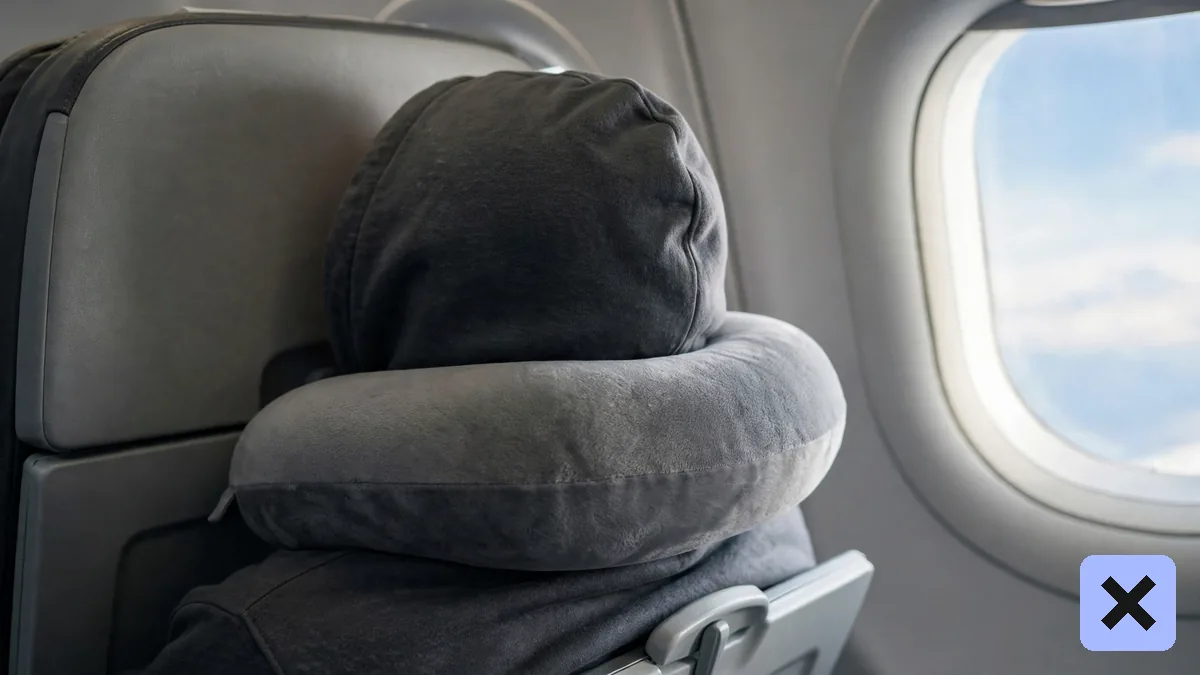
Side sleepers know the struggle all too well. You board a long flight, settle into your seat, and try to drift off on your side, only to wake up twenty minutes later with a stiff neck, a numb arm, and a pillow that has slipped somewhere near your elbow. The best travel pillows for side sleepers in 2026 are built to fix exactly that, with shapes that cradle the head, support the chin, and keep the spine straight.
Most travel pillows were designed for people who sleep sitting upright with their head tilted back. That works for back sleepers, but side sleepers need something different: height on one side, a firm surface to lean into, and enough structure to stop the head from dropping toward the shoulder. When a pillow delivers those three things, a window seat becomes a genuinely restful place.
This guide explains what side sleepers should look for, compares the main pillow styles, and walks through the small habits that turn an ordinary flight into a comfortable one. Every point below is based on the features that matter most on real journeys: support, packability, and washability.
Key takeaways
- Side sleepers need lateral support and chin support, not just a soft ring around the neck.
- Wrap-around and J-shaped pillows outperform classic U-shaped pillows for side sleeping.
- Memory foam gives the most stable support, while inflatable pillows pack the smallest.
- A window seat, a leaned-back headrest, and a scarf or blanket make any pillow work better.
- Choose a washable cover and a pillow that compresses well if you travel light.
Why Side Sleepers Struggle With Standard Travel Pillows
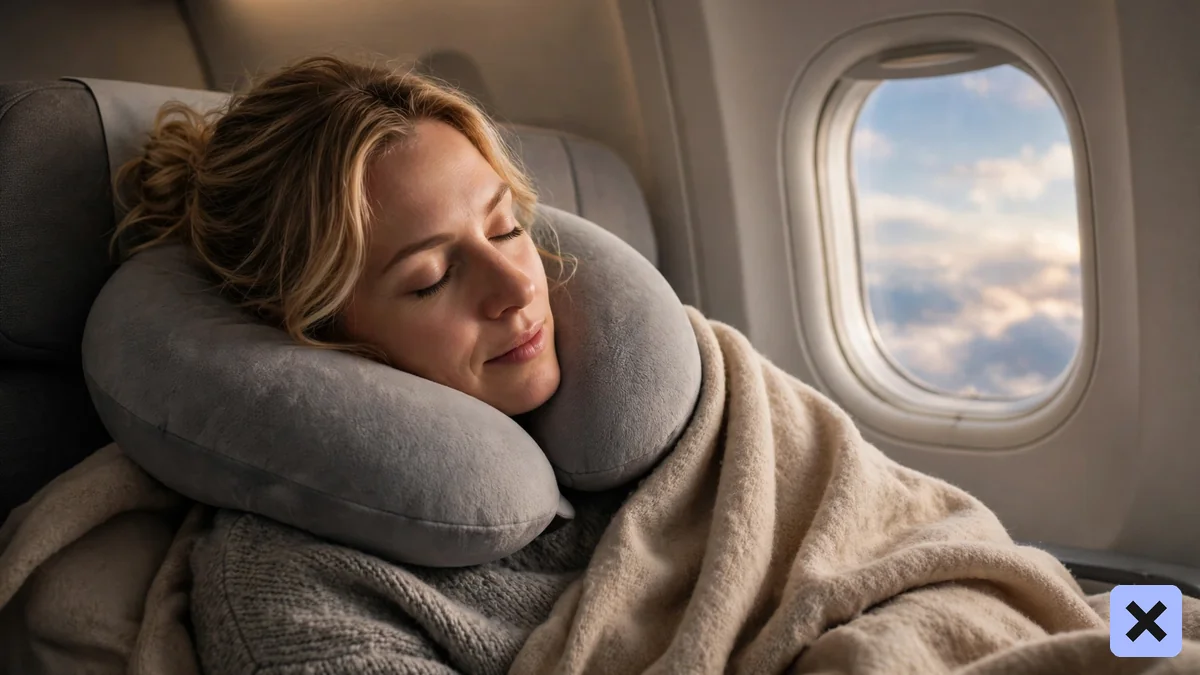
The classic U-shaped travel pillow wraps around the back of the neck and leaves a gap at the front. For a back sleeper, that gap is harmless. For a side sleeper, it is the whole problem: the head tips forward and sideways, the chin drops toward the chest, and the neck bends at an angle it was never meant to hold for hours.
Side sleeping also changes how weight is distributed. When you lean to one side, your head presses down with real force, and a soft pillow simply flattens. What you need is a pillow that pushes back. That is why firmness matters more than softness, and why the softest pillow in the shop is often the worst choice for a long flight.
Seat design makes things harder still. Airplane seats are narrow, headrests are flat, and the gap between your shoulder and the seatback is exactly where a side sleeper needs support. A good travel pillow fills that gap. A poor one leaves it empty.
What Makes a Great Travel Pillow for Side Sleepers
A great travel pillow for a side sleeper does four jobs at once. It holds the head level with the spine, it supports the chin so the head cannot drop forward, it fills the space between the ear and the shoulder, and it stays in place when you shift.
Lateral Support Comes First
Lateral support means the pillow is thick and firm on the side you lean into. Look for raised side lobes, a tall profile on one edge, or a wrap-around design that lets you rest your cheek against a solid surface. Press the side with your palm: if it collapses easily, it will collapse under your head too. The best travel pillows for general use often score well here, but test the side profile specifically.
Chin Support Stops the Head Drop
The head drop is the moment your chin sinks toward your chest and you wake with a start. Pillows with a front closure, a chin cup, or a scarf-style wrap prevent it by giving the jaw something to rest on. This matters most on overnight flights, when muscles relax completely and the head becomes heavy.
Materials That Hold Their Shape
Memory foam is the most reliable material for side sleepers because it moulds to the shape of your head and neck, then holds that shape under pressure. Shredded memory foam is a good middle ground: softer, more adjustable, and easy to push toward the side you lean on. Microbead pillows feel pleasant at first but flatten under sustained pressure. Inflatable pillows are the lightest option, but they need careful inflation.

Size, Weight, and Washability
A pillow that is perfect at home but enormous in your bag is not a good travel pillow. The best side-sleeper pillows compress to roughly the size of a water bottle or clip neatly to a carry-on. A removable, machine-washable cover is equally essential. Look for a cover that comes off easily and dries quickly.
The Main Pillow Styles Compared
Five styles dominate the market for side sleepers, and each suits a different kind of traveller. The table below compares them on the factors that matter most.
| Style | Side support | Packability | Best for | Price range |
|---|---|---|---|---|
| Wrap-around scarf | Excellent | Good | Side and front leaners | Mid to high |
| J-shaped | Excellent | Moderate | Window-seat sleepers | Mid |
| Memory foam U-shaped | Good | Moderate | All-round use | Low to mid |
| Rectangular side pillow | Very good | Poor | Road trips and trains | Low to mid |
| Inflatable | Fair | Excellent | Ultralight travellers | Low |
Wrap-Around Scarf Pillows
Scarf pillows wrap fully around the neck and fasten at the front, creating a continuous ring of support. For side sleepers, this is often the winning design: wherever your head leans, there is pillow waiting for it. The wrap also supports the chin, which solves the head-drop problem in one move. The trade-off is warmth on a warm cabin and extra bulk.
J-Shaped Pillows
A J-shaped pillow has a long arm that runs down one side of the neck and across the chest, giving side sleepers a tall surface to lean into. It works beautifully against a window, where the long arm fills the gap between head and glass. It is less useful in a middle seat, where there is nothing to lean against. Look for a firm core rather than a soft fill.
Memory Foam U-Shaped Pillows
The familiar U-shape remains a solid choice when it is made from dense memory foam with raised sides. The key is a front clasp or drawstring that pulls the two ends together, closing the gap that lets the chin drop. Without that closure, a U-shaped pillow is a back-sleeper pillow. The best neck pillows for flights include several strong U-shaped options with exactly this kind of front support.
Rectangular Side Pillows
Small rectangular pillows are miniature versions of the pillow you sleep on at home, and side sleepers often love them. They fit neatly between the head and the window or headrest, and they feel natural because the shape is familiar. The downside is packability: they do not compress well, so they suit road trips, trains, and flights where you have room to spare.
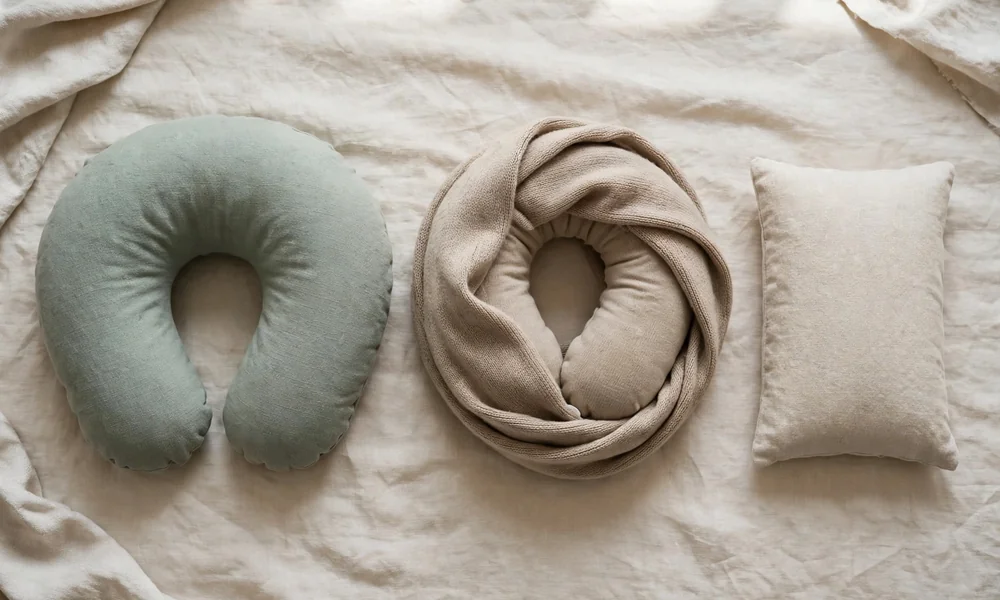
Inflatable Pillows
Inflatable pillows are the lightest and smallest option, packing down to the size of a phone. Modern versions inflate in a few breaths and let you fine-tune the firmness, a real advantage for side sleepers who need a firm lean. The weakness is stability: the smooth surface can slip, and the support is less consistent than foam.
How to Sleep on Your Side on a Plane
The pillow is only half the story. How you use it matters just as much, and a few simple habits can transform a mediocre pillow into a good night’s sleep at thirty thousand feet.
Claim the Window Seat
The window is a side sleeper’s best friend. It gives you a solid surface to lean into, it keeps other passengers from climbing over you, and it lets you control the light. Lean your pillow against the window and use a small blanket or scarf to pad any hard edges.
Build a Nest, Not a Perch
Think of your seat as a nest. Tuck a rolled scarf or a small blanket into the gap between your shoulder and the seatback, place your pillow on top of it, and let your head rest into the whole arrangement. This layering fills every gap at once, so no single part of your neck is left holding weight alone.

Support Your Lower Arm
Side sleepers often forget the arm underneath. If it goes numb, you will wake up no matter how good your pillow is. Rest your lower arm on a folded blanket or cushion, or tuck it between your body and the seat. Hugging a small cushion against your chest also keeps the shoulder comfortable.
Block Light and Noise
Comfort means little if light and noise keep waking you. A good sleep mask and a pair of earplugs or noise-cancelling headphones complete the setup, and they weigh almost nothing. The best sleep masks for side sleepers are designed with flat side panels that do not press into the eyes when your head leans sideways.
What to Avoid When Choosing
A few common mistakes trip up side sleepers again and again. The first is buying the softest pillow in the shop: softness feels wonderful for thirty seconds and useless for three hours. Choose firmness over plushness, and test the pillow by leaning your full head weight into one side for a full minute. The second mistake is ignoring the cover: a pillow with a fixed, non-washable cover will look tired after two trips. The third is the wrong height: your head should sit level with your spine when you lean. Finally, avoid hard plastic valves, stiff seams, or rough fabrics on the side that touches your face.
Side Sleeper Travel Checklist
- Test your pillow at home by leaning into one side for ten minutes before the trip.
- Pack a washable cover or a spare pillowcase for hygiene on long journeys.
- Choose a window seat whenever you can, and board early to settle your nest.
- Bring a light scarf or blanket to fill gaps between your shoulder and the seat.
- Pack a flat-sided sleep mask and earplugs to block light and noise.
- Keep your pillow clipped to your bag or compressed in its sack so it is always with you.
Frequently Asked Questions
Can side sleepers use a normal U-shaped travel pillow?
Yes, if it is made from dense memory foam, has raised sides, and closes at the front with a clasp or drawstring. A loose, soft U-shaped pillow will not give a side sleeper enough support.
What is the best travel pillow shape for side sleepers?
Wrap-around scarf pillows and J-shaped pillows generally work best, because they provide a tall, firm surface to lean into and support the chin.
Are inflatable travel pillows good for side sleepers?
They can work if you inflate them firmly and use them against a window or headrest, but they offer less consistent support than foam. They are best for travellers who prioritise packing light.
How do I stop my neck hurting on long flights?
Keep your head level with your spine, support your chin so it cannot drop, and fill the gap between your ear and your shoulder. A firm side-sleeper pillow, a window seat, and a rolled scarf solve most neck pain.
Should I choose memory foam or microbeads?
Memory foam is the better choice because it holds its shape under sustained pressure. Microbeads feel soft at first but flatten over time, which leaves the neck unsupported on long journeys.
How do I keep my travel pillow clean?
Choose a pillow with a removable, machine-washable cover and wash it after every trip. Wipe down inflatable pillows with a damp cloth, and store your pillow in its stuff sack between journeys.
The Bottom Line
The best travel pillow for a side sleeper is the one that holds your head level, supports your chin, and fills the gap between your ear and your shoulder without collapsing. Wrap-around and J-shaped designs do this best, dense memory foam does it most reliably, and a window seat with a little layering makes any good pillow work harder. Choose firmness over softness, washability over looks, and packability over bulk.