
Top Vacuum Bags That Don’t Lose Suction in 2026
Vacuum bags are the cheapest part of your vacuum and the part that decides whether it actually cleans. A bagged vacuum pulls dirt through a paper or cloth bag, and as that bag fills, the air has less room to pass through, so suction drops, dust escapes, and the motor works harder. The right vacuum bags hold fine dust, keep airflow open until they are nearly full, and fit your machine so tightly that nothing leaks around the collar. This guide covers the vacuum bags that don’t lose suction in 2026: the types worth buying, how to match a bag to your machine, and the habits that keep suction strong between changes.
Key Takeaways
- Suction falls as a bag fills, so change the bag when it is two-thirds full, not when it is bursting.
- Synthetic HEPA-style bags hold fine dust better and keep airflow longer than plain paper bags.
- A bag must match your exact vacuum model, because a loose collar leaks dust back into the room.
- Pet hair and fine plaster dust fill bags faster than ordinary household dust, so check them more often.
- Never reuse a disposable bag, and never wash one: a torn or damp bag wrecks filtration.
What a Vacuum Bag Actually Does
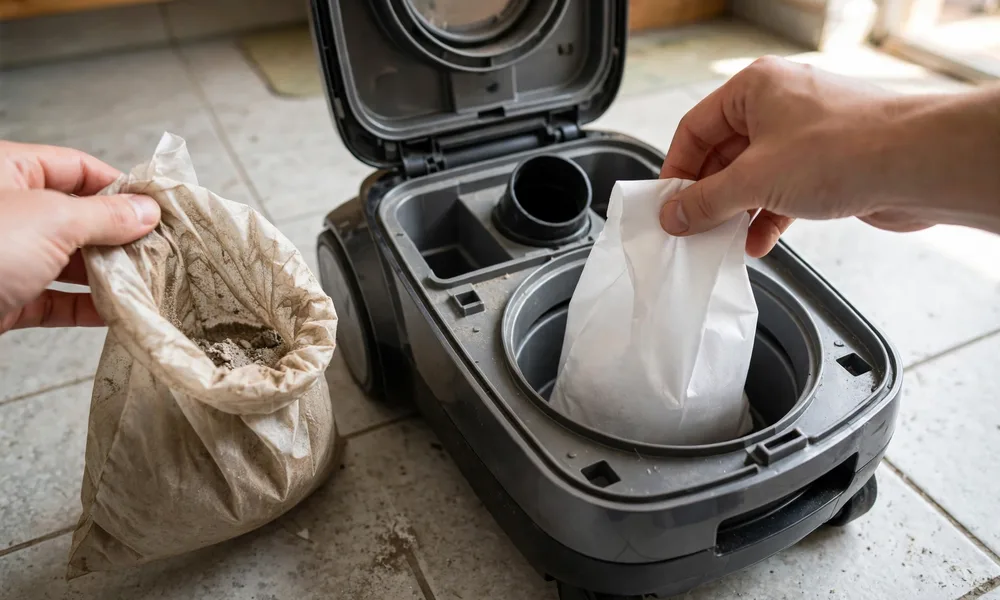
A vacuum bag is not just a bin. It is the first filter in the machine. Air and dirt enter through the hose, the bag catches the dirt, and clean air passes through the bag’s walls to the motor filter and out of the exhaust. That means the bag does two jobs at once: it stores the dirt, and it filters the air. A good bag traps particles as small as a fraction of a micron while still letting air through freely. A bad bag either lets fine dust straight through, which you then breathe, or clogs so fast that suction dies after one room.
This is why bags matter more than most people think. The best vacuum cleaners are judged on suction, and suction is only as good as the bag inside them. A top-end canister vacuum with a cheap, ill-fitting bag will clean worse than a mid-range machine with the right bag fitted properly. The bag is also the part that protects the motor: when dust gets past a torn or loose bag, it coats the motor filter, overheats the motor, and shortens the life of the whole machine.
Bagged vacuums are different from bagless ones in one important way. A bagless machine uses a plastic bin and a cyclone, and you empty the bin yourself, which throws a cloud of dust back into the air. A bagged machine seals the dirt inside a bag you throw away without opening. For allergy sufferers and pet owners, that sealed disposal is the main reason to stay with bags.
The Main Types of Vacuum Bag
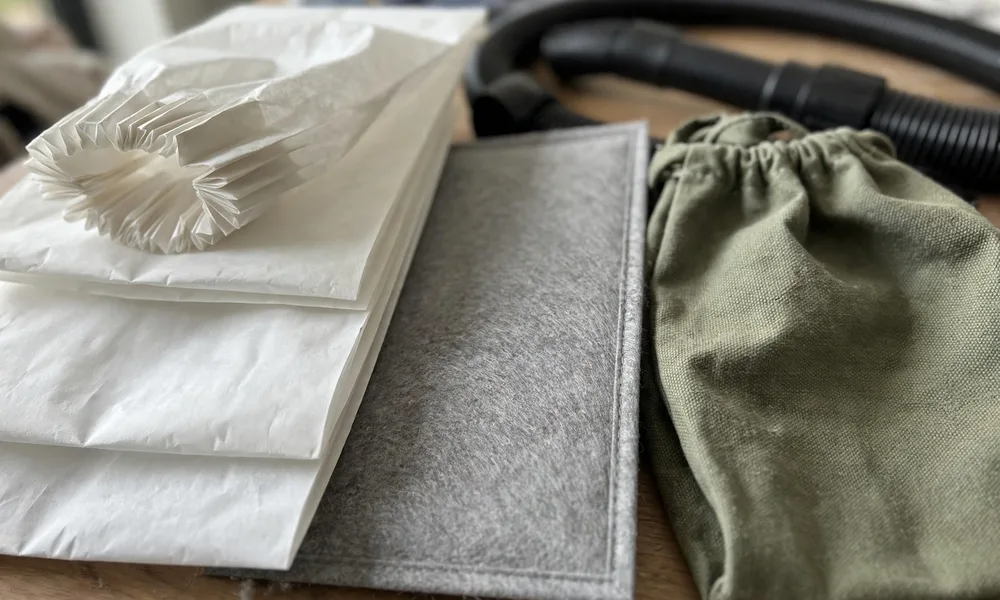
Paper bags
Paper bags are the original type: layers of porous paper that catch dust and let air through. They are cheap, widely available, and fine for light, everyday cleaning in a home without pets. Their weakness is fine dust. Paper lets the smallest particles through, it tears when it gets damp, and it clogs quickly with plaster dust, ash, or very fine pet hair. If your home has hard floors and light dust, paper is good enough. If it has pets or allergies, it is not.
Synthetic HEPA-style bags
Synthetic bags are made from layers of melt-blown fabric, the same kind of material used in face masks, and they are the best choice for most homes in 2026. They trap far finer dust than paper, they hold more before suction drops, and they do not tear when damp. They cost more per bag, but they last longer between changes, so the cost per month is often lower. Look for bags that mention HEPA filtration or fine-dust capture, and check that they are made for your exact model.
Cloth and reusable bags
Cloth bags are washable fabric bags, usually made for older canister vacuums and some workshop machines. They are the cheapest option over time, because one bag lasts for years, but they are also the worst for filtration and the messiest to empty. You have to shake the dust out, which puts it back in the air, and a cloth bag that has been washed too many times loses its weave and leaks fine dust. They suit a garage or workshop, not a bedroom.
How a Full Bag Kills Suction
Suction drops in a straight line as a bag fills, and most people change their bag far too late. When a bag is a third full, airflow is still strong. At two-thirds full, the dust has packed into a dense layer against the bag walls, and airflow drops sharply. At completely full, the bag is a solid block, the motor strains, and the vacuum starts blowing dust out of its seals instead of sucking it in. The rule is simple: change the bag at two-thirds full, and check it before every deep clean.
What you vacuum matters as much as how much. Fine dust is the worst enemy of a bag: plaster dust from a DIY job, ash from a fireplace, and the ultra-fine dust that comes off a new carpet will clog a paper bag in a single session. Pet hair is the second worst, because it mats into a felt layer that seals the bag shut. If you have pets, check the bag every two or three cleans, and switch to a synthetic bag, which handles hair far better.
The signs of a dying bag are easy to spot once you know them. The vacuum sounds higher-pitched than usual, because the motor is spinning faster with less air to move. The brush head leaves lines of dust behind it on carpet. The exhaust smells dusty, or you can see a faint haze in sunlight near the machine. Any one of these means the bag is done, even if it does not look full from the outside. Trust the sound and the cleaning result, not the shape of the bag.
Matching the Bag to Your Vacuum
| Vacuum type | Best bag type | Change when |
|---|---|---|
| Canister vacuum | Synthetic HEPA-style bag | Two-thirds full, or monthly |
| Upright vacuum | Synthetic bag, model-specific | Two-thirds full, or monthly |
| Pet-hair household | Synthetic bag with extra layers | Every 2 to 3 cleans |
| Allergy household | Sealed HEPA bag with collar | Half full, to protect filtration |
| Workshop vacuum | Cloth or heavy paper bag | When suction drops noticeably |
| Light-use home | Paper bag | Two-thirds full, or every 2 months |
The collar is the part most people ignore, and it is the part that matters most for fit. The collar is the cardboard or plastic ring that locks the bag onto the vacuum’s inlet, and if it does not match your model exactly, dust leaks around it and straight into the motor. Generic bags that claim to fit dozens of models are the worst offenders: the collar is a compromise, and the seal is never as tight as a bag made for one machine.
Canister vacuums deserve a special note, because they are the machines where bags make the biggest difference. A canister vacuum that beats an upright for hard floors relies on steady, sealed suction, and a good bag is what keeps that suction steady. Canisters also have larger bag compartments than uprights, so their bags hold more and keep airflow longer. If you own a canister, buy the synthetic bag made for it, change it at two-thirds full, and you will notice the difference on the first clean.
Bagged Versus Bagless: The Honest Comparison
Bagless vacuums are cheaper to run, because there is nothing to buy, and they are easier to see when they are full. But they have real costs. Emptying a bin throws dust back into the air, the cyclone and filters need washing and drying, and the filters themselves are expensive to replace. Bagged vacuums cost a few pounds a month in bags, but they seal the dirt away, protect the motor better, and keep suction steadier as the bag fills.
For most homes, the deciding factor is dust, not money. If anyone in the house has asthma, hay fever, or a dust allergy, a bagged vacuum with a synthetic HEPA bag is the better choice, because the dirt never leaves the bag until it is in the outside bin. If you have pets, the same applies: pet dander is the finest dust of all, and a bag traps it far better than a bin.
Before You Buy Checklist
- Find your vacuum’s exact model number before you order any bags.
- Choose synthetic HEPA-style bags if you have pets, allergies, or fine dust.
- Check the collar fits tightly and locks onto the inlet with no gaps.
- Buy a pack, not a single bag, so a change is never put off.
- Change the bag at two-thirds full, and sooner after DIY dust or pet hair.
- Keep spare bags dry and sealed, because damp bags tear and clog.
Frequently Asked Questions
How often should I change a vacuum bag?
When it is two-thirds full, which in a normal home means about once a month. In a home with pets, change it every two or three cleans. In an allergy household, change it at half full.
Can I reuse a disposable vacuum bag?
No. A disposable bag is designed to be thrown away. Emptying it and putting it back tears the paper, breaks the seal at the collar, and lets fine dust through. A reused bag also clogs faster, because the dust is already packed into the fibres. The money you save is not worth the suction you lose.
Are generic vacuum bags as good as branded ones?
Sometimes, but only if the collar matches exactly. A well-made generic bag with the right collar and synthetic layers can perform as well as the branded version. A cheap generic with a loose collar is worse than useless, because it leaks dust into the motor. Buy one pack, test the fit, and only buy in bulk once you are sure.
Do vacuum bags help with allergies?
Yes, if they are synthetic HEPA-style bags with a sealed collar. They trap the fine dust and pet dander that trigger allergies, and they keep it sealed until disposal. Paper bags let the finest particles through, so they are a poor choice for an allergy household, and cloth bags are worse.
Why does my vacuum lose suction with a new bag?
The bag is probably the wrong one, or the collar is not seated properly. Check that the bag is listed for your exact model, push the collar firmly onto the inlet until it clicks, and make sure the bag compartment closes fully. If suction is still weak, check the hose for a blockage and the vacuum filter that keeps suction strong for dust.
Can I use a vacuum bag for fine dust like plaster or ash?
Only a synthetic bag, and only once. Fine dust clogs paper bags almost immediately and can pass through a cloth bag entirely. For a big DIY job, use a synthetic bag and change it as soon as the job is done, even if it is only half full. Never vacuum hot ash, and never use a household vacuum for builders’ rubble.
The Bottom Line
BestXWorst verdict — bxw_verdict [10]: the best vacuum bags in 2026 are synthetic HEPA-style bags made for your exact model, changed at two-thirds full, with a collar that seals tight. They hold fine dust, keep airflow open longer than paper, and protect the motor from the dust that kills it. Paper bags are fine for light use, cloth bags belong in the workshop, and no bag should ever be reused. Buy the right bag, change it on time, and your vacuum will clean like it did on the day you bought it.


