A baby carrier is the difference between a parent who can get out of the house and a parent who is stuck on the sofa. The right carrier holds your baby close, keeps their hips and spine supported, and spreads the weight across your body so you can walk, shop, and travel in comfort. The wrong one digs into your shoulders, lets your baby slump, or falls apart after a few months. This guide names the best baby carriers of 2026 and the worst ones too, across every type.
We judged every carrier on five questions: does it hold your baby safely, with knees higher than their bottom and their airway clear? Does the weight sit on your hips, not your shoulders and neck? Can you put it on and adjust it without help? Will it last from the newborn months to the toddler years? And is it honestly priced? A carrier that fails the first two cannot be saved by a clever pocket or a fashionable colour.
Best vs Worst Baby Carriers 2026 at a Glance
| Carrier type | Verdict | Best for | Typical age range |
|---|---|---|---|
| Soft-structured carrier | Best overall | Everyday use | Newborn to around 3 years |
| Stretchy wrap | Best for newborns | First months | Birth to around 9 months |
| Ring sling | Best for quick trips | Short carries | Newborn to around 2 years |
| Hip seat carrier | Best for toddlers | Up and down | 6 months to around 3 years |
| Framed backpack carrier | Best for hiking | Trails and travel | 6 months to around 4 years |
| Narrow-based carrier | Worst: avoid | Nobody | Unsafe position |
| One-size cheap carrier | Worst: avoid | Nobody | Months, not years |
| Forward-facing-only carrier | Worst: avoid | Nobody | Poor support |
The Best Baby Carriers of 2026
1. The Soft-Structured Carrier: Best Overall
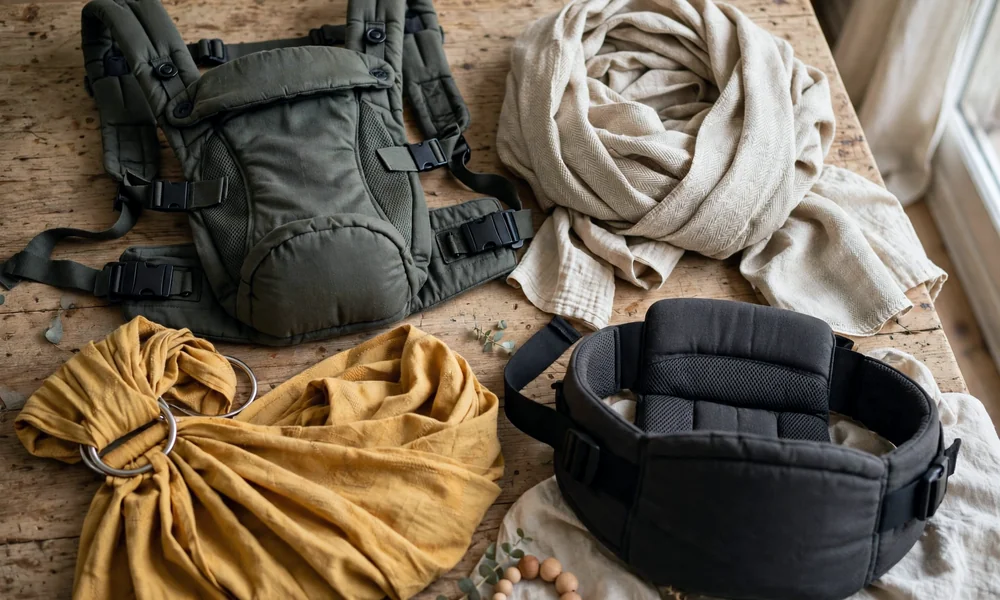
The best baby carrier of 2026 is a soft-structured carrier: a padded waist belt, padded shoulder straps, and a fabric panel that holds your baby against your chest or on your back. It clips on in seconds, adjusts to fit different body shapes, and carries from the newborn months to the toddler years with the right insert or adjustable seat.
What sets the good ones apart is the seat: wide enough to support your baby from knee to knee, with their knees higher than their bottom. Look for an adjustable seat width, head support for sleeping babies, and straps that do not dig in. The best models also let you carry on your hip or your back as your child grows.
2. The Stretchy Wrap: Best for Newborns
A stretchy wrap is a long piece of soft fabric that you tie around your body to hold a newborn close to your chest. It is the gentlest way to carry a small baby, and for the first months it is hard to beat. Your baby hears your heartbeat, feels your warmth, and sleeps against you while you move around the house or walk to the shops. It costs little, weighs almost nothing, and folds into a nappy bag.
The catch is the learning curve and the short lifespan. Tying a wrap takes practice, and by around nine months, when your baby gets heavier, a stretchy wrap starts to sag and lose support. Treat it as a stage-one carrier for the newborn months.
3. The Ring Sling: Best for Quick Trips
A ring sling is a length of fabric threaded through two rings, worn over one shoulder, with your baby tucked into the pouch it forms. It is the fastest carrier to put on: no buckles, no tying, just slip it over your head, tighten the fabric through the rings, and go. That makes it ideal for short carries, school runs, and the constant up-and-down of a toddler who wants to walk, then be carried, then walk again.
The trade-off is that all the weight sits on one shoulder, so a ring sling is not comfortable for long walks or heavy toddlers. Choose one in a strong woven fabric with sturdy metal rings.
4. The Hip Seat Carrier: Best for Toddlers
A hip seat carrier has a firm padded shelf that sits on your hip, with your toddler perched on it and your arm around them. It is the best carrier for the toddler years, when your child wants to be picked up and put down a dozen times an hour. The seat takes the weight off your arm and your back, and your child sits high enough to see the world and talk to you face to face.
The best hip seats have a wide, stable waist belt, a non-slip seat, and a storage pocket. The worst are little more than a cushion on a strap, with a seat that tips and a belt that slips. Try one loaded before you buy: if it slides around your waist, it will only get worse with a wriggling toddler on top.
5. The Framed Backpack Carrier: Best for Hiking
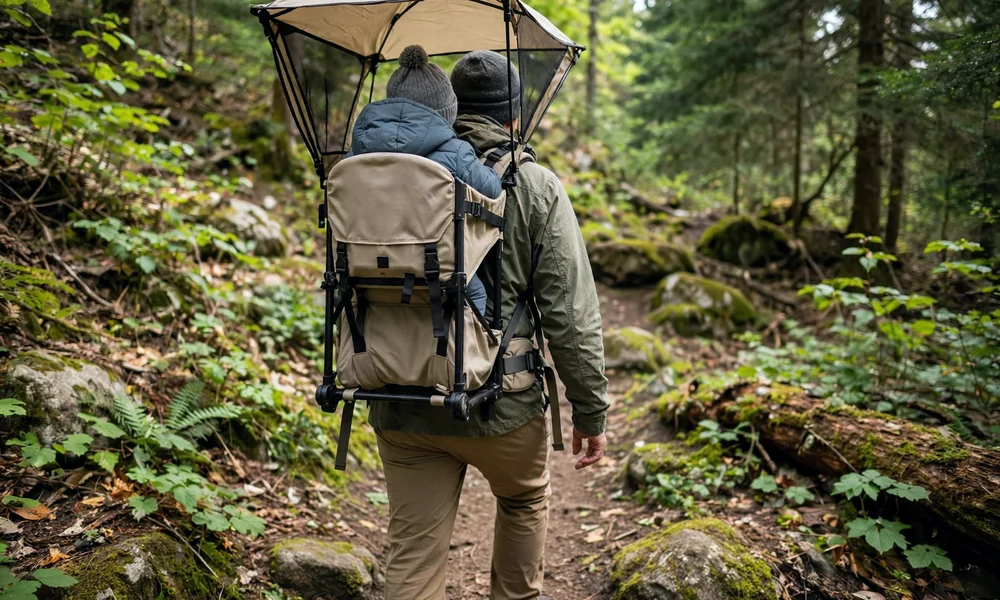
A framed backpack carrier is the only carrier built for the trail. It has an aluminium frame, a padded hip belt, a child seat with a five-point harness, and a kickstand that lets it stand on the ground while you load your child. Your baby rides high on your back, where they can see over your shoulder, while the weight sits on your hips.
Only use one once your child can sit up unaided, usually from around six months old, and check the maximum child weight, usually 18 to 22 kilograms. Look for a built-in sun shade, a rain cover, and storage for nappies, snacks, and a water bottle. The best models adjust to fit different torso lengths, which matters when two parents share one carrier. Our guide to the best backpack baby carriers covers the leading hiking models in detail.
The Worst Baby Carriers of 2026
1. The Narrow-Based Carrier: Worst Overall, Do Not Buy
The worst baby carrier you can buy is a narrow-based carrier, where your baby hangs from the crotch with their legs dangling straight down. It looks simple and it is often cheap, but it fails the most important test of all: it does not support your baby’s hips. A safe carrier holds your baby with knees higher than their bottom, in a seated position that supports the hips and spine. A narrow-based carrier does the opposite, and no amount of padding or branding fixes that.
These carriers still fill the budget end of the market, often sold as a first carrier for new parents. If a carrier’s seat is a thin strip of fabric with no width adjustment, walk away. Your baby’s hips are still developing in the first year, and the way you carry them matters.
2. The One-Size Cheap Carrier: Worst Value
The cheapest soft-structured carriers look like the good ones in a photograph and fall apart in real life. The waist belt is thin and slips, the shoulder straps dig in after twenty minutes, and the buckles feel flimsy the first time you clip them. Worse, many have no seat adjustment at all, so they fit neither a newborn nor a toddler properly. You end up buying twice: once for the cheap carrier, and once for the one you should have bought first.
The warning signs are easy to spot: no weight range on the label, no adjustable seat, straps that cannot be tightened enough to sit on your hips, and reviews that mention back pain. Spend the difference on a carrier with a proper waist belt and an adjustable seat.
3. The Forward-Facing-Only Carrier: Worst for Your Baby
Some carriers only face your baby outward, away from your chest. They look fun, because your baby can see the world, but they are the worst choice for long carries. Facing outward, your baby’s weight pulls forward, your back takes the strain, and your baby cannot turn away from noise, light, or strangers when they get overstimulated. There is no head support for a sleeping baby, and no way for your child to rest against you.
Facing outward is fine for short stretches in a carrier that also faces inward, once your baby has good head control. But a carrier that only faces outward gives you no choice at all.
4. The Unbranded Copy Carrier: Worst for Safety
Unbranded copy carriers, sold cheaply through marketplaces and social media adverts, are the worst carriers for safety. They copy the look of a leading brand while cutting every corner that matters: weak stitching, buckles that crack, fabric that tears, and no testing at all. There is no company to contact, no warranty, and no recall system. A buckle that fails while you are carrying your baby is not a minor fault. It is a fall.
Buy from a brand you can name, through a shop you can return to, and check that the carrier meets recognised safety standards. If the price is a fraction of every other carrier and the seller cannot tell you who made it, that is not a bargain.
What to Avoid When You Buy a Baby Carrier
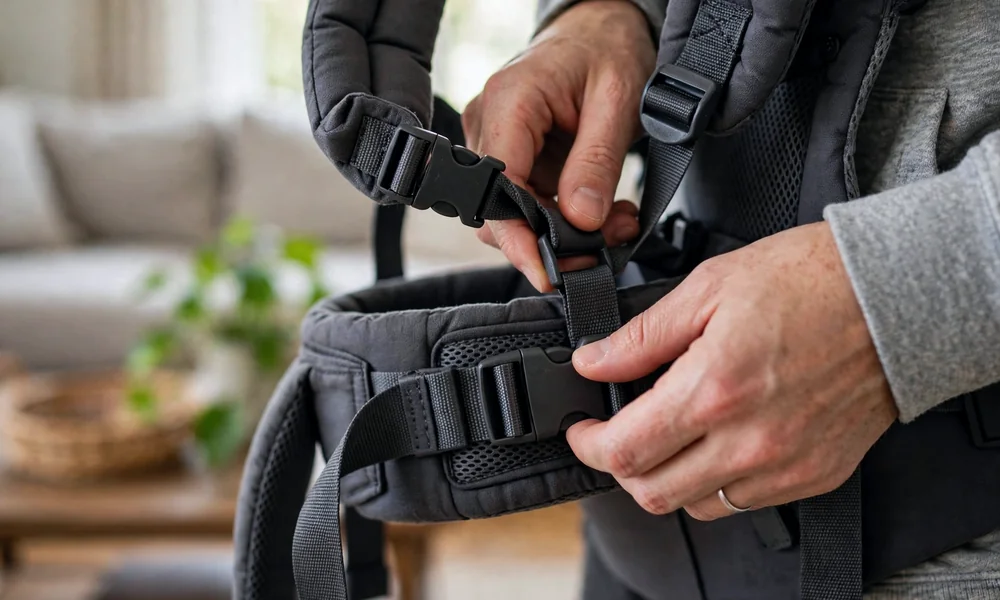
Whatever type you choose, the same checks apply. Put the carrier on with your baby in it, and walk around for ten minutes: a good carrier feels lighter after ten minutes, while a bad one starts to dig in. Check that your baby’s knees sit higher than their bottom, that their chin is off their chest, and that you can see their face. Tighten the waist belt first, so it sits on your hips, then the shoulder straps, then the chest clip.
Check the weight limits, both the minimum and the maximum. A carrier used below its minimum weight, without the right insert, leaves a small baby slumped and unsupported. A carrier used above its maximum weight strains the fabric and the buckles. Always check the buckles before every carry: a cracked or stiff buckle means the carrier needs replacing, not mending.
How to Choose the Right Carrier for Your Life
Start with how you will actually use it. If you mostly walk around the neighbourhood and do the shopping, a soft-structured carrier is the best single purchase. If your baby is newborn, add a stretchy wrap for the first months. If you hike, a framed backpack carrier is the only real option. If your toddler wants up and down all day, a hip seat will save your back.
Think about who else will carry. If two parents share the carrying, a carrier that adjusts quickly between different body shapes matters more than a perfect fit for one person. If you travel, weight and pack size matter: a wrap or a ring sling folds to nothing, while a framed carrier needs its own space in the car. And if you drive everywhere, remember the car seat matters as much as the carrier: our guide to the best and worst car seats applies the same honest test to the seat your baby rides in. For days out, a good diaper bag that survives daily use is the next piece of kit worth choosing well.
The Verdict
Buy a soft-structured carrier with a wide, adjustable seat, a padded waist belt, and a brand you can name, and you have bought the best baby carrier of 2026. Add a stretchy wrap for the newborn months, a ring sling for quick trips, a hip seat for the toddler years, and a framed backpack carrier if you hike. Avoid narrow-based carriers entirely, walk away from one-size cheap carriers and unbranded copies, and never buy a carrier that only faces outward. The best carrier is not the most expensive one. It is the one that holds your baby safely, fits your body, and still feels good after an hour on your feet.