
A bracelet is the smallest piece of jewellery you can wear, and it is the one people notice first when you reach for a cup, shake a hand, or wave across a room. The best bracelets of 2026 sit quietly on the wrist all day: they do not pinch, they do not rattle against a keyboard, and they still look as good at dinner as they did at breakfast. The worst bracelets do the opposite. They snag on sleeves, their clasps give way at the worst moment, and their shine fades to a dull grey within weeks.
This comparison puts the best bracelets of 2026 head to head against the worst, judging them the way you would actually wear them: through a working day, on a night out, in the rain, and after months of everyday use. We look at materials, clasps, comfort, how the finish holds up, and whether a bracelet still feels worth wearing once the newness has worn off. The same honest approach sits behind our comparison of the best and worst watches of 2026, because a bracelet and a watch share the same wrist and the same daily knocks.
Key Takeaways
- Judge a bracelet by how it feels after eight hours on your wrist, not by how it looks in the shop window.
- Solid metals and real stones age gracefully, while thin plating and glued beads fall apart fast.
- A good clasp is worth more than a pretty design, because a bracelet you lose is a bracelet you have lost.
- Comfort is a matter of weight and fit: a bracelet should sit still without squeezing your wrist.
- Buy the bracelet for the life you actually live, not for the occasion you imagine wearing it to.
What Makes a Bracelet Good or Bad
A good bracelet starts with its material. Solid gold, solid silver, and well-made stainless steel keep their colour and their shine for years, and they can be polished back to life when they pick up scratches. The best bracelets of 2026 are made from materials that are honest about what they are: a solid chain that feels cool and heavy in the hand, a leather band that softens with wear, or beads of real stone with natural variation from one bead to the next.
The second thing that separates good from bad is the clasp. A bracelet spends its whole life being pulled, twisted, and knocked, and the clasp takes most of that punishment. The best bracelets have clasps that close with a firm click and stay closed: a well-made lobster clasp, a sturdy box clasp, or a magnetic clasp strong enough to hold through a full day. The worst have clasps that feel flimsy from the first wear, springs that weaken within weeks, and hooks that open when you reach into a pocket.
Comfort is the third test, and it is the one most buyers forget in the shop. A bracelet should move a little on the wrist without sliding down over your hand, and it should sit flat enough that it does not catch on a sleeve or a keyboard. The best bracelets are balanced: no single heavy charm dragging one side down, no sharp edge pressing into the skin, and no link that pinches when you bend your wrist. The worst feel fine for ten minutes and irritating by lunchtime.
The Best Bracelets of 2026
The best bracelets of 2026 are mostly the quiet ones, and that is exactly the point. They are the fine gold chains, the simple silver bangles, and the well-made leather wraps that go with everything you own without shouting about it. A good bracelet does not need to be the biggest thing in the room. It needs to be the thing you reach for every morning without thinking, because it always works and always looks right.

What the best bracelets share is a feeling of solidity. The links are even and close neatly, the beads are drilled straight and strung on a cord that does not stretch, and the metal has a weight that tells you it is real. Their finishes are generous too: gold that is solid rather than a thin wash over brass, silver that is properly hallmarked, and leather that is full grain rather than bonded offcuts glued together.
The Worst Bracelets of 2026
The worst bracelets of 2026 are not always the cheapest, and that is what makes them so frustrating. Some look lovely in the shop and come with a long list of promises, but within a few weeks the problems start: the gold colour rubs off to reveal grey metal underneath, a bead cracks, or the elastic snaps and beads scatter across the floor. Owners find themselves with a bracelet they cannot wear and cannot fix.
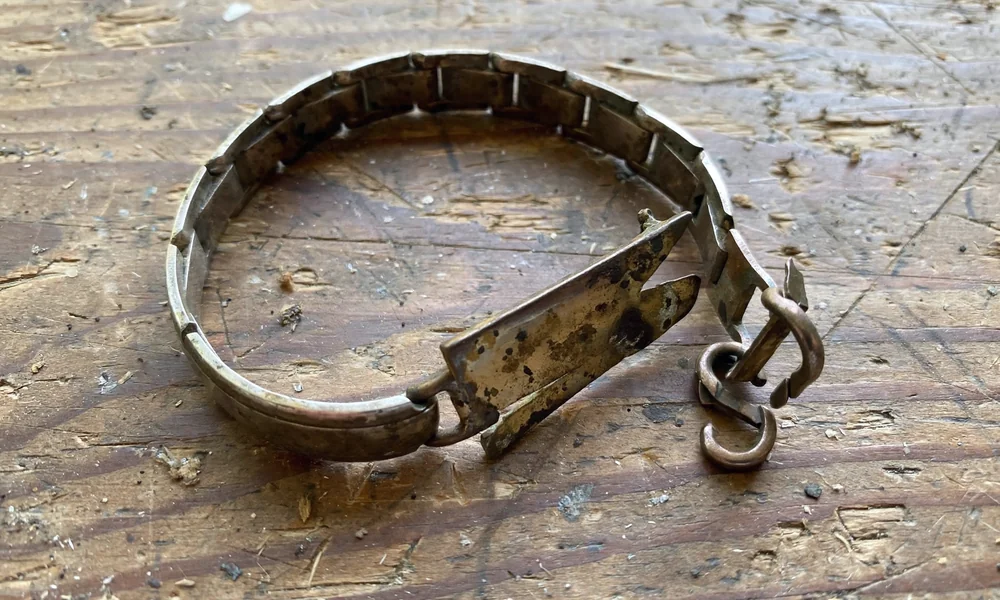
Plating is where many of the worst bracelets fall down hardest. A thin layer of gold over brass or copper looks convincing on the first day, but it wears through at the edges where the bracelet rubs against the wrist, leaving a patchy two-tone mess that no amount of polishing can save. The same goes for silver-coloured bracelets that are really a base metal with a coating: once the coating goes, the bracelet starts to stain the skin green.
Then there are the beads and charms. The worst bracelets use glass beads passed off as stone, plastic charms painted to look like metal, and glue where there should be a proper setting. A charm that falls off in the first month is not bad luck; it is a bracelet that was never built to be worn. The same care applies to everything you wear with a bracelet, and our comparison of the best and worst handbags of 2026 shows how the same quality traps appear in leather goods too.
Chains, Bangles, Beads, or Leather: Which Style Wins
Chains win for everyday wear, and it is not close. A fine link chain is light, it sits flat against the wrist, and it goes with almost anything, from a work shirt to an evening dress. The best chains of 2026 have links that are soldered closed rather than simply bent shut, so they do not pull apart when they catch on something. Their weakness is that a very fine chain can tangle and kink if you are careless with it, so it suits a careful wearer.
Beaded bracelets suit a relaxed look and are the easiest to wear with other pieces. A strand of real stone beads, each one slightly different, has a character that uniform plastic beads never manage. Leather wraps are the most casual of the four, and a good one moulds to your wrist over weeks until it feels like part of you. The trick with both is the cord: a beaded bracelet on cheap elastic will snap, and a leather bracelet with a weak stud will come undone, so check the fastening before you buy.
Materials, Clasps, and the Numbers That Actually Matter
Gold remains the safest choice for most buyers in 2026, especially in solid form rather than plated. A solid gold bracelet costs more at the start, but it keeps its value, it never turns the skin green, and it can be repaired by any jeweller. Gold-filled is a fair middle ground: a thick layer of gold bonded to a core, which wears far better than ordinary plating. Anything described as gold-toned or gold-coloured is usually a thin coating, and it will not last.
Silver is the quiet workhorse, and the best silver bracelets of 2026 are sterling silver, marked 925. Sterling silver tarnishes, but that is normal and it polishes away in minutes. The bracelets to avoid are the ones marked only as silver-plated or silver-tone, which are base metal underneath and will wear through to grey. Stainless steel is the practical choice for anyone who wants a bracelet they never have to think about: it does not tarnish, it does not scratch easily, and it suits a modern, plain design.
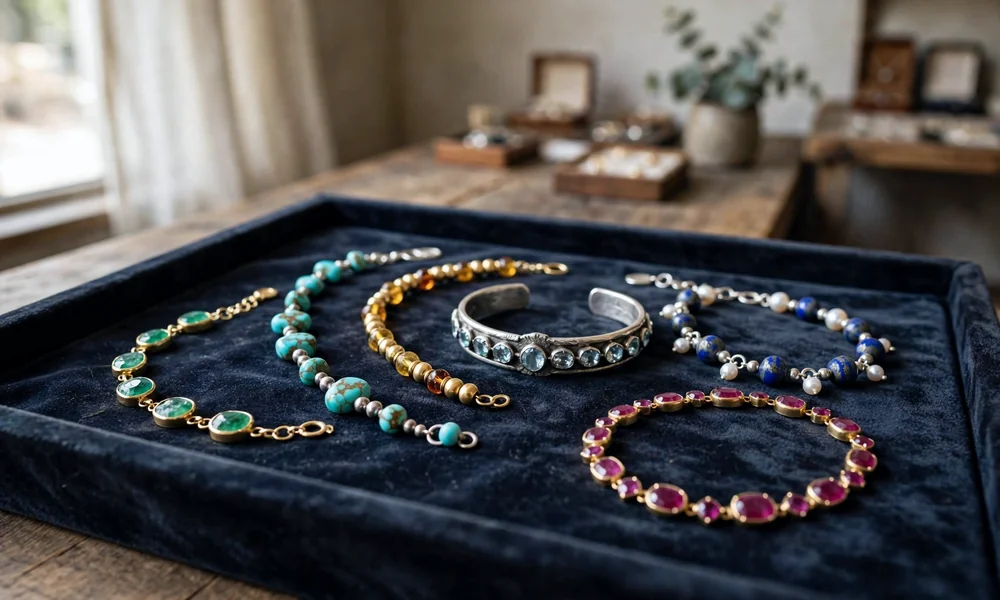
Stones and beads deserve the same attention as metal. Real turquoise, jade, garnet, and onyx each have natural variation, small flaws, and a cool feel against the skin. Glass and resin copies are perfectly uniform, warm to the touch, and often lighter than they look. There is nothing wrong with glass beads if the price is honest, but a bracelet sold as real stone that turns out to be glass is a bracelet you have overpaid for. The same honesty test applies to sunglasses and the rest of your accessories, and our comparison of the best and worst sunglasses of 2026 explains how to spot the same tricks there.
How to Buy a Bracelet Without Regret
The single most useful thing you can do before buying a bracelet is to wear it properly. A minute in the shop tells you almost nothing. Instead, put it on, move your wrist, bend your arm, and push your sleeve over it the way you would during a normal day. If it catches, pinches, or slides too far, believe it: it will feel worse after a week, not better.
Check the details with real eyes before you pay anything. Look at the clasp under a good light, pull it gently to test the spring, and run a finger along the inside of the bracelet for sharp edges. Ask what the metal actually is, and ask whether the stones are real, because a seller who cannot answer plainly is telling you something about what they sell.
Finally, do not be rushed. A good bracelet will still be a good bracelet tomorrow, and a seller who pressures you to decide on the spot is telling you something about how they do business. Look at the bracelet in daylight, check the hallmark with a magnifier, and if you are buying second hand, ask for a receipt or a valuation. A bracelet you wear every day is worth taking your time over.
Best vs Worst Bracelets at a Glance
| What matters | The best | The worst |
|---|---|---|
| Material | Solid gold, sterling silver, real stone | Thin plating over brass, glass sold as stone |
| Clasp | Firm click, strong spring, stays shut | Flimsy spring, opens on its own |
| Comfort | Balanced weight, smooth edges, sits still | Pinches, snags sleeves, slides around |
| Finish over time | Ages well, can be polished and repaired | Colour rubs off, stains the skin |
| Value | Costs more, lasts for years, holds value | Cheap to buy, unwearable within months |
The Verdict
The best bracelets of 2026 are the ones that make getting dressed easier without asking for much in return. They are comfortable, honestly made, and still beautiful after months of daily wear, and they hold their value because other people want them too. They do not need to be big or flashy: they simply work, day after day, in all weathers, with very little fuss.
The worst bracelets of 2026 are the ones that demand too much and give too little back: too much money for plating that wears off, too much time spent fixing clasps that should never have failed, and too much disappointment when a piece you loved falls apart. A bracelet is a small thing you wear against your skin every day, and when it fails, you notice it constantly.
So buy with your head as well as your heart. Choose the material that fits your real life and the clasp that fits your real day. Wear it properly before you buy it, check the metal and the stones with your own eyes, and walk away from anything that feels wrong.


