
A pancake is one of the simplest things you can cook, and that is exactly why it is so easy to get wrong. Flour, eggs, milk, a hot pan, and a few minutes — there is almost nothing to hide behind. The best pancakes of 2026 are light, golden, and tender enough to cut with the side of a fork. The worst are flat, rubbery, grey, or burnt at the edges, and no amount of syrup can rescue them once they reach the plate.
This comparison puts the best pancakes of 2026 head to head against the worst, judging them the way you would actually eat them: at a slow weekend breakfast, in a hurry before work, at a cafe where you paid good money, and from a box mix on a tired Tuesday morning. We look at rise and texture, flavour, colour, the pan, the batter, the toppings, and whether the pancake is still pleasant to eat once it has gone slightly cold. The same honest approach sits behind our comparison of the best and worst waffle makers of 2026, because the pan you cook on matters almost as much as the batter you pour into it.
Key Takeaways
- Rest the batter for ten minutes before cooking, because a rested batter makes a taller, more tender pancake.
- Do not overmix: a few small lumps in the batter are fine, and stirring them out is what makes pancakes tough.
- Judge a pancake by its rise and its crumb, not by how brown it looks, since colour alone can lie.
- The pan should be hot enough that the batter sizzles gently, but never so hot that it burns before it rises.
- Toppings should support the pancake, not drown it, and a good pancake needs very little help at all.
What Makes a Pancake Good or Bad
A good pancake starts with the batter, and the batter starts with balance. Too much flour and the pancake is heavy and doughy. Too much liquid and it spreads thin and tears. Too much sugar and it browns too fast and tastes burnt before it is cooked through. The best pancakes of 2026 get this balance right: a batter that pours slowly, holds its shape in the pan, and rises as it cooks. You can tell a good batter the moment it hits the heat, because it puffs up gently and bubbles appear across the surface.
The second thing that separates good from bad is the cooking itself. A good pancake is cooked on a steady, medium heat, in a pan that has been lightly greased and allowed to warm up properly. The first pancake is almost always a test, and experienced cooks expect it to be a little uneven. The worst pancakes come from a pan that is either too cold, so the batter sits and soaks up grease, or too hot, so the outside burns while the middle stays raw and wet. Patience is part of the recipe.
Flavour is the third test, and it is the one most people notice last and remember longest. A good pancake tastes of butter, eggs, and a little vanilla or salt — simple, warm, and clean. A bad pancake tastes of nothing at all, or worse, of the pan, the oil, or a stale box mix. Toppings can add sweetness and fruit, but they cannot fix a pancake that has no flavour of its own. If the pancake only tastes good once it is buried under syrup and cream, the pancake itself has failed.
The Best Pancakes of 2026
The best pancakes of 2026 are the tall, fluffy ones, and the secret behind them is usually very ordinary: fresh baking powder, a rested batter, and a hot pan. Buttermilk pancakes lead the field, because the acidity in buttermilk reacts with the raising agent and gives the pancake a genuine lift, along with a gentle tang that plain milk cannot match. They are golden on the outside, pale and airy on the inside, and they soak up butter and syrup without falling apart.

What the best pancakes share is a crumb that is soft without being wet, and springy without being chewy. You can press one gently and it springs back. Cut into it and you see a network of tiny air pockets, which is the sign of a batter that was mixed lightly and left to rest. The edges are neatly browned, the top is evenly coloured, and the pancake holds its shape on the plate instead of slumping into a flat disc.
The Worst Pancakes of 2026
The worst pancakes of 2026 are the flat ones, and they are usually flat for a reason that was decided long before the pan was hot. The most common cause is old or dead raising agent: baking powder that has sat in the cupboard for two years will not lift a batter, and neither will a batter that was stirred until it was perfectly smooth. Overmixing develops the gluten in the flour, and gluten is what makes bread chewy and pancakes tough. A batter beaten smooth is a pancake ruined.
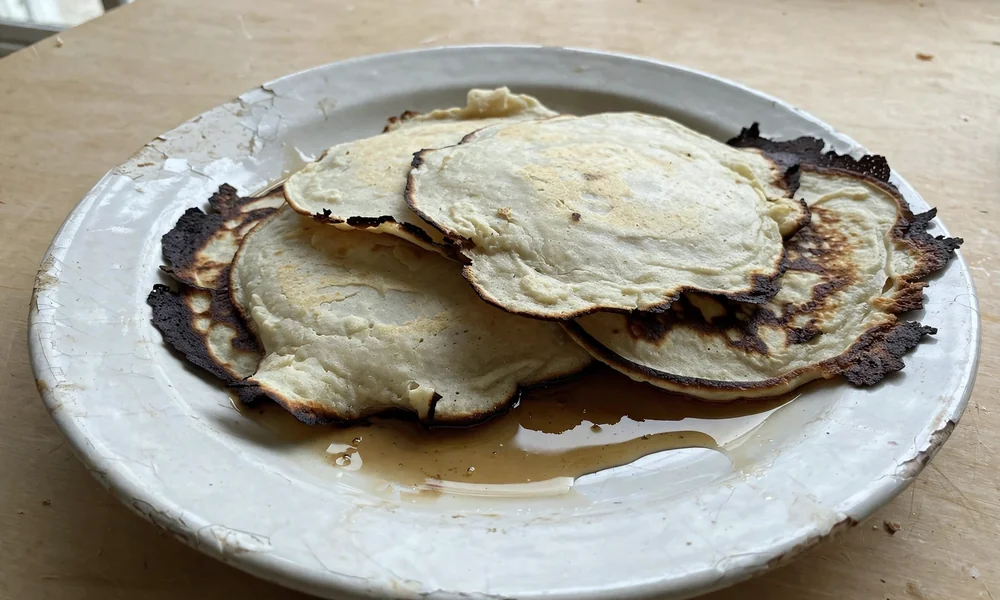
Texture is where the worst pancakes really give themselves away. Some are rubbery, bouncing back from the fork like a sponge that has been wrung out. Others are gummy in the middle, wet and dense where the heat never reached. A few are so dry they crumble when you cut them, usually because the batter was too thick or the pancake was left on the heat long after it was done. None of these are fixed by toppings, and the syrup only makes the mess wetter.
Then there are the burnt ones. A pancake cooked on a pan that is far too hot will look dark and appetising from across the room, and taste of bitter carbon when you bite into it. The worst offenders are the box mixes with too much sugar, which caramelise and then burn within seconds. If the outside is dark brown before the bubbles have even appeared on the surface, the heat is wrong, and the pancake is already lost.
Buttermilk, Plain, or Box Mix: Which Wins
Buttermilk pancakes win on flavour and rise, and it is not close. The tang of the buttermilk gives the pancake a depth that plain milk cannot match, and the acid helps the raising agent work harder, so the pancakes come out taller. The downside is that buttermilk is not always in the fridge, and a carton bought for one batch can sit unused for weeks. If you do not have it, a splash of lemon juice or vinegar in ordinary milk is a fair stand-in, and it is far better than skipping the acid altogether.
Plain pancakes made from scratch are the everyday winner. Flour, eggs, milk, a little sugar, a pinch of salt, and fresh baking powder — mixed gently and rested for ten minutes — will beat almost any box mix on the shelf. They cost less, they taste better, and you know exactly what went into them. The only real skill is restraint: mix until the flour has just disappeared, and then stop, lumps and all.
Batter, Pans, and the Numbers That Actually Matter
The ratio is the number that matters most: roughly one cup of flour to one cup of milk, one egg, and one teaspoon of baking powder will make a batch that serves two people generously. Scale it up by doubling, never by guessing, and keep the same proportions. Too much egg makes the pancake taste of omelette. Too little makes it fall apart. Too much baking powder leaves a bitter, soapy taste that no topping can hide.
The pan matters more than most people think. A heavy pan holds its heat steady, so the pancakes cook evenly from the first to the last. A thin pan heats in patches, so one side burns while the other stays pale. Cast iron and heavy non-stick both work well, as long as the pan is clean and lightly greased. Butter gives the best flavour, but it burns easily, so many cooks use a little oil for the pan and butter on the finished pancake. Our comparison of the best and worst maple syrups of 2026 shows how much difference the topping makes, because a thin, sugary syrup will flood a good pancake while a proper one sits on top and soaks in slowly.

Timing is the last number worth knowing. A pancake needs about two minutes on the first side and one minute on the second, on a medium heat. The bubbles on the surface are your timer: when they appear across the whole pancake and the edges look set, it is ready to flip. Flip it once, and only once. Every extra flip presses the air out and makes the pancake flatter, and a pancake that has been flipped three times is a pancake that has given up.
How to Make Pancakes Without Regret
The single most useful thing you can do is to make the batter first and then leave it alone for ten minutes while the pan heats and the table is set. That rest lets the flour hydrate and the raising agent start working, and it is the difference between a pancake that rises and one that does not. While it rests, get the toppings ready, warm the plates, and put the butter out. A cold plate steals heat from a hot pancake faster than anything else.
Cook a test pancake first, and eat it yourself. It will tell you whether the pan is too hot, whether the batter needs a splash more milk, and whether the heat needs adjusting. Do not serve the test pancake to anyone else, and do not feel bad about it — every good cook does this, and the test pancake is the reason the rest of the batch turns out well.
Finally, serve them as you cook them, or keep them warm in a low oven on a plate covered loosely with a cloth. Do not stack them tightly under a lid, or the steam will make them soggy. And remember that pancakes are a breakfast, not a dessert: the best mornings are the ones where the pancakes are golden, the coffee is hot, and nobody is still standing at the stove while everyone else eats. The same care applies to the whole breakfast table, and our comparison of the best and worst breakfasts of 2026 shows which morning meals are worth the effort and which ones are better skipped.
The Verdict
The best pancakes of 2026 are the ones that respect the basics: fresh raising agent, a gently mixed and rested batter, a steady medium heat, and a pan that is clean and properly warm. They are golden, tall, tender, and full of flavour, and they need little more than butter and a good syrup to be completely satisfying.
The worst pancakes of 2026 are the ones that ignore the basics: a stale mix, a batter beaten smooth, a pan that is too hot or too cold, and toppings used to hide the damage. They are flat, rubbery, burnt, or tasteless, and they turn a simple breakfast into a small regret.
So mix gently, rest the batter, heat the pan properly, and flip once. Choose buttermilk when you can, plain from scratch when you cannot, and a good mix only when you are truly in a hurry. A pancake is a simple thing, and that is the whole point: when you get the simple things right, breakfast takes care of itself.


