
Real maple syrup is not the thick, corn-syrup-based topping that sits beside the pancakes in most diners. It is the boiled-down sap of the sugar maple, gathered in the cold weeks of late winter, with a flavour no imitation can copy: warm and woody, with notes of caramel, vanilla, and toasted nuts that change with the season and the grade. The best and the worst maple syrup in 2026 are separated by exactly one thing, whether the bottle contains the real sap of a tree or a factory-made imitation wearing a maple costume.
This head-to-head comparison puts the two sides against each other properly, instead of listing good syrups on one page and bad ones on another. On one side, the syrups that list a single ingredient, taste of the tree they came from, and suit pancakes, baking, and cooking alike. On the other, the pancake syrups that are mostly corn syrup and flavouring, the watery imitations, and the bottles that charge real-maple prices for something that never saw a tree. By the end, you will know exactly which bottle belongs in your kitchen and which one should stay on the shelf.
Key Takeaways
- Real maple syrup lists one ingredient: maple syrup. Anything with corn syrup or maple flavour is pancake syrup, not maple syrup.
- Grades describe colour and flavour, not quality: golden is delicate, amber is balanced, dark is bold, and very dark is intense.
- It takes about forty litres of sap to make one litre of syrup, which is why real maple syrup costs more than any imitation.
- Store opened syrup in the fridge, and warm the bottle gently before pouring so it flows properly over pancakes.
- Quebec produces most of the world’s maple syrup, and Vermont is the heart of American production.
What Makes a Great Maple Syrup
A great maple syrup starts in late winter, when freezing nights and thawing days make the sap run. Producers drill a small hole in the trunk, fit a spout, and collect the clear, faintly sweet sap, which is only about two per cent sugar and tastes almost like water. The transformation happens in the sugar shack, where the sap is boiled in wide, shallow pans until most of the water has evaporated. That boiling is where the flavour is born: as the sap concentrates, its sugars caramelise gently, and the syrup takes on its amber colour and distinctive taste.
The grade on the bottle tells you what to expect, and none of the grades is better than the others. Golden syrup is delicate and light, and it suits drizzling over yoghurt or ice cream where a gentle sweetness is enough. Amber is the all-rounder, balanced and warm, and it is the best choice for pancakes. Dark is bold and almost smoky, and it is the syrup for baking, glazing, and cooking, where its flavour can stand up to heat and other ingredients. Very dark is intense and almost savoury, and a little of it goes a long way. The best syrup for you is the grade that matches how you plan to use it, not the lightest or the darkest bottle on the shelf.

The Best Side: Syrups That Earn Their Place
Golden and Amber: The Breakfast Classics
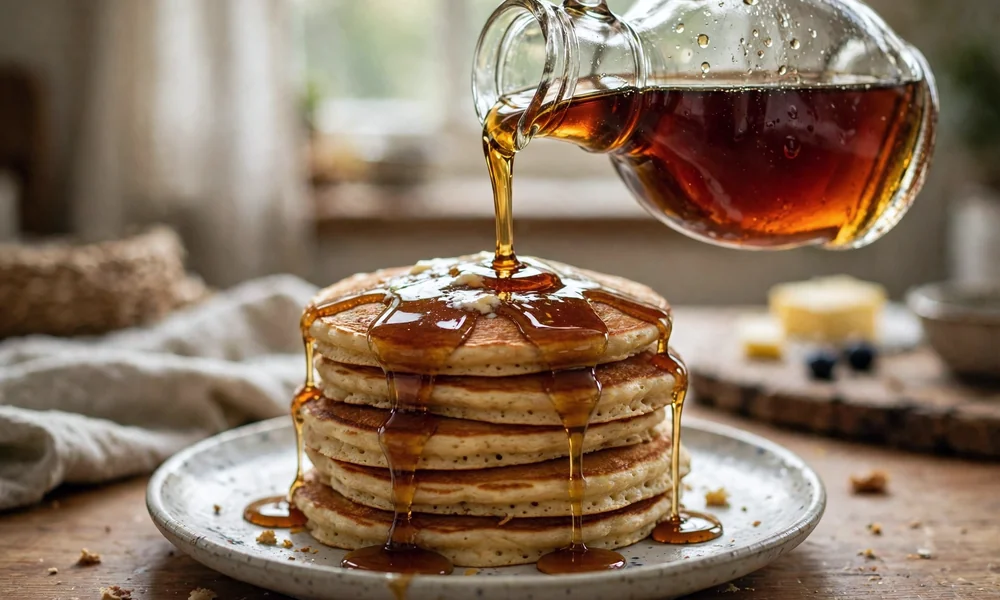
Golden and amber syrups are the best choice for the breakfast table, and the easiest way to taste what real maple is. Golden syrup pours light and clear, tastes delicately of vanilla and warm wood, and never overwhelms the food underneath it. Amber is a little deeper, with caramel notes that sit beautifully on pancakes, waffles, and French toast. Both pour smoothly, soak gently into the crumb rather than sitting on top in a sticky pool, and leave a clean, warm finish rather than a sugary film.
Dark and Very Dark: The Cook’s Syrups
Dark maple syrup is the best choice for the kitchen, and the grade that serious cooks reach for first. Its flavour is bold, almost smoky, with notes of toasted nuts and molasses that survive heat, which is why it belongs in baking, glazes, dressings, and marinades. A spoonful in a vinaigrette, a brush over roasted vegetables, or a measure in a cake batter brings a depth that no imitation can copy. Very dark syrup is even stronger, and it suits recipes where the syrup is a main flavour rather than a background sweetness, such as maple baked beans or a glaze for ham. These are the bottles that turn an ordinary recipe into something worth remembering.
Single-Origin and Organic Syrups
The best syrups of all are often the single-origin and organic bottles, made by one producer from one stand of trees and sold with the harvest year on the label. These syrups taste of a particular place and a particular season, and the flavour changes a little every year, in the same way a good wine does. Organic certification means the trees were never treated with chemicals and the forest was managed with care, which matters to many buyers and shows in the clean, clear flavour of the syrup.
The Worst Side: Syrups to Leave on the Shelf
Pancake Syrup: Corn Syrup in a Maple Costume
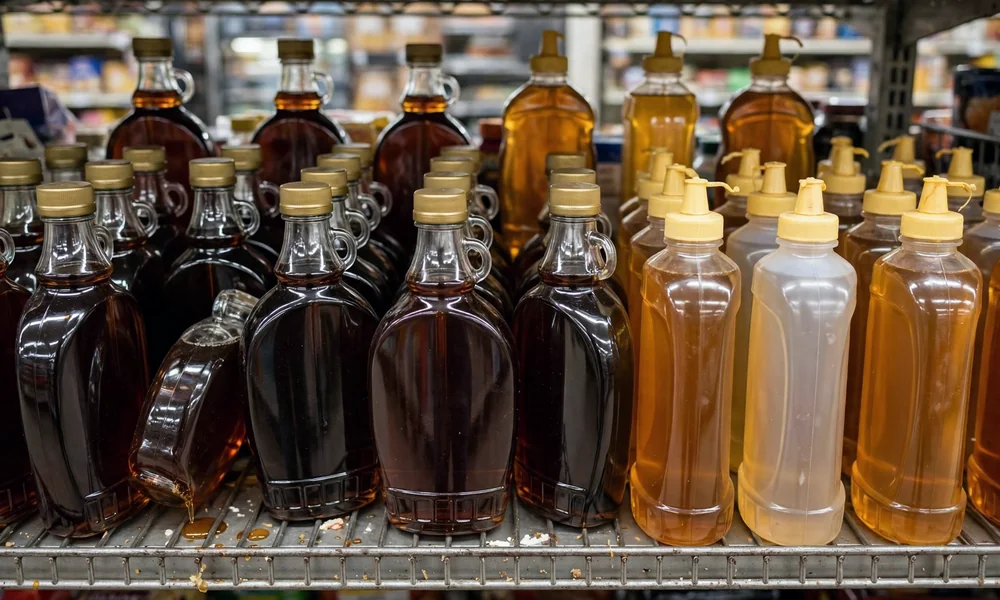
The worst bottles on the shelf are the pancake syrups, which are mostly corn syrup, water, and artificial maple flavouring, with no real maple at all. They are thick, glossy, and very sweet, and they taste of caramel colouring rather than of a tree. They are often sold in large plastic jugs beside the real syrup, at a fraction of the price, and the label leans heavily on words like maple flavoured or original recipe to hide what is inside. If the ingredient list mentions corn syrup before anything else, the bottle is not maple syrup, whatever the picture on the front suggests.
Watery and Artificially Flavoured Imitations
The second group to avoid is the thin, watery imitations, which taste faintly sweet and then disappear, leaving nothing behind at all. These are often the cheapest bottles in the shop, and they are made to a price rather than to a flavour. Some add a little real maple syrup, perhaps two or three per cent, so they can put the word maple on the label in large letters, but the rest is corn syrup and flavouring. The result is a bottle that is neither a good imitation nor a real syrup, and it does a poor job at everything, from pancakes to baking. A syrup that tastes of nothing is worse than a syrup that tastes of sugar, because at least the sugar is honest about what it is.
Overpriced Bottles That Are Not What They Claim
The last group is the most annoying: bottles that charge real-maple prices for syrup that is not what it claims to be. Some are blends, mostly corn syrup with a splash of real maple, sold in handsome glass bottles at premium prices. Others are old stock, stored badly, that has gone cloudy or developed an off, musty taste, yet still sits on the shelf at full price. A few are labelled with vague grades or invented terms that do not match the standard grading system, which is a warning sign in itself. Always read the ingredient list, check the grade, and buy from a shop or producer you trust, because a pretty bottle is no guarantee of what is inside it.
The Verdict
The best side wins this comparison by a wide margin, and it is not a close call. Real maple syrup beats every imitation on flavour, on versatility, and on honesty about what it is. The best bottles taste of the tree, pour beautifully, cook beautifully, and make even a plain breakfast feel like an occasion, while the worst bottles taste of corn syrup and flavouring and leave you wondering why you bought them. The price gap is real, because forty litres of sap go into a single litre of syrup, but the flavour gap is wider still, and a small bottle of real maple lasts longer than you expect, because a little of it goes a long way.
That said, the worst side is not entirely without a point. A cheap pancake syrup has its place at a big family breakfast where the syrup is mostly for children and the budget is tight, and there is no shame in that. Buy the real thing on purpose, read the label every time, and the bottle in your kitchen will be one you actually look forward to opening. The best maple syrup in 2026 is the bottle you finish, enjoy, and buy again without hesitating.
Who Each Side Is For
The best side is for anyone who eats pancakes, waffles, or French toast more than a few times a year, which is most of us. It suits home cooks who bake with it, glaze with it, or stir it into dressings, and anyone who wants a sweetener that brings flavour of its own rather than just sweetness. A golden or amber bottle is the right choice for the breakfast table, and a dark bottle is the right choice for the kitchen, and together they cover almost everything a home cook needs. If you pour it, cook with it, or bake with it, the best side repays the extra cost every single time you open the bottle.
The worst side, if it can be said to be for anyone, is for the rare occasion when price matters more than flavour: a large crowd, a school breakfast, or a jar for a child who will drown the pancakes either way. For everyday use, the best side wins on taste, on value, and on the simple pleasure of food that tastes like where it came from, in the same way a good waffle maker rewards the batter you put into it.
How to Choose and Care for Yours
Choosing well takes ten seconds in the shop. Turn the bottle around and read the ingredients before you read the front of the label, because the front is advertising and the back is the truth. One ingredient, maple syrup, is the rule. Then choose the grade for how you will use it: golden or amber for the table, dark for cooking and baking. Buy the size you will finish in a few months, because an open bottle slowly loses its bright edge. A smaller fresh bottle beats a large stale one every time, and it is worth remembering that the best maple syrup bottles are graded by colour and flavour, not by quality, so no grade is a bad choice.
Caring for it is just as simple. Store an unopened bottle in a cool, dark cupboard, and once opened, keep it in the fridge, where it will stay good for months. Always pour from a clean bottle, and wipe the neck before replacing the cap, because sticky residue is what attracts mould. Warm the bottle gently in a jug of warm water before pouring, so it flows properly over pancakes instead of sitting in a cold lump. A bottle looked after this way is a small daily pleasure, and it is worth the ten seconds it took to choose it well, especially alongside a bowl of granola drizzled with the real thing.


