Cereal is the breakfast most of us grew up with, and it is still the fastest way to get a bowl on the table. At its best, it is a genuinely good start: whole grains, fibre, and slow-release energy, topped with milk, yoghurt, and fresh fruit. At its worst, it is dessert in a box, a bowl of sugar and refined starch that leaves you hungry again within an hour and wondering why the morning feels so hard. The gap between the best cereals of 2026 and the worst is enormous, and it is usually visible on the label, once you know what to look for.
This comparison puts the best cereals of 2026 head to head against the worst, judging them the way you would actually eat them: on a rushed weekday morning, on a slow weekend, at home, and on the go. We look at the sugar, the fibre, the whole grains, how filling each bowl really is, and whether the cereal earns its place in the cupboard or only its place on the shelf. A great cereal keeps you going until lunch. A bad one is a short sugar rush followed by a long, hungry morning.
Key Takeaways
- A good cereal has under 8 grams of sugar and at least 3 grams of fibre per 30 gram serving.
- Whole grains should be the first ingredient, not sugar, syrup, or refined flour.
- A 30 to 40 gram serving is the standard portion, and most people pour far more without realising it.
- Flakes, shredded wheat, and high-fibre styles are the strongest everyday choices for most people.
- Milk, yoghurt, and fresh fruit turn a plain cereal into a complete breakfast.
What Makes a Cereal Good or Bad
A good cereal starts with whole grains. Wheat, oats, barley, and rye bring fibre, B vitamins, and slow-release energy, which is what a breakfast should deliver. Fibre is the quiet hero here: it slows digestion, steadies blood sugar, and keeps you full until lunch. A cereal with 3 grams of fibre or more per serving is doing its job, while one with under 1 gram is little more than flavoured starch. The first ingredient tells you most of what you need to know: whole wheat, whole oats, or wholegrain barley at the top of the list means the grain kept its fibre-rich outer layer.
Sugar is where most cereals fall down. Many popular boxes carry 9 to 12 grams of sugar per 30 gram serving, and a realistic bowl is often 45 grams, which pushes the sugar past 15 grams before the day has properly begun. That is a lot of sweetness for a food that is sold as a sensible start, and it is the main reason a bowl can leave you hungry again within an hour. A little sweetness is fine, and a small amount helps a plain cereal taste pleasant. The trouble starts when sugar, syrup, or honey appears in the first few ingredients, which is a reliable sign that the box is built around sweetness rather than grain.
Salt is the test most people miss. Some savoury-sounding cereals are surprisingly salty, so glance at the salt line and aim for under 0.3 grams per serving. Then check the serving size itself, which is usually 30 grams, roughly three tablespoons of flakes. Most people pour closer to 45 or 50 grams without realising it, so the sugar and salt on the label are often far lower than what is actually in the bowl. Compare boxes using the per 100 gram column, which puts every cereal on the same footing regardless of how generous the manufacturer was with its serving size.

The Best Cereals of 2026
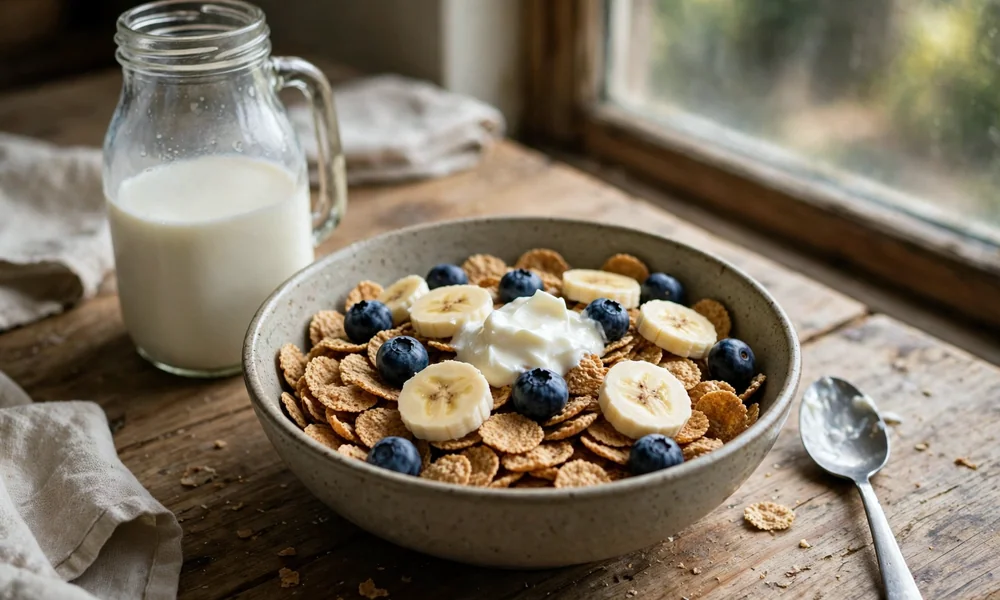
The strongest cereals of 2026 share a simple quality: they are mostly grain, with very little added to it. Plain flakes are the classic example, and the simplest ones are among the best. Plain cornflakes and wheat flakes are low in sugar and light in the bowl, which makes them a good base for adding your own fruit, nuts, or seeds. They are not exciting on their own, and that is the point: the excitement should come from what you add, not from what the factory added for you.
Shredded wheat is another quiet winner. It is usually just whole wheat and water, pressed into a biscuit, with no added sugar at all. It is high in fibre, it keeps you full for hours, and it takes milk and fruit beautifully. Bran flakes deserve a mention too, since they combine a decent fibre count with a mild flavour that works with berries, banana, and a spoonful of yoghurt. These are cereals that do not need a cartoon on the front to sell themselves, and the box is usually the plainest one on the shelf.
High-fibre and oat-based cereals round out the best of 2026. A good oat cereal brings beta-glucan fibre, which helps lower cholesterol and keeps you full, and it pairs well with milk, yoghurt, and fruit. Porridge oats are not a boxed cereal in the same sense, but they sit at the top of the same table: cheap, filling, and kind to your stomach, and they take five minutes to make. The same honest approach sits behind our comparison of the best vs worst breakfasts of 2026, where porridge and eggs come out ahead for exactly the same reasons.
What lifts a good cereal from adequate to excellent is what you put on it. A handful of blueberries, half a sliced banana, a spoonful of natural yoghurt, and a scatter of nuts turn a plain bowl into a complete breakfast with protein, fibre, and flavour. The milk matters too: whole milk adds richness and staying power, while a fortified plant milk adds calcium and vitamins. A good cereal is a base, not a finished meal, and the best bowls are the ones you build yourself in a minute.
The Worst Cereals of 2026
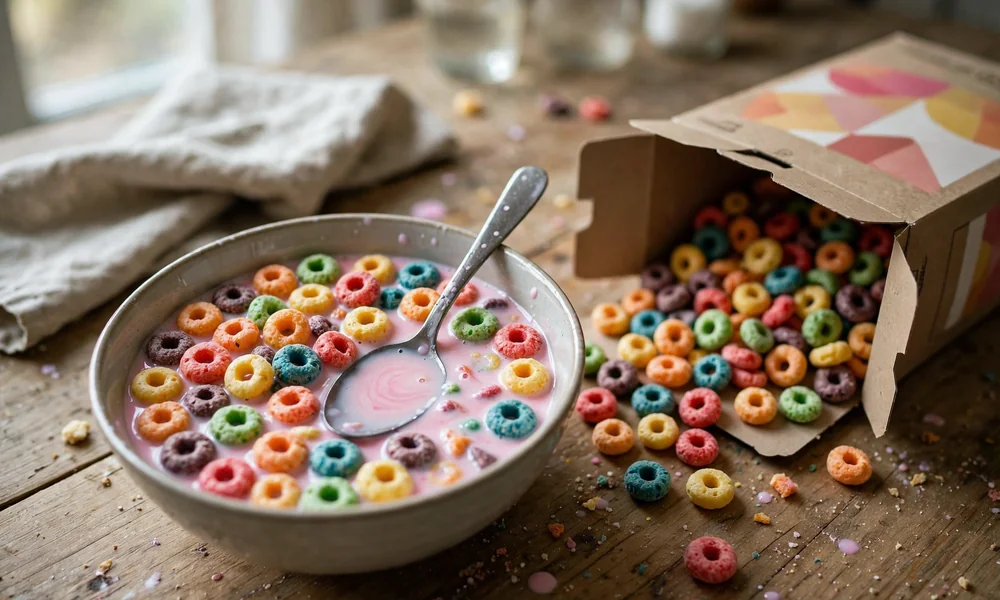
The worst cereals of 2026 are built for the shelf, not for the morning. The most common failure is the sugar trap: a box that looks like breakfast and eats like dessert. Frosted flakes, chocolate hoops, honey-coated puffs, and brightly coloured rings all carry 9 to 12 grams of sugar per small serving, and the serving size on the pack is often a modest 30 grams that few people actually measure. A realistic bowl pushes the sugar past 15 grams, which is roughly four teaspoons before the day has properly begun, and the energy rush it gives lasts about half an hour.
Sugar hides under many names on a cereal box: honey, maple syrup, brown rice syrup, cane sugar, agave, and fruit juice concentrate are all sugars as far as your body is concerned. The worst boxes list two or three of them in the first five ingredients, which means the cereal is built around sweetness rather than grain. A box can call itself wholegrain while containing only a modest share of whole grains, so look for whole grains as the first ingredient, not just in the product name. If sugar or syrup appears second or third, put the box back.
Then there are the cereals that fail on fibre, or on what they pretend to be. A puffed cereal that is mostly air and refined starch may feel light in the bowl, but it will not keep you full, and you will be hungry again before nine o’clock. A cereal that promises fruit and delivers a few flecks of dried strawberry and a lot of flavouring is selling a picture, not a breakfast. A cereal that claims to be high in protein but carries most of its calories from sugar is dressing up a dessert in gym clothes. The same trick appears in other sweet foods, and our comparison of the best vs worst pancakes of 2026 shows how the sweetest options are usually the least filling.
The saddest failures are the cereals that were good once and have quietly changed. A recipe that was once wholegrain and plain now carries more sugar, a smaller serving size on the label, and a brighter box. The change is hard to spot unless you read the label every time, which almost nobody does. That is why the label check matters more than the brand: trust the numbers on the back of the box, not the promises on the front, and a cereal that has slipped will tell on itself in thirty seconds.
How to Choose a Better Cereal
Start with the label, and do it in the shop rather than at home. Check sugar first: under 5 grams per serving is excellent, under 8 grams is acceptable, and over 10 grams means the cereal is a treat rather than an everyday breakfast. Then check fibre, where 3 grams or more is good and 5 grams or more is excellent. Then glance at salt, and at the serving size, so you know what a real bowl actually contains. The whole check takes thirty seconds, and it will save you from most of the bad boxes on the shelf.
Think about the bowl as a whole, not just the cereal. A small bowl of a good cereal with milk, yoghurt, and fruit will keep you full far longer than a large bowl of a sugary one on its own. If you like sweetness in the morning, add your own: a drizzle of honey or a few raisins on a plain cereal gives you the flavour with far less sugar than a frosted box, and you control the amount. A sweet drink on the side makes things worse, and our comparison of the best vs worst milkshakes of 2026 is a useful reminder that a sugary drink and a sugary cereal together are a dessert, not a breakfast.
Finally, keep the cupboard honest. Buy one good everyday cereal and keep it as the default, and treat the sweet boxes as what they are: a weekend treat, a small bowl, eaten slowly and enjoyed. Children are the hardest case, because the sweetest boxes are the ones aimed at them, but a plain cereal with fruit and a little honey tastes better than it sounds, and it will not leave them crashing before school. A cereal you can eat every day without a sugar crash is a cereal worth keeping.
The Verdict
The best cereals of 2026 are the honest ones: mostly whole grain, low in sugar, decent in fibre, and happy to let you add the flavour yourself with fruit, nuts, and yoghurt. They are not always the brightest boxes, and they are rarely the ones with the cartoon on the front, but they reward you every morning with steady energy and a stomach that stays quiet until lunch. The worst cereals are the ones that hide behind a bright box and a health claim while delivering a bowl of sugar and refined starch.
The simplest rule is also the best one. Read the label, check the sugar and the fibre, weigh the portion, and build the bowl with real food on top. If a cereal passes those tests, it will probably serve you well for years. Buy the box that fits your morning, your appetite, and your habits, and keep the sweet ones for the weekend. A great cereal does not need to be expensive or exciting. It just needs to be mostly grain, lightly sweetened, and eaten with milk and fruit, while the morning is still young.