A nail buffer is the quietest tool in the manicure kit, and the one most often used wrong. It is a block or a file covered in fine grit, and its job is not to cut or shape the nail but to smooth its surface: to take down ridges, to even out rough patches, and to bring up a soft, natural shine without a drop of polish. When a buffer is made well and used gently, a dull nail turns smooth and glossy in a minute, and the shine lasts for days. When the buffer is made badly, or pressed too hard, the same little block scratches the nail, thins it, and leaves it weaker than before.
The gap between the best nail buffers of 2026 and the worst is wide, and it usually shows up in five places: the quality of the grit, the number of steps on the block, the firmness of the foam, the comfort of the grip, and how the buffer holds up after repeated use. A great buffer feels firm and even, moves smoothly across the nail, and leaves a shine that looks like health rather than varnish. A bad one feels scratchy and uneven, sheds grit onto the nail, or wears flat after a few uses. This comparison puts them head to head the way you would actually use them: smoothing ridges on bare nails, bringing up a shine before a special occasion, and keeping a buffer in the drawer between manicures. We look at the grit, the steps, the grip, the finish, and whether a buffer earns its place in the kit or only its place in the bin.
Key Takeaways
- A good nail buffer smooths ridges and brings up a natural shine with fine, even grit that never scratches the nail surface.
- Four-sided blocks work in steps, from coarse smoothing to fine shining, and each side should be used in order, lightly and briefly.
- The best buffers feel firm and balanced in the hand, with a foam core that holds its shape instead of collapsing under pressure.
- The worst buffers are coarse and uneven, shed grit, thin the nail, or go flat after only a few uses.
- The same honest approach sits behind our comparison of the best and worst nail files of 2026, because a buffer smooths the surface while a file shapes the edge.
How We Judged the Nail Buffers
We judged every nail buffer on five things that matter at the vanity table rather than on the packet. First, the grit: whether the abrasive surface is fine and even, or coarse and patchy enough to scratch the nail. Second, the steps: whether a multi-sided block moves sensibly from smoothing to shining, with each side doing a different job, or whether the sides feel like the same grit in different colours. Third, the foam and grip: whether the block is firm enough to press evenly, comfortable to hold, and steady in the hand, even when the fingers are a little damp. Fourth, the finish it leaves: whether the nail comes out smooth and glossy, with a shine that looks natural, or dull, scratched, and tired. Fifth, how the buffer ages: whether it keeps its grit and shape after many uses, or whether it sheds, flattens, and falls apart.
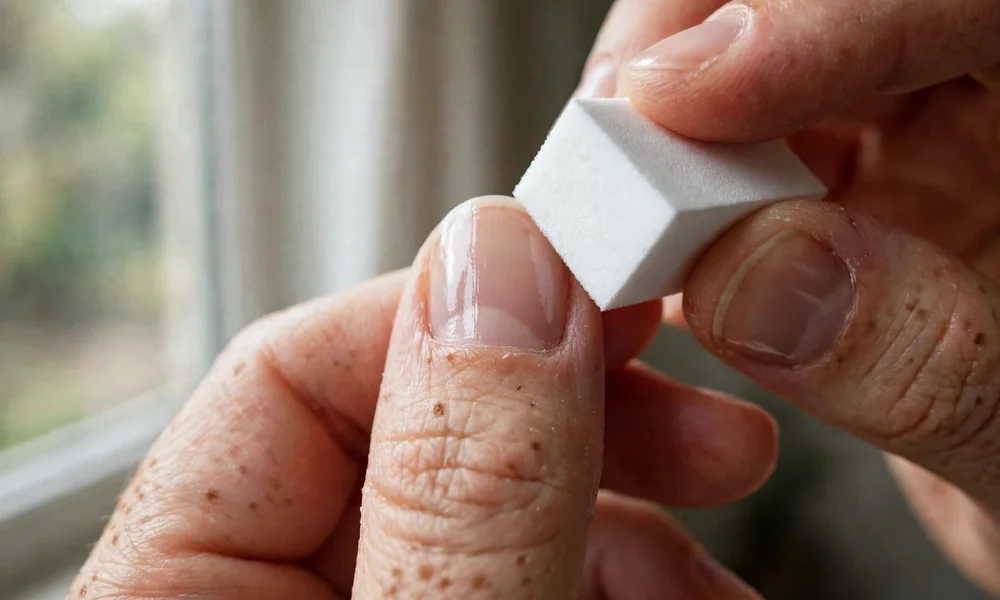
The Best Nail Buffers of 2026
The best nail buffers of 2026 share one quality above all: they are gentle. The grit is fine and evenly spread, so the block glides across the nail instead of grinding into it. A few light strokes take down a ridge or a rough patch, and the finest side brings up a shine that looks like the nail itself, only healthier. The block feels firm in the hand, with a foam core that springs back after each press, and the sides are clearly different from one another, so you can feel the step from smoothing to shining without having to read a label.
What sets the top buffers apart is how little they ask of the nail. The best four-sided blocks are honest about their order: a coarser side to even out the surface, a finer side to smooth it, and a final side to polish it to a shine. Each side does its job in a handful of strokes, and the whole routine takes a minute a hand. The best buffer files, the flat kind, are just as careful, with a fine grit that smooths without biting and a flexible body that follows the curve of the nail. They also age well: the grit stays put, the foam keeps its shape, and the block still works after months in the drawer, which is more than can be said for the cheap ones.
Reading the Sides: Grit, Steps, and What Each One Does
The sides of a buffer block are its instructions, and they are worth reading before you start. The coarsest side is for smoothing: it takes down ridges and rough patches, and it should be used the least, with the lightest touch. The next side refines the surface, removing the marks the first side left. The third side smooths further, and the final side, the shining side, is the finest of all, bringing up the gloss with gentle, quick strokes. Used in order, the sides turn a dull nail into a smooth, shining one. Used out of order, or with the coarse side pressed hard, they do the opposite, scratching the surface and thinning the plate.
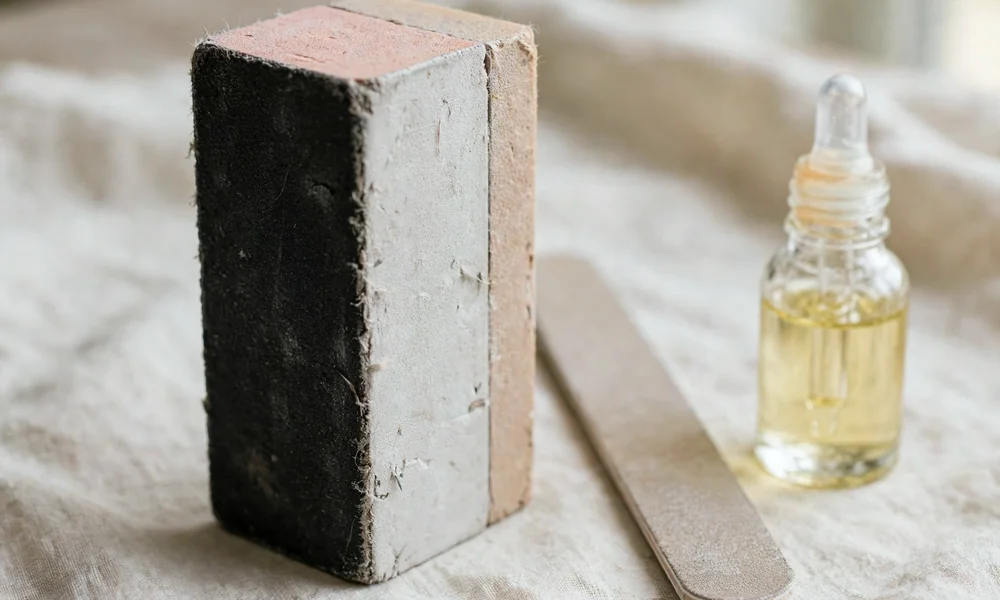
The Worst Nail Buffers of 2026
The worst nail buffers fail in ways that are hard to forgive, because the job is so gentle and the tool has been made for so long. The most common failure is grit that is too coarse: a surface that scratches the nail instead of smoothing it, leaving fine lines that catch the light and make the nail look worse than before. The second failure is grit that sheds, so the block leaves a dusty residue on the nail and on the fingers, and goes smooth and useless after a few uses. The third is a foam core that collapses under pressure, so the block squashes flat in the hand and presses unevenly, shining one part of the nail and scratching another.
Then there are the buffers that fall apart in the hand. The grit peels away from the foam in strips, the block splits at the corners, and the whole thing ends up in the bin after a single manicure. Some are so badly made that the sides are barely different from one another, so the shining side is just as rough as the smoothing side, and the shine never comes. The worst of all are the buffers that combine these faults — coarse, shedding, and collapsing — and still charge a premium for the privilege. They are the reason some people say buffing ruins nails, when what really ruins nails is a bad buffer used too hard.
Buffers for Ridges, Dull Nails, and a Natural Shine
Ridges are the most common reason people reach for a buffer, and they are also the easiest to make worse. A ridge is a line running along the nail, and a light pass with the smoothing side will even it out, but pressing hard will only thin the nail around it and make the ridge stand out more. The right approach is a few gentle strokes, then a look at the nail in daylight, then a few more if needed. Dull nails are simpler: the surface has lost its shine, and the fine sides of the block bring it back in under a minute, with no polish at all.
A natural shine is the buffer’s best trick, and it needs no help from polish. After smoothing, the shining side is worked across the nail in quick, light strokes, and the surface warms and glosses over, looking like a clear coat that was never applied. The shine lasts for days on a healthy nail, and it is the reason buffers are so popular before weddings and holidays. The same care applies to the tool itself: tap the dust off after use, keep it dry, and replace it when the grit goes flat, because a worn buffer does more harm than good. Our comparison of the best and worst nail clippers of 2026 makes a similar point about small nail tools, since a clean cut and a smooth surface belong to the same routine.

How to Choose a Nail Buffer by How You Use It
The best nail buffer for you depends on what your nails need and how often you buff them. If your nails are mostly smooth and you only want a shine, a simple two-sided buffer or a fine buffer file is all you need, and it is worth paying a little more for one whose grit stays even. If your nails have ridges or rough patches, a four-sided block gives you the steps to deal with them, used in order and with a light hand. If you buff every week, look for a firm block that holds its shape, because a soft one will collapse long before the grit wears out.
Think about the rest of the manicure kit too. A buffer works best on clean, dry nails, after the nails have been cut and filed, and a drop of cuticle oil after buffing keeps the nail and the skin around it healthy. Avoid buffers that feel rough to the fingertip, that shed dust when you tap them, or whose sides you cannot tell apart. Buff no more than once a week, and never buff a thin, weak, or damaged nail until it has recovered, because buffing removes a tiny layer of the surface every time. Buy the block that suits your nails, keep it dry, and trust your own eyes over the claims on the packet. The best buffer is the one that leaves a shine in a minute, and the worst is the one that leaves scratches in seconds.
The Verdict
The best nail buffers of 2026 are the quiet, honest ones: fine, even grit, clear steps from smoothing to shining, a firm foam core, and a finish that looks like health rather than varnish. They smooth ridges in a few light strokes, they bring up a shine that lasts for days, and they make bare nails look cared for without a drop of polish. The worst are coarse, shedding, or collapsing, and they fail exactly where it matters most, on the surface of the nail. Between the two sits a wide middle of perfectly usable buffers that do the job without ever delighting anyone. Pick the steps for your nails, use a light hand, and buff no more than once a week. The same care that goes into keeping nails smooth makes the tools that tend them worth choosing well, as our comparison of the best and worst nail polishes of 2026 shows, because a smooth, shining nail is the best base polish could ask for.