
Nuts are one of the healthiest snacks you can buy, and one of the easiest to get wrong. A small handful of raw almonds or walnuts is genuinely good food: filling, rich in healthy fats, and packed with fibre, protein, and minerals. Yet the nut aisle is full of bags that take that good food and bury it under salt, sugar, honey, and flavour coatings until the nuts inside are the least important thing in the bag. The difference between the best nuts of 2026 and the worst is not the nut itself. It is what has been done to it after it left the shell.
This comparison puts whole nuts head to head the way you would actually eat them: by the handful, scattered over breakfast, stirred into cooking, and shared from a bowl at the table. We look at freshness, flavour, salt, sugar, and whether the nuts taste of themselves or only of their coating. A great nut is crisp, fresh, and nutty, with a clean flavour that needs no help. A bad one is stale, soft, or so heavily coated that you could be eating anything at all. The best nuts earn their place in the cupboard. The worst only earn their place on the shelf because the bag looks cheerful.
Key Takeaways
- A good nut has one ingredient: the nut itself, with salt as the only acceptable extra, used lightly.
- Raw and dry-roasted nuts are the strongest everyday choices, because nothing has been added to hide their flavour.
- Walnuts, almonds, and pistachios usually lead on nutrition, while heavily coated and candied nuts trail far behind.
- The worst nuts hide behind bright coatings and bold flavours, with more salt and sugar per handful than a dessert.
- The same honest approach sits behind our comparison of the best and worst peanut butter of 2026, because peanut butter starts with the same nuts, ground rather than whole.
How We Judged the Nuts
We judged every nut on five things that matter at the table rather than on the packet. First, freshness: whether the nut tastes crisp and clean, or stale, soft, and faintly rancid from sitting too long in the bag. Second, flavour: whether it tastes of the nut itself — buttery walnut, sweet almond, earthy cashew — or only of salt, sugar, and flavouring. Third, salt: how much is in a normal handful, and whether the nut tastes seasoned or simply salty. Fourth, the coating: whether the nut is plain, lightly roasted, or buried under honey, sugar, and spice mixes. Fifth, value: whether the bag is mostly nuts or mostly broken pieces, dust, and shells.
The Best Nuts of 2026
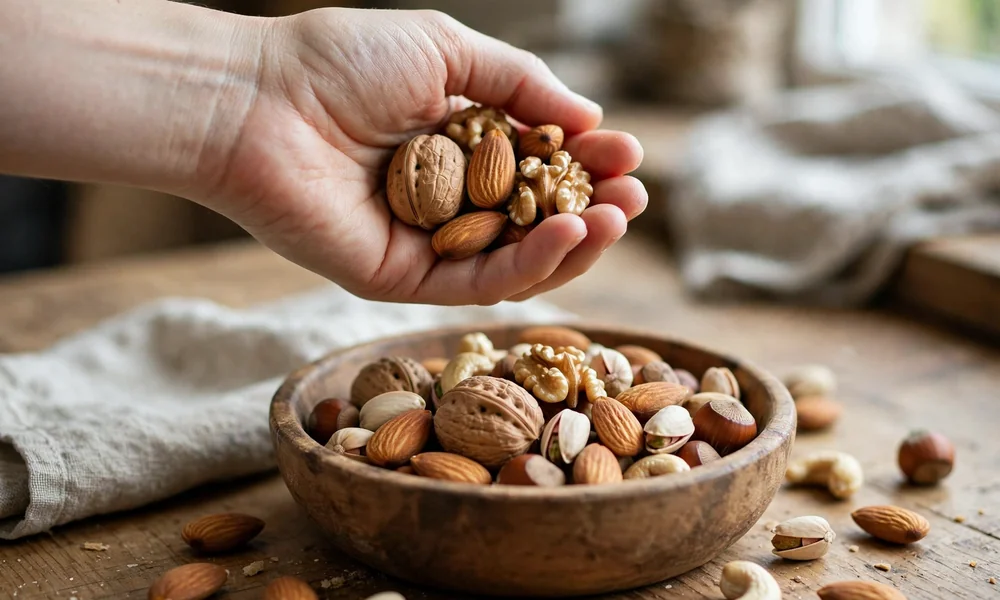
Walnuts lead the best group for good reason. They are rich in healthy fats, they taste buttery and slightly bitter in a way that suits both sweet and savoury food, and they stay satisfying for hours after a small handful. The best walnuts are pale gold inside the shell, crisp rather than soft, and free of any bitter, stale edge. Shelled walnuts should be stored in a cool place and eaten within weeks of opening, because their high oil content means they turn faster than other nuts. When they are fresh, there is no better nut for breakfast, baking, or eating straight from the bowl.
Almonds are the most reliable everyday nut, and the best ones are simple: whole, raw or dry-roasted, and lightly salted at most. A good almond is firm, sweet, and clean-tasting, with a thin brown skin that adds a little bitterness and a lot of fibre. Almonds keep better than walnuts, travel well in a pocket or a lunchbox, and work in almost any dish, from salads to stir-fries to baking. The best bags are mostly whole almonds rather than broken pieces, and they smell fresh and nutty when you open them, never stale or dusty.
Pistachios are the best nut for slow eating, because the shell forces you to pause between each one. The best pistachios are in the shell, lightly salted, with a green kernel that tastes sweet and buttery. They are lower in calories per nut than most others, and the shells give you a visible measure of how many you have eaten, which makes portion control almost automatic. Avoid pistachios that are dyed red, a trick used to hide poor-quality shells, and choose the natural pale shell with a green nut inside.
Cashews are the creamiest nut in the bowl, and the best ones are whole, pale, and gently roasted. A good cashew is soft without being soggy, sweet without being sugary, and rich enough that a small handful feels like a treat. They are the nut to choose for cooking, because they blend into sauces and stir-fries without overpowering the other flavours. The best cashew bags are mostly whole nuts, not broken halves, and they taste fresh and buttery rather than stale and oily.
The Worst Nuts of 2026
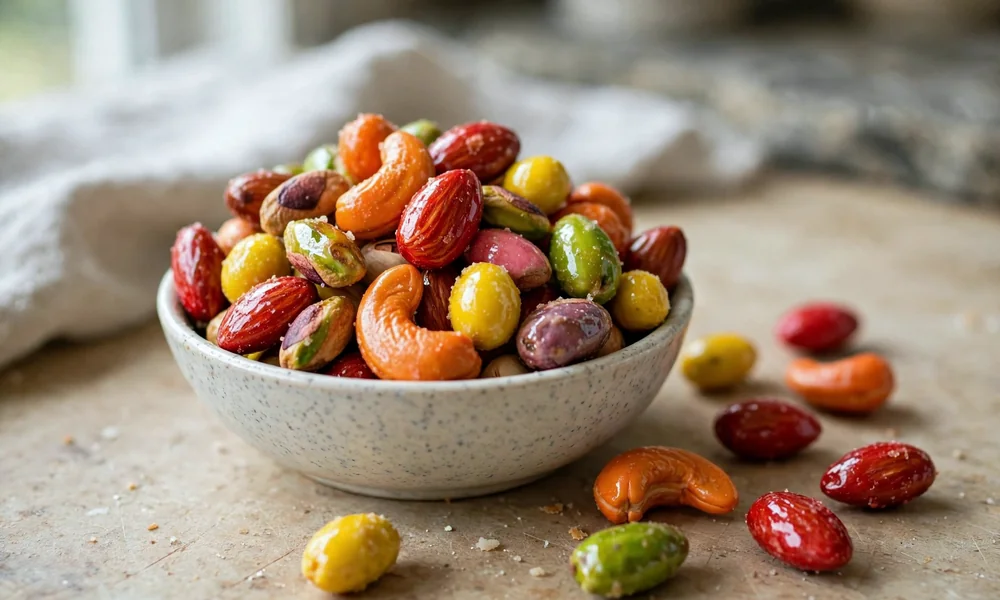
Honey-roasted and candied nuts are the worst value in the aisle, because the coating does most of the talking. A honey-roasted almond is really a sugar-coated almond, and a small bag can carry as much sugar as a biscuit. The honey masks stale nuts and poor quality, and the combination of salt and sugar makes them dangerously easy to overeat. They taste pleasant for the first few, then cloying, and they leave a sticky sweetness on your fingers and teeth that plain nuts never do.
Heavily salted mixed nuts are another poor choice, because the salt hides everything else. The worst bags are so salty that your mouth feels dry after a handful, and the nuts underneath are often the cheapest mix the maker could assemble: mostly peanuts, with a few almonds and cashews scattered on top for the photograph. Peanuts are not bad on their own, but a bag that is ninety percent peanuts and ten percent everything else is not a mixed nut bag. It is a peanut bag with a better name and a higher price.

Flavoured nuts coated in barbecue, chilli, or cheese powder belong in the worst group when the flavouring overwhelms the nut. The worst bags coat a thin, stale nut in spice mix and salt until the nut flavour disappears entirely, and the powder leaves your fingers orange and your mouth coated. A good spiced nut, by contrast, has spice with flavour behind it: smoked paprika, cumin, and a little heat, balanced so you can still taste the almond or cashew underneath. If the coating is the only thing you can taste, the nut was never the point of the bag.
Stale nuts are the quietest failure in the aisle, because the bag gives no warning. Nuts go rancid when their oils turn, and the result is a soft, bitter, almost soapy taste that is easy to mistake for the nut itself if you have never had a fresh one. The worst offenders are large bags that have sat on the shelf for months, and bulk bins where nuts sit open to warm air and light. Buy small bags, check the date, and trust your nose: fresh nuts smell clean and nutty, while stale nuts smell faintly of old oil and dust.
Raw, Roasted, and Salted
Salt is the one addition that can genuinely improve a nut, but only in a small amount. Lightly salted nuts taste seasoned and satisfying, while heavily salted nuts taste salty and leave you thirsty. The best guide is the salt per hundred grams on the back of the bag: under half a gram is light, over one gram is salty, and anything above one and a half grams is a bag that is mostly salt with nuts attached. Unsalted nuts are the safest choice of all, because you can add a pinch of good salt yourself if you want it.
Reading the Bag Before You Buy
The front of the bag is advertising, and the back is the truth. Start with the ingredients, which should list the nuts first and very little else. If sugar, honey, glucose syrup, or flavourings appear high on the list, the bag is a sweet snack rather than a nut snack. Then check the salt and sugar per hundred grams, and compare bags rather than trusting the front of the packet. A bag that calls itself healthy while carrying more sugar than a biscuit is not healthy, whatever the picture on the front shows.
Nuts for Breakfast, Cooking, and Sharing
For breakfast, a small handful of raw nuts over yoghurt, porridge, or fruit adds crunch, protein, and healthy fat without any sugar at all. Walnuts and almonds are the best choices here, because their flavour is mild enough to suit sweet food and their texture holds up in milk. Avoid candied nuts at breakfast, because they turn a healthy bowl into a sweet one before the day has even started. A spoonful of plain nuts is a better topping than any sweetened granola, and it costs less per bowl.
For cooking, cashews and peanuts are the most useful nuts, because they blend, roast, and stir-fry without overpowering the dish. Cashews make creamy sauces, peanuts add crunch to noodles and salads, and almonds thicken curries and soups. Buy them plain and unsalted for cooking, because salted and flavoured nuts will throw the seasoning of the whole dish off balance. A bag of plain nuts in the cupboard is one of the most versatile ingredients you can own, and it keeps for weeks if you store it properly.
For sharing, a bowl of mixed nuts in the shell is the most generous choice, because it slows everyone down and makes the bowl last. Put out a small bowl of walnuts, almonds, and pistachios with a nutcracker, and the table will linger over them far longer than it would over a bag of coated nuts. If you want something to go with them, dried fruit worth stocking in 2026 pairs well with plain nuts, and the two together make a snack that is sweet, salty, and satisfying without any added sugar at all.
The Verdict
The best nuts of 2026 are simple: raw or dry-roasted, lightly salted or unsalted, fresh, and sold as themselves rather than as a vehicle for sugar and salt. Walnuts, almonds, pistachios, and cashews, bought plain and eaten in small handfuls, are among the best snacks you can keep in the house. The worst nuts are the opposite: honey-roasted, candied, heavily salted, or coated in flavour powder until the nut itself disappears. They are sweet, salty, and easy to overeat, and they leave you thirsty rather than satisfied.
Buy the plainest bag you can enjoy, read the back of the bag before the front, and pour your nuts into a small bowl. That small habit is worth more than any brand promise, because it turns a mindless snack into a choice you actually made. And when you do want something crunchier and saltier, our comparison of the best and worst chips of 2026 will help you choose a bag that is honest about what it is. The best nut is not the one with the brightest coating or the boldest flavour on the packet. It is the one that tastes good in a small handful, smells fresh when you open the bag, and makes you want another handful for the right reasons.


