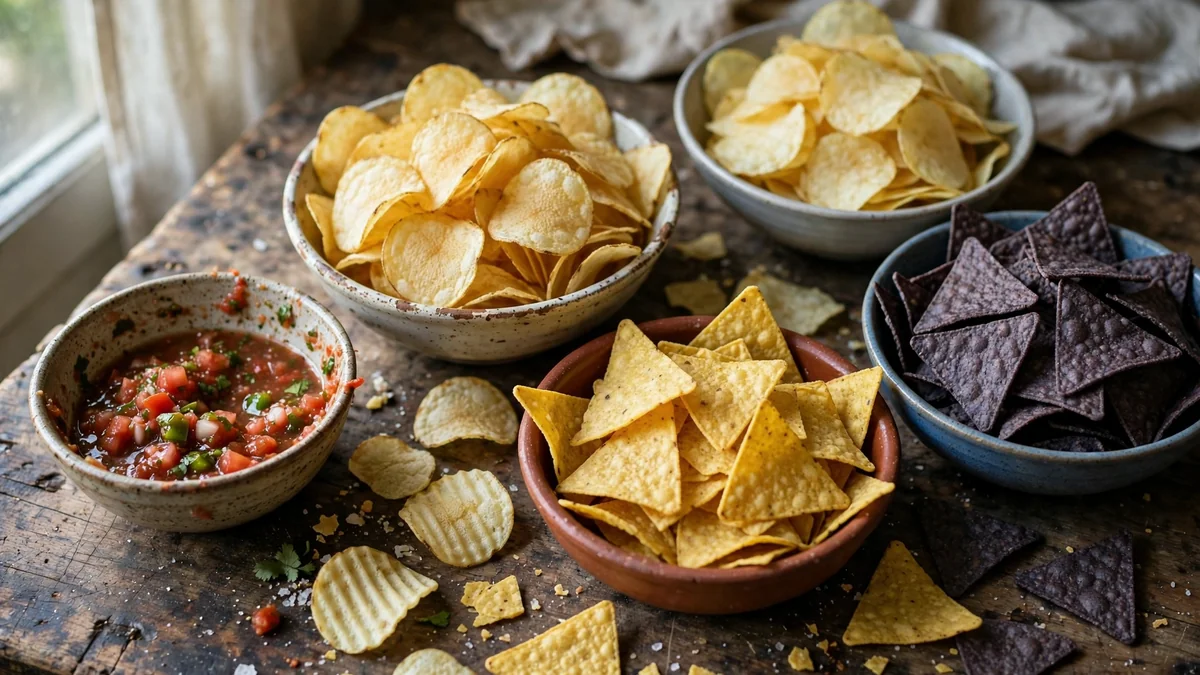
Chips are the snack almost everyone reaches for without thinking, and that is exactly why the bag you choose matters so much. This article is about potato chips and tortilla chips, the crunchy snacks sold in bags for dipping, sharing, and eating straight from the bowl — not computer chips. The supermarket aisle is full of bags that all look cheerful, all promise crunch, and all claim to be made with real potatoes, real corn, or wholesome ingredients. Some of them deliver a genuinely good snack: thin, crisp, properly salted, and made from a short list of ingredients you recognise. Others are little more than fried starch coated in flavour powder, salt, and oil, designed to make you finish the bag before you have even decided whether you liked them.
The gap between the best chips of 2026 and the worst is wide, and it usually shows up in three places: the ingredient list, the oil they were cooked in, and how much salt and flavouring coats each chip. This comparison puts them head to head the way you would actually eat them: straight from the bag, scooped through salsa, piled beside a sandwich, and shared at a table with friends. We look at crunch, flavour, salt, oil, thickness, and whether a chip earns its place in the bowl or only its place on the shelf. A great chip is crisp without being greasy, seasoned without being salty, and satisfying in a small handful. A bad one leaves orange dust on your fingers, a film of oil on your lips, and a thirst that no glass of water quite fixes.
Key Takeaways
- A good chip has a short ingredient list: potato or corn, oil, and salt, with flavourings you can actually name.
- Thick-cut and kettle-cooked chips usually crunch better and feel less greasy than thin, pale, mass-produced chips.
- Tortilla chips made from whole corn and cooked in a good oil beat corn chips loaded with cheese powder and salt.
- The worst chips hide behind bright bags and bold flavours, with more salt per handful than a whole meal should carry.
- The same honest approach sits behind our comparison of the best and worst cookies of 2026, because cookies and chips share the same supermarket shelf and the same labelling tricks.
How We Judged the Chips
We judged every chip on five things that matter at the table rather than on the packet. First, crunch: whether the chip snaps cleanly, holds up under a dip, or shatters into crumbs and dust. Second, flavour: whether it tastes of potato or corn first, with seasoning as a background note, or whether flavour powder does all the talking. Third, salt: how much is in a normal handful, and whether the chip tastes seasoned or simply salty. Fourth, oil: whether the chip feels crisp and dry or greasy and heavy, and whether the oil tastes fresh or stale. Fifth, the ingredient list: short and honest, or long and full of flavour enhancers, colourings, and oils you would never cook with at home.

The Best Chips of 2026
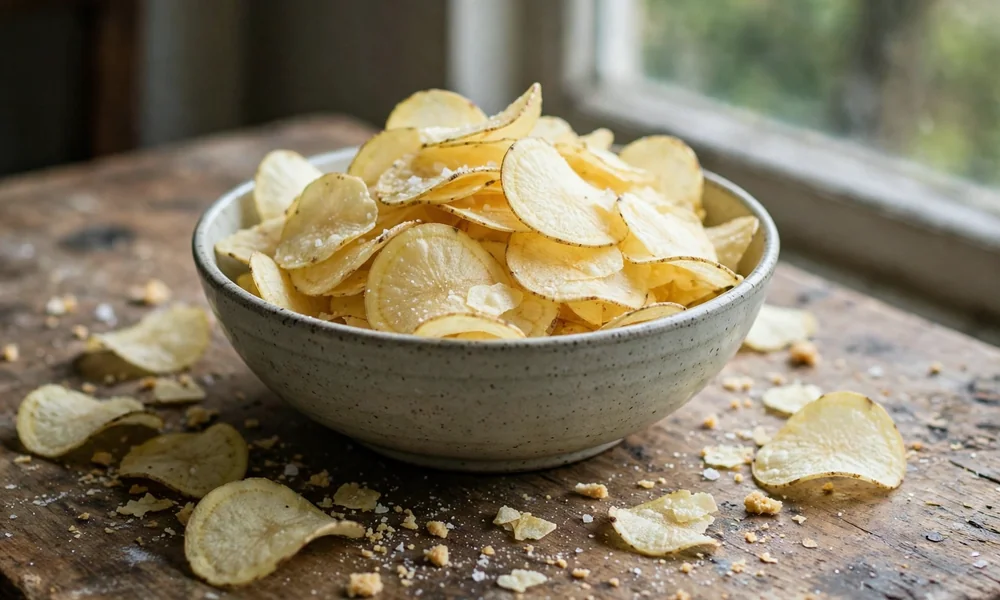
The best potato chips start with a real potato, sliced thin, and cooked until golden. Kettle-cooked chips lead the pack because their slow cooking in small batches gives them a hard, glassy crunch that survives a dip and stays crisp long after the bag is open. A good kettle chip is uneven in the best way: some pieces a little darker at the edges, some a little thicker, all tasting of potato rather than of the fryer. Sea salt is usually the only seasoning they need, and the best bags keep the salt restrained enough that you can taste the potato underneath it.
Plain salted chips, made well, are still the benchmark everything else is measured against. The best ones use a short list of ingredients, a clean-tasting oil, and potatoes that were sliced rather than reformed from potato flakes. They are pale gold rather than deep brown, they snap rather than bend, and they leave your fingers almost clean. Eaten slowly, they taste buttery and earthy, with a faint sweetness from the potato itself. They are also the most versatile chip in the bowl, because they go with everything from a sandwich to a bowl of soup without fighting the other flavours on the plate.
Among tortilla chips, the best are made from whole corn, stone-ground if you can find it, and cut thick enough to scoop. A good tortilla chip has a warm, nutty corn flavour, a firm bite, and edges that do not crumble the moment they touch salsa. White corn and blue corn chips often taste cleaner than yellow corn, and the best bags are cooked in a mild oil that lets the corn flavour come through. They are the chip to choose when dipping matters, because a thin, brittle tortilla chip is no use at all once it snaps off in the bowl and leaves you fishing for it with a spoon.
The Worst Chips of 2026
The worst potato chips are the ones made from reformed potato flakes, pressed into identical ovals and stacked in a tube. They look neat and they never break, but that is the problem: they have no potato character at all, just a uniform crunch and a coating of flavour powder that tastes the same in every flavour. They are usually fried in cheap oil, heavily salted, and packed with flavour enhancers that leave a strange aftertaste on the tongue. You can eat a whole tube without ever tasting a potato, and that tells you everything you need to know about what is actually inside them.
Cheese-flavoured chips are often the worst offenders in the aisle, because the cheese flavour is almost never cheese. The orange dust on your fingers is a mix of flavourings, colourings, and salt, sprayed onto a corn or potato base that has very little flavour of its own. The worst bags are so heavily coated that the chip underneath is barely visible, and the flavour is loud, salty, and artificial in a way that builds with every handful until your mouth feels coated. They are also among the saltiest chips you can buy, with a single small bag carrying more salt than many people should eat in a whole meal.
Extremely spicy chips belong in the worst group when the heat is the only thing they offer. The worst spicy bags coat a thin, greasy chip in chilli powder and salt until the heat overwhelms everything else, and the flavour underneath is stale oil and starch. They are designed to be a challenge rather than a snack, and they leave your lips burning, your stomach unsettled, and your thirst impossible to satisfy. A good spicy chip, by contrast, has heat with flavour behind it: chilli, lime, garlic, and smoke, balanced so you can still taste the chip itself.
Potato Chips vs Tortilla Chips
Potato chips and tortilla chips are different snacks, and the best choice depends on what you are eating them with. Potato chips are best on their own or beside a sandwich, where their buttery, earthy flavour can stand alone. They are usually thinner, more delicate, and more likely to break under a heavy dip, so they suit light eating and careful snacking. Tortilla chips are best with dips, salsas, and guacamole, where their firm, nutty crunch holds up and their corn flavour complements the freshness of the dip. Choosing between them is less about which is healthier and more about which job the chip has to do.
Reading the Bag Before You Buy
The front of the bag is advertising, and the back is the truth. Start with the ingredients, which are listed in order of weight, so the first three should be the food itself, the oil, and the salt. If flavourings, colourings, and enhancers appear before the salt, the bag is mostly seasoning. Then check the salt per hundred grams: under one gram is reasonable for a chip, over one and a half grams is very salty, and anything above two grams per hundred grams is a bag to put back. Fat matters too, but the type of oil matters more than the amount, and sunflower, rapeseed, or olive oil are better signs than palm oil or a vague blend of vegetable oils.

Chips for Dipping, Sharing, and Lunchboxes
For dipping, thickness is everything. A thick tortilla chip or a ridged potato chip holds its shape in salsa, guacamole, and sour cream, while a thin chip snaps and leaves crumbs in the dip. Ridged chips are made for this job, and the best ones have deep ridges that scoop rather than shallow ridges that only look the part. If you are serving chips at a table, put out two bowls rather than one large one, because a second bowl keeps the chips crisp and stops everyone reaching across the table into the same bowl.
For sharing, variety beats quantity. A bowl of plain salted potato chips, a bowl of tortilla chips, and a fresh salsa cover more tastes than three bags of flavoured chips that all taste the same after the first handful. Fresh dips make even simple chips feel generous, and a bowl of salsa worth serving in 2026 will do more for a snack table than any flavoured chip can. Keep the dips cold, the chips dry, and the bowls small enough to refill, because chips left out in a big bowl go soft long before they are finished.
The Verdict
The best chips of 2026 are simple: real potatoes or whole corn, a good oil, light salt, and a short ingredient list. Kettle-cooked potato chips, plain salted chips made from sliced potatoes, and thick whole-corn tortilla chips are the ones worth buying again, because they taste of the food they are made from and they crunch the way a chip should. The worst chips are the opposite: reformed potato flakes, cheese powder instead of cheese, extreme spice with no flavour behind it, and sugar pretending to be a savoury snack. They are loud, salty, and greasy, and they leave you thirsty rather than satisfied.
Buy the plainest bag you can enjoy, read the back of the bag before the front, and pour your chips into a bowl. That small habit is worth more than any brand promise, because it turns a mindless snack into a choice you actually made. And when you do want something different, popcorn worth popping in 2026 is a lighter change of pace that still gives you the crunch, the salt, and the comfort of a bowlful of something crisp. The best chip is not the one with the brightest bag or the boldest flavour on the packet. It is the one that tastes good in a small handful, leaves your fingers almost clean, and makes you want another handful for the right reasons.