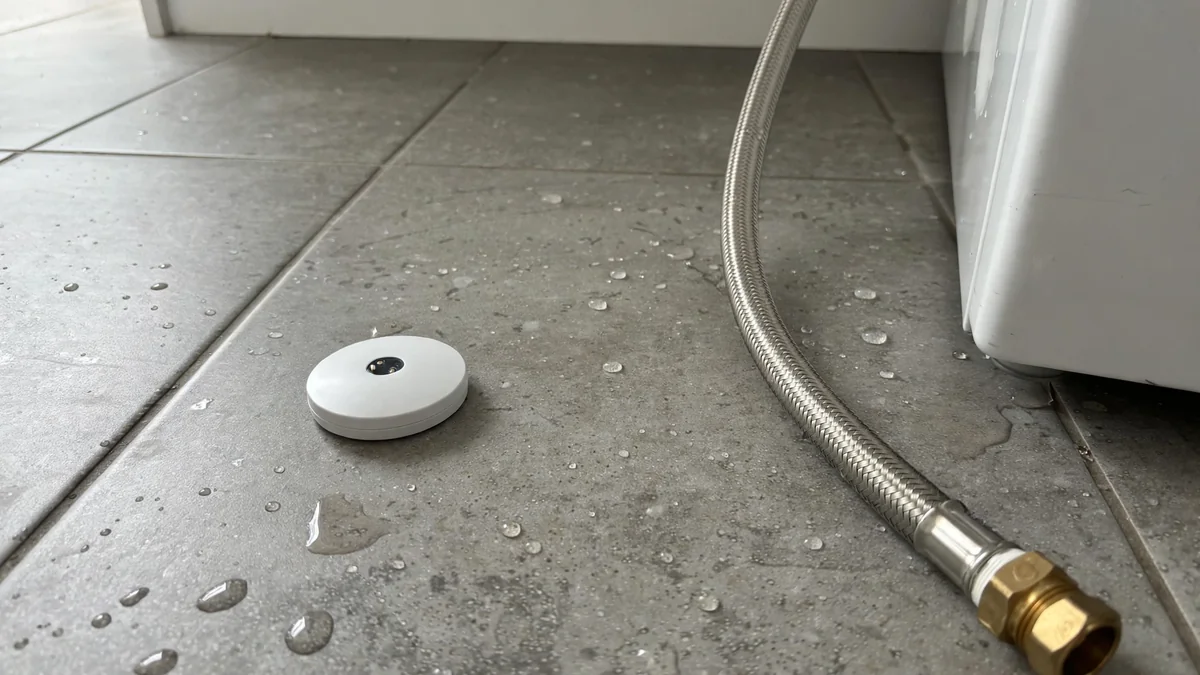
The best water leak detectors in 2026 are small, cheap, and quietly patient. They sit on the floor behind your washing machine or under the kitchen sink for months, doing nothing, and then one afternoon they catch the first drops of a leak hours before you would have noticed the puddle. A burst hose can release hundreds of litres while you are at work.
A water leak detector watches for liquid water where water should never be: on the floor of a kitchen, bathroom, laundry room, or basement. Most models are battery powered, cost less than a takeaway, and need no plumber to install. The hard part is putting the right type exactly where the water will go first. A detector that finds a leak early can save thousands in repairs, and the best ones cost less than a plumber’s call-out fee.
Key Takeaways
- Water pools at the lowest point, so put detectors on the floor at the lowest spot near each appliance.
- Spot sensors guard one place, cable sensors guard a whole run, and flow systems watch the pipes.
- A loud alarm only helps if someone is home: phone alerts matter when you are out.
- Check the battery type first — AA cells are cheaper to run than a coin cell that needs yearly replacement.
- Test every detector once a month with a wet cloth, and replace it when its contacts start to corrode.
How a Water Leak Detector Actually Works
Almost every home water leak detector works the same simple way. Two metal contacts sit a millimetre above the floor, and dry air between them means no current flows. The moment water touches both contacts, it completes a tiny circuit, and the detector sounds its alarm or sends an alert. The device only ever knows wet or dry, and wet is enough.
The differences are in what happens after the water is found: alarm volume, phone alerts, automatic shut-off, and how many places one system can watch.
Spot Sensors: One Place, Done Well
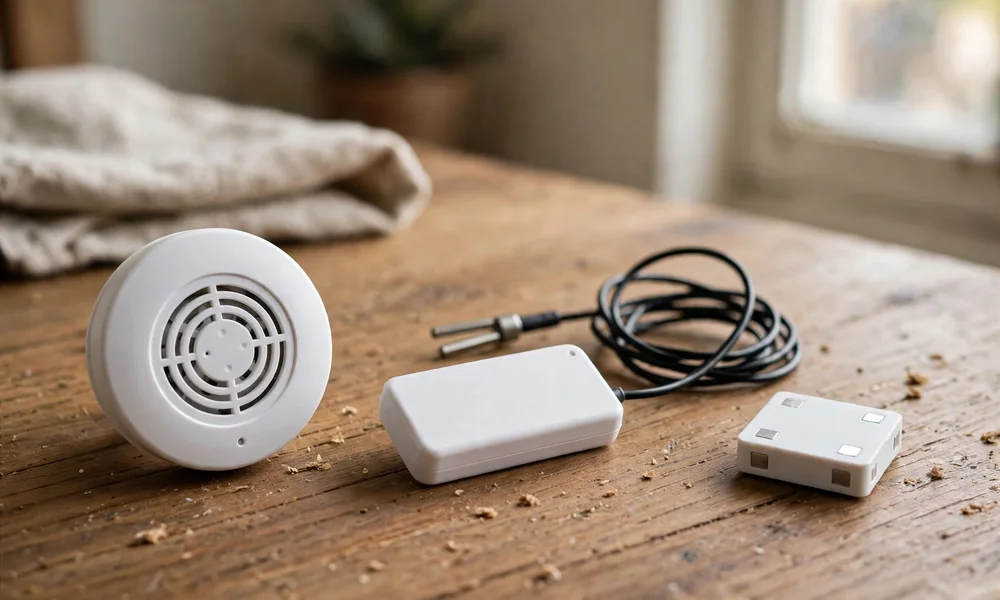
A spot sensor is a small puck or square with metal contacts on its underside. You place it flat on the floor where water would pool first: beside the washing machine or under the sink. When water reaches it, it alarms. Spot sensors are the cheapest type and run for years on a battery. Their weakness is range: a leak that pools two metres away can run for hours before it is found.
Cable and Rope Sensors: Guarding a Whole Run
A cable sensor replaces the single puck with a long sensing cable that lies along the floor, behind kitchen units or around a boiler. Water touching any point along the cable triggers the alarm, so one cable can guard pipework that would need five spot sensors to cover. Cable sensors cost more and suit larger rooms and basements. Keep the cable flat and in contact with the floor: a cable draped over a pipe will miss the water running underneath it.
Flow-Based Systems: Watching the Pipes Themselves
A flow-based system fits on the main water pipe where it enters your home and watches how water moves through it. It learns your normal pattern and raises the alarm when water flows at a strange time or for far too long, the signature of a burst pipe. The best flow systems shut the water off automatically, the only thing that stops a burst pipe while you are on holiday. They cost far more and usually need a plumber, but for a house that stands empty, they are the only detector that protects pipes you cannot see.
The Best Water Leak Detectors of 2026 Compared
| Best for | Detector type | Power | Alert | Standout strength |
|---|---|---|---|---|
| Best overall | Spot sensor | Battery, years | Alarm plus phone | Cheap, simple, fits anywhere |
| Best for kitchens | Cable sensor | Battery or mains | Alarm plus phone | One cable guards a whole run |
| Best for holidays | Flow system with shut-off | Mains | Phone, plus auto shut-off | Stops a burst pipe alone |
| Best for renters | Stick-on spot sensor | Battery, years | Loud local alarm | No wiring, no holes, moves with you |
| Best for smart homes | Smart spot sensor | Battery, one to two years | Phone, hub and voice alert | Triggers lights, scenes and shut-off valves |
| Best for basements | Spot sensor with probe | Battery, years | Alarm plus phone | Probe reaches the lowest floor drain |
Where to Put Them: The Room-by-Room Plan
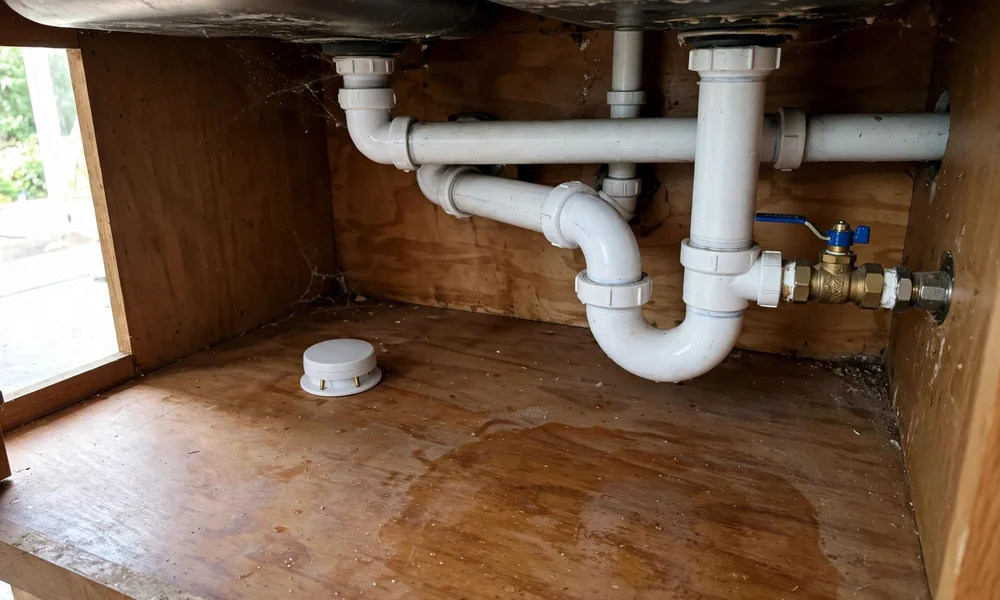
Placement matters more than brand. Water runs to the lowest point and pools there, and a detector sitting on a high spot or behind an obstacle can stay dry while the floor a metre away is soaked. Walk each room, find where water would collect, and put the detector flat on the floor there.
In the kitchen, guard the sink and the dishwasher: one spot sensor on the cabinet floor under the sink, and another behind the dishwasher. In the bathroom, place one behind the toilet and one beside the bath. In the laundry room, put one beside the washing machine hoses. Near the water heater, place one at the base of the tank. In the basement, put one at the lowest point and one near the sump pump.
Battery, Power and Lifespan
Most spot sensors run on batteries for one to three years, and the battery is the commonest reason a detector fails when it is needed. A detector with a dead battery is a plastic disc, and water will not wake it. Check the battery type before you buy: a sensor that takes common AA cells is cheaper to run than one that takes a coin cell, and a sensor with a low-battery warning — a chirp or a phone alert — saves you from a silent failure. Mains-powered detectors stop in a power cut unless they carry a backup battery. Wipe the metal contacts clean when you test, and replace the sensor if they look green or pitted. Write the install date on the back of each unit with a marker pen so you know when its five years are up.
Smart Alerts and Automatic Shut-Off
A loud alarm is enough if someone is always home, but leaks do not wait for office hours. A smart detector sends the alert to your phone as well, so a burst hose in the morning reaches you at work, and a slow drip overnight wakes you before the ceiling below stains. The best systems tell you which sensor fired. Check whether the alerts need a hub, and whether more than one phone can receive them.
Automatic shut-off is the step beyond alerting, and it is the one feature that changes the outcome rather than just the warning. A shut-off valve on the main supply closes when a sensor fires or when flow looks wrong, and it can turn a flooded house into a damp patch. It suits homes that stand empty and anyone who travels, but it costs more, usually needs a plumber, and must be tested regularly — a valve that has sat open for two years may stick. Make sure everyone knows where the manual override is.
Water Leak Detectors vs Other Home Alarms
Home alarms look alike and sit in similar places, but each one watches for a different danger, and none of them covers the others. A smoke detector watches for smoke particles from a fire; a water leak detector watches for liquid water on the floor. The two jobs never overlap, and a home needs both. Our guide to the best smoke detectors of 2026 explains the sensor types that catch a fire early; the placement rules are similar, even though the danger is not.
The same is true of gas. A gas detector sniffs for leaking fuel gas from a pipe or a cooker, which belongs in a different place: high up for natural gas, low down for propane. A water leak detector on the same floor will not smell gas, and a gas detector will not notice water. Our guide to the top gas detectors of 2026 covers which gases each sensor watches.
Carbon monoxide is the third danger often confused with the others, and the most invisible: a colourless, odourless gas made when fuel burns badly, which no water sensor and no smoke sensor can detect. A carbon monoxide detector measures that gas directly and alarms on a time-weighted level. Our guide to the best carbon monoxide detectors of 2026 explains where those detectors belong.
What to Avoid
Avoid detectors with no test button: if you cannot make it alarm on demand, you cannot know it will alarm when it matters. Avoid placing a sensor on carpet or a rug, where the fabric soaks up the first water and the contacts stay dry. Avoid the cheapest no-name sensors with no battery warning — a detector that dies silently gives you confidence you have not earned. And avoid buying one sensor for a whole house: a single puck in the kitchen does nothing for the water heater in the garage.
Checklist: Before You Buy a Water Leak Detector
- Plan one sensor per water risk, not one per house.
- Decide whether you need phone alerts: if the house is ever empty during the day, a local-only alarm is not enough.
- Check the alarm volume is at least 85 decibels, so it can be heard from another room with the doors closed.
- Confirm the battery type and whether the detector warns you when the battery is low.
- Check the wireless signal reaches each sensor spot, including the basement.
- Test the detector with a wet cloth on day one, then put a monthly test on your calendar.
Frequently Asked Questions
Where is the best place to put a water leak detector?
On the floor at the lowest point near the risk: under the kitchen sink, behind the washing machine, beside the water heater, and at the lowest spot in the basement. A sensor on a shelf will miss the leak.
Do water leak detectors need Wi-Fi?
Only the smart ones do. A basic detector sounds a loud alarm with no Wi-Fi at all, which is fine if someone is usually home. Smart detectors need Wi-Fi or a hub to send phone alerts.
How long do water leak detector batteries last?
Most spot sensors last one to three years, and smart sensors usually last one to two years because the radio uses more power. A low-battery warning matters more than the headline life.
Can a water leak detector shut off the water?
Only as part of a system with an automatic shut-off valve on the main supply. If your home stands empty for days at a time, a shut-off system is worth paying for.
Will a water leak detector work on carpet?
Badly. Carpet soaks up the first water and keeps it away from the sensor contacts, so the detector alarms late or not at all. Put the sensor on the hard floor beside the carpet.
How many water leak detectors do I need?
One per water risk: a typical house needs four to six. Start with the appliance that would cause the worst damage.
The Bottom Line
The best water leak detectors in 2026 are the ones that match your home: a few cheap spot sensors beside each appliance for a small flat, cable sensors along the pipe runs in a big kitchen, and a flow system with automatic shut-off for a house that stands empty. Buy for the leak you would miss — the slow drip behind the washing machine or the water heater in the garage. Place each sensor at the lowest point, test it monthly, and make sure the alert reaches your phone.