Choosing between hybrid vs diesel cars for towing is one of the most practical decisions a caravan, boat or trailer owner can make, and the answer is no longer as obvious as it used to be. For decades, diesel was the default choice for anyone who towed anything heavy. Its low-down torque and strong fuel economy under load made it the natural partner for caravans and horseboxes. Today, hybrids have closed much of that gap.
Neither powertrain wins in every situation. A diesel still rules when the trailer is heavy and the journey is long, but a hybrid can be the smarter and cheaper tow car for lighter loads and shorter trips. The best choice depends on what you tow, how far you tow it, and how the car is used when the trailer is parked at home.
We compare capacity, torque, fuel economy, running costs and everyday driving.
Key takeaways
- Diesel offers the highest towing capacities and the most relaxed long-distance towing, especially over 1,800 kg.
- Hybrids tow best with lighter trailers up to around 1,500 kg, where instant electric torque makes pulling away smooth and effortless.
- Fuel economy while towing drops sharply for both, but hybrids use less fuel on mixed journeys, while diesels win on long motorway hauls.
- Diesels cost more to service and face higher emissions charges in many cities, while hybrids are usually cheaper to run day to day.
- For most drivers who tow a few times a year, a hybrid is the best all-round choice, but heavy towers should still choose diesel.
How Towing Really Works: Torque, Weight and Cooling
Towing is not about top speed or headline horsepower. It is about pulling a heavy load away from a standstill, holding speed on a hill and stopping safely.
Why Torque Matters More Than Horsepower
Torque is the twisting force that gets a trailer moving, and it matters most at low engine speeds. Diesel engines produce peak torque very low in the rev range, which is why they feel so effortless when towing. Hybrids take a different route: their electric motors deliver maximum torque instantly, from zero revs.
Towing Capacity Is Not the Whole Story
Every car has a maximum braked towing capacity set by the manufacturer, and it is a legal limit, not a suggestion. Many large diesel SUVs and pickups are rated to tow 3,000 kg or more, while most hybrid SUVs sit between 1,500 and 2,000 kg. A stable tow also depends on the tow car being heavy enough relative to the trailer: a car towing at 95 percent of its limit will always feel less secure than one towing at 70 percent.
Diesel Cars for Towing: The Traditional Champion
Diesel has earned its reputation as the towing fuel, and for heavy work it still deserves it. A modern turbodiesel produces huge torque from barely above idle, so it holds motorway speed on gradients without constant gear changes. For anyone towing a large twin-axle caravan, a boat or a horsebox, that combination is hard to beat.
Where Diesel Wins
The biggest diesel advantage is outright towing capacity. Large diesel SUVs and pickups routinely tow 2,500 to 3,500 kg, a figure few hybrids can match. Diesel engines also cope better with sustained high loads: they run cooler under strain and their fuel economy falls less when towing.
Where Diesel Falls Short
Diesel is not without weaknesses. Modern diesels rely on complex emissions systems, including particulate filters and AdBlue, which can cause expensive problems on cars used mainly for short trips. Diesel fuel also costs more per litre than petrol in many places, and diesel cars often face higher taxes and city emissions charges. To see how diesel stacks up against its closest rival, our guide to petrol vs diesel SUVs for towing breaks down the differences in detail.
Hybrid Cars for Towing: The New Contender
Hybrid cars were once dismissed as tow cars. Early hybrids had tiny towing limits or none at all. That picture has changed completely. Modern hybrids pair a petrol engine with one or more electric motors, and many now tow 1,500 to 2,000 kg, enough for most single-axle caravans and small boats.
How Hybrid Towing Works
A hybrid tows with two power sources working together. The electric motor provides instant torque for pulling away and climbing, while the petrol engine takes over at cruising speed and recharges the battery through regenerative braking. Slowing down recovers energy and reduces wear on the brake pads.
Where Hybrids Shine
Hybrids are at their best when the trailer is moderate in weight and the journey mixes town, country roads and motorway. They pull away smoothly and quietly, they are far more economical than a diesel on short trips, and they are nicer cars to live with when the trailer is unhitched. They also produce lower emissions, which matters in low-emission zones. Our comparison of hybrid vs electric cars for range shows where hybrids make the most sense.
Where Hybrids Struggle
Hybrids do have limits. Their towing capacities are lower than comparable diesels, and their fuel economy advantage shrinks on long motorway hauls, where the petrol engine does most of the work. A heavy trailer on a long uphill climb can leave a hybrid working hard. Battery weight also eats into payload, so check the car’s gross vehicle weight before loading up.

Hybrid vs Diesel for Towing: Side-by-Side Comparison
The table below sums up the key differences between the two powertrains. It reflects typical modern family SUVs and pickups rather than any single model.
| Factor | Hybrid | Diesel |
|---|---|---|
| Typical max towing capacity | 1,500–2,000 kg | 2,500–3,500 kg |
| Torque delivery | Instant electric torque from standstill | Strong low-rev torque, sustained |
| Fuel economy while towing | Good on mixed routes, weaker on long motorway hauls | Best on long motorway journeys |
| Fuel economy without trailer | Excellent, especially in town | Good on motorways, poor on short trips |
| Everyday driving | Smooth, quiet, refined | Gruff at low speed, relaxed at cruise |
| Servicing costs | Usually lower, fewer emissions parts | Higher, DPF and AdBlue maintenance |
| Emissions and city charges | Lower, fewer restrictions | Higher, often charged in cities |
| Best for | Light to medium trailers, mixed use | Heavy trailers, long-distance towing |
Fuel Economy While Towing
Official fuel economy figures are measured without a trailer, so they say almost nothing about towing. Hitch up a caravan and every car’s consumption rises sharply, often by 40 to 60 percent, because the engine must overcome extra weight and the trailer’s wind resistance.
Diesels lose less, proportionally, on a long motorway tow, because the engine works in its comfort zone. The picture reverses on shorter and mixed journeys: a hybrid towing to a campsite an hour away will use noticeably less fuel than a diesel doing the same trip. Over a year of mixed driving with occasional towing, the hybrid usually costs less in fuel.
Running Costs and Reliability
Diesel SUVs and pickups with the highest towing capacities tend to cost more to buy than equivalent hybrids, and hybrids have become more affordable as the technology has spread.
Servicing and Maintenance
Servicing is another area where hybrids score. They have no diesel particulate filter to clog, no AdBlue to top up, and regenerative braking means brake pads and discs last longer. Diesel servicing is more expensive, and a failed particulate filter or emissions component can lead to a four-figure repair bill. Diesel engines themselves are famously durable and can cover very high mileages.
Everyday Driving When You Are Not Towing
Most tow cars spend far more time without a trailer than with one, so everyday driving matters. Here the hybrid is clearly the better car for most people. It is quieter, smoother and more economical in town, and it never needs a long run to stay healthy. A diesel makes sense as an everyday car only if your daily drive includes long motorway journeys.
Which Tows Better in the Real World?
What matters is how each car behaves with a real trailer, and the answer changes with the trailer you own.
Caravans and Camper Trailers
For a single-axle caravan or camper trailer up to around 1,500 kg, a hybrid is an excellent tow car. It pulls away smoothly and holds speed comfortably on main roads. For a large twin-axle caravan over 1,800 kg, diesel remains the safer and more relaxed choice.
Boats and Horseboxes
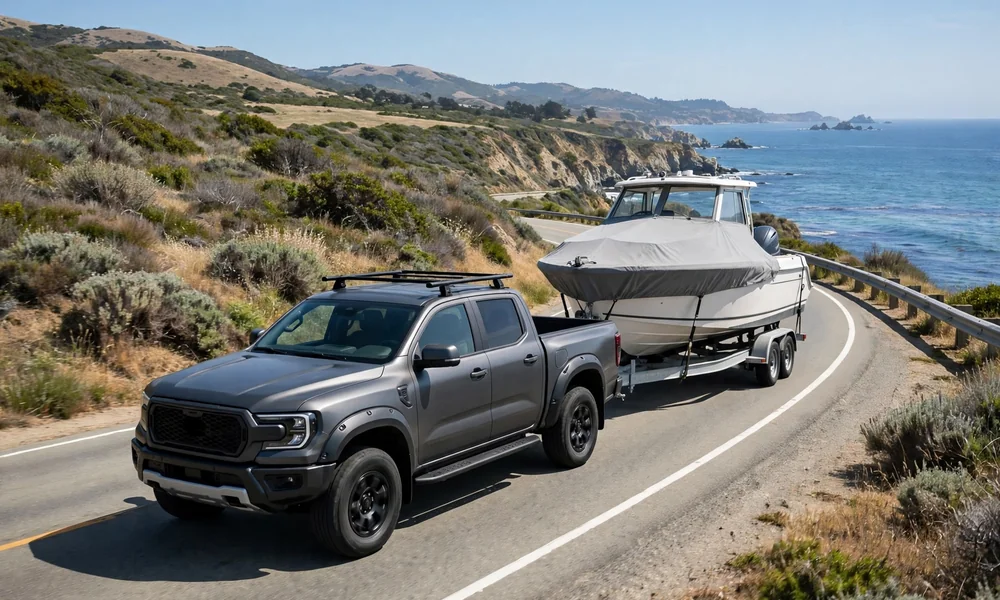
Boats and horseboxes are usually heavier and often towed to places with steep slipways and muddy fields. This is diesel territory. The high towing capacity, strong low-speed control and greater tow car weight give diesel pickups and large SUVs a clear advantage. Body style matters just as much as the engine, so read our guide to pickup vs SUV for towing before deciding which shape suits your trailer.
Short Trips vs Long Hauls
Distance is the deciding factor for many buyers. If your towing is mostly short hops to nearby campsites, lakes or stables, a hybrid will do the job well and cost less to run. If you regularly tow hundreds of miles with a heavy trailer, a diesel’s relaxed cruising and superior motorway economy make the journey easier and cheaper.
Towing Checklist: Before You Hitch Up
Safe towing comes down to preparation. Run through this checklist before you set off.
- Check the weights: Confirm the trailer’s loaded weight is within the car’s maximum braked towing limit.
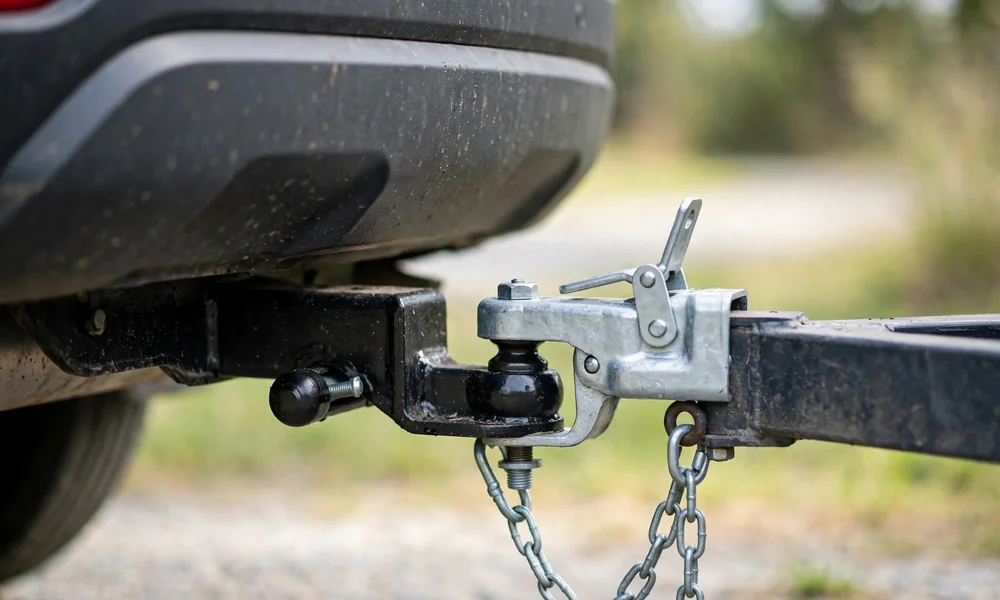
- Inspect the hitch and coupling: Make sure the coupling is locked, the safety chains are attached, and the jockey wheel is raised.
- Test the lights and brakes: Check all trailer lights, indicators and brakes before every journey.
- Balance the load: Keep roughly 5 to 7 percent of the trailer’s weight on the tow ball, with heavy items low and over the axle.
- Set the tyre pressures: Inflate the tow car and trailer tyres to the towing pressures in the handbook.
- Plan your route: Allow extra time and plan fuel stops that a car and trailer can get into and out of.
Frequently Asked Questions
Can a hybrid car tow a caravan?
Yes, many modern hybrids can tow a caravan, but check the specific model’s towing limit. Most hybrid SUVs tow between 1,500 and 2,000 kg, which covers most single-axle caravans. Always confirm the braked towing capacity first.
Is diesel better than hybrid for towing?
Diesel is better for heavy trailers and long-distance towing, thanks to higher towing capacities and better motorway fuel economy under load. Hybrid is better for lighter trailers, mixed driving and lower running costs.
Do hybrids use less fuel than diesels when towing?
It depends on the journey. Hybrids usually use less fuel on short and mixed trips, while diesels usually win on long motorway hauls. Both use far more fuel while towing than they do solo.
What is the maximum weight a hybrid can tow?
Most hybrid SUVs are rated to tow between 1,500 and 2,000 kg, though some larger plug-in hybrids reach 2,500 kg. Small hybrids often have much lower limits, or none at all.
Are diesel cars being phased out for towing?
Diesel cars are becoming rarer as manufacturers shift to hybrid and electric power, but large diesel SUVs and pickups remain on sale and will be supported for many years.
Which is cheaper to own overall, a hybrid or a diesel tow car?
For most drivers, a hybrid is cheaper overall. It usually costs less to buy, less to service and less to fuel across a year of mixed driving.
The Bottom Line
For most drivers, the hybrid is now the best tow car. It handles the trailers most people actually own, it costs less to run day to day, it is smoother and quieter, and it avoids the servicing headaches and city charges of a modern diesel. If your caravan or trailer weighs under 1,500 kg, a hybrid is the smart choice.
Diesel still wins one clear contest: heavy, long-distance towing. If you regularly tow more than 1,800 kg, haul a boat or horsebox, or cover hundreds of motorway miles with a trailer, a diesel remains the best tool for the job.