A cello case looks like a simple shell: put the cello in, close the lid, and wheel it to the lesson. What nobody tells a first-time player is that the case decides how much of the cello actually survives the journey. A good case holds the instrument still, cushions every bump, and keeps the rain out, with wheels that roll smoothly and straps that stay attached. A bad one lets the cello rattle around inside, cracks at the corners, and soaks through in the first shower, so every trip feels like a gamble. The worst cello cases of 2026 make owning a cello stressful, damage instruments that cost far more than the case, and fall apart before the first year of lessons ends. A player deserves a case that protects the instrument, not one that puts it at risk every time it leaves the house.
What Makes a Cello Case Bad
A cello case has one job above all others: it must keep the instrument safe and still. A player closes the lid and expects the cello to stay exactly where it was put, held by padding that fits the body, neck, and scroll, and the case should answer the same way every time. Bad cases fail this test on the first day. Their padding is either thin as paper or so lumpy that the cello sits at an angle, and neither one protects the instrument from a bump. The neck support is often missing altogether, so the scroll knocks against the inside of the lid, and the endpin presses against the lining until it shifts out of place. The case often fits badly from the start, too big for a small cello or too tight for a full-size one, so the instrument moves every time the case is wheeled along the street.
The second problem is weight, which is where cheap cases cut the deepest corners. A good case is light enough to carry up stairs, with a shell that is strong without being heavy and wheels that roll over pavements. A bad one is heavy before the cello is even inside, with a thick shell that adds kilos and wheels that seize after a month. The inside is just as bad, with a lining that holds dampness against the varnish and a bow holder that lets the bow roll free. Cheap cases also skimp on the pockets, so the rosin, spare strings, and endpin stop end up loose inside the case, rattling against the cello with every step. A player who cannot trust their case cannot relax, and a case that damages the cello will not be used for long.
The Main Types of Cello Case, and Where They Go Wrong
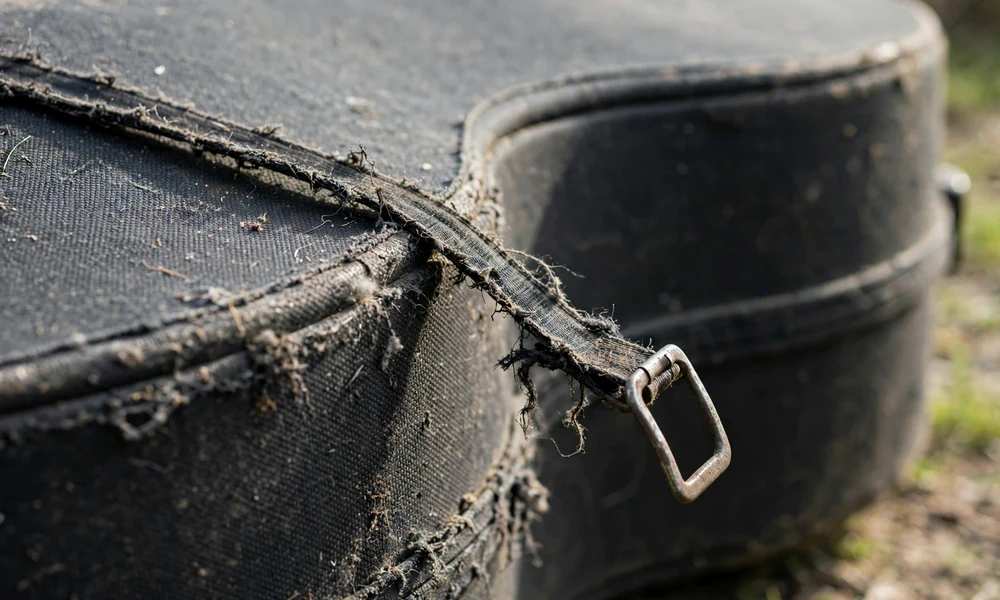
Hard shell cases with wheels are the usual first recommendation, and they are the hardest to get badly wrong, which is exactly why the bad ones stand out. A good hard case is strong and snug, with a shell that resists a knock and a suspension system that holds the cello away from the walls. A bad one has a shell so thin it flexes when it is picked up, padding that compresses flat within weeks, and wheels that wobble on their axles. The latches are often the giveaway: a good one has metal catches that click shut firmly, while a bad one has plastic clasps that pop open when the case is lifted by the handle. The pull handle is another weak point, thin and flimsy on the cheapest models, so the case tips over when it is pulled along the pavement.
Soft gig bags promise lighter carrying and more pockets, and the bad ones fail in a different way. They add compartments, backpack straps, and rain covers, but the protection stays at hard-case level or worse, so everything feels flimsy at twice the price. The extra space is often a trick: the bag is bigger and heavier, but the cello compartment is the same size, and the pockets are too shallow to hold anything useful. Lightweight carbon-style cases look impressive, yet the cheap ones have a glossy shell that scratches on the first outing and a frame that cracks if the case is dropped from waist height. A case that cannot survive a normal school run is not a professional tool, no matter how light the shell claims to be.
The Faults That Matter Most
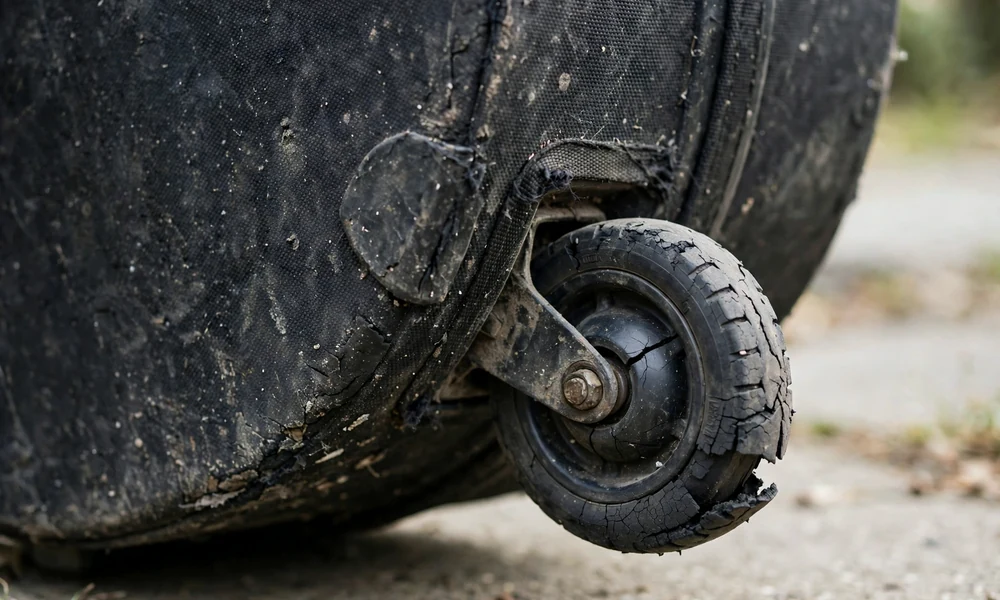
Wheel failure is the fault that ends most cheap cases. The wheels are the part that does the actual work, and on a bad case they wear out first. The bearings seize, the tyres crack, and the wheel that once rolled smoothly now drags along the pavement, tipping the case over at every kerb. Once the wheels go, the case has to be carried, and a heavy case with a dead wheel is useless on a long walk. The latches fail next: the catches go loose and rattly, the lid starts opening on its own, and the case that once protected the cello now drops it onto the pavement. A player who cannot trust the latches stops wheeling the case, and the whole point of a portable case is lost.
Padding failure is the other fault that matters, because the padding is what actually protects the cello. A bad case has foam that goes flat within months, leaving the cello resting on the hard shell, and a neck cradle that collapses so the scroll knocks against the lid. The lining is often the weakest link of all, thin velvet that wears through to the glue underneath, sticking to the varnish on a warm day. Damp is another trap: cheap cases have no ventilation, so moisture builds up inside during a rainy week and the varnish clouds over. The right guide helps here too, and our look at the best cellos of 2026 covers the instruments that get the basics right, from solid wood to honest setup, so the first lesson feels like the start of a skill rather than a test of patience.
How to Spot a Bad One Before You Pay
Start with the fit, because it tells the truth faster than any review. Put the cello in the case, close the lid, and shake the case gently from side to side. A good case holds the instrument still, with no rattle and no movement at all. A bad case lets the cello shift, and the sound of the scroll tapping the lid is a fail on its own. Try the neck support too: press the neck down lightly and see if the cradle holds it, or if the whole cello rocks. Then test every latch the same way, opening and closing them ten times, and listen for a firm click every time. If a latch misses even once, it will open on the street.
Next, test the case at real weight, not just empty. Put the cello, bow, and music inside, close it, and wheel it along the pavement for a minute, then carry it up a flight of stairs. Any wobble in the wheels, any flex in the shell, or any slip from the straps is a fail, and it will only get worse with a school bag on the other shoulder. Check the rain test as well, because a case that soaks through in a shower is a case that cannot be trusted in winter. Look at the wheels while you pull it: if they drag or the case tips at every kerb, the wheelbase is too narrow. A case that cannot survive its own wheels is not a bargain at any price.
The Hidden Costs of a Bad Case
The price on the box is never the real price of a bad cello case. A player who buys the cheapest case usually pays again within a year, first for a replacement, then for a repair when the cello is damaged, then for new wheels when the old ones seize. The cheap case also costs peace of mind, because every journey starts with worry: a wheel that might seize, a latch that might pop, a shell that might crack. That worry adds up, and a parent who spends every school run watching the case will stop letting the child wheel the cello alone. The frustration is worse than the money, because it arrives exactly when the player is most enthusiastic, in the first weeks of lessons, and it teaches the wrong lesson: that owning a cello is stressful, when the truth is that the case is bad.
There is a musical cost too, because a case that damages the cello teaches the player nothing except fear. A cello with a shifted bridge, a cracked varnish, or a bent endpin never sounds right, and a player who cannot hear their instrument properly never learns to listen. A bad case also limits what the player can do: without a reliable case there are no trips to rehearsals, no holidays with the cello, and no confidence to take the instrument anywhere. The player ends up leaving the cello at home instead of playing it, and those missed hours have to be made up later. Buying right the first time is cheaper, safer, and far better for the music than buying twice.

What to Buy Instead
The safest buy is a case from a maker with a long record in string instruments, even if it means a simpler model or a used one. A well-made hard case holds its padding for years, while a cheap gig bag is tired after one season. Check a used case the same way you would check a new one: test every latch, wheel it loaded along the pavement, and look for worn lining or flat foam. The same thinking applies to the rest of the setup: the right instrument matters as much as the case, which is why our guide to the best violins of 2026 starts from the same advice, check the build, check the fit, and never trust a case you have not tested with your own instrument inside.
One last check before paying: ask to try the case with your own cello inside, not an empty shell on the shelf. A case that fits the shop’s demo cello and not yours is no good to you, and a case that holds your own instrument snugly in the shop will hold it snugly on the street too. The best test is always your own cello, your own bow, and your own hands.
The Bottom Line
The worst cello cases of 2026 share the same faults: wheels that seize and crack, latches that pop open, padding that goes flat, and shells that soak through in the rain. They are easy to spot once you know what to look for, and they are easy to avoid. Shake the case with the cello inside, wheel it loaded along the pavement, and test every latch ten times before you pay. The same thinking applies to the rest of the setup: the other gear matters just as much, which is why our guide to the best clarinet cases of 2026 starts from the same advice, check the wheels, check the padding, and never trust a case you have not tested.