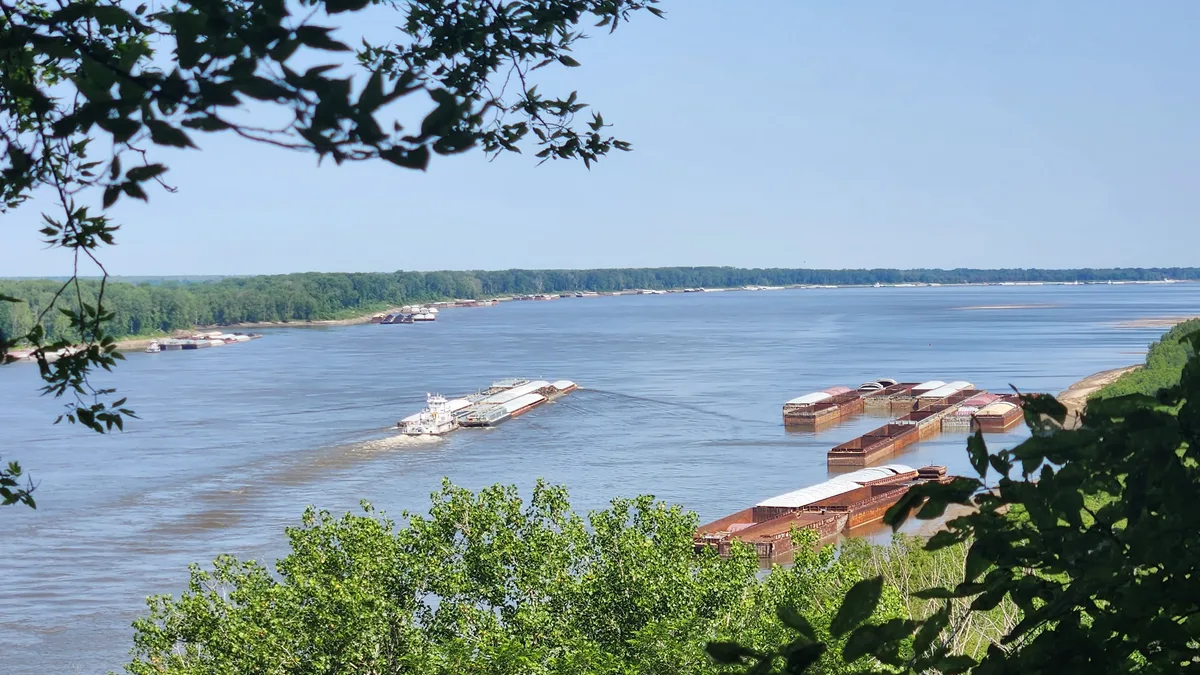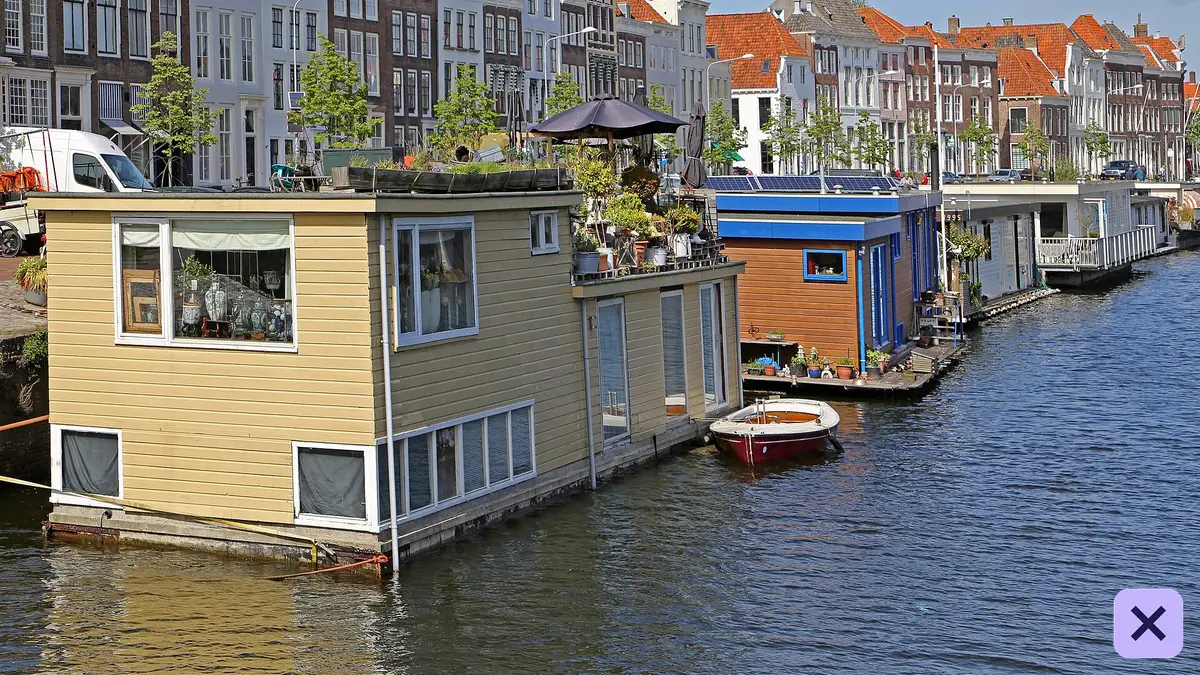
Cross Off the Worst Houseboats of 2026: Floating Homes That Flood, Freeze and Drain You
The worst houseboats of 2026 look like the cheapest home on the water: a floating cottage with a deck and a view. Then the mooring ends and the boat cannot move, the winter freeze cracks a pipe you cannot reach, the toilet needs emptying by hand, and the home that was meant to be freedom turns into a damp steel box you cannot sell. This guide ranks the seven worst houseboats of 2026 by type and pattern, not by marina or builder, so you can spot the trap before you buy or move aboard.
Key takeaways
- The engine-less static pontoon houseboat is the houseboat to avoid first: a floating home that cannot move when the mooring ends, and costs a fortune to tow.
- A houseboat lives or dies as a home, not as a boat: a boat that has no water, no power, no sewage and no dry roof fails at its basic job.
- Mooring is the real purchase: a cheap boat on a mooring with no services, no security and no renewal is the most expensive houseboat on this list.
- Flat roofs and thin hulls are the quiet killers: a roof that ponds and a hull that sweats will rot a houseboat from above and below at once.
- Always check the mooring terms, the services, the sewage, the roof drainage and the flood risk before you buy, and walk away from any boat that hides them.
How the worst houseboats of 2026 were chosen
Every boat below was scored on five measures. The mooring comes first: does the boat have a secure place to sit, with terms you can rely on, and can it move if the mooring ends? Services are second, judged on water, power, sewage and access for deliveries, repairs and rubbish. Dryness is third: the roof, the hull, the windows and whether the cabin stays dry in rain and warm in winter. Liveability is fourth: headroom, beds, heating and space to live, not just to sleep. Value is fifth: the real cost of the home, including mooring fees, towing, repairs and the price you could sell it for.
Two notes before the list. First, no boat here is useless on paper: each one earns its place because the home lets its owner down, not because a houseboat is a bad idea. Second, this guide ranks types and patterns, not named marinas, builders or boats: no published reliability scores exist for individual houseboats, so naming companies would be guesswork, and a boat that is bad on one mooring may be fine on another. This guide is strictly about houseboats: broad, flat-bottomed floating homes, usually moored in one place on a river, lake or marina, and lived in as a home. It is not about narrow canal cruising: a narrowboat is a slim self-steered boat that travels lock by lock, as our guide to the worst canal boats shows, while a houseboat mostly stays put and is judged as a home. It does not cover ferries either, which are scheduled passenger crossings between two points on a timetable, as our guide to the worst ferries shows, while a houseboat carries nobody anywhere on a schedule. The closest comparison on land is the camper: a home on wheels that must also solve water, power and sewage in a small space, as our guide to the worst RV campers explains, and the same checks that catch a bad camper will catch a bad houseboat. A houseboat is not a ferry and not a canal cruiser: it is a home that happens to float, and it is judged on whether it stays put, stays dry and stays warm.
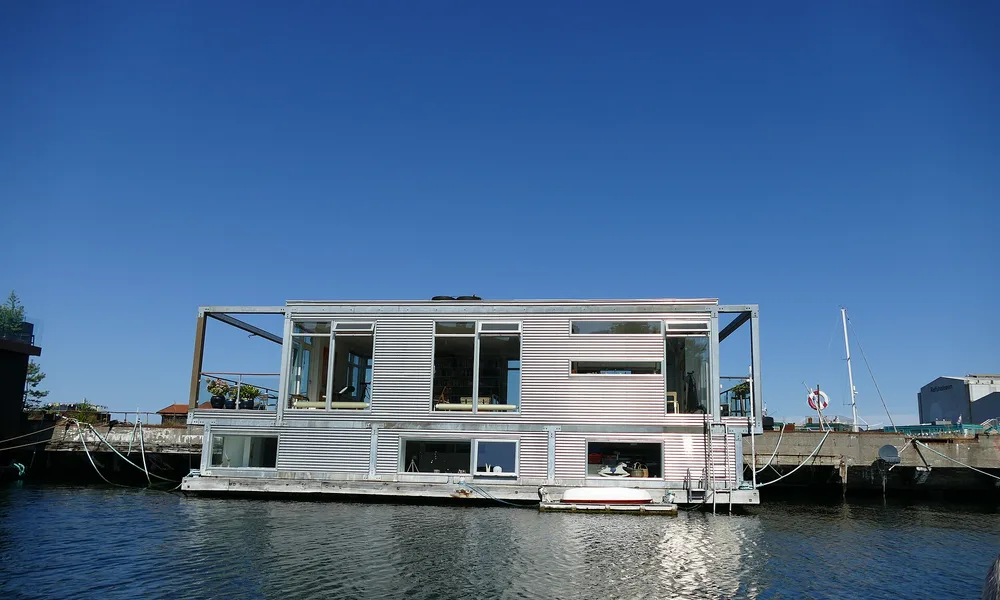
Comparison table: the worst houseboats of 2026
| Rank | Houseboat type | Main problem | Buy instead |
|---|---|---|---|
| 1 | Engine-less static pontoon houseboat | Cannot move when the mooring ends | Houseboat with a working engine |
| 2 | Houseboat on a mooring with no services | No water, power or sewage | Mooring with full services in writing |
| 3 | Converted old barge houseboat | Thin steel, rust, no insulation | Converted barge with a fresh survey |
| 4 | Flat-roofed houseboat with no drainage | Roof ponds, leaks and rots | Houseboat with a sloped, drained roof |
| 5 | Thin fibreglass houseboat | Condensation, blisters and cold | Houseboat with a solid, insulated hull |
| 6 | Houseboat with a composting toilet, no pump-out | Smell, chores and nowhere to empty it | Houseboat with a pump-out toilet nearby |
| 7 | River-moored houseboat in a flood zone | Flood risk, gangway angles, insurance | Houseboat on a sheltered marina mooring |
The worst houseboats of 2026
1. Engine-less static pontoon houseboat: the home that cannot move
The engine-less static pontoon houseboat is the bad houseboat to avoid first in 2026. It sits on its pontoons and looks like a bargain, until the mooring is not renewed, the marina changes its rules, or the pontoons need work that can only be done out of the water. Then the owner discovers that a home with no engine can only be moved by a tug or a crane, at a price larger than the saving on the boat. Buy a houseboat with a working engine instead, and read the mooring terms before you pay anything.
2. Houseboat on a mooring with no services: water, power and sewage sold separately
The houseboat on a mooring with no services is the trap for anyone who buys the boat and forgets the mooring. There is no mains water, so every litre is carried in a can; no mains power, so a generator rattles through the evening; and no sewage point, so the toilet is emptied by hand or by a long trip to a pump-out. Rubbish, deliveries and repairs all need a walk along a towpath in the dark.

3. Converted old barge houseboat: rust under the fresh paint
The converted old barge houseboat looks like a bargain: a long steel hull, a full fit-out, a price far below a new floating home. The survey finds thin steel, rust at the waterline, and insulation that is little more than fresh paint over damp boards, and the repair bill is larger than the saving on the price. Buy a converted barge with a fresh out-of-water survey instead, and budget for the survey before you fall in love with the listing.
4. Flat-roofed houseboat with no drainage: a pond over your bed
The flat-roofed houseboat with no drainage is the worst houseboat for anyone who lives through a rainy season. The roof is flat, so the rain sits in puddles instead of running off, and every puddle finds the same weak seam, the same rusted screw hole, or the same cracked seal. The ceiling stains, the insulation soaks,
5. Thin fibreglass houseboat: cold, sweating and blistered
The thin fibreglass houseboat is the trap for anyone who buys by the view. The hull is light and cheap, but it sweats in winter, blisters below the waterline, and flexes in a wash until the fittings work loose. The cabin is cold to the touch, the heating runs all day and warms nothing, and the damp collects behind every cupboard.

6. Houseboat with a composting toilet, no pump-out: the chore that never ends
The houseboat with a composting toilet and no pump-out access is the worst houseboat for anyone who expects a normal home. The toilet needs emptying by hand, the smell returns every warm day, and guests learn the routine before they learn your name. There is nowhere nearby to dispose of the waste properly, so every trip ashore carries a bucket, and the boat is hard to sell to anyone who has lived with one.
7. River-moored houseboat in a flood zone: the water comes to you
The river-moored houseboat in a flood zone is the worst houseboat for anyone who wants to sleep soundly in winter. The river rises, the gangway steepens until it is a ladder, and the mooring lines strain as the boat lifts and drops with the water. Insurance is dear or refused outright,
What to avoid when buying or moving aboard a houseboat
The most common houseboat regret is not a bad boat but a wrong mooring: a cheap boat on a mooring with no services, a boat with no engine on a mooring that will not renew, or a river mooring bought without checking the flood record. Avoid the trap by checking four things before you pay: the mooring terms, which should be in writing and longer than a season; the services, which should include water, power and sewage you have actually seen working; the roof and the hull, which should be dry after rain and free of blisters; and the flood and insurance position, which should be checked with an insurer, not the seller.
Checklist: buying or moving aboard a houseboat
- Read the mooring terms in writing and check how long they run and whether they renew.
- Turn on the water tap, the power and the sewage point, and check they all work.
- Start the engine, even if you never plan to cruise, and check it moves the boat.
- Look at the roof after rain and the hull below the waterline for ponding and blisters.
- Ask where the toilet waste goes and how far the nearest pump-out point is.
- Check the flood history and get an insurance quote before you pay, not after.
Frequently asked questions
What is the difference between a houseboat and a canal boat?
A houseboat is a broad, flat-bottomed floating home, usually moored in one place on a river, lake or marina, while a canal boat is a narrow, self-steered boat that travels lock by lock along a canal.
Do houseboats move, or do they stay in one place?
Most houseboats stay in one place for months or years, and many have no working engine at all. A houseboat with an engine can move to a new mooring or a yard for repairs,
What should a houseboat mooring include?
At minimum, mains water, mains power, a sewage point or a nearby pump-out, rubbish collection, parking, and safe access on foot in all weathers. The terms should be in writing, with a clear length and renewal,
How do houseboats deal with sewage?
Most use a pump-out toilet, emptied at a pump-out point by a hose, or a cassette toilet carried ashore. A composting toilet is the third option, but it needs regular emptying by hand and a proper place to dispose of the waste.
Are houseboats cold in winter?
They can be, and the worst ones are: thin steel or fibreglass sweats, flat roofs leak. A houseboat that stays warm in winter has a dry hull, a drained roof, proper insulation and a working stove or heater, and a mooring with power to run it.
Can you get insurance and a loan for a houseboat?
Insurance is usually available, but flood-zone moorings, engine-less boats and old steel hulls can be dear or refused, so get a quote before you buy. Loans are harder than for a house: most lenders treat a houseboat as a boat, not a property,
Bottom line
The worst houseboats of 2026 fail at the same floating-home job in different ways: the engine-less pontoon cannot move, the mooring with no services leaves you carrying water, the converted barge rusts under fresh paint, the flat roof ponds and leaks, the thin fibreglass hull sweats and blisters, the composting toilet never stops being a chore, and the river mooring floods. Choose a boat with a working engine, a mooring with services in writing, a dry roof, a solid hull and a pump-out point nearby.