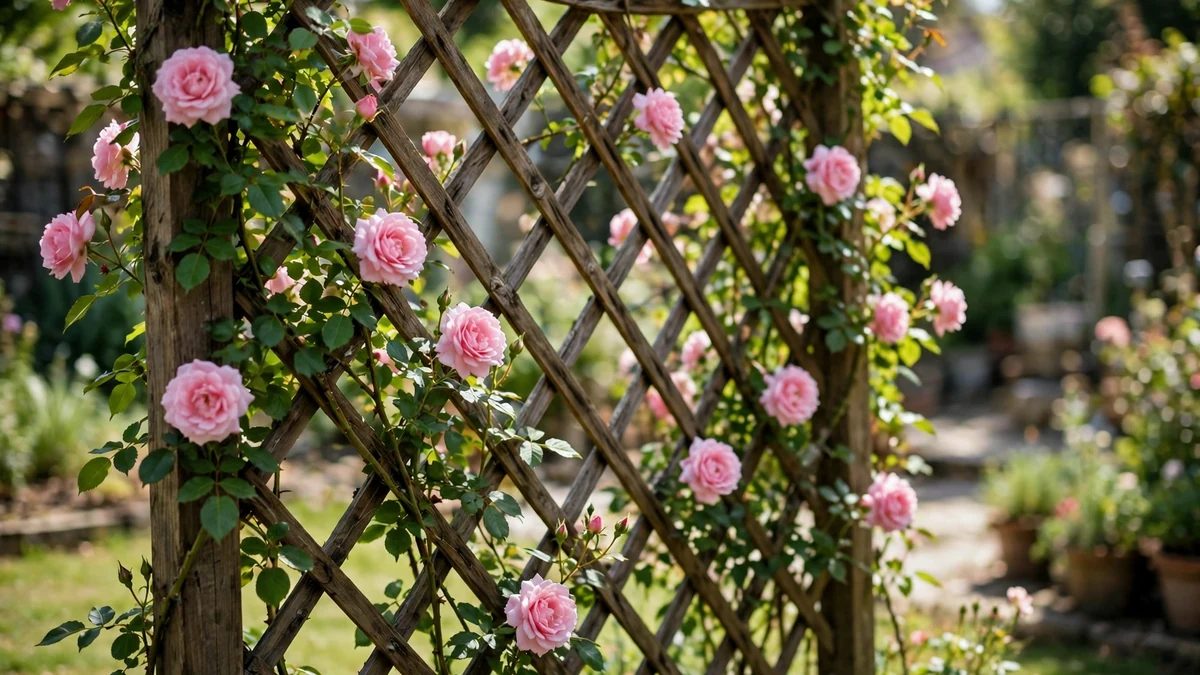
Best Trellises 2026
A bare wall, a plain fence, or an empty stretch of lawn can make even a well-kept garden feel unfinished. A trellis changes that in an afternoon. It gives climbing plants somewhere to go, turns a flat boundary into a green screen, and adds height and structure to a garden that would otherwise spread out sideways and stop.
The best trellises of 2026 do more than hold up a rose. They stand up to wind, they do not rot after one wet winter, and their spacing suits the plants you actually want to grow. These are the trellises worth buying, chosen for material, strength, size, and how well they age in a real garden.
Key Takeaways
- Match the trellis to the plant, because a heavy rose needs a far stronger frame than a light sweet pea ever will.
- Wood looks warm and natural but needs treatment, while powder-coated metal lasts longer with almost no upkeep.
- Leave a gap of at least five centimetres between a wall trellis and the wall so air can move and stems can pass behind it.
- Anchor freestanding trellises properly, since a tall panel full of leaves catches the wind like a sail.
- Buy the size your plant will reach in three years, not the size it is today, or you will be replacing the trellis just as the plant peaks.
Trellises 2026 at a Glance
| Best for | Trellis type | Material | Standout strength |
|---|---|---|---|
| Best overall | Diamond lattice panel | Cedar wood | Strong, good-looking, and suits most climbers |
| Best for roses | Heavy-duty fan trellis | Powder-coated steel | Holds heavy canes without bending |
| Best for entrances | Garden arch | Metal tube | Frames a path and carries vigorous vines |
| Best for small gardens | Wall-mounted panel | Treated pine | Fills a bare wall without taking floor space |
| Best for pots | Obelisk | Willow or metal | Neat upright support for containers |
| Best low maintenance | Square lattice panel | Vinyl | Never rots, never needs painting |
What a Trellis Is Really For
A trellis is a frame that lets a climbing plant grow upward instead of sprawling along the ground. The plant does the decorating; the trellis does the holding. Without a frame, a climbing rose will flop, a clematis will tangle into a knot at ankle height, and a grapevine will wander across the lawn looking for something to grip.
It helps to think of the trellis as part of the planting plan rather than an afterthought. If you are building a raised bed for vegetables, for example, a trellis at the back of the bed gives beans and peas somewhere to climb and keeps the crop off damp soil. Our guide to the best raised garden beds of 2026 covers bed heights and materials that pair well with a climbing frame.

Wood, Metal, or Vinyl: Which Material Lasts?
Wood is the classic trellis material, and for good reason. Cedar and redwood resist rot naturally and weather to a soft silver-grey if left untreated, while treated pine is cheaper and takes paint or stain well. A wooden trellis looks at home against brick, stone, and planting, and it is easy to cut or extend if your plans change. The trade-off is maintenance: expect to treat or repaint a wooden trellis every two or three years, and expect a softwood panel in constant contact with damp soil to fail sooner than one kept clear of the ground.
Metal trellises, usually powder-coated steel or aluminium, are the strongest option and the best choice for heavy plants. A steel fan trellis will hold a mature climbing rose that would pull a light wooden panel off its fixings. Metal needs little care beyond an occasional wipe and a touch-up of any chips in the coating, because a chip is where rust starts. Aluminium is lighter and never rusts, but it bends more easily, so check the tube thickness before buying a tall arch.
The Main Types of Trellis
The diamond lattice panel is the workhorse. Its diagonal slats give plenty of crossing points for tendrils and stems, and it looks good from both sides, which matters when it stands between you and a neighbour. Panels come in standard fence sizes, so they slot neatly into a fence run or stand alone on posts. Buy a panel with slats at least twelve millimetres thick; thinner slats snap in a storm and look flimsy once a plant loads them.
The fan trellis is shaped like an open fan and fixes to a wall, spreading outward from a narrow base. It suits roses and jasmine trained against a house wall, because the shape follows the way a shrub naturally branches. The best fan trellises are made from stout timber or steel with joints that are screwed rather than stapled, since the whole weight of the plant pulls outward on the fixing points.
Wall-mounted panels are the answer for a bare wall. A simple square lattice fixed to brick with spacers behind it will carry ivy, honeysuckle, or a climbing hydrangea, and it protects the wall by keeping the plant slightly away from the surface. That gap matters: plants growing flat against a wall trap damp and can lift mortar over time, while a spaced trellis lets the wall dry after rain.
Sizing and Placement
Measure the plant, not the space. A clematis that reaches three metres needs a trellis at least that tall, and a rose that spreads two metres wide needs a panel of the same width. Trellises that are too small are the most common buying mistake, because the plant outgrows the frame in its second summer and there is no neat way to extend it.
Height is only half the question. A freestanding trellis should be sunk into the ground or bolted to posts, with at least a third of its height below ground for a tall panel. A wall trellis should sit with its base at least fifteen centimetres above the soil so the bottom slat does not sit in wet earth and rot. And a trellis used as a screen should be positioned so it blocks the view you want to hide without shading the plants behind it.
Placement also decides how you use the rest of the garden. A trellis panel can make a quiet corner behind a seat feel enclosed and private, and a seat placed in front of a flowering trellis is one of the cheapest ways to make a garden feel designed. If you are choosing somewhere to sit, our guide to the best garden benches of 2026 covers benches that sit well against a planted backdrop.

The Best Plants for a Trellis
Climbing roses are the classic trellis plant, and they repay the effort. Choose a repeat-flowering variety if you want colour all summer, and tie the main canes in horizontally rather than vertically, because horizontal canes produce far more flowering side shoots. A rose needs a strong trellis and a firm tie: use soft garden twine or rubber ties, and check them each spring before growth starts.
For a quick result, annual climbers are hard to beat. Sweet peas, morning glories, and black-eyed Susan vines will cover a trellis in a single summer from a spring sowing, and they are the right choice if you want to test a new trellis position before committing to a permanent plant. They are also the best plants for a light vinyl or willow trellis that could not carry a woody climber.
Fixing and Anchoring a Trellis
A trellis fails at its fixings long before it fails in its slats, so spend the effort here. For a wall trellis, use proper masonry fixings and stand-off brackets that hold the panel at least five centimetres from the wall. Space the brackets evenly, with one near each corner and one in the middle of a wide panel, and check that the wall itself is sound before you drill. A trellis bolted to crumbling render will come down with the plant still attached to it.
Arches need the most care. Sink each foot into a concrete footing or a deep post hole filled with compacted hardcore, and check that the arch is level before the concrete sets. A wonky arch is obvious from across the garden and hard to correct later. For an arch over a path, leave enough headroom for the tallest person in the household plus the plants that will hang down from the top.
Care and Maintenance
A trellis is easy to look after if you check it once a year. In late winter, before the plants leaf up, walk the garden and look at every trellis. Tighten loose screws, replace broken slats, touch up chipped paint on metal, and re-treat any bare wood. It is far easier to fix a trellis when you can see it clearly than in midsummer when it is hidden under leaves.
If you grow plants indoors as well as out, the same climbing habit applies on a smaller scale. A small trellis in a pot on a sunny windowsill can support a trailing plant and keep it off the sill, and good light makes all the difference to how well it grows. Our guide to the best grow lights of 2026 covers the lights that keep indoor climbers healthy through a dark winter.

Mistakes to Avoid
The most common mistake is buying a trellis for the plant you have today rather than the plant you will have in three years. A small panel looks tidy in the first summer and overwhelmed in the second. Buy generously, and if you are torn between two sizes, take the bigger one.
The third mistake is underestimating weight. A trellis in full leaf, wet after rain, with a mature rose or wisteria on it, is far heavier than the empty frame you carried home from the shop. If the plant is heavy, the trellis and its fixings must be heavy too. Light decorative panels have their place, but that place is with light annual climbers, not with woody shrubs.
Frequently Asked Questions
How tall should a trellis be? Tall enough for the mature plant, which for most roses and clematis means at least 1.8 metres. A trellis shorter than the plant will leave growth flopping over the top, while one much taller than the plant looks bare for years.
Do trellises damage walls? A properly fitted trellis with spacers does not. Damage comes from plants growing flat against a wall and holding damp, or from fixings drilled into weak mortar. Keep the gap, use sound fixings, and check the wall each year.
The Bottom Line
The best trellis is the one that matches your plant, your wall or border, and your willingness to maintain it. A cedar lattice panel is the safest all-rounder, a steel fan trellis is the right choice for a heavy rose, an arch makes an entrance memorable, and a wall panel rescues the plainest brick. Buy it generously sized, fix it properly with a gap behind it, and tie the plant in as it grows. Do that, and the trellis will disappear under green within a season or two, which is exactly what a good trellis is supposed to do.


