
Fish food looks simple from the shop shelf. A tub of flakes, a bag of pellets, a few frozen cubes in the freezer section, and a promise on every label that your fish will be brighter, livelier and happier. The reality inside the tank is a little more honest. The best fish food of 2026 is not one tub that suits every fish. It is the right type, in the right size, fed in the right amount, to the fish you actually keep. Get that combination right and feeding time becomes the best part of the day, for you and for them. Get it wrong and the same flakes that looked harmless will cloud the water, sit uneaten on the gravel and turn a calm aquarium into a chore.

What Fish Food Actually Is
Most fish food is a mix of the same building blocks: fish meal, shrimp meal, algae, grains and a vitamin mix, pressed or dried into a shape your fish can bite. The differences that matter are not the exotic ingredients printed in large letters on the front of the tub. They are the size of each piece, whether it floats or sinks, how fast it breaks apart in water and how much of it your fish can actually eat before it drifts away. A flake that suits a tetra will be ignored by a large cichlid, and a pellet that suits a cichlid will be too big for a neon tetra to take in at all. That is why the first question is never which brand is best. It is which fish you are feeding, where in the tank they eat, and how big their mouths are.
Flakes: The Everyday Default
Flakes suit fish that feed near the surface, and they are easy to portion by eye. A pinch is usually enough for a small tank, and because flakes spread out across the surface, several fish can eat at once instead of one bold fish guarding a single pellet. The weakness of flakes is that they are not a good fit for every fish. Bottom feeders will barely see them, large fish will swallow them without noticing, and in a tank with a strong surface current they can be swept into the filter before anyone eats. Flakes also go stale faster than pellets once the tub is open, because their large surface area picks up damp from the air. Keep the lid shut, keep the tub away from the tank where splashes land, and use a small tub you will finish rather than a bulk tub that sits open for a year.
Pellets: Slow, Steady and Less Messy
The trick with pellets is size. A pellet should be small enough for your fish to take in one bite. If your fish chew at a pellet, spit it out and pick at it again, it is too big, and the pieces that break off will sink into the gravel uneaten. Many keepers buy one size too large because the tub looked like better value. It is not. A smaller pellet that is eaten cleanly is better than a larger one that half your fish cannot manage. Soak large pellets for a few seconds before feeding if you are unsure, and watch how your fish handle them. If every pellet disappears within a couple of minutes, the size is right. If pellets sit on the bottom, switch to a smaller size or feed fewer at a time.

Live Food: The Most Natural Option
Live food, such as live brine shrimp or daphnia, is the most natural option of all and the one that needs the most thought. Live food moves, and that movement wakes up the hunting instinct in fish that have grown bored of food that simply falls from above. It is also the most work: live cultures need their own care, and live food bought from a shop should come from a source you trust, because anything alive can carry something you do not want into your tank. For most keepers, frozen food gives almost all of the benefit of live food with far less fuss. If you do try live food, start small, watch your fish carefully over the next day, and keep it as an occasional treat rather than the main event.
Matching Food to the Fish You Keep
Community tanks with tetras, rasboras and guppies do best on small flakes or micro pellets that spread through the water so every fish gets a share. Timid fish in a community tank often miss out when food is dropped in one spot, because the boldest fish eat first. Scattering a pinch across the surface gives the quieter fish a chance. Bottom feeders need food that reaches them: sinking pellets or wafers that hold their shape on the gravel long enough for a corydoras or a pleco to find them. And pond fish such as koi need larger pellets that float, so you can see them eat and stop the moment they lose interest. If you are setting up the tank itself as well as the feeding routine, our guide to the best aquariums of 2026 covers the tanks these foods are made for, from small desktop setups to large community aquariums.
How Much to Feed, and How Often
Most adult fish do well on one or two small feeds a day, and many keepers give their fish one day a week with no food at all, which gives the tank a chance to clear and the fish a chance to graze on algae and anything else they find. Young, growing fish need feeding more often, in smaller amounts, because they are building bodies quickly. The time of day matters less than the routine: fish learn when food arrives, and a regular feeding time makes them calmer and easier to watch. If your water turns cloudy after feeding, the cause is almost always the amount rather than the food itself, and that is a sign to feed less, not to buy a different tub. Clean water and careful feeding go together, which is why the guide to the best water filters of 2026 is worth reading alongside any feeding plan: a good filter forgives small mistakes, but no filter can keep up with a daily overfeed.
Reading the Label Without a Chemistry Degree
Fish food labels can look like they were written to confuse. Long lists of ingredients, percentages that mean little on their own, and bright claims about colour and growth on the front of the tub. The parts worth reading are simple. Look for a named fish or seafood meal near the top of the ingredient list, which tells you the food is built on something fish actually eat, and look for a mix rather than a single filler. A food that lists a grain first and fish meal somewhere near the end is mostly filler, and filler is what ends up as waste in your tank. The habit of reading labels properly is the same one that helps with any pet food: if you have ever compared tins and bags for another pet, the approach in our guide to the best dog food of 2026 will feel familiar, and the same scepticism about front-of-pack claims applies here.
Two numbers on the label deserve a second look. The first is the protein level, which is usually higher in foods made for young or fast-growing fish and lower in foods made for goldfish and other slow-growing types. The second is the ash level, which is a rough measure of the mineral content left after the food burns: a very high ash level often means a lot of indigestible filler, and that filler becomes waste. You do not need to memorise ideal numbers for every fish. You need to compare two tubs side by side and choose the one whose ingredients you recognise, whose protein level suits your fish, and whose ash level is not the highest on the shelf. If a label will not tell you what is inside, that is an answer in itself.
Storing Frozen and Live Food
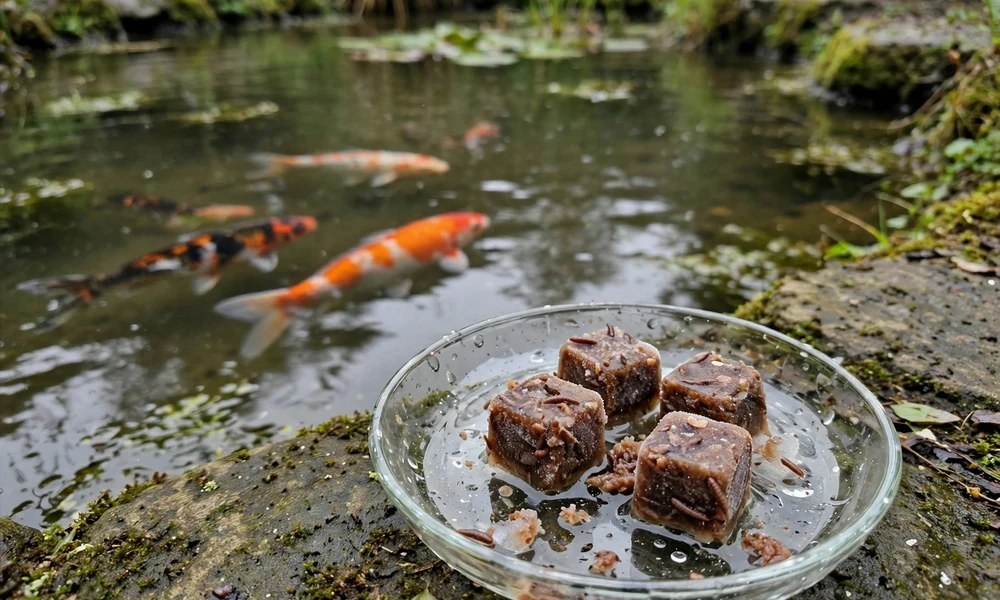
Frozen food has a different problem: it keeps well in the freezer, but only if it stays frozen. A pack that has thawed and been refrozen will have lost its shape and much of its appeal, and a cube that has sat in the fridge for days is not the same as one taken fresh from the freezer. Keep frozen food in the freezer, take out only what you need, and use a small cup of tank water to thaw it rather than warm water from the tap. The same care applies to live food, which should be used quickly and never left sitting in a warm room. A little care with storage is worth more than a more expensive tub, because even the best fish food is only as good as the day you open it.
The Mistakes That Cost Fish Keepers Most
The first mistake is feeding one food to every fish in a mixed tank and wondering why some of them look thin while others look fine. A community tank is a compromise, and the compromise works only if the food reaches every level of the tank. Mix a floating food with a sinking one, and scatter the floating food so the bold fish cannot guard it all. The second mistake is buying food for the fish you wish you had rather than the fish you have. Large pellets for small fish, flakes for bottom feeders, and food that sinks straight past a surface feeder are all versions of the same error, and they are all fixed by watching your fish eat for two minutes instead of guessing.
Our Verdict: The Best Fish Food Approach in 2026
There is no single tub that is the best fish food for every tank, and any guide that claims otherwise is selling you something. The best approach in 2026 is a small, simple routine built around your own fish. Start with a good flake or a small pellet as the daily staple, chosen to fit the size of your fish and the level of the tank where they eat. Add a sinking food if you keep bottom feeders, so they are not left to survive on leftovers. Add a frozen food once or twice a week for variety, thawed first in tank water. Feed only what disappears in two or three minutes, store every tub sealed and dry, and read the label before you buy rather than after.
That routine costs less than most keepers expect, because the food that is eaten cleanly is the food you do not have to replace with water changes and filter cleaning. It also makes feeding time something to enjoy rather than something to worry about. Watch your fish at the surface, learn which of them is bold and which is shy, and adjust the amount and the mix until every fish in the tank gets its share. The best fish food of 2026 is not the most expensive tub on the shelf. It is the one your fish finish, in the tank you keep, fed in the amount they can actually eat.


