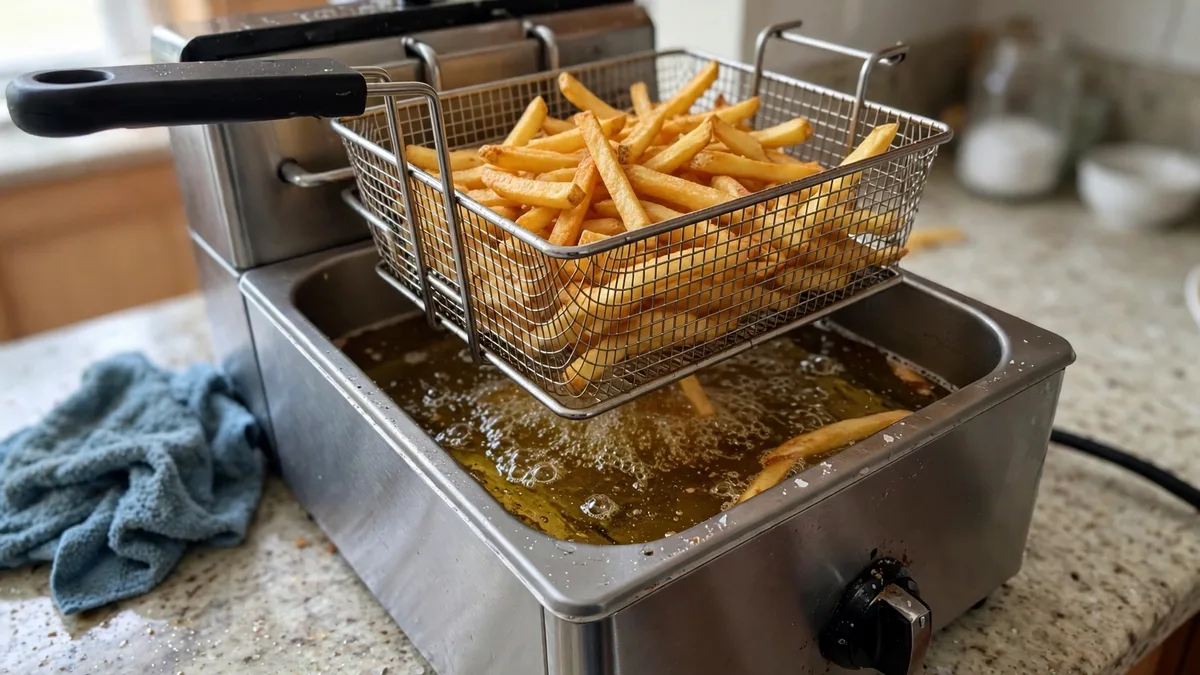
Peanut oil is the high-heat frying oil that serious cooks reach for when the pan needs to stay hot and the food needs to come out crisp. It is the oil in the turkey fryer at Thanksgiving, the oil behind properly golden chips, and the oil that lets a stir-fry sear instead of steam. It handles temperatures that make other oils smoke, while adding only the faintest whisper of nutty flavour.
Yet peanut oil is also one of the least understood bottles on the shelf. Some cooks avoid it because of peanut allergy, others buy the wrong kind and wonder why their salad dressing tastes of roast peanuts. This guide explains what peanut oil actually is, why it fries so well, which kind to buy for which job, and how to store it so it stays fresh.
Key takeaways
- Refined peanut oil smokes at around 230 degrees Celsius, making it one of the best choices for deep frying, shallow frying and searing.
- Refined peanut oil is almost neutral, while cold-pressed and roasted peanut oil taste distinctly nutty and suit dressings and finishing.
- Peanut oil is rich in monounsaturated fat and vitamin E, with a fat profile closer to olive oil than to most cheap frying oils.
- Highly refined peanut oil is treated differently from raw peanuts in allergy guidance, but cold-pressed peanut oil is not, so check the label and ask a doctor if allergy matters.
- Buy refined peanut oil in a dark bottle, keep it cool and dark, and strain and reuse it two or three times before discarding it.
What peanut oil actually is
Peanut oil is pressed from peanuts, the groundnuts that grow underground on the peanut plant. It has been a kitchen staple across Asia, Africa and the American South for generations: the everyday cooking oil in China, the frying oil for yam and plantain in West Africa, and the traditional choice for frying chicken and turkey in the southern United States.
The oil comes in three main forms, and knowing which one you are holding matters more than the brand. Refined peanut oil is the common supermarket bottle: pale gold, almost flavourless, and built for heat. Cold-pressed peanut oil keeps more peanut flavour and a deeper golden colour, but smokes at a lower temperature. Roasted peanut oil is dark amber with a strong, toasty flavour, and it is a finishing oil rather than a frying oil.
Its fat profile is genuinely good for a frying oil: roughly half monounsaturated fat, the same kind that dominates olive oil, with about a third polyunsaturated fat and under a fifth saturated fat. It is still a calorie-dense fat, so the amount you use matters, but on fat quality it stands well above the cheapest frying oils.
How hot can it go?
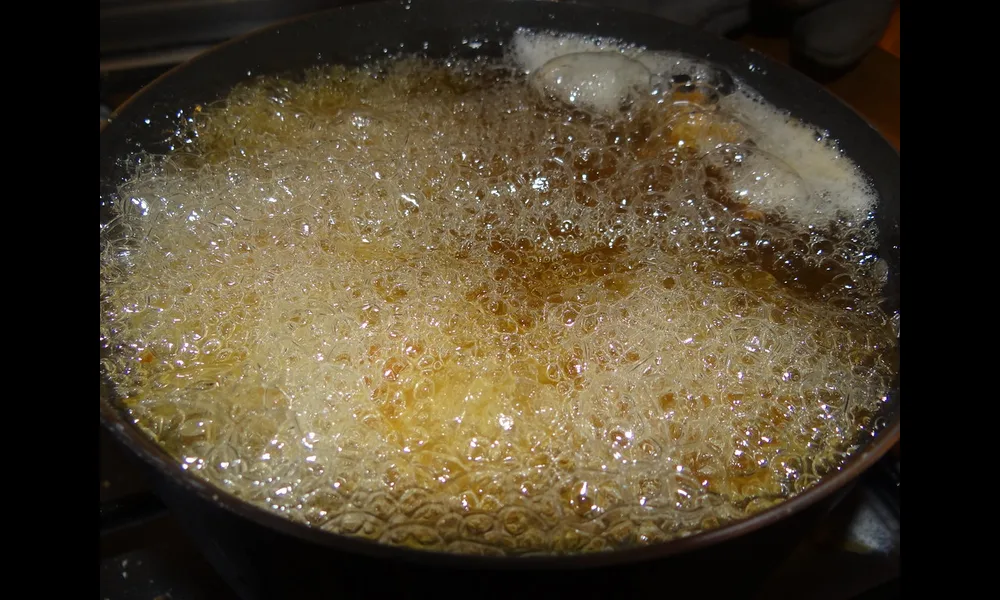
Heat is where peanut oil earns its place. Refined peanut oil smokes at around 230 degrees Celsius, above refined olive oil, canola oil and coconut oil, and close to high-oleic sunflower oil. Home frying happens at 175 to 190 degrees, and an oil with a higher smoke point gives you room when the temperature spikes as food goes in, instead of smoking and turning bitter.
That high smoke point is why peanut oil is the classic choice for deep frying a turkey. A whole bird goes into a large pot of hot oil for half an hour or more, and any oil that smokes or breaks down over that time ruins the meal. Peanut oil holds steady, keeps the skin crisp and the meat juicy, and leaves almost no flavour of its own. The same steadiness makes it reliable for batches of chips, fried chicken and fritters, where the oil must recover its temperature again and again.
Cold-pressed peanut oil is a different story: it smokes at around 160 to 175 degrees, which rules it out for deep frying. Use it where its flavour can shine instead, whisked into dressings, drizzled over noodles, or brushed over grilled vegetables. Roasted peanut oil smokes lower still and should never be used for frying; a spoonful at the end of cooking is all it needs. Our guide to the best olive oil shows how a flavoured oil compares when the job is finishing rather than frying.
Refined, cold-pressed and roasted compared
The three kinds of peanut oil are barely the same ingredient. The refined bottle is the workhorse, the cold-pressed bottle is the flavourful middle ground, and the roasted bottle is a seasoning in oil form.
| Peanut oil type | Smoke point | Flavour | Best for | Watch out for |
|---|---|---|---|---|
| Refined | About 230°C | Almost neutral | Deep frying, shallow frying, searing | No peanut flavour at all |
| Cold-pressed | About 160–175°C | Light, nutty | Dressings, noodles, light sautéing | Smokes if the pan gets too hot |
| Roasted | About 160°C | Strong, toasty | Finishing, dipping, Asian dishes | Never use for frying |
| Blended peanut oil | About 220°C | Faint | Cheap everyday frying | May contain cheaper oils |
Peanut oil against the rest of the shelf
The honest comparison is with canola oil, the other everyday frying oil. Canola is cheaper and easier to find, and for shallow frying and roasting the difference is small. Peanut oil pulls ahead when the heat is highest and the frying goes on longest: deep frying a turkey, running batch after batch of chips, or keeping a wok at searing heat. If you fry rarely, canola oil is the better value; if you fry often and hot, peanut oil earns its premium. Our guide to the best canola oil covers the cheaper workhorse in detail.
Where peanut oil shines
Chips are its home territory. Potatoes fried in peanut oil come out crisp outside and fluffy inside, with a clean flavour that lets the potato lead. The oil stays calm while batch after batch goes in, and the chips brown evenly instead of soaking up oil as the temperature falls. The same steadiness suits fried chicken, fritters, tempura and onion rings.
Stir-fries are the second strength. A wok needs an oil that can take fierce heat without smoking, and peanut oil is the traditional choice across Chinese cooking for exactly that reason. It lets the wok sear meat and vegetables quickly, and cold-pressed peanut oil can finish the same dish with a spoonful at the end.
Roasting rounds out the list. Vegetables tossed in peanut oil crisp well at the edges in a hot oven, and it is a good choice for roasting potatoes, where its high heat tolerance keeps the oil from smoking. The one place refined peanut oil does not shine is finishing: a drizzle over a finished dish adds nothing, and that is the moment to reach for a flavoured oil instead.

The allergy question, answered plainly
Peanut allergy is the first thing most people ask about, and it deserves a straight answer. Highly refined peanut oil is made by a process that removes almost all of the peanut protein, and food regulators treat it differently from raw peanuts because of that: it is generally not considered a major food allergen in its refined form. That is why refined peanut oil is used in restaurant fryers that serve customers with no idea it is there.
But that reassurance has limits. Cold-pressed, expeller-pressed and roasted peanut oil are not refined in the same way, and they can retain enough peanut protein to trigger a reaction. A bottle that says cold-pressed or unrefined should be treated as a peanut product, full stop. Anyone with a peanut allergy, or cooking for someone with one, should ask a doctor before using any peanut oil, and should never assume a restaurant fryer is safe. When in doubt, choose a different oil entirely.

How to buy and store peanut oil
Buying peanut oil rewards reading the label. Buy refined peanut oil from a brand you recognise, and check that peanut oil is the only ingredient listed. Prefer a dark bottle or tin, and check the best-before date: a bottle that has sat in a bright shop for a year is already going stale. Choose a size you will finish within six months of opening.
Store it in a cool, dark cupboard away from the stove, cap on tight. Light and heat are what turn a fresh oil stale, and a bottle left beside the hob goes off far faster than one kept in a cupboard. An opened bottle stays fresh for about six months, unopened for a year or more. Smell it before use: fresh peanut oil smells faintly nutty or almost of nothing, stale oil smells waxy or like old crayons. If in doubt, throw it out.
Reusing frying oil is where peanut oil pays you back. After frying, let the oil cool, strain it through a fine sieve or a coffee filter into a clean container, and store it in the dark. You can reuse it two or three times for similar foods. Discard it when it foams heavily, smells stale, looks dark or smokes well below its usual temperature. Never mix oil used for fish with oil for anything else, and never pour used oil down the sink.
Checklist: buying peanut oil in 2026
- Choose refined peanut oil for frying and searing; cold-pressed for dressings and light cooking, roasted for finishing only.
- Check the ingredient list: peanut oil alone beats a blend stretched with cheaper oils.
- Prefer a dark bottle or tin, and check the best-before date before you buy.
- Buy a size you will finish within six months of opening, not the largest bottle available.
- Store it in a cool, dark cupboard away from the stove, with the cap screwed on tight.
- Strain frying oil after use, reuse it two or three times, and discard it when it foams, darkens or smells stale.
Frequently asked questions
Is peanut oil good for deep frying?
Yes, it is one of the best. Refined peanut oil smokes at around 230 degrees Celsius, holds its temperature across batches, and leaves fried food crisp without adding flavour. It is the traditional choice for frying turkey, chicken and chips.
Is peanut oil safe for people with peanut allergy?
Highly refined peanut oil is generally treated as safe because refining removes almost all peanut protein, but cold-pressed, expeller-pressed and roasted peanut oil can retain enough protein to cause a reaction. Anyone with a peanut allergy should ask a doctor first.
Can you reuse peanut oil after frying?
Yes. Let it cool, strain it through a fine sieve or coffee filter, and store it in a clean, dark container. You can reuse it two or three times for similar foods. Discard it when it foams, smells stale, looks dark or smokes early.
Does peanut oil go bad?
Yes. Unopened it keeps for a year or more in a cool, dark place; once opened, use it within about six months. Light, heat and air speed up rancidity, and if it smells waxy, stale or like paint, it has gone off.
What is the difference between refined and cold-pressed peanut oil?
Refined peanut oil is processed for a high smoke point and a neutral flavour, which makes it the frying oil. Cold-pressed peanut oil keeps a nutty flavour and a lower smoke point, and suits dressings and light cooking.
Is peanut oil better than vegetable oil for frying?
For high-heat frying, yes: it smokes hotter, holds its heat better across batches, and has a better fat profile than most generic blends. Vegetable oil is cheaper, so for gentle everyday frying it is the better value, as our guide to the best vegetable oil explains.
The bottom line
Peanut oil is the high-heat frying oil worth knowing because it does the hardest job in the kitchen better than almost anything else on the shelf. It stays calm at temperatures that make other oils smoke, fries food crisp without imposing flavour, and keeps well enough to reuse. Buy it refined, store it properly, and take the allergy question seriously.