Pincushions That Keep Pins Within Reach in 2026
Pincushions that keep pins within reach in 2026 are small, weighted cushions holding your pins upright and ready, and they are the difference between sewing that flows and sewing that stops every few minutes while you hunt for a pin on the floor. A good pincushion keeps every pin in one place, point down and head up, so you can grab one without looking. A bad one sheds pins across the table or swallows them so deep you cannot pull them out again.
Key Takeaways
- A pincushion stores pins between stitches, point down and head up, so they are within reach and never loose on the floor.
- Tomato pincushions suit most sewers, magnetic dishes suit quilters and machine sewers, and wrist pincushions suit fitting work and cutting out.
- Weight matters more than size: a pincushion should stay put when you pull a pin out with one hand.
- Throw away any pin that is bent, blunt, or rusty, because a bad pin damages fabric.
- A pincushion is not a thimble: a pincushion stores your pins, while a thimble protects your finger while you push the needle.
What a Pincushion Actually Does
A pincushion is a small, firmly stuffed cushion, and its job is simple: it holds pins so they are safe, visible, and ready. Pins go in point first, so only the coloured head shows above the surface. That keeps the points away from your fingers, the fabric, and the floor. It also keeps pins from rolling towards the edge of the table and onto the floor.
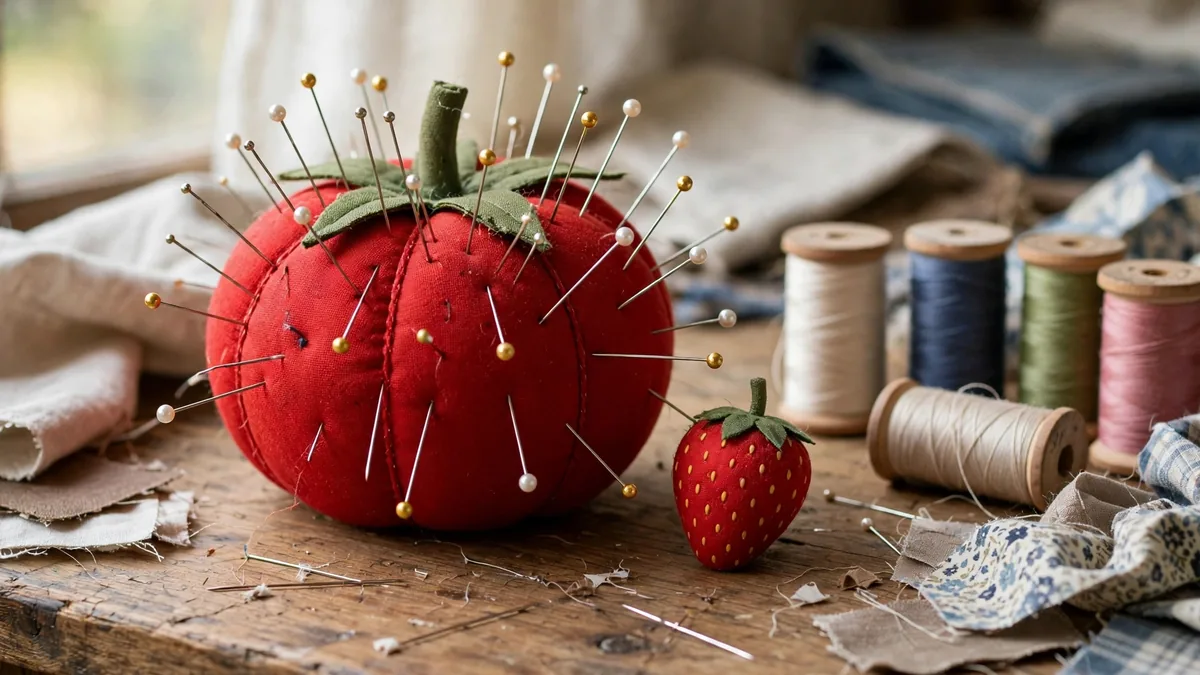
The stuffing matters. A good pincushion is stuffed firmly, so a pin pushed in meets resistance and stays upright instead of flopping sideways. Traditional tomato pincushions are stuffed with sawdust or crushed walnut shells, which grip the pin shaft, and the little strawberry on the side is filled with emery, a fine abrasive that sharpens a pin. What matters is the result: pins that go in easily, stand upright, and come out cleanly.
It is worth being clear about what a pincushion is not. It is not a pin box, and it is not a magnetic dish, though both have their place. A box stores pins safely for travel, and a dish catches them, but neither holds pins upright and ready while you work. A pincushion is the working store: the one that sits beside your hand while you sew. It is also not a thimble: a thimble protects the finger that pushes the needle, while a pincushion looks after the pins, and our guide to thimbles that protect your fingertips covers the other half of that partnership.
The Main Types of Pincushion Compared
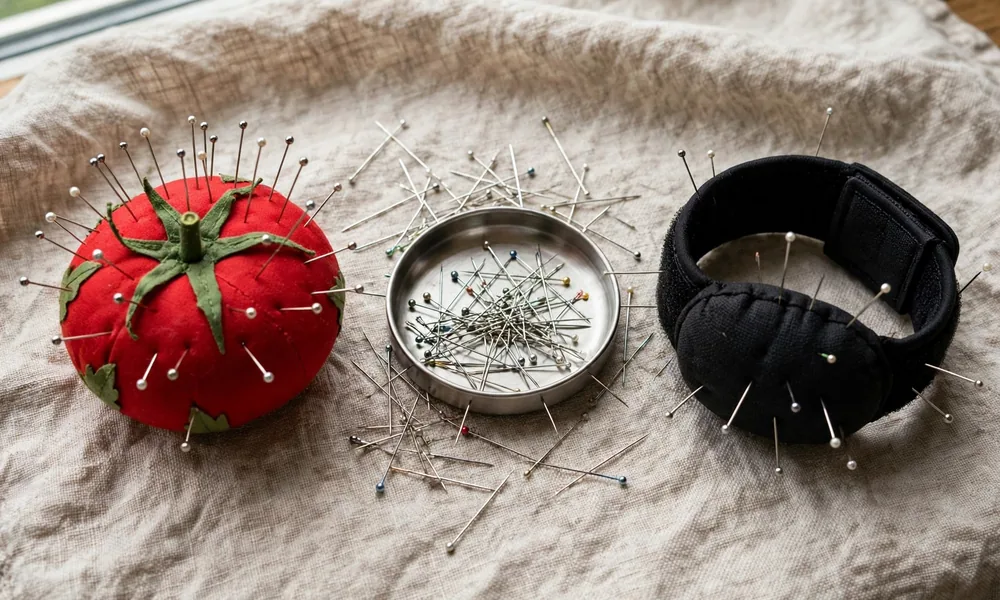
Four types cover almost every sewer, and they differ in how they hold pins, where they sit, and the work they suit best.
| Type | Best for | Feel | Drawback |
|---|---|---|---|
| Tomato | General hand sewing | Heavy, classic, steady | Pins can hide deep inside |
| Magnetic dish | Quilting, machine sewing | Fast, open, flat | Pins can clump together |
| Wrist | Fitting, cutting out | Hands-free, close | Small, holds few pins |
| Novelty and DIY | Gifts, matching a room | Personal, decorative | Often too light to stay put |
Tomato Pincushions
The tomato pincushion is the classic, and for most sewers it is still the best all-rounder. A round red cushion, divided into sections, stuffed firmly with sawdust or walnut shells, and heavy enough to stay put. The weight is the point: when you pull a pin out one-handed, the cushion should not follow your hand across the table. The sections let you sort pins by type, and the little strawberry on the side is the sharpener, filled with emery.
Magnetic Pin Dishes
A magnetic pin dish is a shallow bowl with a magnet in the base, and it holds pins flat in a neat pile instead of upright. It is the fastest option for machine sewing and quilting: sweep pins off the fabric into the dish in one movement, and pick them up again just as fast. The magnet also catches a dropped pin before it reaches the floor. The drawback is clumping: pins tend to stick together, and pulling one free can bring three more with it.
Wrist Pincushions
A wrist pincushion is a small cushion on an elastic band, worn on the wrist of the hand that does not hold the needle. It keeps pins where your hand is, which makes it the best choice for fitting work or cutting out a pattern. The pins travel with you around the garment. The trade-off is capacity: a wrist cushion holds a dozen pins at most. It is a second pincushion, not a replacement for the one on the table.
Novelty and Homemade Pincushions
Novelty pincushions come in every shape, from hedgehogs to teacups, and homemade ones are often the first sewing project a beginner finishes. They are charming and make good gifts, and a well-made one works just as well as a shop-bought tomato. The risk is weight. A light, pretty pincushion tips over when you pull a pin out, and a loosely stuffed one lets pins sink out of reach. If you make your own, stuff it firmly and add weight in the base, such as steel wool or a small bag of rice.
Where to Keep Your Pincushion
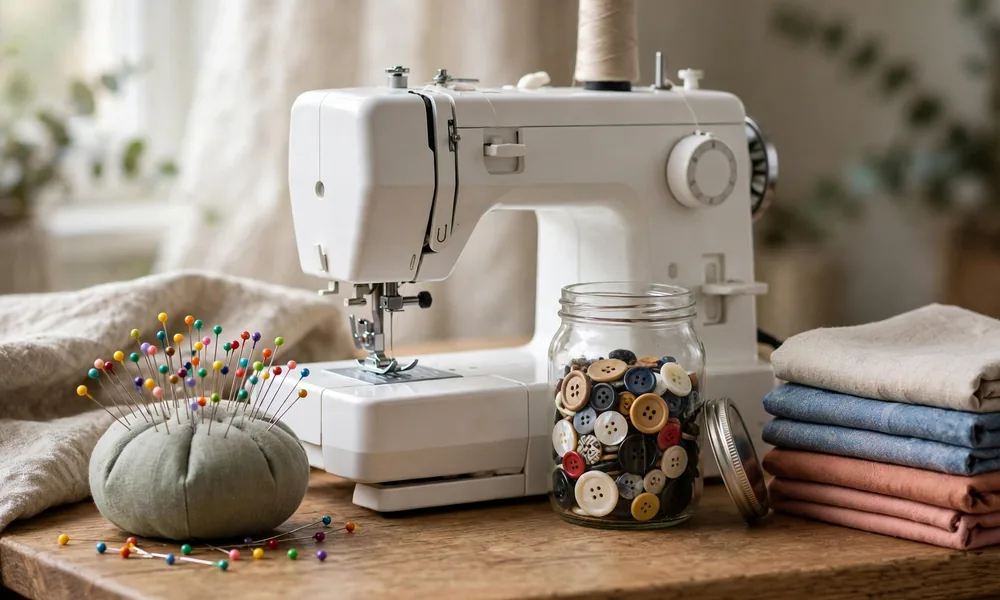
Keep the pincushion where your pins are used, not where they are stored. That means beside the sewing machine, or beside your chair if you sew by hand, within easy reach of the hand that does not hold the needle. A pincushion in a drawer is a pincushion you will not use, and pins will end up loose on the table instead. If you sew in more than one place, keep a pincushion in each: one by the machine and one by the cutting table.
Count your pins. Put a known number of pins in the cushion at the start of a session, and count them back at the end. If one is missing, stop and find it before you move on. A magnet will find a pin on a wooden floor in seconds. On carpet, run a strong magnet slowly over the area, and check the fabric itself before it goes into the machine.
Pincushions for Different Kinds of Sewing
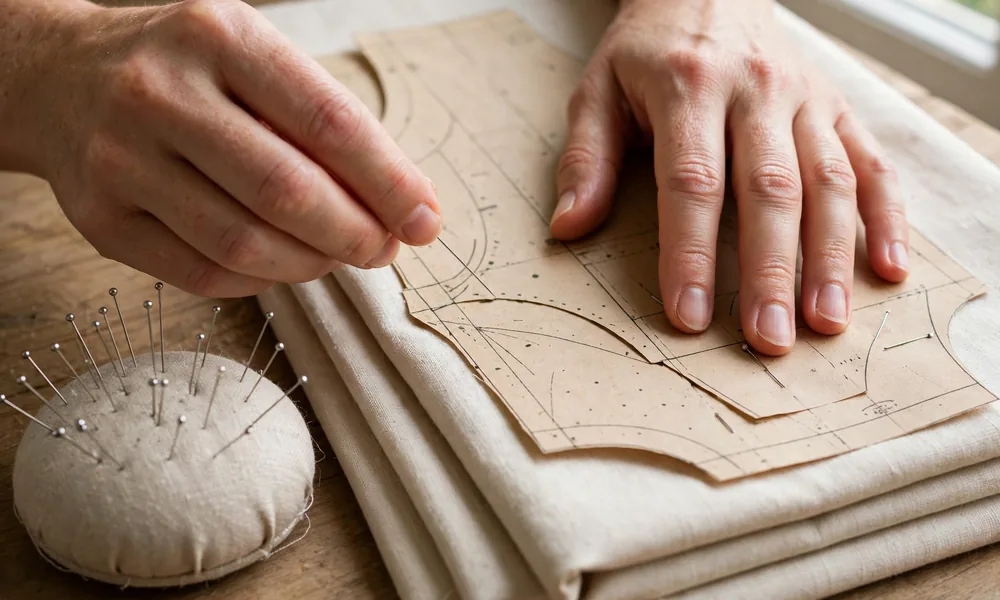
The best pincushion depends on the sewing you actually do, and the wrong choice is the most common reason a pincushion ends up unused.
Quilting and Patchwork
Quilting uses more pins than any other kind of sewing, and the pins are longer and finer. A magnetic dish suits this work best, because you can pick up and put down dozens of pins quickly while layering the quilt sandwich, and the magnet catches the ones you drop. Many quilters keep a tomato beside the dish for pins that need sorting by length, and the needle matters just as much when the layers get thick: our guide to sewing needles that glide through every fabric explains how to match it.
Dressmaking and Fitting
Dressmaking is where the wrist pincushion earns its place. When you are pinning a hem on a person or a dress form, you need both hands free and the pins within reach of your fingers, not on a table behind you. A wrist cushion holds enough pins for a fitting. On the cutting table, a heavy tomato is better, because you are working flat.
Repairs, Hems, and Everyday Mending
Repair work needs few pins, but it needs them ready. A small tomato pincushion by the chair is enough for most mending, and it keeps the pins out of the way of children and pets between sessions. For repairs, the pincushion is often part of a kit, and our guide to sewing kits that cover every quick fix shows what else belongs in that drawer. Put the pins back in the cushion when you finish, every time.
What Makes a Good Pincushion, and What to Avoid
A good pincushion is heavy for its size, firmly stuffed, and stable on the table. Pins should go in with a little resistance, stand upright, and come out cleanly. The fabric cover should be tightly woven, so pin holes do not grow into tears, and the base should be flat, so the cushion does not rock. The worst pincushions are the ones that look charming and fail in use: too light to stay put, too loosely stuffed to hold a pin upright, or made of a loose weave that falls apart after a month of pins. Price is a poor guide: a good tomato pincushion costs little, and what matters is the weight, the stuffing, and the base.
Looking After Your Pins and Pincushion
Pins last longer when they are kept clean, dry, and sharp. The emery strawberry on a tomato pincushion is there for a reason: push a pin in and out of it a few times, and it will come out cleaner and sharper. Throw away any pin that is bent, blunt, or rusty, because a bad pin snags fabric and can stain pale cloth. Keep the pincushion dry and out of direct sunlight, which fades the cover. Replace a pincushion when pins start sinking too deep to reach, or when the cover wears thin, because a pincushion that hides your pins is worse than no pincushion at all.
Buying Checklist
- Pick the pincushion up and check the weight: it should feel heavier than it looks.
- Push a pin in and pull it out one-handed: the cushion should stay put on the table.
- Check the stuffing is firm, so pins stand upright instead of flopping sideways.
- Look for a flat, stable base that does not rock on a hard surface.
- Match the type to your sewing: tomato for general work, magnetic for quilting, wrist for fitting.
- Buy a second one for the cutting table, because a pincushion you have to fetch will not get used.
Frequently Asked Questions
What is the strawberry on a tomato pincushion for?
It is filled with emery, a fine abrasive, and it sharpens and cleans pins. Push a pin in and out a few times, and it will come out sharper and free of rust. It is the most useful part of the pincushion.
Are magnetic pin dishes better than pincushions?
For speed, yes, especially for quilting and machine sewing, where you handle dozens of pins at once. For safety, no: a pincushion holds pins upright with the points buried. Many sewers keep both.
How many pins should a pincushion hold?
A tomato pincushion holds forty or fifty pins, and a wrist cushion holds about a dozen. More than that, and the pins crowd each other and become hard to pull out one at a time. Keep the rest in a pin box, and refill the cushion as you use them.
Can I make my own pincushion?
Yes, and it is a good first sewing project. Use a tightly woven fabric, stuff it firmly, and add weight in the base, such as steel wool or a small bag of rice. A homemade pincushion works just as well as a shop-bought one, as long as it is heavy enough to stay put.
How do I find a lost pin?
Stop and search before you move on. On a hard floor, a magnet on a stick will find it in seconds. On carpet, run a strong magnet slowly over the area, and check the fabric before anything goes into the washing machine.
How long does a pincushion last?
A well-made tomato pincushion lasts for years, and the stuffing wears out before the cover does. Replace it when pins sink too deep to reach, or when the cover wears thin. A magnetic dish lasts indefinitely.
The Bottom Line
The best pincushion is heavy enough to stay put, firmly stuffed enough to hold pins upright, and matched to the sewing you actually do: tomato for general work, magnetic for quilting, wrist for fitting. Keep it beside your hand and count your pins back at the end of the session.


