The best bike covers in 2026 do a simple job that matters more than most riders expect: they keep rain, sun, dust and bird droppings off a bicycle that spends hours, days or whole winters outside. A bike left uncovered in a wet autumn will rust at the chain and fade at the saddle, and fixing that costs more than a decent cover.
A cover is not the same thing as a lock, a rack or a stand, and it does not replace any of them. A lock stops theft, a rack carries the bike somewhere else, and a stand holds it upright while you work on it. A cover does one thing only: it shields a parked bicycle from the weather.
Key Takeaways
- Fit decides almost everything: a cover cut for your bike size stays put in wind, while a loose universal cover flaps and scratches paint.
- Waterproof fabric must still breathe, or trapped damp will rust the chain and corrode bolts underneath the cover.
- A soft inner lining matters on painted frames, and a rough plastic sheet can do more harm than leaving the bike bare.
- Outdoor covers need UV protection, taped seams and strong straps; indoor covers mainly need softness and dust-proofing.
- Measure your bike before you order, including the handlebars and any basket or child seat, because most returns come from wrong sizing.
What Makes a Bike Cover Good or Bad
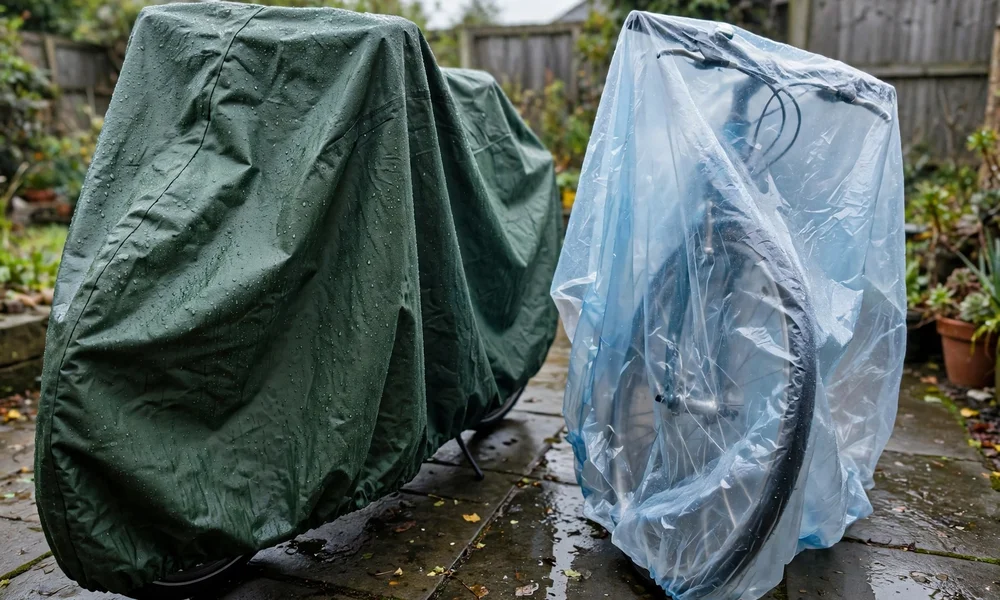
The first test is the fabric. A good outdoor cover uses several layers: a tough waterproof outer face that shrugs off rain, a breathable membrane in the middle that lets trapped moisture escape, and a soft lining inside that cushions paint and chrome. The outer face should feel heavy and flexible, not stiff and crackly, and the seams should be double-stitched and taped so water cannot creep through.
A bad cover is usually a single layer of cheap shiny plastic. It keeps the rain out but also keeps the damp in, so condensation forms underneath and sits there for days. On a bike parked for weeks, that damp breeds rust on the chain, dulls the rims and starts corrosion around bolts and spokes. The plastic tears easily, goes brittle in the sun, and flaps in the wind until it works loose.
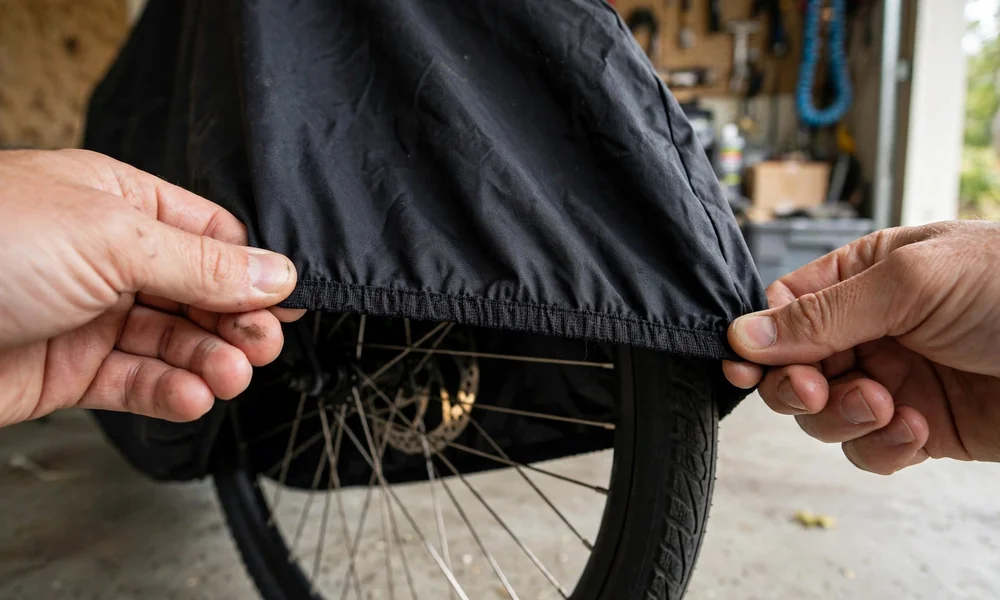
The second test is the fit. The best covers are cut for a narrow size range, with an elasticated hem that hugs the wheels and straps underneath that stop the cover lifting in a gust. A loose cover billows, the fabric flaps against the frame hundreds of times a day, and every flap drags trapped grit across the paint like sandpaper. After a month under a flapping cover, a frame can look worse than if the bike had been left uncovered.
Check the details before you buy. A good cover has a lock hole or a reinforced eyelet so you can pass a lock through the cover and the frame together, which matters if the bike sits outside overnight. Ventilation panels near the top help damp escape.
The Main Types of Bike Cover
Full covers are the most common choice, covering the whole bicycle from the handlebars to the wheels. They suit bikes stored outside for days or weeks, in a garden, on a balcony or at the side of a house. A good full cover reaches the ground, so rain cannot splash up onto the chain, and it has room for the handlebars without stretching tight over the brake levers. Check the stated dimensions if your bike has a basket, a child seat or wide flat bars.
Half covers protect the saddle, handlebars and upper frame while leaving the wheels exposed. They are lighter, quicker to put on and easier to carry, which makes them popular with commuters who park at a station all day. They stop the saddle soaking through and keep rain off the gears, but they do nothing for the wheels and the chain, so they are a compromise for winter storage.
Indoor covers are made from soft, breathable fabric rather than waterproof material, and their job is to keep dust off a bike stored in a hallway, a spare room or a flat. A waterproof cover used indoors can trap damp, so buy the right type for where the bike actually lives.
Heavy-duty covers use thicker fabric, stronger straps and reinforced corners, and they are built for bikes left outside all winter, for coastal areas where salt air speeds up rust, and for electric bikes, which are heavier and cost more to repair. For a bike worth several hundred pounds, the extra cost is worth it.
Outdoor or Indoor: Which Cover Suits You?
Start with where the bike sleeps. If it lives outside, even under a porch roof, buy an outdoor cover with waterproof fabric, UV protection and straps, because rain that blows sideways will still reach it and morning dew will settle on it every day. If the bike lives in a garage or a shed, a lighter outdoor cover or a good indoor cover may be enough, because the building already blocks the rain and the wind.
Think about how often you ride. A daily commuter needs a cover that goes on and off in under a minute, with a hem that pulls tight with one hand. A bike that sits untouched for months needs the best protection you can buy, with ventilation to stop condensation building up. Electric bikes deserve care too: let the motor cool before covering it, never charge a battery under a cover, and pair the cover with one of the best bike locks for overnight security.
How to Measure Your Bike for a Cover
Measuring takes two minutes and saves a return. Measure the length from the front tyre to the back tyre, the height from the ground to the top of the handlebars, and the width across the handlebars at their widest point. Compare the three numbers with the cover’s stated dimensions, not with a size label like medium or large, because those labels mean different things from one maker to another. If your bike falls between two sizes, buy the larger one: a cover that is slightly loose can be pulled tight with straps, but one that is too small will stretch, tear and leave the wheels exposed.
Do not forget the extras. A front basket adds length and height, a child seat adds bulk at the back, and mudguards and pannier racks change the shape a cover has to fit over. The same applies to a bike on a rack: a cover sized for the bike alone will not fit a bike mounted on a car. Our guide to bike racks explains how to carry a bike safely, while a cover is for a bike that is parked, not travelling.
Bike Covers Compared
The table below sums up the main choices, so you can match the cover to the way you actually store your bike.
| Type | Best for | Weather protection | Typical price |
|---|---|---|---|
| Full outdoor cover | Bikes stored outside for days or weeks | High, rain and UV | Mid-range |
| Half cover | Commuters parking all day | Medium, saddle and gears | Low |
| Indoor cover | Bikes kept in a hallway or flat | Low, dust only | Low |
| Heavy-duty cover | Winter storage, coastal areas, e-bikes | Very high | High |
| Travel cover | Touring and carrying in a pannier | Light, showers only | Low to mid-range |
Mistakes That Ruin a Good Cover
The most common mistake is covering a wet bike. A cover traps whatever moisture is already on the frame, the chain and the brakes, and a wet bike under a cover stays wet for days, so dry the bike with a cloth first and wipe the chain before covering it. The second mistake is covering a dirty bike: grit trapped between the cover and the paint will scratch the frame every time the wind moves the fabric. The third mistake is buying on price alone, because the cheapest covers are almost always a single layer of thin plastic that fails within a season. The fourth mistake is forgetting the lock: a covered bike with no lock is an easy target, because the cover hides the bike and tells a thief that something worth stealing is underneath.
Looking After Your Cover
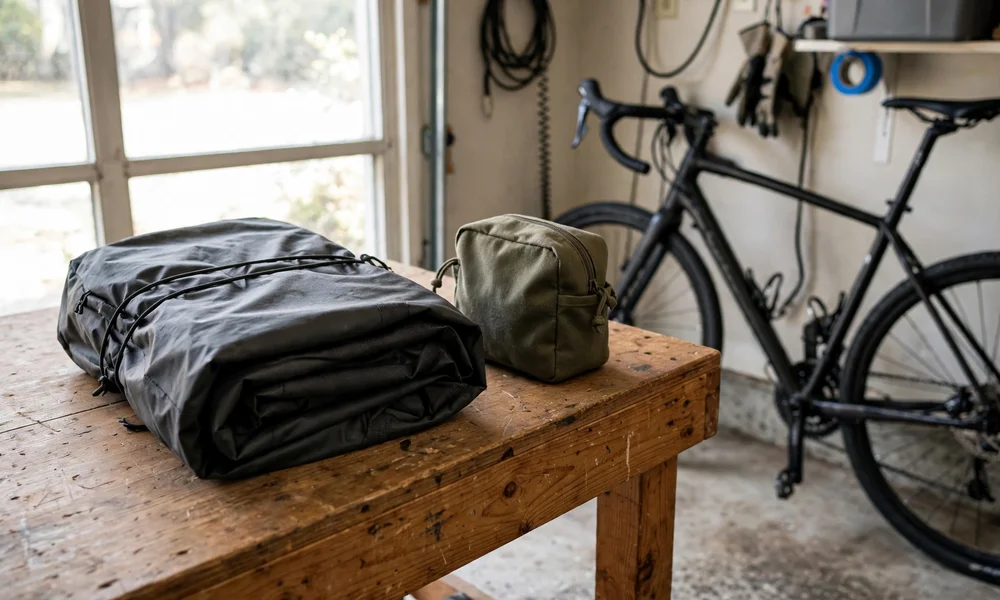
A cover lasts longer if you look after it. Shake it out after rain, hang it up to dry before folding it away, and never fold a wet cover into its bag, because mildew will grow in the folds. Wash it occasionally with mild soap and cold water, and check the seams and the straps every few months. Replace the cover when the fabric goes thin, the waterproof coating peels, or the hem loses its stretch. Keep it by the door if you ride daily, and check the tyres before you set off, since a covered bike can hide a slow puncture. Our guide to the best bike pumps will help you keep them at the right pressure.
Before You Buy Checklist
- Measure your bike: length, height to the handlebars, and width across the bars.
- Decide where the bike sleeps: outside needs a waterproof outdoor cover, inside needs a soft dust cover.
- Check the fabric: layered, breathable and waterproof beats a single sheet of thin plastic.
- Look for taped seams, an elasticated hem, straps underneath and a lock hole.
- Make sure the lining is soft, so it protects paint rather than scratching it.
- Confirm the cover fits with your basket, child seat or pannier rack still attached.
Frequently Asked Questions
Do bike covers really stop rust?
Yes, a good breathable cover slows rust a great deal by keeping rain off the chain and the spokes, but it cannot stop rust on its own. A wet bike covered while still damp will rust underneath, so dry the bike first and keep the chain oiled.
Can I use a car cover on a bicycle?
No, a car cover is cut for a car body, not a bicycle, and it will not fit a bike properly. It is far too large, it will pool water, flap in the wind and drag on the ground. Car covers and bicycle covers are different products for different shapes.
Will a cover fit a bike with a child seat?
Only if the cover is sized for it. Measure the bike with the seat fitted and compare the numbers with the cover’s dimensions, or buy the next size up. A cover stretched tight over a child seat will tear at the seams and leave the back wheel exposed.
Should I cover my bike in a garage?
A light indoor cover is worth it in a garage, because it keeps dust off the bike and stops it marking the walls. A heavy waterproof cover is not needed indoors and can trap damp, so choose a breathable dust cover instead.
How long does a bike cover last?
A good mid-range cover usually lasts two to four years of regular use. Cheap thin covers often fail within a single winter, so replace yours when the fabric thins or the hem no longer holds tight.
Can a bike cover damage paint?
Yes, a loose cover with a rough lining can scratch paint as it flaps in the wind, especially if grit is trapped underneath. A well-fitting cover with a soft lining, used on a clean dry bike, protects paint rather than harming it.
Bottom Line
The best bike covers in 2026 are the ones that fit your bike, breathe well enough to let damp escape, and survive more than one winter without tearing. Measure before you order, buy a layered waterproof cover for outdoor storage and a soft dust cover for indoors, and dry the bike before you cover it. Do that, and a modest cover will save you far more than it costs in rust, faded paint and replacement parts.