
What Is a Storage Cube? The Best Storage Cubes for Every Room in 2026
A storage cube is a square box, usually made of fabric, that slides into one compartment of a cube shelving unit and turns an open hole into a drawer you can pull out. The best storage cubes of 2026 do that one job well: they hide the mess, they fit the shelf exactly, and they survive being pulled out and pushed back in several times a day. Get the size wrong by a single centimetre and the cube either jams in the opening or sags in a visible gap, so this guide starts with measuring and only then talks about colours and materials.
Key Takeaways
- Measure the inside of one compartment first: most cube units take an 11-inch or 13-inch cube, and a cube one centimetre too big will not fit at all.
- Fabric cubes with a stiffened frame hold their shape best; soft unframed cubes sag when half empty and look tired within months.
- One cube, one category, with a label on the front, is the only system that stays tidy; mixed cubes become junk drawers with handles.
- Rigid plastic and wire cubes suit garages, pantries and heavy things, while fabric cubes belong in rooms people actually live in.
- Buy cubes in sets of the same size and colour for one unit, and keep a spare or two, because a single odd cube breaks the whole look.
What a Storage Cube Actually Is
A storage cube is not the same thing as a storage box, even though the two get mixed up constantly. A box is a container that sits anywhere: on a shelf, under a bed, on top of a wardrobe. A cube is a container built to a standard square size so it fits a cube shelving unit, and that standard size is the whole point. The unit gives the cube its structure, and the cube gives the unit its tidiness. Our guide to the best storage bins of 2026 covers the wider family of containers, and the same measure-first rule applies there, but with cubes there is no fudging it: the fit either works or it does not.
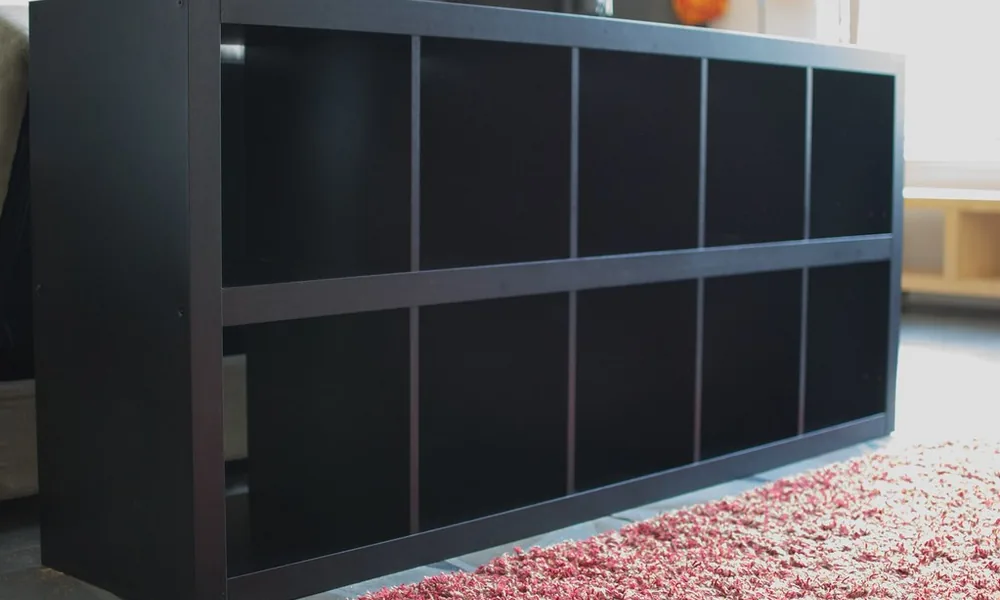
An empty cube unit shows the sizing rule plainly: every compartment is the same square, and every cube must match it.
The Main Types of Storage Cube
Every storage cube on the market is a variation on a few basic ideas, and once you know them you can match the cube to the room instead of buying a matching set that solves nothing.
Fabric cubes with a stiffened frame
This is the classic storage cube, and the one most homes need. A fabric cube is a square of canvas, cotton or polyester with a rigid insert in the base and walls, a handle on the front, and sometimes a label holder. The stiffening is what separates a good cube from a bad one: a well-made fabric cube keeps its square shape when empty, slides like a drawer, and still looks neat when it holds only a couple of jumpers. A cheap unframed cube collapses when you pull it out and sags at the front when half full. Fabric cubes fold flat when empty, which makes spares easy to store, and they come in every colour, so you can colour-code a room.
Rigid plastic cubes
Rigid cubes are hard plastic boxes built to cube-unit sizes, and they suit the jobs fabric cannot handle. They hold heavy things without bowing, they wipe clean, and they do not absorb smells, which makes them right for a garage, a utility room or a craft cupboard. Their weakness is looks: a row of hard plastic cubes reads as workshop storage, not living-room furniture, so keep them behind a cupboard door. Clear rigid cubes have one extra advantage: you can see what is inside without pulling the cube out.
Wire and metal cubes
Wire cubes are open metal grids, sometimes sold as stackable systems that clip together into a unit of their own, and sometimes as inserts that slide into a wooden cube shelf. They let air move around the contents, which keeps stored blankets fresh, and they let you see everything at a glance. They suit shoes, sports kit and children’s toys, where visibility saves time. Their weakness is small things: anything smaller than the grid falls through, so line a wire cube with a cloth if you store small items in it.
Storage Cubes Compared
| Cube type | Best for | Watch out for | Price in 2026 |
|---|---|---|---|
| Fabric, stiffened frame | Living room, bedroom, kids’ rooms | Sagging if unframed; stains | Low to mid |
| Rigid plastic | Garage, utility room, heavy items | Looks industrial; can crack | Low to mid |
| Wire and metal | Shoes, sports kit, toys | Small items fall through | Low to mid |
| Stackable organiser | Renters, changing needs | Wobble; needs wall anchoring | Low to mid |
| Leather-look cube | Hallway, home office display | Scuffs; higher price | Mid to high |
| Open-front cube | Daily-use items, deep shelves | Dust on open contents | Low to mid |
How to Size a Storage Cube
Sizing is a five-minute job that saves a return trip to the shop. Measure the inside width, height and depth of one compartment, not the outside of the unit, and write the numbers down. Then subtract about one centimetre from the width and height: that gap is the clearance that lets the cube slide in and out without scraping the wood. The standard sizes to look for are 11 inches (about 28 centimetres) and 13 inches (about 33 centimetres), but do not trust the label on the unit: measure the opening itself, because two units sold as the same size can differ by a centimetre.
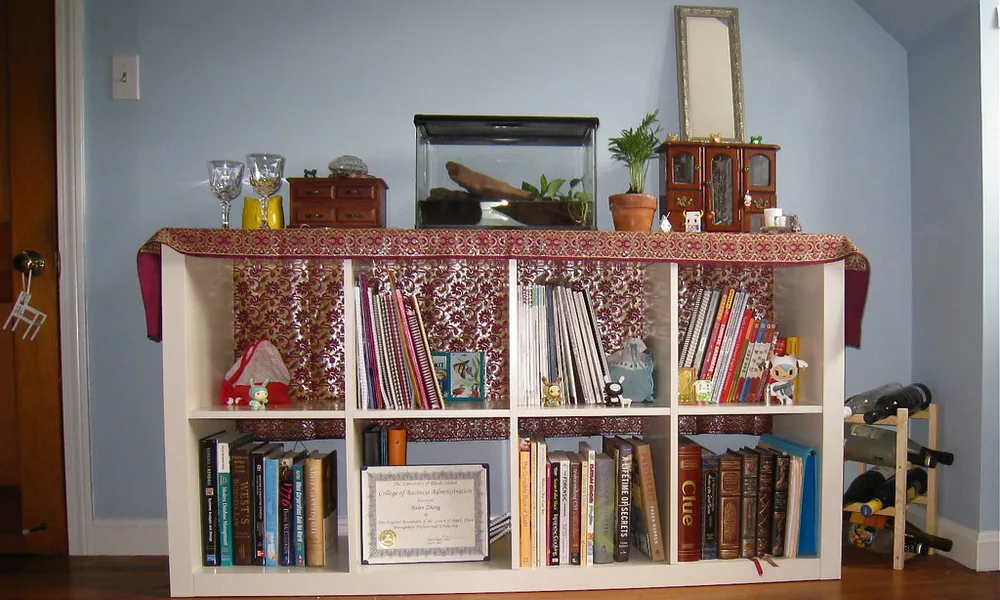
A cube unit earns its keep when some compartments hold cubes and others stay open for books and display.
Storage Cubes Room by Room
Cubes work differently in every room, and the best cube for one room is often the wrong cube for another.
The living room
In the living room, cubes hide the things that make a room look untidy without being used every hour: spare cables, board games, magazines, the dog’s toys, the blanket that lives on the sofa. Fabric cubes in a colour that matches the room are the right choice here, because the cube itself is on show. Keep the fronts plain and skip busy patterns, which fight with the rest of the room. Our guide to the best storage baskets of 2026 covers the woven alternative, which adds warmth where a fabric cube looks too plain.
The children’s room
In a children’s room, cubes are at their best and their most abused. A child can pull a cube out, tip the toys onto the floor, and push the cube back in, which is exactly the tidy-up routine a cube system is built for. Choose cubes with a strong handle a small hand can grip, a fabric that survives a wash, and no sharp rigid edges. Colour-code by toy type rather than by child, and anchor the unit to the wall: a cube unit full of toys is exactly the height a toddler climbs.
The hallway and entryway
In the hallway, cubes hold the things every household loses: gloves, hats, scarves, dog leads, spare keys, the reusable bags. An open-front cube works well here, because a lid adds a step every single time you come through the door. Put one cube per person by the door and the morning search for a missing glove mostly disappears.
The home office
In the home office, cubes hold printer paper, cables, chargers and stationery. Rigid or wire cubes suit this room better than fabric, because office things are heavy and sharp-edged, and a fabric cube full of cables sags and tears. Label the front of every cube, because an office cube with no label becomes a junk drawer within a month. Our guide to the best storage boxes of 2026 looks at lidded boxes for the archive material that leaves the office once a year: cubes for the things you reach for weekly, boxes for the things you reach for yearly.
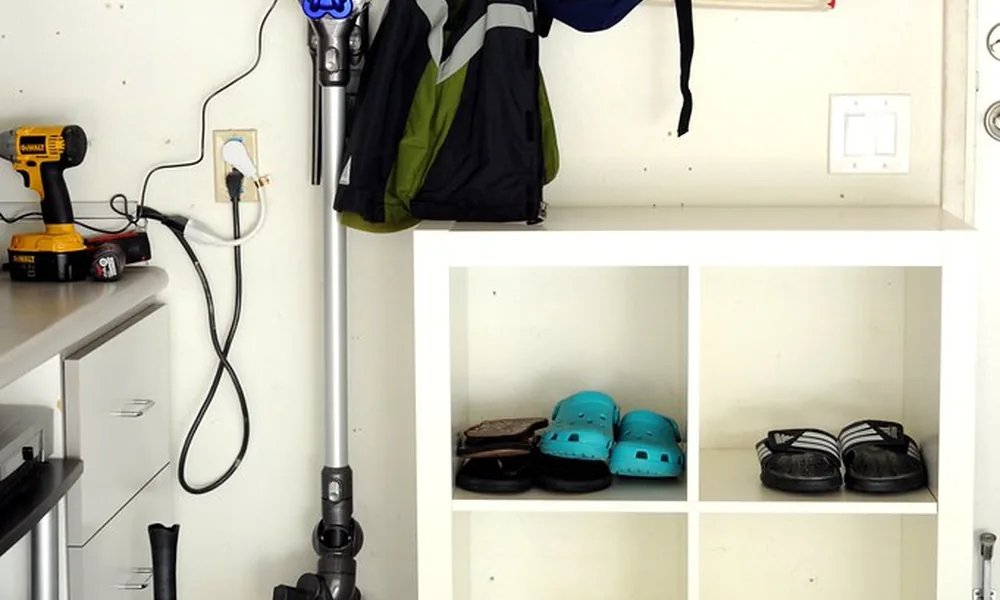
By the front door, a small cube unit keeps shoes, bags and outdoor kit off the floor and in one place.
The Mistakes That Ruin a Cube System
The first mistake is buying cubes before measuring, which is also the most common. The second is buying one size for the whole house: a cube that fits the living-room unit will not necessarily fit the bedroom unit. The third is mixing colours and makers across one unit, which looks untidy even when the cubes are full of perfectly organised things. The fourth is overfilling: a fabric cube stuffed past its top edge cannot slide back in without a shove, and the shove is what tears the handle off. The fifth is skipping labels: a cube without a label is a box you have to open to identify, and a system you have to open is a system nobody uses.
Keeping Storage Cubes Clean and Working
Fabric cubes need a vacuum with a brush attachment every month or two, and a sponge with warm soapy water for marks. Most fabric cubes are not machine washable, because the stiffening insert warps, so check the label before you put one in the machine. Rigid cubes wipe clean with a damp cloth. Whatever the material, empty each cube twice a year: cubes are so good at hiding things that they hide the things you no longer need.
Storage Cube Checklist
- Measure one compartment inside, and subtract one centimetre for sliding clearance.
- Test a single cube in the unit before ordering the full set.
- Choose stiffened fabric for living rooms and bedrooms, rigid or wire for garages and offices.
- Give every cube one category and a label on the front.
- Put heavy cubes in the bottom row and anchor tall units to the wall.
- Leave a finger-width of space at the top of each cube so it slides back in easily.
Storage Cubes: Frequently Asked Questions
What size storage cube do I need?
Measure the inside of one compartment and subtract about one centimetre for clearance. Most units take an 11-inch (28 cm) or 13-inch (33 cm) cube, but always measure the opening itself rather than trusting the unit’s label.
Are fabric storage cubes washable?
Most are not machine washable, because the stiffening insert can warp. Vacuum them with a brush attachment and sponge-clean marks with warm soapy water, and check the care label before washing.
Can storage cubes hold heavy things?
Fabric cubes hold folded clothes, toys and craft supplies well, but for books, tools or files use rigid plastic or wire cubes, and keep the heaviest cubes in the bottom row of the unit.
Do storage cubes fit any cube shelving unit?
Only if the sizes match. Cube units are built around 11-inch or 13-inch openings, and a cube one centimetre too big will not fit at all, so measure before you buy.
How many storage cubes do I need?
Count the compartments you want hidden rather than the compartments in the unit. A nine-cube unit with three compartments left open for books needs six cubes, not nine.
Are storage cubes better than storage bins?
They solve different problems. Cubes fit cube shelving units and work like drawers, while bins sit on any shelf or under a bed. Many homes need both, with cubes in the living room and bins in the garage and loft.
The Bottom Line
Storage cubes work when they fit the unit exactly, hold one category each, and get used every day without a struggle. Measure first, buy one cube to test the fit, choose stiffened fabric for the rooms people live in and rigid cubes for the heavy jobs, and label every front. Do that, and a cube unit stops being a display shelf for clutter and starts being the tidiest piece of furniture in the house.


