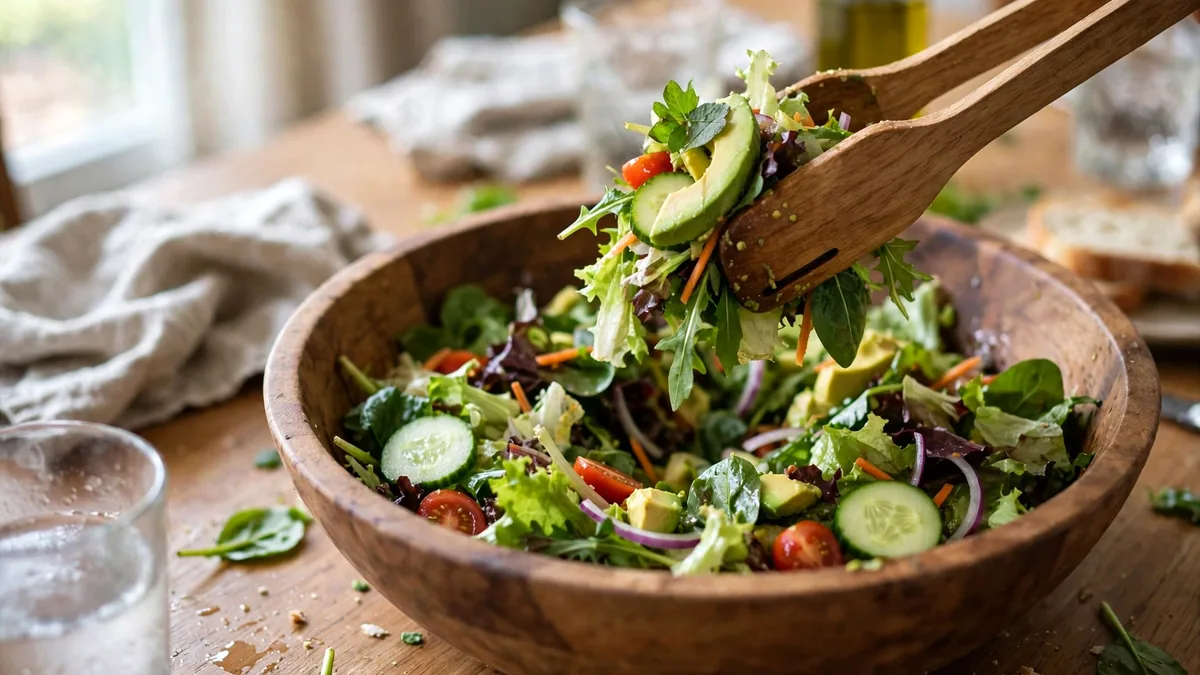
Salad tongs turn a bowl of salad from a pile of leaves into a dish people actually serve and eat. A good pair lifts a generous portion, tosses the leaves without bruising them, and sets the salad down neatly on the plate, dressing and all. A bad pair drops half the salad back in the bowl, crushes the leaves, or slides off the bowl. This guide explains what salad tongs are, how the main types work, and how to choose a pair that serves well in 2026.
Salad is served at the table, and that changes what the tool needs to do. Cooking tongs live at the stove, where heat resistance and a strong grip matter most. Salad tongs live on the dining table, where the food is light, delicate and already dressed, and the tool needs to be gentle and easy for any guest to use.
Key Takeaways
- Salad tongs should lift and toss without bruising leaves, so wide, gentle tips matter more than a crushing grip.
- Fork-and-spoon tongs suit most tables best, while scissor tongs give the most control for large salads.
- Wood tongs are kind to leaves and look good on the table, while steel tongs last longest and go in the dishwasher.
- Buy tongs around 25 to 30 centimetres long, reaching the bottom of the bowl without your knuckles touching the salad.
- A good pair costs very little, so buy on tip shape, balance and feel rather than on extra features.
What Salad Tongs Actually Do
Salad tongs have two jobs: tossing a salad so the dressing coats every leaf, and lifting portions from the bowl onto plates. Both need the same thing, a grip that is firm enough to hold the food but gentle enough not to crush it. A leaf of lettuce bruises easily, and a bruised leaf wilts, darkens and tastes bitter. Salad tongs solve this with wide tips that spread the pressure across a larger area, instead of the narrow, pointed tips of cooking tongs that concentrate it in one spot.
Salad tongs are easily confused with the general tongs in every kitchen drawer. Our guide to tongs covers the full range, from twelve-inch stove tongs to long grill tongs, and includes serving tongs as one of six types. That guide is about cooking: grip on slippery chicken, heat resistance and spring strength over a hot pan. Salad tongs are a narrower tool for a narrower job. They never go near heat, they never lift anything heavy, and their whole design is about serving delicate food at the table without damaging it.
The other neighbour is the serving spoon. A serving spoon moves food from the dish to the plate in a single scoop, and it is the right tool for rice, vegetables and stews. It is a poor tool for tossing a salad, because a spoon stirs rather than lifts, and stirring is what bruises leaves. Our guide to serving spoons explains the deep-bowl design that makes a spoon good at its job. Salad tongs do the opposite job: they lift from underneath and turn the salad over, coating the leaves without pressing them down. The two tools belong together on a buffet table, but they are not interchangeable.
The Main Types of Salad Tongs
Most salad tongs fall into three designs, and the right one depends on how you serve salad.
Fork-and-Spoon Tongs
Fork-and-spoon tongs are the classic design: one side is a small fork, the other a small spoon, joined at the top. The spoon side cradles the salad while the fork side holds it in place, so you can lift a neat portion and set it down without it sliding apart. This is the best choice for most tables, because it handles everything from leafy salads to pasta salad. Its only weakness is tossing: a fork and spoon turn a salad over more slowly than a scissor design.
Scissor Tongs
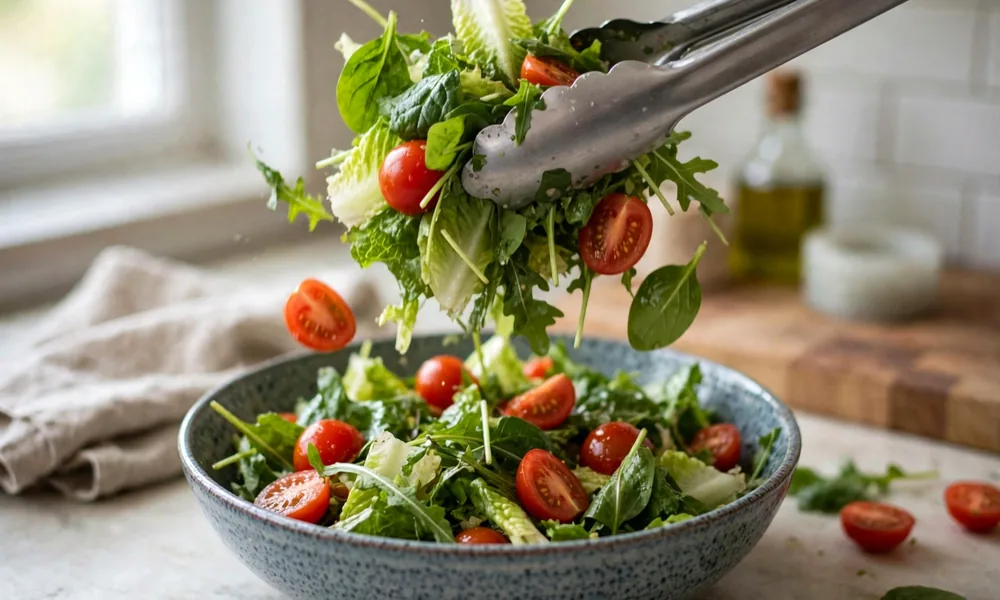
Scissor tongs work like a pair of scissors, with two arms that pivot in the middle and wide, flat tips at the end. They give the most control for tossing, because the pivot lets you open the tips wide, slide them under the salad, and close them gently around a portion. They are the best choice for large salads, where you need to turn a big bowlful over several times to coat it evenly. The trade-off is that a cheap pair can be stiff or loose at the pivot.
Claw and Pincer Tongs
Claw tongs have broad, curved tips shaped like a small scoop, designed to cradle a portion of salad from underneath. They are the gentlest design of all, because the wide curve spreads the pressure across the whole portion, and they are the right choice for very delicate salads with soft leaves or fragile herbs. They are less versatile than fork-and-spoon tongs, because the broad tips struggle with small ingredients like peas or cherry tomatoes.
Salad Tongs Compared
| Salad Tongs | Best For | Tips | Why They Stand Out |
|---|---|---|---|
| Fork-and-spoon tongs | Everyday tables | Fork and spoon | Easy to use, handles most salads well |
| Scissor tongs | Large salads, tossing | Wide flat tips | Most control for turning a big bowl over |
| Claw tongs | Delicate salads | Broad curved tips | Gentlest grip, kind to soft leaves |
Fork-and-spoon tongs win for most people: they do the everyday job well, cost very little, and every guest knows how to use them. Scissor tongs are the better second buy if you regularly toss large salads for a crowd.
How to Choose Good Salad Tongs
Start with the tips. Their shape decides whether the salad arrives on the plate looking fresh or looking bruised. Wide tips spread the pressure; narrow tips concentrate it. Fork tines should be short and rounded, because long tines spear leaves instead of lifting them. Spoon bowls should be shallow and broad, so they cradle a portion without crushing it. Press the tips together in the shop if you can: they should meet evenly, with no gap that lets food slip through.
Next, look at the length. Salad tongs around 25 to 30 centimetres long suit most bowls, because they reach the bottom without your knuckles touching the salad, and they are short enough to rest across the bowl. Shorter tongs feel cramped in a deep bowl, and longer ones are unwieldy on a small table.
Material matters more than brand. Wood and bamboo are the kindest materials for leaves, because they are warm, light and slightly soft, and they look good on a wooden table. They need hand washing and occasional oiling, and they stain with dressing over time. Stainless steel is the most durable choice: it survives the dishwasher, does not stain, and lasts for years, but it is heavier and noisier against a bowl. Silicone-tipped tongs sit in the middle: gentle, easy to clean and quiet, but the tips can stain with tomato and turmeric.
Check the balance and the spring. Hold the tongs by their middle and they should sit level, not tip toward one end. A well-balanced pair feels light even when it is full, and it will not twist in your hand when you lift a heavy portion of pasta salad. The spring should open smoothly and close with a firm, even pressure, not a stiff snap. Tongs that spring open too hard will flick dressing across the table.
Using Salad Tongs Properly
Toss before you serve, not after: just before the salad goes on the table, when the dressing is freshly added and the leaves are still crisp. Slide the tongs down the side of the bowl, under the salad, and lift the bottom leaves up and over the top, turning the salad rather than stirring it. Repeat three or four times, and the dressing will coat every leaf without bruising them.
Serve with the tongs resting on the bowl, not in it. A pair left lying in the salad gets coated in dressing and makes a mess of the tablecloth when the next guest picks it up. Rest the tongs across the rim, tips up, or on a small plate beside it. If your tongs lock, use it between servings, because locked tongs stay closed.
Match the tongs to the salad. Leafy green salads need wide, gentle tips. Pasta and grain salads need a firmer grip, because the food is heavier and slipperier. Fruit salads need a spoon side that cradles without squeezing. A single pair of fork-and-spoon tongs handles all three reasonably well. Wash the tongs as soon as the meal is over: dressing dries fast.
Pairing Tongs With the Bowl
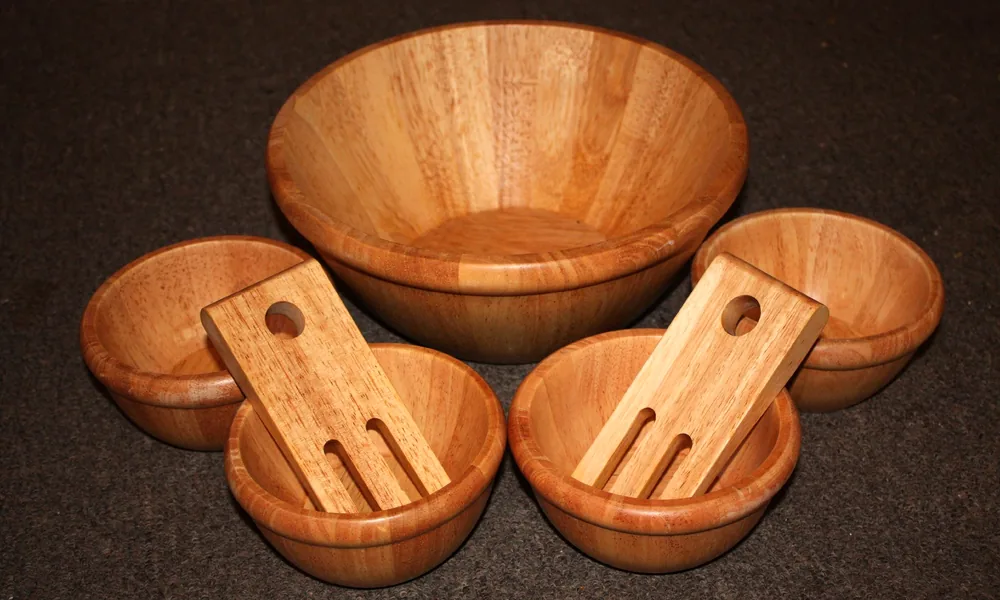
The bowl matters as much as the tongs. A wide, gently sloped bowl tosses cleanly, because the tongs can slide underneath the leaves and turn them over without pushing them over the edge, while a tall, narrow bowl traps dressing at the bottom and forces you to stir, which bruises the leaves. Our guide to salad bowls explains why width matters more than depth, and why a bowl of at least five litres is the right size for a crowd. Wooden tongs suit wooden bowls, and steel tongs suit ceramic and glass bowls.
Cleaning, Storage and Care
Most salad tongs are slim enough to fit in a drawer. Stainless steel tongs go in the dishwasher every night. Wooden tongs need hand washing, drying straight away, and a rub of food-safe oil once a month, or they will dry out and stain. Check the hinge before each summer: a stiff pivot will crush leaves, and a slack spring will not close evenly. If the tips have bent, replace the pair.
Salad Tongs Checklist
- Wide, gentle tips that spread pressure instead of concentrating it.
- Fork tines short and rounded, spoon bowl shallow and broad, tips meeting evenly.
- Length of 25 to 30 centimetres, reaching the bottom of the bowl.
- Material matched to the table: wood for warmth, steel for durability.
- Balanced in the hand, with a smooth spring that closes firmly.
- Easy to clean, with no corners where dressing can dry and jam the hinge.
Frequently Asked Questions
Are salad tongs different from cooking tongs?
Yes. Cooking tongs are built for heat, heavy food and a strong grip at the stove, while salad tongs are built for delicate food at the table, with wide, gentle tips that do not bruise leaves.
What length of salad tongs should I buy?
Around 25 to 30 centimetres suits most bowls. Shorter tongs feel cramped in a deep bowl, and longer ones are unwieldy on a small table.
Are wooden salad tongs better than steel ones?
Wood is kinder to leaves, quieter against a bowl and warmer to look at, but it needs hand washing and occasional oiling. Steel lasts longer, goes in the dishwasher and does not stain.
How do I toss a salad without bruising the leaves?
Slide the tongs down the side of the bowl, under the salad, and lift the bottom leaves up and over the top, turning the salad rather than stirring it. Repeat three or four times.
Can I use salad tongs for pasta salad?
Yes, and fork-and-spoon tongs are the best choice for it, because the fork side holds the pasta while the spoon side cradles it. Pasta salad is heavier and slipperier than leafy salad, so you need a firmer grip.
Do I need salad servers as well as salad tongs?
No. Servers give the most control and the most traditional feel, but they need two hands and are slower. One good pair of fork-and-spoon tongs does the everyday job faster.
Bottom Line
Salad tongs are a small, cheap tool that makes serving salad better. Buy fork-and-spoon tongs around 25 to 30 centimetres long, with wide, gentle tips that meet evenly, in wood for the look and steel for the dishwasher. Step up to scissor tongs only if you regularly toss large salads for a crowd. Toss by lifting and turning, not by stirring, and your salad will reach the plate looking as fresh as it did in the bowl.


