
Brushes That Miss: The Worst Lawn Sweepers of 2026
The worst lawn sweepers of 2026 are not the oldest tools in the shed or the cheapest ones on the shelf. They are the sweepers that look useful in the garden centre and then wear their owners down: brushes that skip over the leaves, hoppers that fill after one pass and spill on the next, wheels that jam on the first damp patch, or a tow-behind that needs a lawn flatter than a bowling green. This guide ranks the seven worst lawn sweeper types of 2026, by what actually goes wrong, so you can spot the pattern before you buy.
Key takeaways
- A sweeper with a small hopper is the type to avoid first on a big lawn: it fills after one pass and spills when you turn.
- Brush height matters more than engine size: a sweeper with no height adjustment scalps the high spots and misses the dips.
- Wet leaves are the great test of a sweeper: a light machine clogs and smears them instead of lifting them.
- Wheels, hitches and catches are the weak points: plastic wheels crack, hitches bend and catches pop open.
- Check the brush height, the hopper size, the wheels and the spare parts before you buy, and test it on your own leaves, not a dry showroom floor.
How the worst lawn sweepers of 2026 were chosen
Every sweeper below was scored on five measures. Sweeping ability comes first: can the sweeper lift the leaves, clippings and twigs its size and price promise, from a dry lawn to a damp one, without leaving a trail? Brush quality is second, because brushes too stiff skip over debris, too soft fold under it, and unadjustable ones miss the leaves in the dips. Hopper capacity is third: a hopper that fills after one pass turns a quick job into a long one, and one that spills when you turn undoes the pass you finished. Durability is fourth, judged on the wheels, the hitch, the frame and the catches, because a sweeper that cracks a wheel in its first season is disposable. Ease of use is fifth: a height setting you can reach without tools, a hopper you can empty without a fight, and a machine you can turn without dragging it.
Two notes before the list. First, this guide covers lawn sweepers only: machines with rotating brushes that sweep leaves and clippings off the lawn surface and into a hopper. A leaf vacuum is a different machine: it sucks leaves up and shreds them into a bag, as our guide to the worst leaf vacuums of 2026 shows, while a leaf blower only moves the leaves somewhere else. The mower cuts the grass on top, as our guide to the worst lawn mowers of 2026 explains, and the sweeper cleans up what is left lying on it. Second, no single model is named as the worst, because the same bad patterns appear across many brands, and what matters is learning to recognise them for your own lawn.

Comparison table: the worst lawn sweepers of 2026
| Rank | Sweeper type | Main fault | First warning sign |
|---|---|---|---|
| 1 | Narrow tow-behind sweepers with small hoppers | Hopper fills after one pass, then spills | A trail of leaves appears behind the machine |
| 2 | Push sweepers with stiff brushes on thick leaves | Brush skips over the leaves instead of lifting them | You push the same patch twice and it looks untouched |
| 3 | Cheap tow-behind sweepers with plastic wheels | Wheels crack and jam, hitch bends | One wheel stops turning halfway down the lawn |
| 4 | Sweepers with no height adjustment | Brush scalps high spots and misses the dips | The lawn looks striped: clean ridges, dirty hollows |
| 5 | Lightweight sweepers on wet leaves | Leaves mat, clog the brush and fill the hopper with mush | The brush stops turning and the hopper drips |
| 6 | Narrow-width sweepers with a small brush diameter | Too many passes, still misses the edges | The middle is clean and the edges are still covered |
| 7 | Petrol-powered tow-behind sweepers for small lawns | Too much machine, noise and storage for the job | You spend longer starting it than sweeping with it |
The worst lawn sweepers of 2026
1. Narrow tow-behind sweepers with small hoppers: the worst first buy
The narrow tow-behind sweeper with a small hopper tops this list because it fails at the job a gardener actually has. On a lawn with real autumn leaves the hopper fills after a single pass, and the moment it is full the brushes keep turning and the leaves spill out behind the machine. The owner stops, empties the hopper, and fills it again. Buy a hopper sized to your lawn.
2. Push sweepers with stiff brushes on thick leaves: the brush skips the job
The push sweeper with stiff brushes promises a quiet, simple clean-up with no engine and no tow vehicle, and on a thin scatter of dry leaves it works well enough. On a thick carpet of leaves the stiff brushes skip across the top instead of digging underneath, so the leaves stay where they fell. The owner pushes the same patch twice, then three times, with no change. A good push sweeper has firm, flexible brushes and a height setting.
3. Cheap tow-behind sweepers with plastic wheels: the wheels give up first
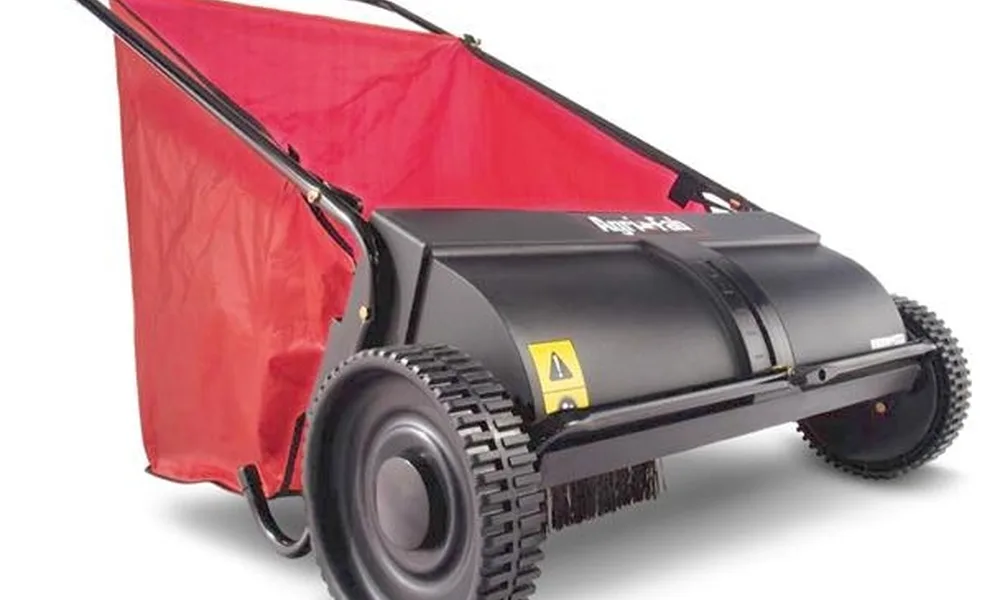
The cheapest tow-behind sweepers look like a bargain and behave like one. The wheels are plastic, the bearings are unsealed and the hitch is thin steel, and the first rough patch of lawn shows the difference. A plastic wheel cracks on a root, the bearing fills with grit and seizes, and the hitch bends the first time the sweeper catches on a dip, so the machine crabs sideways and the brushes miss half the lawn. Buy rubber-tyred wheels, sealed bearings and an adjustable hitch.
4. Sweepers with no height adjustment: clean ridges, dirty hollows
A sweeper with no height adjustment is built for a lawn that does not exist: perfectly flat and free of dips. On a real lawn the brush presses into the high spots and floats above the hollows, so the ridges come up clean and the dips stay covered. The owner finishes the pass and sees stripes on the lawn. The fix is a height lever, set by hand.
5. Lightweight sweepers on wet leaves: the brush stops, the hopper drips
The lightweight sweeper is the most tempting machine in the garden centre: easy to push, easy to store, and light enough to lift into the car. On wet leaves it is the weakest, because wet leaves mat together, cling to the brush and pack into the hopper as mush. The brush stops turning, and the owner ends up raking the leaves the sweeper was bought to collect. Buy a heavier sweeper, and sweep before the rain.

6. Narrow-width sweepers with a small brush diameter: too many passes, still dirty edges
A narrow sweeper with a small brush looks neat and manageable, and on a small courtyard lawn it is. On a garden lawn it turns a twenty-minute job into an hour, because every pass covers so little ground that the owner walks the lawn four times to do what a wider machine does in one. Worse, the small brush cannot reach the edges, so the middle is clean and the borders are still covered. Buy the widest sweeper your gate will take.
7. Petrol-powered tow-behind sweepers for small lawns: too much machine
A petrol-powered tow-behind sweeper never runs out of power, which sounds like the answer to every other problem on this list, until you try one on a small lawn. The engine needs fuel, oil and a pull cord that floods on a cold morning, the noise wakes the neighbours, and the machine is too wide to turn between the beds or fit through the gate. The owner spends longer starting it than sweeping with it. Buy a petrol sweeper only for a lawn too big to walk behind; for anything smaller buy a push or tow-behind model with no engine.
What to avoid when buying a lawn sweeper
The most common sweeper regret is a wrong match: a small hopper bought for a big leaf fall, a light machine bought for wet leaves, or a wide tow-behind bought for a lawn it cannot turn on. Check four things before you pay: the hopper size against your own leaf fall; the brush height setting, and whether you can reach it without tools; the wheel quality and the hitch strength; and the real width against your narrowest strip and gate. The same checks work on other garden machines too, and our guide to the worst leaf blowers of 2026 makes the same point about matching the machine to the lawn, because the traps are the same everywhere.
Checklist: buying a lawn sweeper in 2026
- Count the trees over your lawn and buy a hopper that holds a week of their leaves, not a single pass.
- Choose a sweeper with a height adjustment you can reach without tools, and test it on your own dips.
- Check the wheels are rubber-tyred with sealed bearings, and ask how long a spare wheel takes to arrive.
- Measure your narrowest strip and your gate, and buy a sweeper that fits both with room to turn.
- For wet leaves, buy a heavier sweeper with a wide brush, and sweep before the rain when you can.
- Check the hopper catches hold when it is full, and that it empties without tipping the whole machine.
Frequently asked questions
Is a lawn sweeper better than a rake?
Yes, on a large lawn with a heavy leaf fall, because a sweeper collects as it goes and the hopper holds far more than a barrow of raked leaves. On a small lawn a rake is faster, cheaper and reaches the corners a sweeper cannot.
Can a lawn sweeper handle wet leaves?
Only a heavy one with a wide brush, and even then slowly. Light sweepers clog on wet leaves, so sweep before the rain, or let the leaves dry for a day first.
Do I need a ride-on mower to use a tow-behind sweeper?
No, most tow-behind sweepers hitch to any garden tractor or ride-on mower, and some can be pulled by hand on flat ground. Check the hitch type and the weight first, because a heavy sweeper needs a mower strong enough to pull it.
How big should the hopper be?
Big enough to hold a week of leaves from the trees over your lawn. A hopper that fills after one pass doubles the job, so measure your leaf fall and buy the largest hopper your storage will take.
Is a push sweeper enough for a large lawn?
No, a push sweeper suits a small lawn or a courtyard. On a large lawn it means too many passes and tired arms, so buy a tow-behind and let the mower do the walking.
How do I keep a lawn sweeper working between seasons?
Clean the brushes after every use, empty the hopper and leave it open to dry, check the wheels and bearings for grit, and store the machine dry and covered. Replace worn brushes before autumn, because a bald brush sweeps nothing.
Bottom line
The worst lawn sweepers of 2026 promise a clean lawn and deliver a trail instead: hoppers too small to finish a pass, brushes that skip thick leaves, plastic wheels that crack, no height setting for real ground, light machines that clog on wet leaves, narrow widths that miss the edges, and petrol engines too big for the lawn. Buy a sweeper matched to your leaf fall, with a big hopper, adjustable brushes, rubber-tyred wheels and a width your gate will take, and the leaves will end up in the hopper instead of behind you.


