The best knee sleeves in 2026 are the simplest piece of kit a lifter or runner can own: a snug tube of neoprene or knit that slides over the knee, keeps the joint warm, and adds a springy rebound out of the bottom of a squat. They do not replace good technique, and they do not fix an injured knee, but for anyone who trains heavy or runs long, the right pair turns a cold, creaky first set into a warm, confident one.
A knee sleeve is not a knee brace and not a knee pad, and the confusion costs people money. A brace is a rigid support with hinges or metal stays, chosen for instability and injury recovery; a sleeve is flexible compression that warms and supports a healthy joint. Our guide to knee pads that save your knees on hard floors covers hard-shell pads for kneeling on tile and concrete, which is a different job — pads protect the kneecap from the floor, sleeves support the joint from the inside. This guide covers every sleeve type, how thick yours should be, and which pairs are worth buying in 2026.
Key Takeaways
- Buy thickness for your sport: 7 millimetres for heavy squats, 5 millimetres for general training, 3 millimetres or knit for running and everyday wear.
- Measure around the centre of your kneecap with your leg straight, and check the maker’s chart — sizes vary by several centimetres between brands.
- A sleeve should feel tight when you pull it on and disappear once you start moving; pain, numbness or bunching behind the knee means the wrong size.
- Neoprene gives the most rebound and warmth; knit sleeves breathe better and suit running, long days and sensitive skin.
- Two pairs last longer than one: rotate them so each pair dries fully between sessions, and never tumble-dry neoprene.
What Knee Sleeves Actually Do
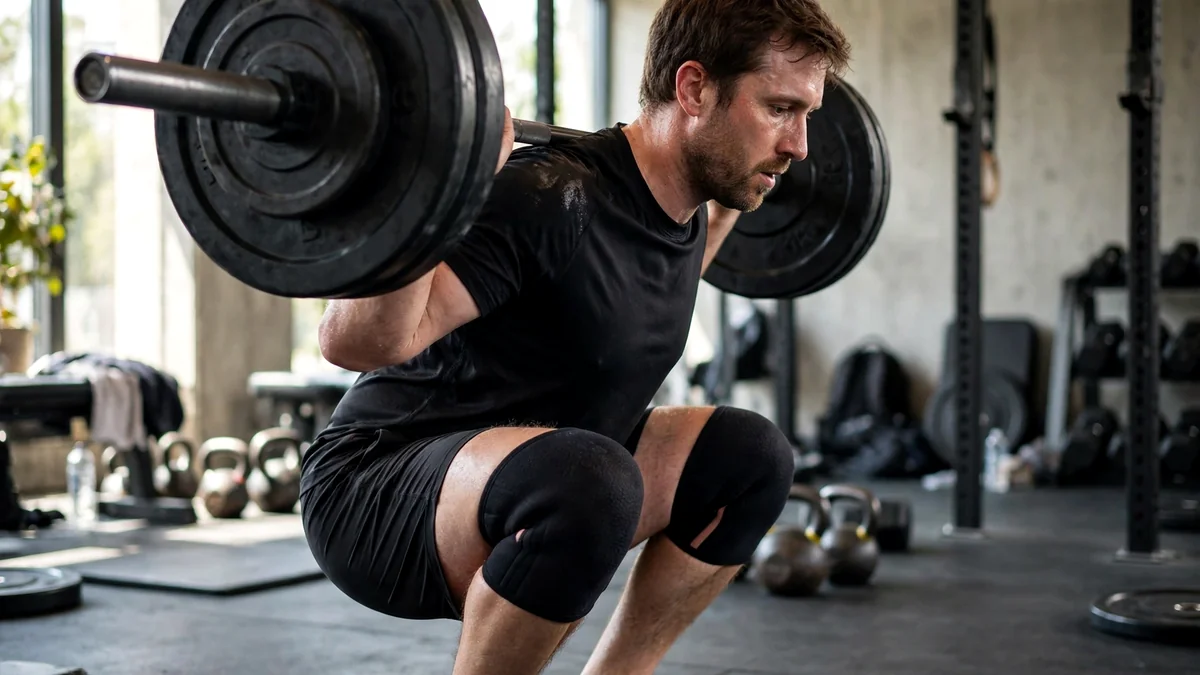
A knee sleeve works in three ways. First, it keeps the joint warm. Neoprene traps body heat around the knee, and a warm knee moves more smoothly than a cold one. Second, it compresses. Gentle, even pressure gives your brain better information about where the knee is, which most lifters describe as feeling more stable under the bar. Third, at 7 millimetres thick, it stores a little elastic energy as you descend into a squat and returns it as you drive up.
What a sleeve does not do matters just as much. It does not add real strength to the knee, it does not correct a knee that collapses inward, and it does not protect a damaged ligament the way a hinged brace does. If your knee gives way, locks, or swells after training, see a clinician rather than buying a tighter sleeve.
Most buyers come to sleeves from one of two directions. Lifters want rebound and warmth for squats, and they buy thick neoprene. Runners and people with achy knees want light compression they can forget about, and they buy thin knit.
The Sleeve Types Worth Knowing
7-Millimetre Neoprene Sleeves
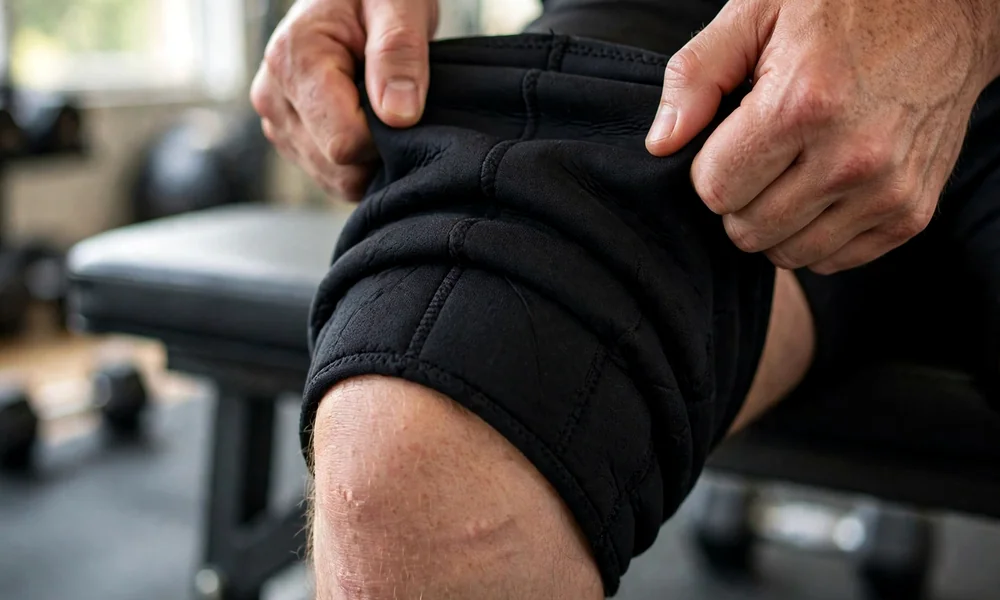
Seven-millimetre neoprene is the powerlifting standard, and the thickest sleeve most federations allow in competition. It is stiff, warm and springy: pulling it on is a workout in itself, and once it is on, the knee feels locked into a warm tube. The rebound out of a deep squat is real. The trade-off is heat and bulk — too warm for running and too stiff for all-day wear.
5-Millimetre Neoprene Sleeves
Five-millimetre sleeves are the all-rounders. They give most of the warmth and a little of the rebound of the 7-millimetre pair, but they are easier to pull on, cooler to wear, and flexible enough for lunges and general gym work. If you train a bit of everything, 5 millimetres is the thickness to start with.
3-Millimetre and Knit Sleeves
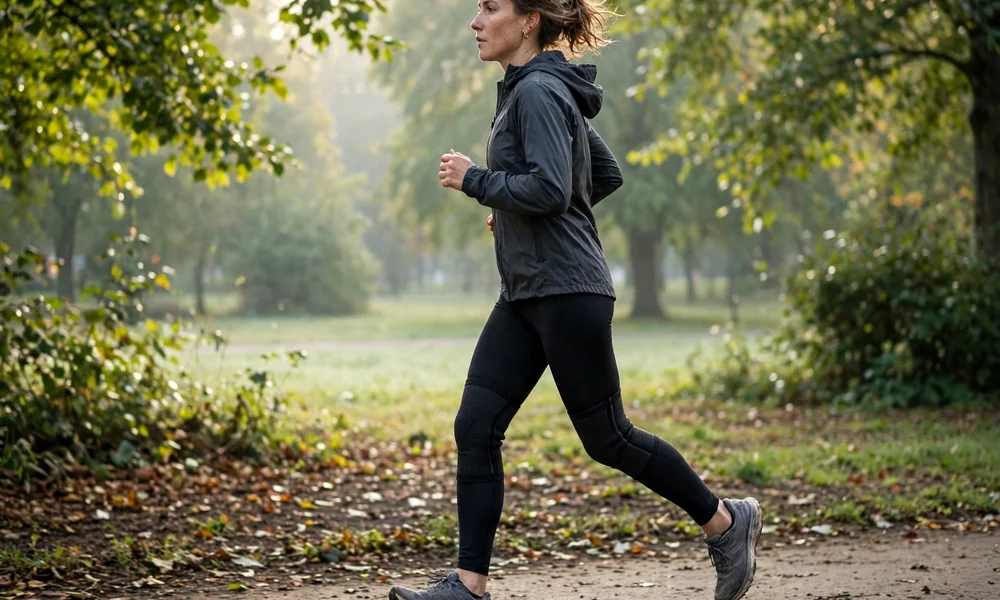
Three-millimetre neoprene and knitted compression sleeves are the lightweights of the family. They give warmth and mild compression without meaningful rebound, and they are the right choice for running, hiking, cycling and everyday wear under trousers. Knit sleeves breathe far better than neoprene, so they suit hot weather and long sessions, and many include silicone grip strips to stop them sliding down.
How Thick Should Your Sleeves Be?
Thickness follows directly from what you do in the sleeves. Heavy squats want 7 millimetres; mixed gym training wants 5; running and daily wear want 3 or knit. Buying thicker than you need buys heat and stiffness, not extra protection.
| Thickness | Best for | Warmth | Rebound | Watch out for |
|---|---|---|---|---|
| 7 mm neoprene | Heavy squats, powerlifting | Very high | Strong | Hard to put on, too hot for running |
| 5 mm neoprene | General gym training | High | Moderate | Less rebound than 7 mm under max loads |
| 3 mm neoprene | Light training, hiking | Moderate | Minimal | Won’t support a heavy squat |
| Knit compression | Running, cycling, all-day wear | Low to moderate | None | Can slide down without grip strips |
| Open-patella knit | Sensitive kneecaps, recovery | Low | None | Less overall compression |
Length matters too. A sleeve that ends just above and below the knee covers the joint and nothing else; a longer sleeve gives more warmth but can bunch behind the knee when you sit.
Sizing: Measure Twice, Buy Once
Sizing is where most knee sleeve purchases go wrong, because every brand measures differently. Stand with your leg straight and relaxed, wrap a tape measure around the centre of your kneecap, and write down the number. Then check it against the maker’s size chart — do not assume your size from another brand.
Between sizes, the right choice depends on your sport. Lifters chasing rebound should size down, because a tighter sleeve gives more spring — as long as they can still pull it on without help. Runners and all-day wearers should size up, because a sleeve that is too tight restricts circulation over hours. If you are between sizes and you plan to wear the sleeves for more than an hour at a time, take the larger size.
Try the sleeve on before you commit. It should take real effort to pull on — if it slides on easily, it is too big — but once it is in place, you should be able to squat, walk and sit without pain or numbness. Bunching behind the knee usually means the sleeve is too long, and a sleeve that migrates down during a run needs better grip strips or a smaller size.
The Best Knee Sleeves of 2026
We judged every sleeve on warmth, rebound, fit, durability and value, wearing each pair for squats, running and all-day use. The five picks below cover every sport and every budget.
Best Overall: SBD 7mm Knee Sleeves. The benchmark powerlifting sleeve: dense 7-millimetre neoprene, a contoured cut that follows the knee, and a fit that stays put through the heaviest sets. Expensive and a fight to pull on, but they last for years.
Best for General Training: Rehband Rx 5mm Knee Sleeves. The best all-rounder: 5-millimetre neoprene that warms quickly, a comfortable anatomical shape, and enough flex for lunges and conditioning work.
Best for Running: CEP Compression Knee Sleeves. A knit sleeve built for movement: light, breathable, with grip strips that actually hold, and compression that stays even over a long run.
Best Budget: Nordic Lifting 7mm Knee Sleeves. The strongest budget sleeve we tested: genuine 7-millimetre neoprene at a price well below the premium brands. The fit is less refined and sizing runs generous, so measure carefully.
Best for Everyday Wear: Bauerfeind Sports Knee Support. A medical-grade knit sleeve with a shaped pad around the kneecap and a comfortable, breathable weave. The pair for achy knees and long days on your feet.
Knee Sleeves in a Full Training Setup
Sleeves work best as part of a routine, not as a magic fix. Warm up first, then put the sleeves on once the knee is already warm, so they hold heat rather than trapping cold. For heavy squat days, pair them with a proper belt: our guide to weightlifting belts for heavy squats and deadlifts covers the stiffness and buckle choices that matter. Sleeves do not replace a warm-up, and they do not replace the strength work that actually protects a knee over years.
On non-squat days, sleeves still earn their place. A light knit pair keeps an achy knee comfortable through a long walk, and a 5-millimetre pair is useful for lunges and leg presses. For home training, bands complement sleeves well: our guide to resistance bands covers the loop and tube options that build the glute and hamstring strength a sleeve can never provide.
Care and Lifespan: Making a Pair Last
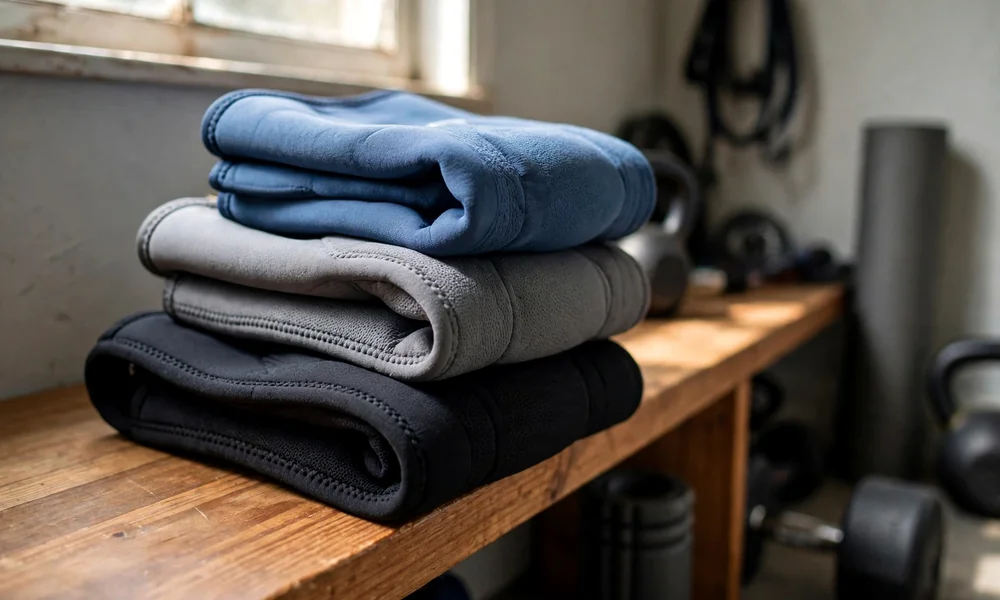
Neoprene hates heat and loves fresh air. After every session, turn the sleeves inside out and hang them somewhere ventilated — a damp sleeve left in a gym bag will smell within days. Wash by hand in cool water with mild soap, rinse well, and air-dry away from sunlight and radiators. Never tumble-dry neoprene: heat breaks down the rubber and the sleeve loses its spring. Knit sleeves are easier — most go in the machine on a cold, gentle cycle inside a laundry bag. Expect a good pair to last one to two years; replace it when it slides down during a set or the neoprene goes thin at the knee.
Knee Sleeve Buying Checklist
- Match thickness to your sport: 7 mm for heavy squats, 5 mm for general training, 3 mm or knit for running and daily wear.
- Measure around the centre of your kneecap with your leg straight, and check the number against that brand’s own size chart.
- Size down for maximum rebound, size up if you will wear the sleeve for more than an hour at a time.
- Check for bunching behind the knee and slipping during a full squat before you keep a pair.
- Choose neoprene for warmth and rebound, knit for breathability, running and all-day comfort.
- Buy two pairs if you train more than three times a week, so each pair dries fully between sessions.
Frequently Asked Questions
Do knee sleeves actually help your squat?
Yes, in two ways: they keep the joint warm, which makes the first heavy sets feel smoother, and at 7 millimetres they return a little elastic energy out of the bottom of the squat. The effect is modest — a few percent — but lifters consistently report more confidence under the bar.
Should knee sleeves be tight?
They should be snug and take real effort to pull on, but they should not hurt or cause numbness. If your foot tingles, the sleeve is too tight. A sleeve that slides on easily is too loose and will not stay in place.
Can I wear knee sleeves all day?
Light knit sleeves, yes — they are designed for it. Thick neoprene sleeves, no: they are too warm, too stiff, and too compressive for hours of sitting.
Do knee sleeves help with arthritis?
Many people with mild knee arthritis find that the warmth and gentle compression of a knit sleeve eases stiffness, especially in the morning and in cold weather. Sleeves do not treat arthritis, and if your knee is swollen, hot or unstable, see a clinician instead.
How do I stop knee sleeves sliding down?
Sliding usually means the wrong size or a worn-out sleeve. Measure again against the brand’s chart, look for sleeves with silicone grip strips, and replace pairs whose elastic has gone soft.
Are knee sleeves allowed in powerlifting competitions?
Most federations allow 7-millimetre neoprene sleeves in the raw division, with limits on length and thickness and a ban on sleeves with straps or rigid inserts. Check your federation’s rulebook before competing.
The Bottom Line
The best knee sleeves are the ones matched to your sport: 7-millimetre neoprene for heavy squats, 5 millimetres for general training, and light knit for running and everyday wear. Measure your knee, buy the right thickness, and let the sleeve do its quiet job — warmth, compression and confidence — while your training does the rest.