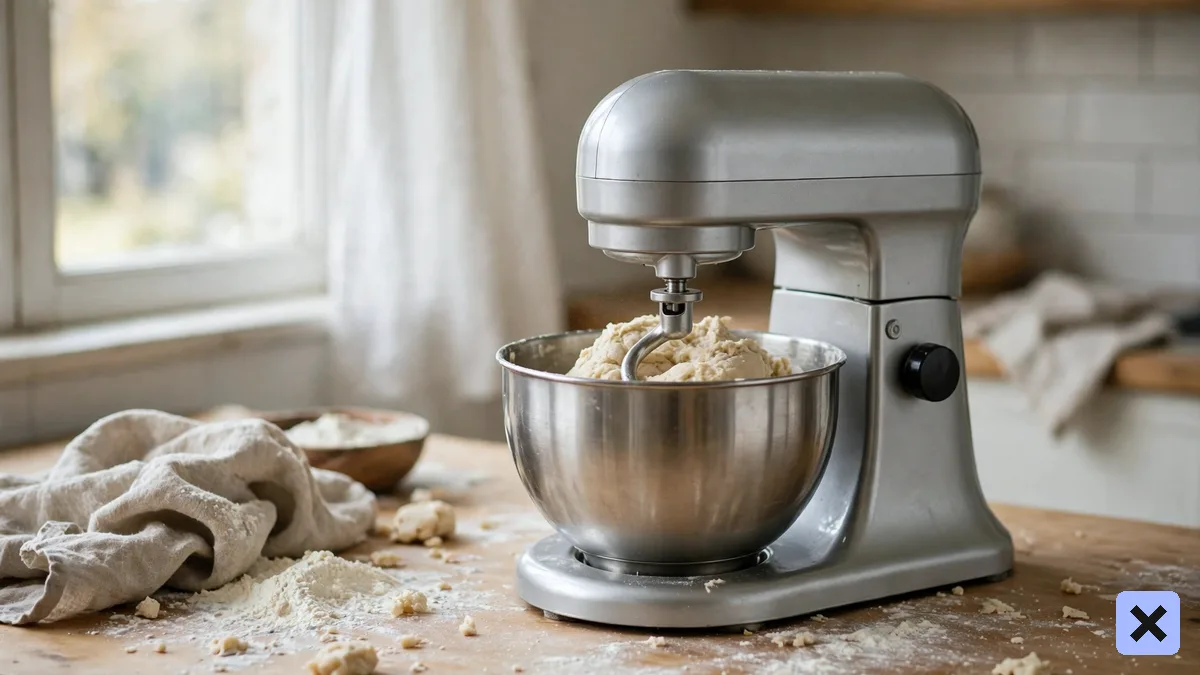
KitchenAid and Bosch are the two names that dominate serious conversations about stand mixers, and many bakers treat the choice as a matter of loyalty. That is a mistake, because the two brands build genuinely different machines. KitchenAid builds an icon: a heavy, beautiful, planetary mixer that has looked almost the same for decades. Bosch builds an engineer: a lighter, more compact, more powerful machine.
Both will knead bread, whip cream and cream butter, and both have loyal owners who would not swap. But they do those jobs differently, they suit different kitchens, and they fail in different ways. This guide puts them head to head across the things that matter on your worktop.
Key Takeaways
- KitchenAid wins on design, heritage and attachments, and it is the better all-round choice for cakes and everyday baking.
- Bosch wins on dough power and capacity, and it is the better choice for serious bread bakers.
- KitchenAid’s tilt-head models are easy to use but smaller; its bowl-lift models handle heavy dough far better.
- Bosch’s open-bowl design makes adding ingredients easier, but its look divides opinion.
- Both last for years when bought well, but the wrong model from either will disappoint.

The Two Brands at a Glance
KitchenAid is the most recognised stand mixer brand in the world, and its Artisan is the machine most people picture when they hear the words stand mixer. The design has barely changed in decades: a rounded head, a single column, a stainless steel bowl, and a planetary beater that sweeps around the bowl. It comes in dozens of colours and has become a piece of kitchen furniture as much as an appliance.
Bosch is the quieter contender, and in many European kitchens it is the default. Its Universal Plus and MUM series take a different approach: the motor sits in the base, the bowl sits on top, and the attachments drive down from above. Bosch does not sell romance. It sells a tool that mixes large amounts of heavy dough without complaint, and it has a following among bread bakers who care about that above everything else.
The practical difference is this. KitchenAid sells a mixer that is a pleasure to own and use for everyday baking. Bosch sells one that is a pleasure to use when the baking gets serious and the batches get big. Your baking habits decide which one earns its place on your counter.
Power and Dough: Where the Brands Diverge
Power is the first place the two brands genuinely differ, and it is also where the numbers on the box mislead most. KitchenAid quotes wattage figures that look modest next to Bosch, but wattage alone does not tell you how a mixer behaves under load. What matters is torque, the force that keeps the beater turning when a stiff dough resists it.
KitchenAid: Smooth, Steady, and Limited at the Top End
KitchenAid’s smaller tilt-head models, the ones most people buy first, are excellent at cakes, biscuits, meringues and light doughs. Where they struggle is heavy bread dough in large quantities: the motor works hard, the head can bounce, and the machine can walk across the counter. The bowl-lift models, with stronger motors and locked-in bowls, solve most of this, and they are the KitchenAid to buy if bread is a regular job.
That split matters more than the brand name. A buyer who chooses a small tilt-head KitchenAid and then tries to knead two kilos of sourdough every weekend will blame the brand, when the mistake was buying the wrong model.
Bosch: Built for Bread
Bosch’s strength is torque. The Universal Plus is famous among bread bakers for kneading large quantities of dough, often several kilos at a time, without slowing down or overheating. The open bowl lets the dough move freely instead of climbing the beater. For anyone who bakes bread in bulk or makes pizza dough for a crowd, Bosch is simply the more capable machine.
The trade-off is finesse. Bosch is less graceful with small quantities: a single egg white in a large bowl can be hard for the beater to reach. KitchenAid’s planetary action, with its beater sweeping close to the bowl’s edges, is better at small and medium jobs. Bosch wins the heavy work; KitchenAid wins the everyday work.
Design, Bowl and Everyday Use
Design is where KitchenAid’s advantage is most obvious. The Artisan is a beautiful object, available in a wide range of colours, and it makes a kitchen look better simply by sitting on the counter. At around ten kilos it stays planted during heavy mixing. The tilt-head models make changing beaters easy, because the head lifts out of the way.
Bosch looks like an appliance designed by engineers, and it is. The Universal Plus is tall and narrow, with the bowl sitting high on the base, and it does not have KitchenAid’s charm. But it is practical: the open bowl means you can see the dough, add flour or water without stopping, and scrape down the sides easily. It is also lighter to move and easier to store.
Noise is a smaller but real difference. KitchenAid’s all-metal gears produce a hum that rises with the load, and heavy dough makes the machine work audibly. Bosch is generally quieter under load. Neither is silent, but Bosch is the calmer machine when the dough gets serious.
The Best Side: Where Each Brand Wins
The best KitchenAid is the best all-round home baking machine you can buy. It does everything well, it looks wonderful, and it has the largest ecosystem of attachments of any stand mixer: pasta rollers, meat grinders, grain mills and more, all driven from the hub on the front of the head. Parts and repairs are easy to find, and a well-kept KitchenAid can last decades.
The best Bosch is the best bread machine in the stand mixer world. If your baking is mostly bread, pizza and large batches of dough, nothing in the KitchenAid range at a comparable price kneads as much dough as calmly as a Bosch Universal Plus. Its capacity means one batch instead of three.
If you want the mixer that makes everyday baking a pleasure and looks good doing it, KitchenAid is the best side. If you want the mixer that handles the heaviest baking without breaking a sweat, Bosch is the best side. The best choice matches the baking you actually do.
The Worst Side: Where Each Brand Falls Short
Neither brand is perfect. KitchenAid’s weakness is that its most popular models are also its least capable. The small tilt-head Artisan, the machine most people buy, is the one most likely to struggle with heavy dough, and its plastic gears in some versions are a known weak point under sustained load. KitchenAid is also expensive at the entry level, and the attachment range adds up quickly.
Bosch’s weakness is that it is a specialist in a generalist’s market. Its open-bowl design, so good for dough, is less good for small quantities and for cake batters that need the beater to reach every corner of the bowl. Its appearance puts some buyers off. The attachment range is good but smaller, and finding parts and service can be harder outside Europe.
The worst choice on either side is buying on looks or on brand loyalty alone. A KitchenAid bought for heavy bread baking will struggle, and a Bosch bought for delicate cakes and small batches will frustrate. The only way to avoid them is to be honest about what you bake most.

Head to Head at a Glance
| What matters | KitchenAid | Bosch |
|---|---|---|
| Bread dough power | Good on bowl-lift models, limited on tilt-head | Excellent, the brand’s signature strength |
| Batch capacity | Moderate, suits family baking | Large, suits bulk baking |
| Cakes and whipping | Excellent, planetary action reaches the whole bowl | Good, but small quantities can be tricky |
| Design and colours | Iconic, many colours, looks great on display | Practical, understated, divides opinion |
| Ease of adding ingredients | Good on tilt-head, harder on bowl-lift | Excellent, open bowl is easy to reach into |
| Attachments range | Huge, the largest available | Good, but smaller than KitchenAid |
| Weight and stability | Heavy, stays planted | Lighter, easier to move and store |
| Noise under load | Audible, rises with heavy dough | Quieter under sustained load |
| Long-term support | Excellent, parts widely available | Good, easier in Europe than elsewhere |
Attachments, Price and Value
Attachments are a real point of difference. KitchenAid’s front hub accepts a large range of accessories, and for many owners the pasta roller or the meat grinder is what turns the mixer from a baking tool into a kitchen centrepiece. Bosch’s attachments are fewer but well made. If you want to make fresh pasta or grind your own flour, check the attachment range before you choose.
Price is harder to compare directly, because both brands sell across a wide range and both are often discounted. As a rough guide, an entry-level KitchenAid costs more than an entry-level Bosch, and a top-end KitchenAid costs considerably more than a top-end Bosch. But the entry-level KitchenAid is also the less capable machine for heavy work. Value depends on the model, not the brand: a mid-range Bosch is better value for a bread baker than a top-end KitchenAid, and a mid-range KitchenAid is better value for a cake baker than a top-end Bosch. Our guide to the best versus worst stand mixers of 2026 puts both brands in the wider context of the market.
Longevity favours both brands when the right model is bought. A well-kept KitchenAid can last for decades. The difference is in repair: KitchenAid parts are easy to find almost everywhere, while Bosch parts can take longer to source outside Europe.
Who Each Mixer Is For
KitchenAid is the right choice if you bake a bit of everything, if you value design and colour, or if you bake mostly cakes, biscuits and everyday bakes. It suits households where the mixer lives on the counter and is used several times a week. The best stand mixers for baking in 2026 include strong KitchenAid models at several levels.
Bosch is the right choice if you bake bread seriously, if you make large batches, or if you prefer a practical tool to a display piece. It suits bakers who knead several kilos at a time. If bread is your main baking, the best bread makers of 2026 are worth a look too, though a good stand mixer gives you more control.
There is also a middle group: bakers who do a bit of everything and cannot decide. Count how often bread features in the baking. If it is most weeks and in large quantities, Bosch. If it is occasional and the baking is mostly cakes and biscuits, KitchenAid.
The Verdict
KitchenAid versus Bosch is not a contest with a single winner. It is a choice between two ideas of what a stand mixer is for: KitchenAid’s beautiful, versatile machine that makes everyday baking a pleasure, and Bosch’s powerful, practical machine that handles the hardest baking without complaint. Both brands execute theirs well when you buy the right model.
If there has to be one recommendation, it is this: choose KitchenAid if you bake a bit of everything, and choose Bosch if you bake bread in quantity. That single rule gets most buyers to the right mixer. Buy the model that fits the baking you actually do, and check that it handles the largest batch you will realistically make.
Frequently Asked Questions
Can a KitchenAid handle bread dough?
Yes, but choose the model carefully. Bowl-lift KitchenAid models handle bread dough well. Small tilt-head models struggle with large or stiff doughs and suit cakes and lighter baking better.
Is Bosch better than KitchenAid for bread?
For large quantities of bread dough, yes. Bosch’s torque and capacity make it the stronger bread machine.
Which mixer is better for small batches?
KitchenAid, generally. Its planetary beater reaches the whole bowl, so small amounts of cream, egg white or batter are mixed properly. Bosch’s large open bowl can leave small quantities untouched.