
A baby shoe is not a small adult shoe. It is a different thing with a different job: it has to keep a tiny foot warm, protect it from cold floors and rough pavements, and stay on through kicking, crawling and those first wobbly steps, all without squeezing, rubbing or getting in the way of a foot that is still growing fast. The best baby shoes of 2026 do all of that quietly, and the worst ones fail on the basics long before anyone notices the colour or the brand. A stiff sole, a narrow toe or a fiddly fastening can turn a lovely-looking shoe into something a baby hates wearing, and a baby who hates their shoes will let you know.
What Makes a Baby Shoe Different
An adult shoe is built to support a foot that has finished growing, to cushion long walks and to survive miles of pavement. A baby shoe is built for a foot that is mostly soft cartilage, that grows quickly, and that spends much of its day bare or in socks. For the first months, a shoe is really a warm cover: a soft crib shoe or bootie that keeps toes warm in a pram or on a cool floor. It does not need a sole at all, and a hard sole at this stage would only get in the way. The best crib shoes are light, breathable and easy to pull on over a wriggling foot, with a soft elastic or a gentle tie that holds without digging in.
How to Choose: The Three Things That Matter Most
Start with the sole. For a baby who is not yet walking, a soft sole is all you need, and a suede or leather sole is a good choice because it grips a smooth floor without being slippery. For a first walker, look for a thin rubber sole that is flexible at the ball of the foot, with a light tread that grips without being chunky. Press the sole with your thumb: it should give a little. Turn the shoe over and look at the tread pattern as well. A flat, smooth sole can be slippery on tiles and wooden floors, while a deep, heavy tread belongs on a boot, not on a first shoe.
Next, look at the fit around the toes. A baby shoe should be roomy at the front, with space for the toes to wiggle and spread as the baby pushes off the ground. Pointed or narrow shoes squeeze toes together, which is uncomfortable and unhelpful for balance. The best baby shoes have a wide, rounded toe box that matches the natural shape of a small foot, which is wider at the toes than at the heel. When you try a pair on, you should be able to see the shape of the foot sitting comfortably inside, not pressed against the sides.
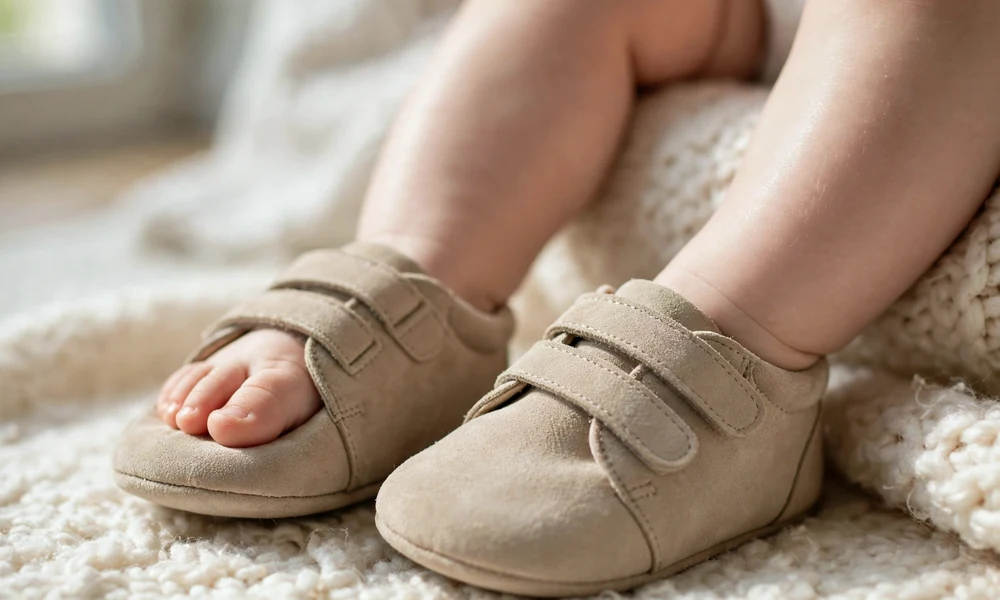
Then think about the fastening, because it decides whether the shoe stays on. Laces look lovely, but they come undone, they are hard to tie on a moving foot, and a trailing lace is a trip hazard. Velcro straps are the workhorse of baby shoes for good reason: they open wide, they adjust in seconds, and they can be tightened or loosened as a foot grows or as socks get thicker. Elasticated openings and zips have their place too, especially on boot-style shoes, but check that a zip does not pinch and that an elastic opening does not leave marks on a chubby ankle after an hour.
The Best Baby Shoes by Stage
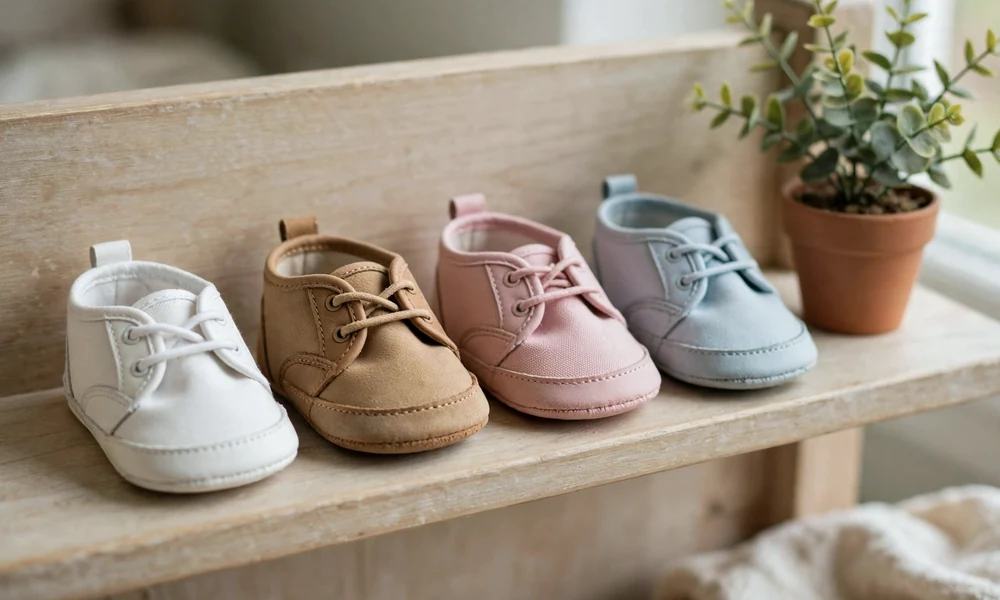
For newborns and babies who are not yet moving around, the best choice is a soft crib shoe or bootie. These have no hard sole at all, just a soft leather or fabric base that keeps feet warm and gives a little grip on a blanket or a rug. Look for a pair with a gentle elasticated ankle or a soft tie, because a shoe that falls off every five minutes is no use to anyone. Booties with a slightly higher ankle tend to stay on better than low slip-ons, especially on a baby who kicks a lot. At this stage, warmth and comfort are everything, and style is a bonus.
For first walkers, the best baby shoes are flexible first walkers with a thin rubber sole and a closed, rounded toe. These are made for real steps outdoors as well as indoors, so the sole needs to cope with pavements, grass and playground surfaces without being heavy or stiff. Look for a sole that bends at the toes, a toe bumper that protects against stubs, and a heel that holds the foot steady without squeezing it. A good first walker feels sturdy in the hand but bends easily when you fold it, and that balance is what you are paying for. When your baby outgrows these and starts running, our guide to the best toddler shoes of 2026 picks up where this guide leaves off, with tougher soles and stronger support for confident little runners.
Materials: Leather, Knit and Wool
Soft leather is the best all-round material for baby shoes, and it has been for years. It breathes, so feet stay dry rather than sweaty; it moulds gently to the shape of the foot over a few wears; and it survives scuffs and crawling far better than fabric. Full-grain leather lasts longest, while softer nubuck and suede feel lovely but mark more easily and need a little more care. If you choose leather, look for a smooth, unlined interior or a soft lining without rough edges, and check that the dye does not rub off on a white sock after a day of wear.
Knit and wool shoes are the cosiest option, and they are lovely for cold weather, car journeys and quiet days at home. A knitted bootie with a soft sole keeps a baby’s feet warm without any stiffness at all, and wool is naturally warm even when it gets a little damp. But knit shoes are not made for the outdoors: they soak up water, they wear through quickly on rough surfaces, and they offer no protection against bumps. Think of them as slippers and pram shoes rather than walking shoes. Pair any baby shoe with a good sock, and our guide to the best baby socks of 2026 covers soft, stay-put pairs that do not slip down inside a shoe or bunch up around the toes.
Fit, Sizing and the Thumb Test
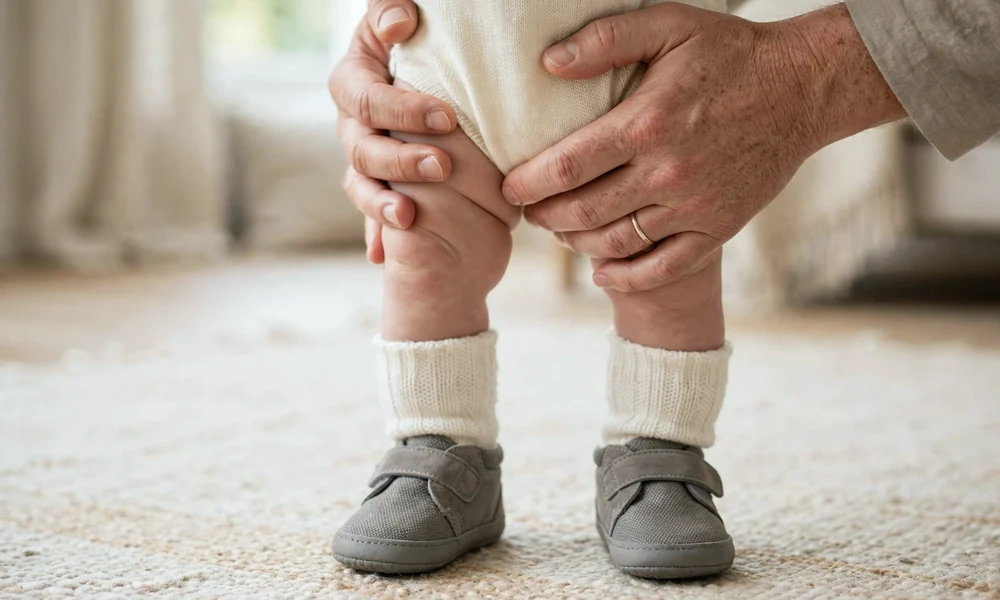
Baby shoe sizing is famously inconsistent, and a size four in one brand can feel like a size three in another, so treat the number as a starting point rather than a promise. The best way to check fit is to measure the foot. Stand the baby on a piece of paper, mark the heel and the longest toe, and measure the length. Then add roughly a thumb’s width, about a centimetre, for growing room and for the foot spreading as the baby steps. That gap is the space a baby needs to walk comfortably, and a shoe without it will pinch the toes within weeks.
When you try a pair on, check the width as well as the length. The shoe should feel snug around the heel, so it does not slip off, but roomy around the toes. Press the front gently: you should feel the longest toe with a little space in front of it, not pressed hard against the end. Watch the baby walk if they can: a shoe that is too small makes a baby walk on tiptoe or trip more often, while a shoe that is too big slides around and causes blisters at the heel. If you are between sizes, the larger size is usually the better choice for a growing baby, as long as the heel stays put.
What to Avoid When Buying Baby Shoes
Hard, stiff soles are the first thing to avoid. A sole that does not bend at the toes forces a baby to lift the whole foot differently, which makes walking harder and more tiring. If you cannot bend the shoe easily in your hand, do not buy it, however lovely it looks. The same goes for shoes with a raised heel: a baby shoe should be flat, with no heel lift at all, so the foot sits naturally on the ground. High-top shoes that lock the ankle are also best avoided for everyday wear, since a baby needs ankle movement to balance and to learn to walk.
Everyday Care: Cleaning and Hand-Me-Downs
Baby shoes get dirty fast, so choose pairs that are easy to clean. Leather shoes wipe down with a damp cloth and a little mild soap, and a soft brush takes off dried mud without damaging the surface. Canvas shoes can usually go in the washing machine on a gentle cycle inside a laundry bag, though they may need a day to dry fully. Knit shoes should be hand-washed and dried flat so they keep their shape. Whatever the material, never dry baby shoes on a radiator or with a hairdryer, because the heat can shrink leather, warp a sole and crack a soft finish.
When a baby outgrows a pair, the shoes often still have plenty of life in them, so pass soft shoes on to a friend or store them for a younger sibling. Keep a note of the size and the brand that fitted well, because it saves time next time you shop, and you will know which brands run small or large for your baby. And when you are heading out for the day, a pair of baby shoes, a spare pair of socks and a light blanket are the essentials worth packing. Our guide to the best strollers of 2026 covers the other half of getting out and about, from lightweight everyday strollers to sturdy all-terrain models for longer walks.
Frequently Asked Questions
Do babies need shoes before they can walk? Not really. Bare feet and socks are the best choice indoors for a baby who is not yet walking, because they let the foot move and feel the floor freely. Shoes are useful outdoors, in cold weather and on rough surfaces, and a soft crib shoe or bootie is all a non-walking baby needs. Save the structured first walker for the weeks when a baby is actually taking steps.
Are expensive baby shoes better than cheap ones? Not necessarily. The things that matter are a flexible sole, a wide toe box, a light weight and a fastening that stays put, and those are found at every price. An expensive pair may last longer and use nicer leather, which is worth it for an everyday shoe, but a cheaper pair that fits well and bends easily is a better buy than a pricey pair that is stiff and narrow. Spend more on the pair your baby wears every day, and less on special-occasion shoes.
What is the best shoe for a baby’s first steps outdoors? A lightweight first walker with a thin, flexible rubber sole, a closed rounded toe and a velcro fastening is the best all-round choice. It protects the foot on pavements and playgrounds, grips gently on smooth surfaces, and stays on during a wobbly walk. Keep a soft pair for indoors, and save heavier boots for cold, wet days when protection matters more than flexibility.


